
Collecting historical Singapore dollar notes is a rewarding way to preserve cultural heritage and appreciate the intricate design history of the nation’s currency. From the vibrant Orchid series of the late 1960s to the detailed Bird and Ship series, these artifacts hold significant historical and aesthetic value. However, the growing popularity of these collectibles has also attracted counterfeiters and deceptive sellers. To protect your investment and ensure you are acquiring genuine pieces of history, you must learn how to systematically authenticate these banknotes before finalizing any purchase.
Authenticating old banknotes requires a combination of sensory inspection, physical measurements, and verification of security features against official historical guidelines. Relying on a single visual check is rarely sufficient, especially when purchasing high-value items. By understanding the specific design elements of each currency series and utilizing basic verification tools, you can confidently navigate the collectibles market and avoid falling victim to counterfeit schemes.
Understanding the Risks of Counterfeit Collectible Banknotes
The market for historical banknotes features various types of reproductions, ranging from crude photocopies to sophisticated, artificially aged replicas. Counterfeiters often use chemical staining, artificial creasing, or physical distressing to make modern reproductions look like genuine, circulated historical notes. These techniques can easily deceive inexperienced buyers who mistake physical wear and tear for authentic age.
Products mentioned in this guide
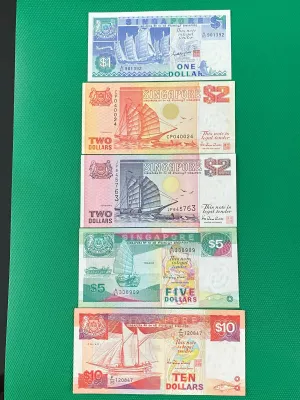
![Interesting Collection] $50 Old Singapore Banknote F|265417](https://img.lazcdn.com/g/ff/kf/S1ea7aa98407f4ee2a747b5f455ce774dd.jpg_400x400q80.jpg_.webp)
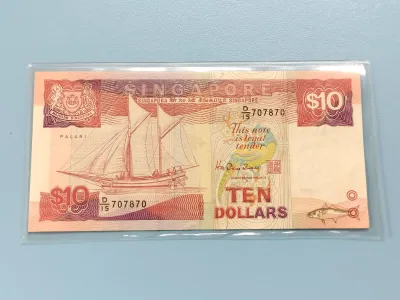
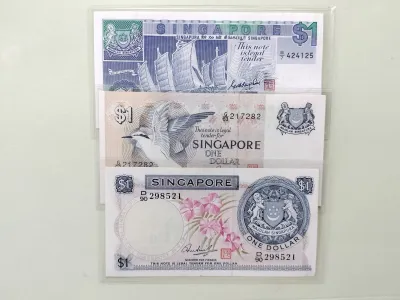
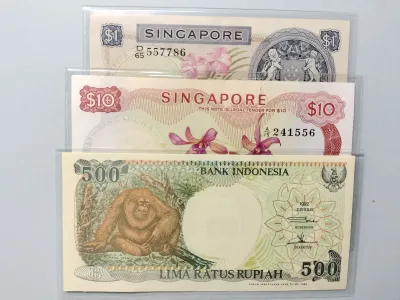
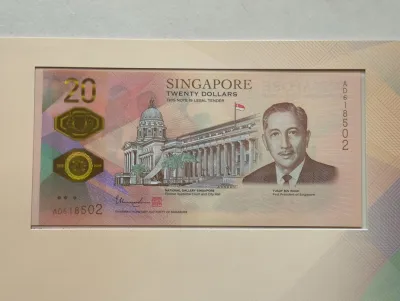
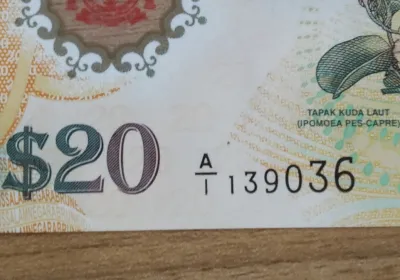
Prices are valid at publication and may change. Please refer to the product page for the latest price.
Online marketplaces and peer-to-peer ecommerce platforms have made historical collectibles more accessible, but they also carry elevated risks. Many unverified third-party sellers on these platforms lack professional numismatic credentials and may unknowingly or deliberately list counterfeit items. Without a physical inspection, relying solely on low-resolution product photographs is highly risky, as digital listings can easily mask flat printing, incorrect paper textures, or missing security features.
Furthermore, some deceptive listings use genuine but heavily altered banknotes. For example, a seller might alter the serial numbers of a common note to match a rare prefix or chemically clean a damaged note to artificially inflate its grade. Understanding these common deception tactics is the first step toward protecting yourself when building a collection of historical currency.
Key Visual and Tactile Authentication Checks
Performing a hands-on sensory inspection is one of the most effective ways to evaluate a banknote’s authenticity. Genuine Singapore banknotes from older series were printed on high-quality, cotton-based paper rather than standard wood-pulp commercial paper. This specialized paper has a distinct, slightly rough texture and produces a crisp, resonant sound when gently handled or flicked, whereas counterfeit paper often feels smooth, limp, or waxy.
Print quality is another critical indicator of authenticity. Genuine historical banknotes utilize intaglio (raised) printing for key design elements, such as the national coat of arms, major portraits, and denomination numerals. Running a fingernail gently over these areas should reveal a distinct tactile texture. Additionally, inspect the sharpness of the print; genuine notes feature incredibly sharp, clean lines and smooth color transitions, whereas digital counterfeits often display pixelated dot patterns or blurry edges under close inspection.
Optical security features must also be cross-referenced with official historical guides from the Monetary Authority of Singapore (MAS). When held up to a direct light source, a genuine banknote will reveal a multi-tonal watermark embedded within the paper fibers, showing clear variations in light and shade rather than a flat, printed image. Security threads—whether fully embedded or windowed—should appear as continuous, clean lines with precise metallic or color-shifting properties appropriate to the specific series and denomination.
Advanced Verification Tools and Techniques
For high-value acquisitions, basic sensory checks should be supplemented with non-destructive verification tools. An ultraviolet (UV) flashlight is highly effective for identifying security features invisible to the naked eye. Genuine historical banknotes are printed on paper that does not fluoresce under UV light; the paper itself remains dull and absorbent. However, specific security fibers embedded in the paper and certain fluorescent inks used for serial numbers or design elements will glow vibrantly under a 365nm UV light. If the entire banknote glows bright blue, it is likely printed on standard commercial paper containing optical brighteners.
Using a jeweler’s loupe with 10x or 20x magnification allows you to inspect the micro-printing and fine engraving lines that are nearly impossible for standard digital printers to replicate. Genuine micro-text remains sharp and legible under magnification, whereas counterfeit versions typically appear as solid, blurry, or broken lines. Additionally, using digital calipers to measure the exact length and width of the banknote in millimeters allows you to verify its dimensions against official specifications. Even a millimeter of deviation can indicate a trimmed note or a counterfeit reproduction.
Throughout the verification process, adhere strictly to the principle of non-destructive testing. Never use chemical testing pens, as these are designed for modern wood-pulp or polymer notes and can permanently stain or damage historical cotton-based paper. Avoid any harsh physical handling, folding, or rubbing that could degrade the condition and value of the collectible.
Verifying Provenance and Choosing Reliable Sellers
Mitigating purchase risks involves evaluating the credibility of the seller and the documented history of the banknote. Whenever possible, request clear provenance documentation or historical transaction records. For high-value notes, look for items that have been certified and encapsulated by recognized professional grading services, such as Paper Money Guaranty (PMG). These certified notes are sealed in tamper-evident, protective holders and assigned a unique serial number that can be verified directly on the grading service’s online database.
Choosing the right purchasing channel is equally important. Established numismatic dealers, reputable auction houses, and authorized cultural institutions are far safer than unverified online sellers. These professional entities have reputations to uphold, employ experienced specialists to verify their inventory, and often provide written authenticity guarantees with their sales.
Be vigilant against common red flags when browsing listings. An unusually low price for a rare denomination, such as a S$1,000 or S$10,000 note from the Orchid or Bird series, is a strong indicator of a potential counterfeit. Other warning signs include a seller’s refusal to provide high-resolution, close-up photographs of specific security features, demands for immediate cash-only transactions, or high-pressure sales tactics designed to prevent you from conducting a proper inspection.
What to Do If You Suspect a Counterfeit Note
If you suspect a banknote is counterfeit during a transaction, halt the purchase immediately. Do not proceed with the payment, and do not let high-pressure tactics influence your decision. If you have already completed the purchase on an online marketplace, immediately initiate a formal refund dispute through the platform’s customer support channels and flag the seller’s account to prevent them from targeting other buyers.
Preserve all evidence related to the transaction. Keep detailed records of the original listing, communication logs with the seller, receipts, and shipping labels. Store the physical banknote in a protective, clear sleeve to avoid excessive handling, which preserves any physical evidence or forensic details on the item itself.
Report the suspected counterfeit to local law enforcement or consumer protection agencies. It is critical to remember that passing or recirculating counterfeit currency—even if you acquired it unknowingly—is a serious legal offense. Suspected fakes must never be spent, traded, or destroyed; instead, they should be handed over to the appropriate authorities for investigation.
Frequently Asked Questions (FAQ)
Are old Singapore dollar notes still considered legal tender?
Under Singapore law, older series of Singapore dollar banknotes, including the Orchid, Bird, and Ship series, generally retain their legal tender status at face value unless they have been officially demonetized by the Monetary Authority of Singapore (MAS). However, because these historical notes are highly sought after by collectors, their market value as cultural artifacts and numismatic collectibles is typically much higher than their nominal face value. Collectors should consult the latest official announcements and currency guides on the MAS website to verify the current legal tender status of specific historical denominations.
Can I clean or wash an old banknote to improve its appearance?
No, you should never attempt to clean, wash, or iron an old banknote. Using water, chemical solvents, or household detergents strips the original surface fibers, removes the natural sheen of the paper, and can dissolve or distort sensitive security inks. Ironing a note can scorch the cotton fibers and flatten the tactile intaglio printing, permanently destroying its numismatic value. To preserve the condition and value of a historical banknote, keep it in its original, unaltered state and store it in an acid-free, archival-grade protective sleeve. For highly valuable or damaged notes, consult a professional paper conservator.
Community discussion
Share your experience or ask a question. Comments are reviewed before publication.