
Using an E14 to E27 adapter is a highly practical solution when you want to install a standard, widely available E27 bulb into a fixture designed for a smaller E14 socket. These handy accessories bridge the physical gap between different thread sizes, allowing you to reuse existing lamps and fixtures without expensive replacements. However, using them safely requires a clear understanding of electrical limits and thermal dynamics.
The core safety rule is straightforward: an E14 to E27 adapter is safe to use only if the actual wattage of the installed E27 bulb remains below the maximum wattage rating of the original E14 socket and the light fixture itself. The adapter does not upgrade the electrical wiring, heat tolerance, or current capacity of your lamp. It merely changes the physical fitting, meaning the original fixture’s limits remain the absolute boundary for safety.
The Short Answer: Conditional Safety Based on Wattage
An E14 to E27 adapter is a passive electrical component, meaning it does not alter the voltage or current flowing through the circuit. It simply acts as a physical conduit to connect a larger bulb thread to a smaller socket. Because of this, the adapter itself is not inherently hazardous, but safety risks arise entirely from human error and improper bulb selection.
Products mentioned in this guide
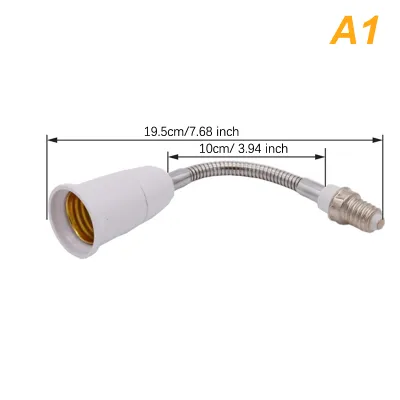
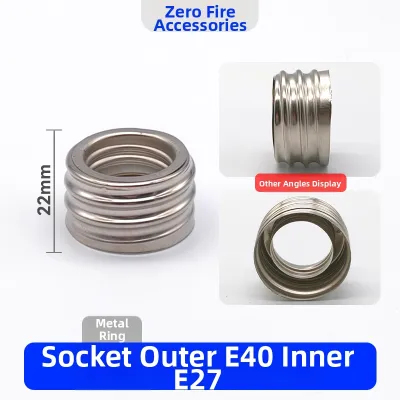
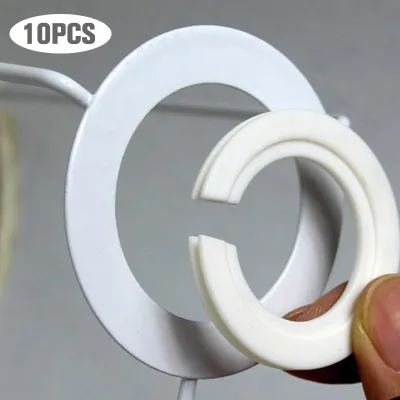
Prices are valid at publication and may change. Please refer to the product page for the latest price.
A common and dangerous misconception is that installing a larger E27 adapter somehow upgrades the light fixture’s overall capacity. Many homeowners assume that because E27 bulbs are typically brighter and historically drew more power, the socket can now handle that higher load. In reality, the thin internal wiring and plastic components of the original E14 fixture remain exactly the same, leaving them vulnerable to overloading if a high-wattage bulb is inserted.
To ensure a safe installation, you must always defer to the “MAX Wattage” label printed on the light fixture itself, rather than any maximum rating stamped on the adapter’s packaging. If your lamp is rated for a maximum of 40 watts, that is your absolute limit. Installing a bulb that draws more than this limit, even if the adapter claims to support up to 100 watts, creates an immediate fire and electrical hazard.
How to Determine the Safe Wattage Limit for Your E14 Socket
Traditional E14 sockets, often referred to as Small Edison Screw (SES) fittings, are engineered for smaller, low-power fixtures such as chandeliers, decorative wall sconces, and bedside reading lamps. Because these fixtures are compact and often feature delicate materials, they are designed to handle relatively low electrical currents and minimal heat. Historically, these sockets are capped at a maximum of 40W or 60W for traditional incandescent bulbs, but some decorative pieces are restricted to 25W or even 15W.

To find the exact safe limit for your specific setup, you must locate the manufacturer’s maximum wattage rating. This information is typically printed on a small adhesive label placed inside the socket cup, on the underside of the lamp base, or along the power cord. In Singapore, reputable fixtures sold in retail stores carry clear markings indicating these safe operating thresholds, which you should verify before making any modifications.
When evaluating bulb options, it is vital to distinguish between “equivalent wattage” and “actual wattage.” LED bulb manufacturers frequently use equivalent wattage (such as “100W Equivalent”) in large fonts on their packaging to help consumers gauge brightness compared to old incandescent bulbs. However, for electrical safety, you must ignore this marketing number and look for the actual wattage—the real power draw of the bulb—which is usually printed in smaller text and typically ranges from 8W to 15W for bright LEDs.
If you are dealing with an older, unbranded, or imported fixture where the wattage label has faded or peeled off, you must adopt a highly conservative approach. In the absence of clear manufacturer specifications, it is safest to assume a strict limit of 6W to 9W actual power draw, which is typical of low-power LED bulbs. If you plan to use a higher-power bulb or are unsure of the fixture’s structural integrity, consult a licensed electrical worker (LEW) to inspect the wiring before proceeding.
Overheating Risks: What Happens When You Exceed the Limit
The single greatest hazard associated with using socket adapters is thermal overload. E27 bulbs are physically larger and traditionally designed for fixtures that can easily dissipate heat over a wider surface area. When you use an adapter to insert a high-wattage E27 bulb—especially an incandescent or halogen model—into a compact E14 fixture, the heat cannot escape, converting the small fixture housing into a dangerous heat trap.
This excessive heat buildup rapidly degrades the physical components of the light fixture. Over time, high temperatures will melt plastic or bakelite sockets, causing them to warp, crack, and eventually crumble. More critically, prolonged exposure to high heat destroys the rubber or plastic insulation surrounding the internal electrical wires, making it brittle and causing it to flake off.
Once the wire insulation is compromised, the bare copper conductors inside the fixture are exposed to each other and to any nearby metal parts. This exposure leads to severe electrical hazards, including short circuits and localized electrical arcing, where current jumps across gaps. In Singapore’s humid tropical climate, moisture in the air can lower electrical resistance across damaged components, significantly increasing the risk of current leakage, electric shocks, and devastating electrical fires.
Furthermore, the physical size mismatch of an E27 bulb introduces mechanical risks. Because E27 bulbs are longer and wider, and the adapter itself adds extra height, the bulb will protrude much further out of the socket than intended. This extension can cause the hot glass envelope of the bulb to make direct contact with fabric lampshades, plastic diffusers, or enclosed glass globes, leading to scorched materials, melted plastic, or shattered glass due to uneven thermal expansion.
Best Practices for Using an E14 to E27 Adapter Safely
Switch to LED Bulbs
The most effective way to eliminate thermal and electrical risks when using an E14 to E27 adapter is to use LED bulbs exclusively. While a traditional 60W incandescent bulb runs hot enough to cause burns and degrade sockets, a modern E27 LED bulb producing the same light output typically draws only 8W to 12W of actual power. This incredibly low power consumption ensures the setup remains safely below the thermal and electrical thresholds of almost any E14 socket.
Check Physical Clearances
Before purchasing an E27 bulb, measure the available space inside your light fixture or lampshade. Keep in mind that the adapter itself will add approximately 1.5 to 2.5 centimeters of height to the bulb assembly. You must ensure there is a generous air gap of at least a few centimeters around the entire bulb to allow natural air circulation, and the bulb must never touch the shade or housing.
Avoid Enclosed Fixtures
Do not use an E14 to E27 adapter inside fully enclosed, recessed, or tightly sealed fixtures unless the E27 LED bulb is explicitly rated for enclosed environments. In sealed spaces, even the low heat generated by an LED bulb’s internal driver can accumulate over time, baking the electronics and leading to premature bulb failure or melting.
Verify Dimmer Compatibility
If your E14 fixture is connected to a wall dimmer switch, you must ensure that both the adapter connection and the E27 LED bulb are fully compatible with dimming. Standard adapters are passive, but the LED bulb itself must be labeled as dimmable. Additionally, older dimmers designed for incandescent bulbs may cause LEDs to flicker or buzz, in which case you should have a professional upgrade the switch to an LED-compatible trailing-edge dimmer.
Ensure Secure Installation
When installing your adapter, always isolate the power at the wall switch first. Screw the adapter into the E14 socket firmly but gently, then screw the E27 bulb into the adapter. Avoid over-tightening, which can damage the delicate metal contacts or crack the plastic casing, but ensure the connections are snug to prevent loose contacts that cause dangerous electrical arcing.
Warning Signs: When to Unplug and Call an Electrician
Even with careful installation, you must remain alert to early warning signs of electrical failure. If you detect a faint smell of burning plastic, a fishy odor (often caused by overheating bakelite), or an ozone scent, turn off the light immediately. Other critical indicators include visible yellowing or browning of the adapter, flickering light that persists after tightening, or unusual buzzing and crackling sounds coming from the socket.
If you observe any of these warning signs, take immediate action to isolate the hazard. Do not attempt to touch or unscrew a hot or potentially melting bulb or adapter while the circuit is active. Instead, turn off the power at the wall switch, or safely shut off the corresponding circuit breaker at your home’s distribution board (DB box), and allow the entire fixture to cool completely for at least 30 minutes.
Once an adapter or socket shows signs of thermal damage, it is permanently compromised and must never be reused. Overheated plastics and metals lose their structural and insulating properties, making them highly susceptible to immediate failure if re-energized. Attempting to patch or reuse a damaged socket is an extreme safety risk.
For any repairs involving damaged sockets, compromised wiring, or suspicious electrical behavior, avoid DIY fixes. In Singapore, safety guidelines dictate that repairs on fixed electrical installations should be referred to a licensed electrical worker (LEW). A qualified professional will ensure that your home’s electrical systems remain compliant, safe, and free from fire hazards.
Frequently Asked Questions (FAQ)
Can I use an E14 to E27 adapter with a smart bulb?
Yes, electrically it is safe to use a smart bulb with an E14 to E27 adapter because modern smart bulbs utilize energy-efficient LED technology, which draws very low actual wattage (typically between 8W and 15W). This low power draw easily falls within the safe electrical limits of standard E14 sockets.
However, the primary challenge is physical size and weight. Smart bulbs contain internal Wi-Fi or Zigbee radios, controllers, and heavier cooling components, making them bulkier than standard LEDs. Combined with the added height of the adapter, this setup can become top-heavy, putting mechanical strain on a delicate E14 socket, so you must verify that the bulb fits comfortably inside your lampshade without touching the sides.
Does the adapter itself consume electricity or reduce brightness?
No, a standard E14 to E27 adapter is a passive conductive bridge with no internal circuitry, transformers, or active components. It does not consume electricity, alter the voltage, or reduce the brightness of the bulb in any way.
Any perceived dimming, flickering, or drop in performance is typically caused by a loose physical connection, dirty metal contacts, or an incompatible dimmer switch rather than the adapter itself. To prevent these issues, ensure that all contacts are clean, dry, and that both the adapter and bulb are screwed in securely to maintain optimal electrical conductivity.
Community discussion
Share your experience or ask a question. Comments are reviewed before publication.