
The Flextail Zero lantern can be a highly practical addition to your household emergency preparedness kit, provided its specific battery life, brightness levels, and physical mounting options align with your flat’s layout and your family’s evacuation plan. Because high-rise emergency scenarios demand a balance between stationary area lighting and lightweight portability, evaluating this compact device requires looking closely at its manufacturer-stated specifications and comparing them to the unique demands of Singapore public housing. By understanding how to verify its performance features and integrate them into a broader safety strategy, you can ensure your household remains safe, calm, and well-lit during an unexpected power disruption.
Identifying Your HDB Emergency Lighting Requirements
Preparing for emergencies in a high-density, high-rise Housing & Development Board (HDB) flat requires a clear understanding of your spatial and structural environment. Unlike landed properties, HDB blocks feature shared infrastructure, concrete walls that block natural light transmission between rooms, and multi-story stairwells that serve as primary evacuation routes. When a power outage occurs, your lighting needs immediately split into two distinct categories: stationary illumination to keep your living spaces safe and functional, and mobile task lighting to facilitate movement or evacuation.
Stationary room illumination is essential for maintaining order and safety within the flat. During a blackout, a reliable light source must illuminate common areas like the living room, kitchen, and hallways to prevent trips and falls over furniture or household items. This requires a broad, diffused light source rather than a narrow, focused beam. You must also consider the typical duration of power outages; while Singapore’s electrical grid is exceptionally reliable, localized distribution board (DB) trips or maintenance issues can still leave a home dark for several hours, making a minimum runtime threshold a critical factor in your planning.
Products mentioned in this guide
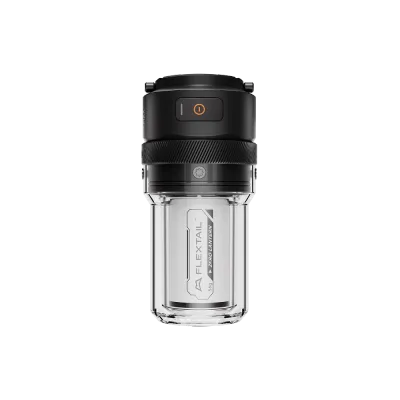
Prices are valid at publication and may change. Please refer to the product page for the latest price.
Mobile task lighting, on the other hand, is necessary for active navigation and hands-on tasks. If you need to inspect your home’s DB box, locate emergency supplies, or navigate unlit common corridors and concrete stairwells during a building-wide outage, you require a light source that is easy to carry, highly durable, and capable of casting light precisely where you step. Relying solely on a smartphone flashlight is risky, as it rapidly drains a device that is crucial for emergency communication.
Evaluating the Flextail Zero Lantern for Stationary Blackouts
To determine if the Flextail Zero lantern is suitable for stationary use during a blackout, start by cross-referencing the manufacturer’s stated brightness levels with the physical dimensions of your HDB flat. Check the product packaging or user manual to find the maximum and minimum lumen output. A standard living room in a 4-room or 5-room flat typically requires a wider, more diffused beam angle to eliminate deep shadows, so verify whether the lantern’s design allows for 360-degree light distribution or if it projects light in a more directional pattern.

Next, evaluate the battery capacity and expected runtime by reviewing the technical specifications in the product manual. Note how many hours of continuous operation the lantern can sustain at various brightness settings. For emergency preparedness, the low and medium settings are often the most critical, as they conserve battery power while still providing enough ambient light to navigate a room safely. Ensure the stated runtime on these lower settings can comfortably exceed the typical few hours of a standard localized power disruption.
Physical stability and mounting versatility are equally important when a lantern is used as a stationary light source. Examine the physical design of the Flextail Zero to see if it features a flat, stable base that can sit securely on dining tables, kitchen countertops, or shelves without tipping over if bumped in the dark. Additionally, look for integrated hanging options such as built-in hooks, loops, or magnetic mounts. These features allow you to suspend the lantern from a ceiling fan hook, a wall organizer, or a metal door frame, casting light downward to maximize room coverage and mimic standard overhead lighting.
Assessing the Lantern for Stairwell Evacuations
Evacuating a high-rise HDB block during an emergency requires descending multiple flights of concrete stairs, making the portability and physical design of your light source a primary safety consideration. Verify the weight and dimensions of the Flextail Zero lantern in its official specifications. A device intended for evacuation must be lightweight enough for children or elderly family members to carry comfortably for extended periods without causing fatigue.
Evaluate the grip design and build materials to ensure the lantern can withstand the physical demands of an evacuation. In Singapore’s hot and humid climate, hands can quickly become sweaty, so a textured or ergonomic handle is highly beneficial to prevent accidental drops. Review the user manual for any specific drop-resistance ratings or impact-resistance claims. A robust outer casing made of durable polymers or aluminum is essential, as dropping your primary light source on a hard concrete stairwell could leave your family in complete darkness during a critical moment.
Finally, consider how the lantern supports hands-free operation during movement. If you are carrying an emergency grab-bag, holding a handrail, or assisting a family member down the stairs, you cannot afford to have one hand permanently occupied. Check if the lantern features attachment points, such as a carabiner loop or a lanyard attachment, which allow you to secure the device to a backpack strap, a belt loop, or a chest harness. This ensures the path ahead remains illuminated while keeping both of your hands free to manage other safety tasks.
Managing Charging, Storage, and Electrical Safety
Maintaining the battery health of your emergency lantern is vital to ensure it functions reliably when a crisis occurs. Verify the charging input requirements of the Flextail Zero lantern—typically a standard USB-C interface—and confirm its compatibility with the portable power banks and wall chargers you already own. Because emergency gear can sit unused for months, establish a routine to check the battery level and perform a top-up charge every three to six months to prevent deep discharge and subsequent battery capacity degradation.
When recharging the lantern from your household mains, prioritize electrical safety by using compatible, undamaged charging cables and adapters. Ensure that any wall adapter used carries relevant local electrical safety certifications, such as the Singapore Safety Mark, to protect against short circuits, overcharging, and fire hazards. Never leave the lantern charging unattended for extended periods or overnight on soft, flammable surfaces like beds or sofas.
Proper storage is equally critical in Singapore’s tropical climate, where high humidity and ambient temperatures can accelerate the aging of lithium-ion batteries and electronic components. Store the lantern in a cool, dry, and easily accessible location, such as a dedicated emergency cabinet or a utility closet near the front door. Avoid storing the device in areas prone to high heat or moisture, such as directly next to kitchen appliances, laundry areas, or windows where direct sunlight can cause temperature spikes inside the storage compartment.
Completing Your Emergency Lighting Setup
While a compact lantern like the Flextail Zero can serve as an excellent primary source of ambient light, a comprehensive emergency plan requires a multi-layered approach. Relying on a single device can create single-point-of-failure risks, especially if your household consists of multiple family members who may need to move to different rooms or evacuate separately during an incident.
Identify the gaps that a broad-beam lantern cannot easily fill. For instance, you may want to supplement your setup with focused-beam flashlights for long-distance spotting down dark corridors, or hands-free headlamps for executing precise tasks like administering first aid or checking electrical connections. If you live in a larger HDB layout, such as a 5-room flat, an executive apartment, or a multi-generation home, consider distributing secondary light sources across different bedrooms so every family member has immediate access to illumination.
When building out your household emergency kit, balance the addition of extra gear against your available storage space and budget. Budgeting approximately S$50 to S$150 can easily secure a well-rounded combination of a primary ambient lantern, a couple of compact flashlights, and basic headlamps. This ensures that regardless of the scenario—whether you are sheltering in place during a minor power trip or evacuating the block—your household is fully equipped to handle the dark safely.
Frequently Asked Questions (FAQ)
How often should I test and recharge my emergency lantern?
You should test your emergency lantern and check its battery level at least once every three months. Turn the device on to verify that all light modes function correctly, and inspect the casing for any signs of wear or battery swelling. If the battery indicator shows a drop in charge, or if the manufacturer’s manual recommends a specific maintenance cycle, recharge the unit to full. Always recharge the lantern immediately after any active use so it is fully prepared for the next unexpected power disruption.
Can I use a standard power bank to recharge the lantern during an outage?
Yes, you can typically use a standard portable power bank to recharge the lantern, provided the power bank’s output voltage and current match the input specifications detailed in the lantern’s user manual. Always check the input label on the lantern (usually 5V/1A or 5V/2A) before connecting it to a fast-charging power bank. Use high-quality, undamaged charging cables to ensure a stable energy transfer and to prevent overheating or damage to the lantern’s internal charging circuitry during an outage.
Community discussion
Share your experience or ask a question. Comments are reviewed before publication.