
When a sudden power outage occurs in a Singapore HDB flat, having a reliable light source is the difference between a calm response and a hazardous situation. The NexTool Gemini is often considered for this role due to its compact design and multi-functional capabilities. However, determining whether it is truly suitable as your primary emergency light requires evaluating how its specific design matches the unique layout and electrical demands of HDB living.
While the device offers excellent portability, it is best utilized as a supplementary task light and diagnostic tool rather than a comprehensive, whole-home emergency lighting system. To make an informed decision, you must understand how to analyze its technical specifications against your household’s spatial layout and safety requirements.
Quick Assessment: Matching the Nextool Gemini to HDB Needs
To decide if the NexTool Gemini fits your emergency preparedness plan, you must first define its primary role. This device is engineered as a highly portable, multi-functional hand light rather than a fixed, high-output area floodlight. It is designed for active, mobile use, making it an exceptional tool for navigating dark rooms or inspecting specific areas during a localized blackout.
Products mentioned in this guide
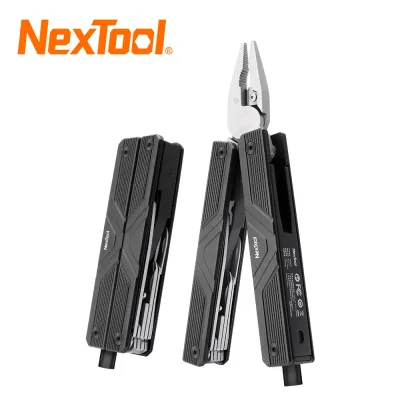
Prices are valid at publication and may change. Please refer to the product page for the latest price.
Before purchasing, always verify the key specifications printed on the product packaging or user manual. Pay close attention to the maximum lumen output, the battery capacity measured in milliampere-hours (mAh), and the charging interface. These metrics dictate how bright the light will be, how long it can run on a single charge, and how easily you can keep it powered using standard household accessories.
Because of its compact form factor, this device serves beautifully as a supplementary light source. It is ideal for keeping in a bedroom drawer or near your main entrance for immediate access. However, if your goal is to illuminate an entire multi-room flat for an extended period, you should pair it with dedicated, wide-angle area lights.
Understanding Emergency Lighting Needs in HDB Flats
Singapore HDB flats feature distinct architectural layouts, ranging from compact two-room units to spacious five-room flats and executive maisonettes. These homes often contain long, windowless central corridors, enclosed kitchens, and heavy concrete household shelters. When a power failure occurs, these interior spaces lose all natural light instantly, creating immediate navigation hazards.

An effective emergency lighting strategy must address two distinct visual requirements: wide-area ambient lighting and targeted task lighting. Ambient lighting prevents panic and allows family members to move safely between rooms without tripping over furniture. Task lighting, on the other hand, provides a focused beam to help you perform specific, critical actions in the dark.
Consider the immediate steps you must take during a sudden blackout. Your first priority is typically to locate your distribution board (DB box) to check if a localized circuit breaker has tripped. This task requires a reliable, directional light source that you can aim directly at the switches while keeping your hands relatively free to safely reset the breakers.
Furthermore, because a utility-side power outage disables all standard wall sockets, your emergency lights must rely entirely on independent power sources. Rechargeable lithium-ion batteries are the modern standard for these devices. Having a light that charges via a standard USB interface is highly advantageous, as it allows you to replenish the battery using portable power banks if the outage lasts longer than expected.
Evaluating the Nextool Gemini Against HDB Scenarios
When evaluating the NexTool Gemini for your flat, start by analyzing how its lumen rating translates to real-world coverage. Lumens measure the total light output; a lower setting of 50 to 100 lumens is perfect for reading a DB box label or navigating a narrow hallway without blinding yourself. Higher lumen settings are useful for bouncing light off a white ceiling to create soft, indirect ambient illumination in a small bedroom.
Next, examine the beam angle and light distribution specifications of the device. A highly focused spotlight beam is excellent for searching or walking through dark corridors because it throws light over a long distance. However, for general room illumination, a wider, more diffused beam is far more comfortable and effective at reducing harsh shadows.
Battery runtime is another critical factor that you must cross-reference with typical Singapore power restoration times. Most localized HDB outages are resolved within one to two hours, meaning your emergency light should comfortably exceed this duration on its medium brightness setting. Always check the manufacturer’s runtime specifications to ensure the battery does not drain too quickly on the higher, more power-intensive modes.
The physical design and portability of the device also dictate its utility during a crisis. A lightweight, cylindrical body is easy for children or elderly family members to hold securely. You should also verify if the device features flat sides to prevent it from rolling off tables, or if it includes a magnetic base or hanging loop that allows for hands-free placement on metal surfaces or doors.
Strategic Placement and Maintenance for HDB Living
An emergency light is only effective if you can locate it instantly when the lights go out. The most logical storage location in an HDB flat is directly adjacent to your main entrance or mounted right next to your DB box. This ensures that anyone entering the home or attempting to check the breakers can grab the light immediately without searching through dark drawers.
Avoid storing rechargeable emergency lights in areas subject to extreme temperature fluctuations or high humidity, such as directly next to kitchen stoves or inside damp bathroom cabinets. Moisture and excessive heat can degrade the internal lithium-ion battery, shorten its overall lifespan, and potentially damage the sensitive electronic control circuits.
Because rechargeable batteries naturally lose their charge over time, you must establish a disciplined maintenance routine. Set a recurring reminder every three to six months to check the battery level of your device. Discharge the battery slightly and recharge it fully according to the manufacturer’s care instructions to keep the cells healthy and ready for unexpected emergencies.
Safety boundaries must also be observed during prolonged use. High-output portable lights can generate noticeable heat near the lens and body during extended operation. Always refer to the user manual regarding heat dissipation, and never leave an active light resting face-down on flammable materials like bedsheets, sofas, or paper documents.
When to Consider Dedicated Emergency Lights
While a compact, portable tool like the NexTool Gemini is incredibly versatile, it has physical limitations that prevent it from being a complete, standalone safety solution for larger households. If you live in a multi-generation four-room or five-room HDB flat, a single handheld light cannot safely cover multiple rooms simultaneously, leaving other family members in total darkness.
For comprehensive home safety, consider integrating dedicated plug-in emergency lights into your plan. These specialized fixtures remain plugged into wall sockets and automatically illuminate the moment they detect a loss of mains power. Placing these in high-traffic areas like the living room or hallway ensures immediate, hands-free safety coverage while you locate your portable lights.
This multi-tiered approach is especially crucial for households with elderly residents, young children, or individuals with mobility challenges. Older eyes require significantly more light to navigate safely and avoid falls, making permanent, wide-area emergency fixtures a necessity. Portable lights can then be reserved for targeted tasks, such as checking on family members or retrieving emergency supplies.
Frequently Asked Questions (FAQ)
Can the Nextool Gemini be used while it is charging?
To determine if the NexTool Gemini supports pass-through charging, you must consult the official user manual supplied by the manufacturer. Some portable rechargeable lights disable high-output modes or shut down entirely during charging to prevent excessive heat buildup. If the manufacturer does permit simultaneous charging and operation, always ensure the device is placed in a well-ventilated area, away from insulating fabrics, to mitigate any risk of thermal stress on the internal battery.
How long should an emergency light last during a typical HDB blackout?
Because Singapore’s electrical grid is highly reliable, most residential power outages are localized incidents that are typically resolved within one to two hours. To ensure an adequate safety margin, your primary emergency light should be capable of operating continuously for at least three to four hours on a usable, medium-brightness setting. You can verify this capability by checking the power consumption label on your device; dividing the total battery capacity by the power draw of your preferred mode will give you a realistic estimate of its runtime.
Community discussion
Share your experience or ask a question. Comments are reviewed before publication.