
When a sudden power outage or circuit breaker trip plunges your Singapore HDB flat into complete darkness, having a reliable light source becomes an immediate priority. The Nextorch TA70 is frequently discussed in emergency preparedness circles as a robust, high-performance option. However, deciding whether this tactical flashlight is the right fit for a compact, modern apartment requires looking beyond raw lumen numbers. While the nextorch ta70 offers exceptional build quality and impressive output, its tactical design means you must understand how to manage its intense beam to avoid blinding glare in close indoor quarters.
Core Lighting Needs for HDB Flats During Power Outages
Singapore’s Housing & Development Board (HDB) flats are designed to optimize space, typically featuring light-coloured walls, polished tiled floors, and white plaster ceilings. While these reflective surfaces help make living areas feel bright and airy during the day, they create unique challenges during a sudden blackout. If you switch on a high-intensity, long-throw tactical spotlight indoors, the concentrated beam will bounce off these pale surfaces. This intense reflection can cause severe glare, temporary night blindness, and eye strain, making it difficult to navigate safely.
Unlike outdoor search-and-rescue scenarios where a narrow, long-reaching beam is essential, indoor emergency lighting requires a completely different profile. For safe navigation through narrow hallways, locating the main distribution board (DB) box, or calming anxious children, you need soft, diffused, or highly adjustable illumination. A beam that can be dialed down to low-lumen levels allows you to read emergency instructions, prepare food, or move from room to room without dazzling yourself or your family members. In typical 3-room, 4-room, or 5-room HDB layouts, bedrooms are relatively compact, meaning a light source that is too bright will quickly overwhelm the space.
Products mentioned in this guide
![Nextorch TA70 Ultra-Slim EDC Tactical Flashlight [3500 Lumens I 220 Meters]](https://img.lazcdn.com/g/p/a2cc70fd54598842e96cb25a43da5499.jpg_400x400q80.jpg_.webp)
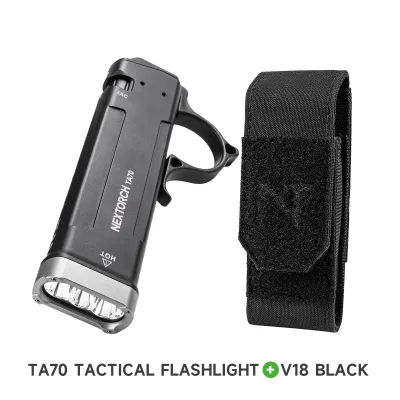
Prices are valid at publication and may change. Please refer to the product page for the latest price.
Modern HDB households are highly streamlined, relying heavily on standardized charging infrastructure. An emergency light that integrates seamlessly with your existing setup is far more practical than one requiring specialized chargers. Having a standard USB-C charging port ensures you can recharge the flashlight using the same wall adapters, cables, and portable power banks you use for your smartphone. Furthermore, space is always at a premium in compact apartments, meaning any emergency tool must have a small footprint so it can be stored discreetly in bedside drawers or a designated household emergency kit without adding clutter.
Evaluating the Nextorch TA70 for Compact Indoor Spaces
To determine if the Nextorch TA70 fits your HDB flat, you must first evaluate its brightness levels and beam characteristics. Tactical flashlights are engineered to project light over long distances, which means their default high settings are often too powerful for a small bedroom or living room. Before purchasing, verify the exact lumen steps and beam distance on the product packaging or the official user manual. When using the TA70 indoors, avoid pointing the beam directly at people or reflective surfaces. Instead, make use of its lower brightness modes, or practice “ceiling-bouncing”—pointing the light directly at the ceiling so the light scatters downward as a soft, ambient glow.

Additionally, note that tactical flashlights typically feature a cool-white color temperature, which maximizes visibility but can feel clinical or harsh indoors. Color temperature preference is highly subjective; if you prefer a warmer, softer atmosphere, you may need to rely more heavily on warm-tinted diffusers.
The physical size and weight of your emergency light play a major role in how easily you can access and handle it during a crisis. A compact, pocket-sized EDC (everyday carry) flashlight like the TA70 is highly advantageous because it takes up minimal space. It can sit permanently in a shallow bedside drawer, a kitchen cabinet, or a small pouch inside your household shelter. Its lightweight aluminum body ensures that anyone in the household, from teenagers to elderly relatives, can carry and operate it for extended periods without experiencing wrist fatigue.
Power reliability is the cornerstone of any emergency tool, making the battery and charging configuration a critical point of evaluation. Check whether your specific TA70 unit utilizes a built-in battery or a removable lithium-ion cell (such as a high-capacity 21700 or 18650 battery). Removable batteries offer the advantage of being replaceable once they reach the end of their lifespan, while built-in batteries simplify maintenance. Ensure the charging interface is a modern USB-C port, which allows you to top up the battery during a prolonged blackout using a standard portable power bank. Always verify the charging status using the flashlight’s built-in LED indicators before storing it away.
An emergency light is only useful if it can be operated quickly and intuitively in total darkness. When a power trip occurs, you do not want to struggle with complicated multi-button interfaces or complex programming sequences. Evaluate the switch design of the TA70, which typically features a tactical tail-switch or a side-switch. The interface should allow you to access a low-power, non-blinding mode immediately with a single press. Ensure that all family members are familiar with how to turn the light on, adjust the brightness, and lock the switch to prevent accidental activation while stored in a drawer.
Additionally, check the flashlight’s environmental protection ratings, such as its IPX water and dust resistance. While an indoor HDB flat is generally dry, a blackout might require you to navigate wet areas like bathrooms or kitchens. A certified IPX7 or IPX8 rating ensures that the flashlight will continue to function even if it is accidentally dropped into a filled sink or exposed to water splashes. Always verify these specifications on the official manufacturer documentation to ensure the light meets safety standards.
Practical Storage and Usage Tips for HDB Homes
Proper preparation means knowing exactly where your emergency tools are located before the lights go out. In an HDB flat, the most strategic location for your primary flashlight is near the main electrical DB box, which is commonly situated in the entryway, kitchen, or household shelter. Storing the Nextorch TA70 in a small, wall-mounted bracket or a dedicated shelf right next to this box ensures you can quickly reset a tripped circuit breaker. Additionally, keeping a secondary light in your master bedroom bedside drawer allows you to safely navigate your way to the DB box in the first place.
When dealing with a tripped circuit breaker, safety must always come first. Before touching the DB box, ensure your hands are completely dry, and use your flashlight to inspect the switches for any obvious signs of damage or burning. If you are unsure of how to reset the breakers safely, or if the power fails to restore after resetting, isolate the main power switch and contact a qualified licensed electrical worker (LEW) or your town council’s emergency services. Never attempt to force a breaker switch that repeatedly trips, as this indicates an active electrical fault.
Singapore’s tropical climate, characterized by high ambient temperatures and humidity, requires careful attention when storing electronic devices with lithium-ion batteries. High heat can accelerate battery self-discharge and degrade the internal chemistry over time. To maintain battery health, store your flashlight in a cool, dry, and well-ventilated spot inside your home. Strictly follow the manufacturer’s guidelines regarding storage charge levels—many lithium-ion batteries are best stored at approximately 50% to 70% capacity if left unused for long periods. Never store the flashlight in hot, unventilated spaces, such as inside a car parked in an unsheltered HDB car park, or near kitchen appliances that generate heat.
Because tactical flashlights naturally produce a focused, directional beam, you may want to modify the light output for better indoor usability. Pointing the flashlight straight up at a white plaster ceiling is the simplest and most effective way to diffuse the beam, instantly transforming the directional throw into comfortable, indirect room lighting. If you require more localized diffusion, check if the manufacturer offers compatible soft-filter accessories or silicone diffuser cones. Do not attempt to make DIY diffusers using flammable or meltable materials like paper cups, tissues, or thin plastic bags over the lens; high-output LEDs can generate significant heat on high settings, creating a potential fire hazard or damaging the flashlight.
Frequently Asked Questions (FAQ)
Can a tactical EDC flashlight replace a dedicated room lantern?
A tactical EDC flashlight like the Nextorch TA70 and a dedicated room lantern serve two distinct purposes during an emergency. A lantern is designed to provide 360-degree, omnidirectional ambient lighting, making it ideal for hands-free use when lighting up a dining table or a shared living space for hours. A tactical flashlight is highly directional, optimized for searching, navigating dark corridors, or identifying specific hazards. While you can use ceiling-bouncing or diffuser attachments to make a tactical light function like a temporary lantern, a dedicated lantern remains more comfortable for extended, stationary room illumination. For comprehensive HDB emergency preparedness, the ideal setup combines a portable tactical light for navigation and a dedicated lantern for ambient room lighting.
How should I maintain the battery of my emergency flashlight?
Maintaining the lithium-ion battery in your emergency flashlight ensures it will work reliably when you need it most. Establish a routine to check the battery charge level every three to six months, recharging it as necessary to prevent the battery from discharging completely. Periodically clean the electrical contacts on both the battery and the flashlight tail-cap using a dry, lint-free microfiber cloth to remove any dust or oxidation caused by Singapore’s humid climate. Always consult the specific Nextorch TA70 user manual for exact maintenance schedules, recommended storage charge percentages, and safety warnings regarding battery replacement. If you notice any swelling, leakage, unusual heat during charging, or if the battery fails to hold a charge, stop using it immediately and consult a qualified professional or the manufacturer for a replacement.
Community discussion
Share your experience or ask a question. Comments are reviewed before publication.