
When a sudden power outage plunges your Housing & Development Board (HDB) flat into darkness, the immediate challenge is navigating your home safely to locate the distribution board (DB box) or secure a primary light source. The Nitecore TIKI, an ultra-compact keychain flashlight, is a highly practical first-line emergency tool for these exact scenarios. While it cannot replace a heavy-duty lantern for illuminating an entire room for hours, its immediate accessibility, surprisingly high output, and versatile auxiliary modes make it an invaluable bridge tool during a blackout.
To understand whether this tiny device deserves a spot on your keychain or in your home emergency kit, it is essential to evaluate how its performance, battery life, and physical design align with the unique layout and challenges of a typical Singaporean household.
HDB Power Outage Scenarios and Core Lighting Needs
Power outages in Singapore HDB flats are rarely prolonged grid failures, but they do occur due to localized electrical faults, tripped circuit breakers, or scheduled substation maintenance. When the lights go out, the interior of a modern HDB flat can become exceptionally dark, particularly in windowless areas such as bathrooms, long central corridors, and the household shelter (often utilized as a storeroom). The immediate priority in these situations is safety: you must be able to move through the flat without tripping over furniture, toys, or household items, and navigate directly to your DB box to inspect the breakers.
Products mentioned in this guide
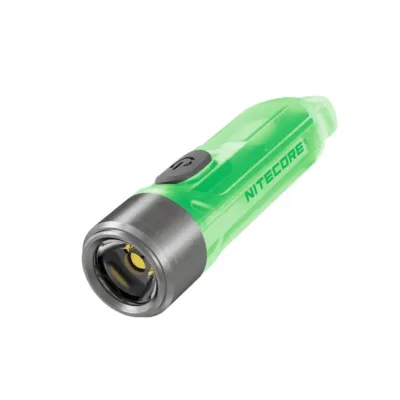
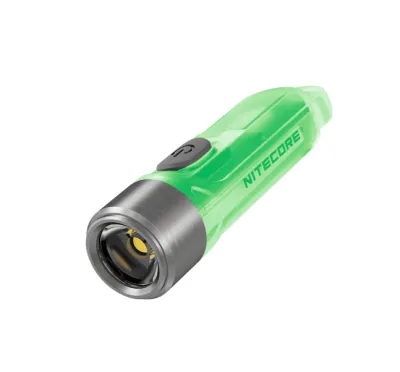
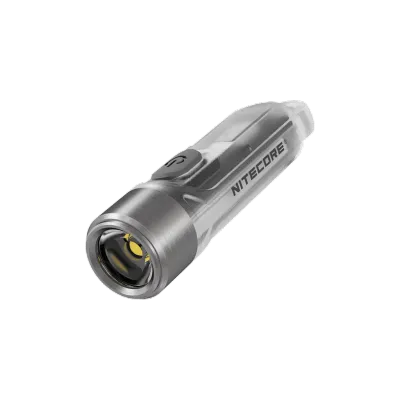
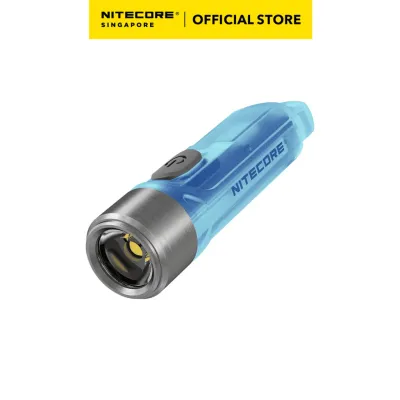
Prices are valid at publication and may change. Please refer to the product page for the latest price.
Checking the DB box requires a light source that is immediately accessible and leaves at least one of your hands free to operate the switches. The DB box is typically located near the main entryway or tucked inside the household shelter, areas that receive almost no ambient outdoor light from windows. If the outage occurs at night, navigating these tight spaces without a reliable light source poses a genuine tripping hazard.
Furthermore, if the blackout affects your entire block, you may need to navigate common corridors, lift lobbies, and emergency stairwells. Because HDB lifts automatically shut down or park at the nearest floor during a power failure, descending several flights of stairs requires a dependable, portable light with a beam wide enough to illuminate steps and landings clearly. A personal task light like the Nitecore TIKI is designed specifically for these short-range, high-mobility tasks, serving a very different purpose than a stationary, whole-room area light.
Illumination Performance: Can the TIKI Light Up an HDB Flat?
The Nitecore TIKI utilizes a primary OSRAM P8 LED capable of emitting up to 300 lumens of light, which is remarkably powerful for a device weighing approximately 12 grams. In a standard HDB flat, 300 lumens is more than enough to completely illuminate a long hallway, a service yard, or the deep recesses of a household shelter. The beam profile is projected through a total reflective optic lens, creating a balanced blend of a central hotspot for distance and a wide, gentle spill that illuminates your peripheral vision as you walk.

To use the flashlight effectively during an outage, you should familiarize yourself with its multiple output modes. The manufacturer-specified High mode (300 lumens) is ideal for high-intensity tasks, such as inspecting the fine print on circuit breakers or searching for dropped items under heavy furniture. However, for general navigation through a dark bedroom or living room, the Mid mode (60 lumens) or Low mode (15 lumens) is far more appropriate, providing sufficient visibility without causing harsh reflections off light-colored HDB walls or polished floor tiles.
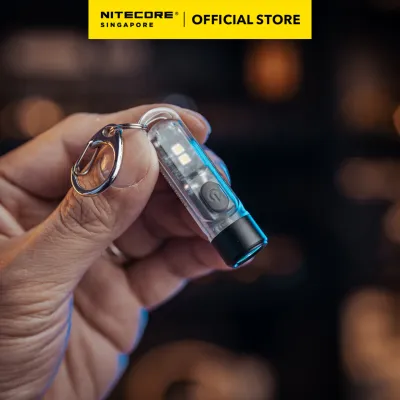
Beyond the primary beam, the standard TIKI features two auxiliary lights built into the side of its translucent body: a high color rendering index (CRI) white LED and an ultraviolet (UV) LED. The auxiliary high CRI light is particularly useful during a blackout; it emits a warm, diffused glow that mimics natural sunlight, making it excellent for close-up reading, checking medicine labels, or examining color-coded wiring in your DB box without blinding glare. It is crucial to remember, however, that the TIKI is a directional task light; it is not designed to bounce light off high ceilings to illuminate a large, open-concept living room for an entire family.
Battery Runtime and Keeping the TIKI Charged for Emergencies
The TIKI is powered by a built-in, rechargeable 130mAh lithium-ion battery. Because the battery is compact, managing your brightness levels is key to ensuring the light lasts through a prolonged outage. According to manufacturer specifications, the runtime scales dramatically across different output levels:
- High Mode (300 Lumens): Approximately 30 minutes of continuous use.
- Mid Mode (60 Lumens): Approximately 1 hour of continuous use.
- Low Mode (15 Lumens): Approximately 4 hours of continuous use.
- Ultralow Mode (1 Lumen): Up to 40 hours of continuous use.
For most HDB power outages, which are typically resolved within one to two hours, running the TIKI on its Low or Mid mode provides the perfect balance of usable light and reliable runtime. Utilizing the auxiliary high CRI reading light also offers an extended runtime of several hours, making it a highly efficient option for stationary tasks or keeping a small room softly lit.
Keeping the device ready for an emergency requires a proactive charging strategy. The TIKI features a built-in charging port protected by a rubber cover to prevent dust and moisture ingress; depending on the specific product generation, this port will be either Micro-USB or USB-C. Because lithium-ion batteries naturally experience slow self-discharge over time, you should establish a routine to top up the flashlight once every three to four months. Integrating this check into your seasonal household cleaning or placing the TIKI on your daily smartphone charging station overnight ensures that the battery is fully primed when a blackout occurs.
Strategic Storage: Finding a Keychain Light in the Dark
The primary drawback of an ultra-compact flashlight is that its small size makes it incredibly easy to misplace. If a power outage occurs suddenly at 2:00 AM, searching through cluttered desk drawers, storage boxes, or deep cabinet shelves in pitch-black conditions is frustrating and potentially dangerous. To make the TIKI a practical emergency tool, you must store it in a highly strategic, easily accessible location.
One highly effective strategy is to attach the TIKI directly to your primary set of house keys, which are naturally kept in a consistent, memorable location near your entryway. Alternatively, you can mount a small magnetic hook to the metal frame of your DB box door and hang the flashlight there. This creates a dedicated “emergency station” that every member of the household can locate by muscle memory alone, even in complete darkness.
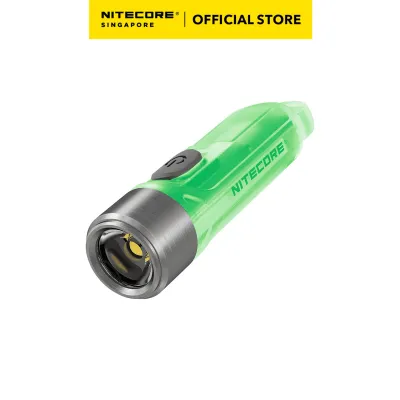
If you choose the version of the TIKI with a phosphorescent, glow-in-the-dark (GITD) body, locating the light becomes significantly easier. When exposed to ambient household light during the day, the body shell absorbs energy and emits a soft, green glow in the dark for a period after the lights go out. If you store the flashlight on a bedside table or an open key tray, this faint glow serves as a visual beacon, allowing you to grab the light instantly without fumbling.
Everyday Carry (EDC) Utility Beyond Power Outages
One of the greatest advantages of a keychain-sized flashlight over a traditional, heavy emergency lantern is its versatility in daily life. Emergency equipment that is stored away in a closet often suffers from neglected maintenance, dead batteries, or corrosion. Because the TIKI is small enough to carry in your pocket or bag every day, it transitions naturally from an emergency backup to a highly useful daily tool.
In Singapore, daily utility scenarios for a compact light are abundant. You can use it to find keyholes in dimly lit HDB common corridors, search for dropped items under car seats, navigate unlit pathways in neighborhood parks during evening walks, or inspect dark corners behind home appliances. Using the flashlight regularly ensures that you are always aware of its battery status and operational condition.
This continuous integration into your daily routine eliminates the risk of “drawer death”—the common phenomenon where emergency gear fails to work when needed because it has sat neglected for years. By carrying and using the TIKI as part of your everyday carry (EDC) setup, you guarantee that a fully functional, familiar light source is always within arm’s reach the moment an unexpected blackout occurs.
Building a Complete Emergency Lighting Setup for Your Flat
While the Nitecore TIKI is an exceptional tool for immediate personal navigation and task work, it should be viewed as the first line of defense in a broader, layered household emergency plan. Relying solely on a keychain light during a multi-hour blackout can lead to hand fatigue and limited spatial awareness for other family members. To build a robust setup, you should pair the TIKI with complementary lighting tools designed for different roles:
- A Dedicated LED Lantern: Keep a high-capacity, stable LED lantern in your living room or kitchen. This provides hands-free, 360-degree ambient light to illuminate common areas so your family can gather comfortably.
- A Quality Headlamp: Store a headlamp inside or directly next to your DB box. If you need to perform hands-free troubleshooting, such as resetting switches or inspecting wiring, a headlamp keeps the light focused directly on your line of sight while leaving both hands completely free.
- A High-Capacity Power Bank: Keep a charged power bank in your emergency kit to recharge your portable devices, including your phone and your TIKI, if an outage extends overnight.
When dealing with electrical issues in your flat, safety must always come first. If a power outage is caused by a tripped circuit breaker, check your household appliances for signs of damage or overheating before attempting to reset the switch. If a breaker immediately trips again after you reset it, do not force it to stay open. This indicates a persistent electrical fault or short circuit. For any complex electrical troubleshooting, fixed wiring modifications, or persistent breaker issues, always isolate the power and contact a licensed electrical worker (LEW) registered in Singapore to resolve the issue safely.
To maintain your household readiness, establish a simple quarterly checklist. Every three months, test all emergency lights, verify that they are in their designated storage spots, check that their charging ports are clean, and top up their batteries to ensure your household is always prepared for a sudden power failure.
Frequently Asked Questions (FAQ)
Is the Nitecore TIKI bright enough to light up an entire HDB living room?
No, the Nitecore TIKI is not designed to serve as a primary area light for a large room. While its 300-lumen High mode is exceptionally bright, its compact optic lens projects a directional beam meant for personal navigation and close-up tasks. Attempting to illuminate an entire living room with the TIKI will result in rapid battery depletion (approximately 30 minutes on High) and inadequate ambient light. For whole-room illumination, you should use a dedicated LED lantern or a specialized area light designed to cast a wide, 360-degree diffused glow.
How should I store a keychain flashlight so I can find it in the dark?
To ensure you can locate your flashlight instantly during a sudden blackout, avoid storing it loose in deep drawers, cabinets, or bags. Instead, establish a dedicated, consistent storage spot that you can find by feel or muscle memory. Excellent options include attaching the flashlight to your daily house keys kept in an entryway tray, hanging it from a magnetic hook directly on your metal DB box door, or keeping it on a bedside table. If you use the glow-in-the-dark (GITD) version of the TIKI, keeping it in an area that receives ambient light during the day will allow its phosphorescent body to emit a soft glow, making it highly visible when the lights go out.
Community discussion
Share your experience or ask a question. Comments are reviewed before publication.