
When a sudden power outage plunges a home into darkness, having an immediate, reliable light source is essential for safety and peace of mind. In a typical Singapore household, a compact keychain light like the Nitecore TIP3 can serve as an incredibly practical first line of defense. While it is too small to illuminate an entire multi-room flat for hours on end, its portability, fast deployment, and surprising brightness make it an excellent tool for navigating dark rooms, locating emergency supplies, and safely reaching the main electrical distribution board.
To determine whether this specific tool fits your household’s emergency plan, it helps to understand the unique layout of local apartments and how portable lighting behaves within concrete walls. Rather than relying on a single, heavy lantern stored in a distant closet, a layered lighting strategy that begins with a highly accessible keychain light often proves to be the most effective way to handle unexpected blackouts.
Understanding the Lighting Needs of an HDB Blackout
Singapore’s public housing flats, ranging from compact 3-room units to spacious 5-room apartments and executive maisonettes, feature distinct architectural layouts that influence how light travels. Most modern flats are constructed with thick, structural concrete walls that segment the home into distinct zones. Because of this compartmentalization, a single stationary light source placed in the living room cannot easily penetrate into bedrooms, bathrooms, or the service yard, leaving critical pathways in complete darkness during a power failure.
Products mentioned in this guide
Prices are valid at publication and may change. Please refer to the product page for the latest price.
Power outages in local residential estates are generally rare and highly localized, often caused by a minor electrical trip within the unit itself rather than a widespread grid failure. These trips typically occur when a faulty household appliance overloads the circuit, causing the Earth Leakage Circuit Breaker (ELCB) in the main Distribution Board (DB) box to shut off. Resolving this requires immediate, safe navigation through the home to locate the DB box, which is often situated near the entryway or inside a household shelter.
During these sudden blackouts, the immediate hazard is physical navigation. Tripping over loose items, toys, or furniture in the dark poses a significant risk, particularly in households with elderly family members or young children. Having a light source that can be activated instantly prevents these physical accidents and allows the homeowner to assess the situation calmly without fumbling in the dark.
For safety reasons, modern emergency planning strongly discourages the use of open-flame candles in high-density high-rise housing. Enclosed spaces with minimal natural ventilation can quickly become fire hazards if a candle is knocked over or left unattended. Battery-operated or rechargeable LED lights are the standard recommendation for safe, flame-free illumination that can be moved from room to room without any risk of starting a fire.
An emergency light is only useful if you can find it immediately when the power cuts out. If your primary flashlight is buried deep inside a utility closet or a cluttered toolbox, finding it in pitch-black conditions becomes a hazardous task in itself. A small, pocket-sized light that remains on your person, attached to your daily keys, or stored in a highly predictable location ensures that you are never left searching in the dark.
Evaluating the Nitecore TIP3 for Indoor Emergency Use
When considering the nitecore tip3 for household emergency duties, the first step is to evaluate its brightness and beam pattern against the physical dimensions of your flat. You should check the manufacturer’s official specifications on the product packaging to verify the maximum lumen output and the designed beam angle. In an indoor setting, an extremely narrow, far-reaching spotlight beam can create harsh reflections and glaring hot spots on white concrete walls, which can temporarily impair your night vision. A wider, more diffused flood beam is far more practical for indoor use, as it softly illuminates a broader area, making it easier to see obstacles in your immediate path.

Compact flashlights face an inherent physical limitation regarding thermal management and battery capacity. High-output modes generate substantial heat within the small metal body and drain the rechargeable battery rapidly. For emergency navigation inside a flat, you rarely need maximum brightness. It is highly recommended to check the manufacturer’s manual for the runtime specifications on the medium and low settings. Utilizing these lower modes not only prevents the aluminum chassis from becoming uncomfortably warm to the touch but also extends the battery life significantly, ensuring you have continuous light for several hours if needed.
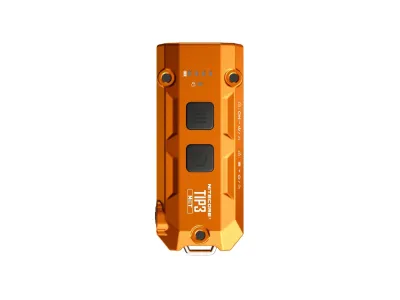
An often-overlooked factor in emergency gear is the physical user interface. When the lights go out, you must be able to operate the device entirely by feel. Examine the button layout of the light to ensure the switches are raised, tactile, and easily distinguishable from the rest of the body. Additionally, verify if the device features a reliable lockout mode. A lockout function is essential for preventing the light from accidentally turning on while stored in a tight drawer or a crowded pocket, which would leave the battery completely drained when an actual emergency arises.
Household tools are frequently subjected to accidental drops, especially when handled in moments of surprise or confusion. The durability of the outer casing is a key factor to consider. HDB flats typically feature hard flooring materials such as homogeneous tiles, vinyl, or polished parquet. A plastic keychain light can easily crack or shatter upon impact with these surfaces, whereas a light constructed with an anodized aluminum alloy chassis offers robust drop resistance, ensuring the internal electronics remain functional after a fall.
Charging, Storage, and Readiness in an HDB Setting
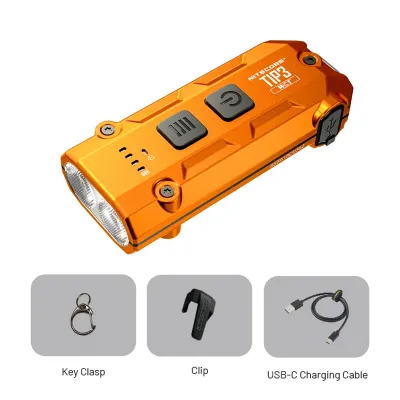
Modern rechargeable lights offer significant advantages over older models that rely on disposable alkaline batteries, which are prone to leaking and corroding over time. The inclusion of a USB-C charging port allows the light to be recharged using the same cables and wall adapters already used for smartphones and tablets in most households. This universal compatibility makes it incredibly simple to keep the light powered up without needing to search for specialized charging accessories.
Because power trips are infrequent, an emergency light may sit unused for months at a time. Lithium-ion batteries naturally lose charge slowly when stored, and keeping them completely depleted for extended periods can permanently damage their capacity. To maintain battery health, establish a simple maintenance routine. Check the battery level of your light every three to six months, and top it up to ensure it remains fully charged and ready for action.
Strategic placement is the key to ensuring your light is accessible when you need it most. Rather than storing the light in a random drawer, choose a highly visible, memorable location that is central to your home’s layout. Excellent storage spots include:
- The Entryway Console: Placed right next to your daily house keys so it is always within reach when entering or leaving the flat.
- Beside the DB Box: Stored on a small hook or shelf directly adjacent to your electrical panel, allowing you to reset tripped breakers immediately.
- The Bedside Table: Kept within arm's reach of your bed, ensuring you can safely navigate out of the bedroom if a power failure occurs in the middle of the night.
Beyond Blackouts: Everyday Utility and Cross-Scenario Value
One of the greatest strengths of a high-quality keychain light is that it does not have to sit idle between power outages. Its compact size makes it incredibly useful for common daily tasks around the flat. Whether you are inspecting a dark corner behind the washing machine in the service yard, looking for dropped items under the sofa, or checking the plumbing connections under the kitchen sink, a small, powerful light is often much easier to maneuver than a bulky smartphone.
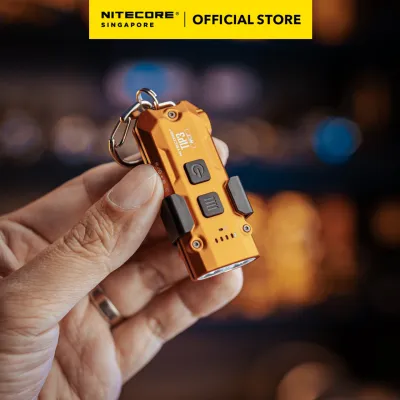
Outside the home, the lightweight design allows the light to serve as a constant companion on your daily commute or evening activities. It attaches easily to a keyring or a backpack strap without adding noticeable bulk. If you find yourself walking along dimly lit park connectors, navigating dark stairwells, or searching for items in a poorly lit vehicle at night, having a dedicated light source readily available provides an extra layer of personal safety.
Ultimately, the nitecore tip3 should be viewed as a vital component of a layered household emergency plan rather than a complete, single-source solution. It excels as a personal navigation tool that you can grab instantly to guide yourself through the initial moments of darkness. For extended blackouts where you need to illuminate an entire room so the family can dine or read comfortably, you should complement this compact light with a dedicated, high-capacity area lantern that casts light in a 360-degree pattern.
Frequently Asked Questions (FAQ)
Can a compact keychain flashlight replace a dedicated emergency lantern?
A compact keychain flashlight is designed for directional, task-oriented lighting and personal navigation, making it ideal for moving safely through dark hallways or inspecting specific areas. However, it cannot fully replace a dedicated emergency lantern, which is designed to provide 360-degree ambient light to illuminate an entire room. For the best emergency preparedness, use a keychain light as your immediate personal locator, and use a larger lantern for comfortable, hands-free group illumination during long outages.
Is it safe to leave the Nitecore TIP3 plugged in all the time?
To ensure safety and preserve the long-term health of the built-in lithium-ion battery, it is generally recommended to unplug the device once it reaches a full charge. While modern rechargeable lights typically include built-in overcharge protection circuits to prevent safety hazards, leaving any lithium-ion battery continuously connected to a live charger can accelerate battery degradation over time. Always consult the manufacturer’s user manual for specific charging instructions and safety guidelines regarding your device.
Community discussion
Share your experience or ask a question. Comments are reviewed before publication.