
Standard HDB flats in Singapore typically feature a structural ceiling height of 2.6 metres. When planning your home renovation or upgrading your light fixtures, managing this vertical clearance is essential to prevent your living spaces from feeling cramped or visually cluttered. The Philips Meson ceiling light series is a popular option among homeowners due to its clean aesthetic and low-profile design. However, determining whether this specific fixture is suitable for your 2.6m ceiling requires a careful evaluation of its physical dimensions, light dispersion characteristics, and the specific installation environment of your flat. By understanding how to measure your true ceiling clearance and match the fixture’s specifications to your room layouts, you can achieve a bright, open, and comfortable home environment.
Understanding the 2.6m HDB Ceiling Constraint
To accurately assess if a light fixture will fit comfortably, you must first calculate the true net height of your rooms. A standard HDB flat starts with a 2.6-metre concrete slab-to-slab height. However, this number decreases once flooring is installed. For instance, applying cement screed followed by homogeneous tiles or thick luxury vinyl tiles (LVT) can reduce your vertical clearance by 10mm to 30mm. If you choose to install a false ceiling to conceal electrical conduits or air conditioning pipes, your ceiling height can drop by another 100mm to 150mm, leaving you with a net clearance of approximately 2.4 to 2.45 metres.
In these low-clearance scenarios, the design of your light fixture plays a critical role in spatial perception. Semi-flush-mount or hanging pendant lights that protrude significantly into the room create visual obstacles. They draw the eye downward, making the ceiling feel lower and the room more confined. Furthermore, low-hanging fixtures pose a physical hazard for taller occupants. To maintain an open, airy feel, interior designers generally recommend a maximum fixture drop or thickness of no more than 50mm to 75mm for ceilings under 2.6 metres. This ensures ample headroom and allows light to disperse closer to the ceiling plane, which visually expands the room.
Products mentioned in this guide
![[Local Set] [3 Year Warranty] Philips Meson LED Downlight Ceiling Light 9W/13W Round/Square [Bundle Deal Available]](https://img.lazcdn.com/g/p/d8d02051d9b113c0010c4b1a40161081.png_400x400q80.png_.webp)
![[Climate Voucher] PHILIPS 3 Color Meson LED Downlight 5.5W 9W 13W 17W Tri Tone Scene Switch for False Ceiling Local Warranty](https://img.lazcdn.com/g/p/4f25f6fa6bf4fcf754b08b97b4102da3.jpg_400x400q80.jpg_.webp)
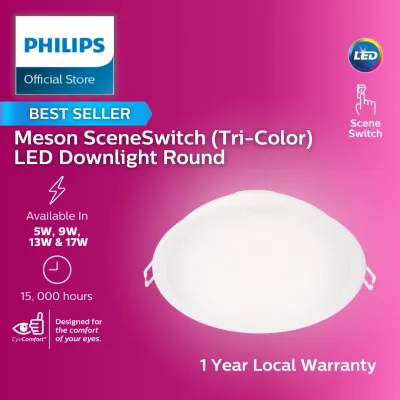
![[Climate Voucher] PHILIPS Meson Scene Switch Tri Color 3 Tone Changeable LED Downlight 5W 9W 13W 17W SceneSwitch](https://img.lazcdn.com/g/p/4750beeb678d6132dca764e882152bd0.jpg_400x400q80.jpg_.webp)
Prices are valid at publication and may change. Please refer to the product page for the latest price.
Evaluating the Philips Meson Physical Profile
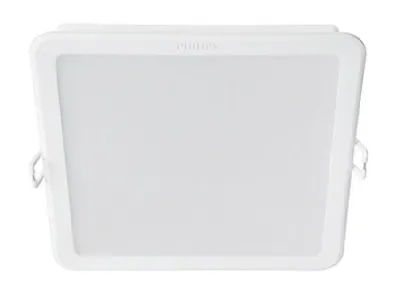
The Philips Meson series is designed with a slim profile, making it a strong candidate for low-ceiling HDB flats, but you must verify the exact specifications of the model you select. This product line includes both recessed downlights and surface-mounted ceiling lights. If your HDB flat retains its original concrete ceiling without a false ceiling, you cannot install recessed models, as they require a cavity behind the plasterboard. Instead, you must opt for the surface-mounted Meson variants.

Before purchasing, check the manufacturer’s specification sheet for the exact height, outer diameter, and base plate dimensions of the chosen model. The surface-mounted Meson typically features an ultra-thin profile, often measuring under 40mm in thickness. This minimal protrusion allows the fixture to sit almost flush against the concrete ceiling, minimizing its visual weight. A bulky, dark-colored fixture with a thick bezel will draw the eye upward and emphasize the low ceiling. In contrast, the Meson’s clean white bezel and flat, frosted diffuser help it blend seamlessly with standard white-painted HDB ceilings. By matching the fixture’s color to your ceiling paint, the boundary between the light and the ceiling is softened, making the room feel taller and less cluttered compared to traditional, bulky dome lights.
Light Dispersion and Room Size Matching
Achieving a comfortable living environment goes beyond physical clearance; you must also ensure the light output and beam spread are appropriate for your room sizes. HDB flats feature diverse room layouts, from compact bomb shelters to open-plan living areas. To avoid under-illuminating or over-illuminating these spaces, you must match the fixture’s lumen output and wattage to the specific square footage. As a general guideline, utility rooms and corridors may only require a single low-wattage fixture, while a standard HDB master bedroom or living room will require either a higher-wattage central fixture or multiple distributed light sources to achieve adequate lux levels.
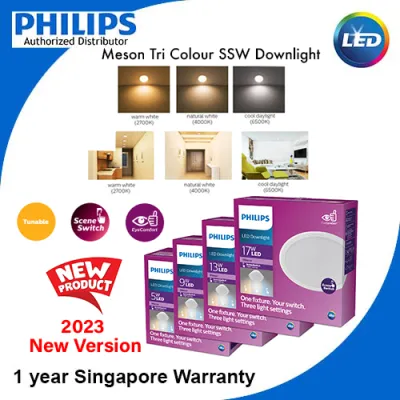
The color temperature you select also plays a significant role in how spacious a room feels, though this remains a matter of personal preference. The Philips Meson is commonly available in warm white (3000K), cool white (4000K), and cool daylight (6500K). Cooler color temperatures, such as cool white and daylight, tend to make spaces feel more open, alert, and clean, which can be highly beneficial in compact kitchens or study rooms. Warm white, on the other hand, creates a cozy, relaxing ambiance suitable for bedrooms, though it can make a low-ceiling room feel slightly more enclosed if the walls are painted in dark shades.
Additionally, you should verify the diffuser’s light scattering properties. The Meson features an integrated frosted diffuser designed to distribute light evenly across a wide beam angle. This wide dispersion is crucial for low ceilings, as it helps cast light horizontally toward the upper corners of the walls, eliminating harsh shadows and glaring hotspots that can make a room feel small.
HDB Installation and Electrical Checks
Before mounting any new fixture onto your HDB ceiling, you must perform several critical safety and compatibility checks. Begin by inspecting the existing ceiling junction box, the condition of the wiring, and the alignment of the mounting holes. Standard HDB concrete ceilings often feature pre-cast metal or plastic conduit boxes embedded in the concrete. You must verify that the mounting bracket of the Philips Meson aligns with the screw holes of your existing ceiling box, or prepare to drill new mounting holes if required.
When drilling into a concrete ceiling, always verify the structural integrity of the concrete and ensure you are using the correct masonry drill bits, wall plugs, and screws as specified in the manufacturer’s installation manual. Be extremely cautious not to drill into embedded electrical conduits or structural rebars.
Electrical safety is paramount when dealing with fixed wiring. Before unboxing or installing the fixture, isolate the power supply at your home’s main distribution board (DB box) by switching off the corresponding circuit breaker. Verify that the power is completely off using a reliable voltage tester. If your existing ceiling wiring is degraded, lacks an earth wire, or if the installation requires working at height on an unstable ladder, do not attempt a DIY installation. In Singapore, fixed electrical wiring installations should be carried out by a licensed electrical worker (LEW) or a qualified professional to ensure compliance with local safety standards and to prevent fire or shock hazards.
Common Sizing and Placement Mistakes to Avoid
To ensure a successful lighting upgrade, homeowners should avoid several common design and functional mistakes when selecting and positioning ceiling lights. One frequent error is choosing an oversized fixture diameter for a small space. While a large light might seem like it offers better illumination, an excessively wide fixture in a narrow HDB corridor or a small bedroom disrupts the visual proportions of the room, making the ceiling appear lower and the walls feel closer together.
Another common oversight is failing to measure the footprint of the old light fixture before purchasing a replacement. When you remove an old, bulky ceiling light, it often leaves behind a ring of discolored paint, dust outlines, or old screw holes. If the base plate of your new Philips Meson is smaller than the footprint of the previous fixture, these unsightly marks will remain visible, requiring tedious ceiling patching, sanding, and repainting. Always measure the old fixture’s footprint and compare it with the new light’s dimensions to ensure complete coverage.
Finally, pay close attention to the installation environment. Standard ceiling lights are not universally rated for wet or highly humid areas. If you plan to install a fixture in an HDB kitchen or bathroom where steam and moisture accumulate, you must verify the IP (Ingress Protection) rating on the product label. Installing a light with inadequate moisture protection in these areas can lead to internal corrosion, short circuits, and premature fixture failure.
Frequently Asked Questions (FAQ)
Can I use a dimmer switch with the Philips Meson?
Standard models of the Philips Meson series are typically equipped with non-dimmable integrated LED drivers. Connecting a non-dimmable LED fixture to a standard wall dimmer switch can lead to severe performance issues, including persistent flickering, audible buzzing, reduced lifespan, or immediate damage to the internal driver. If you require dimming capabilities to adjust the mood of your room, you must check the product packaging, specification sheet, or official product label for explicit dimming compatibility. Do not attempt to install a dimmer switch unless the manufacturer clearly states that the specific model supports dimming, and always use a compatible dimmer switch model recommended by the manufacturer.
How do I clean the diffuser without causing yellowing or scratches?
Maintaining the appearance and light output of your ceiling light requires gentle, regular cleaning. The diffuser of the Philips Meson is typically made of lightweight polycarbonate or acrylic, which can scratch easily if wiped with abrasive materials. To clean the diffuser safely, first turn off the power and allow the fixture to cool completely. Use a clean, dry, or slightly damp microfiber cloth to gently wipe away dust and cobwebs. If there are stubborn spots, you may use a mild, highly diluted dish soap solution on the cloth, ensuring no liquid enters the internal electrical components. Never use harsh chemical solvents, alcohol, benzene, or abrasive scrubbing pads, as these substances can chemically react with the plastic diffuser, causing it to yellow, become brittle, or develop micro-scratches that permanently degrade light transmission.

Community discussion
Share your experience or ask a question. Comments are reviewed before publication.