
Determining whether the Philips Skylight is suitable for your Housing & Development Board (HDB) flat requires balancing physical clearance with your home’s lighting needs. With a standard HDB ceiling height of 2.6 meters, every centimeter of vertical space impacts how spacious a room feels. While slim, flush-mounted ceiling lights generally perform well in these compact layouts, choosing the right model depends entirely on verifying the fixture’s exact dimensions and light output.
Before making a purchase, you must evaluate how the physical profile of the light interacts with your room’s layout. A fixture that is too thick can create a cramped atmosphere, while one that is too small might leave corners in shadow. By taking precise measurements and matching the technical specifications of the light to your specific room type, you can achieve a bright, open, and visually balanced home.
Assessing Physical Clearance and Visual Proportions
When working with a 2.6-meter ceiling, the vertical profile of your light fixture is the most critical factor in maintaining comfortable headroom. You should always begin by checking the manufacturer’s official specification sheet for the exact height, or thickness, of the specific Philips Skylight model you are considering. Because these fixtures are designed to mimic natural skylights, they often feature a recessed or layered design that can vary in total drop length.
Products mentioned in this guide
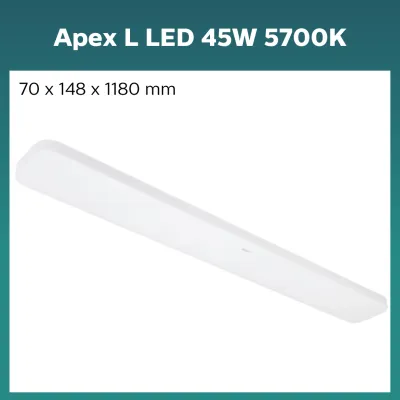
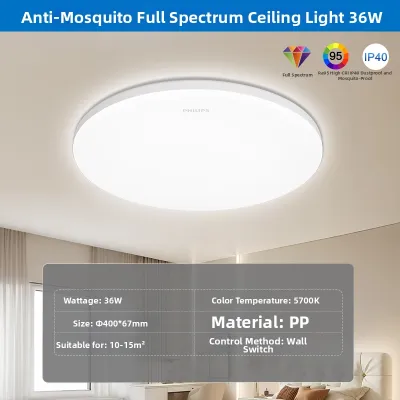
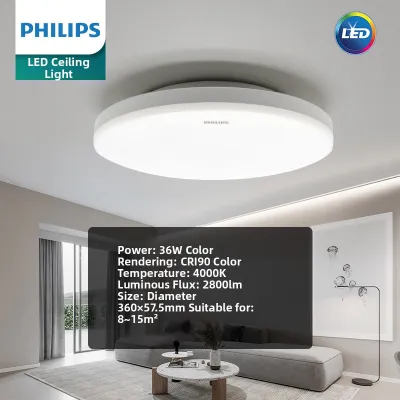
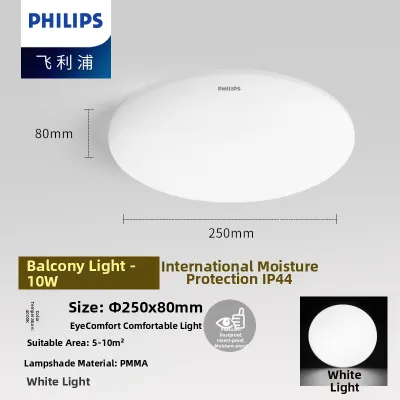
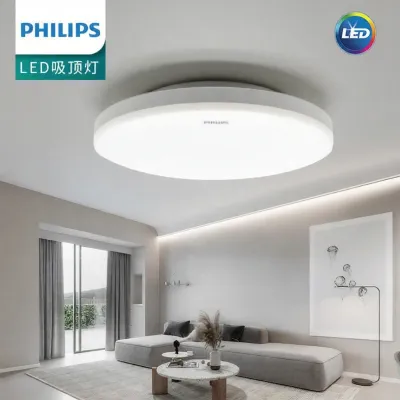
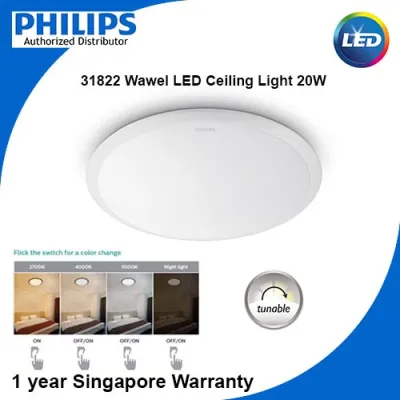
Prices are valid at publication and may change. Please refer to the product page for the latest price.
As a general rule for standard Singapore apartments, ceiling fixtures should ideally protrude no more than 5 to 10 centimeters from the ceiling. This ultra-slim profile ensures that tall residents can walk underneath without feeling a sense of visual crowding. A flush-mount design helps the fixture blend seamlessly into the ceiling plane, which visually elevates the room and makes the ceiling appear higher than it actually is.
In addition to the fixture’s thickness, you must account for the base diameter. A very wide light fixture in a small bedroom can overwhelm the space, making the entire room feel disproportionately small. Conversely, a tiny fixture in a large living room will look lost and out of place. Aim for a balanced ratio where the diameter of the light complements the overall footprint of the room.
Do not forget to factor in hidden structural elements when planning your installation. If your HDB flat has an existing false ceiling or plasterboard layer, your actual floor-to-ceiling clearance will be less than 2.6 meters. You must measure from the lowest finished surface of the ceiling to the floor to determine your true clearance. Additionally, concrete ceilings in older resale flats can sometimes be slightly uneven, which may require minor adjustments during mounting to ensure the fixture sits perfectly flush without gaps.
Matching Illumination to HDB Room Sizes
Achieving the right balance of light is essential to making a 2.6-meter-high room feel comfortable and spacious. To do this, you must look beyond the aesthetic design and verify the lumen output and wattage listed on the product packaging or official technical specifications. Lumens measure the actual brightness emitted by the light, which is a far more reliable metric than wattage for modern LED fixtures.

Standard HDB rooms have distinct lighting requirements based on their size and primary function. For a typical HDB bedroom, which usually ranges from 9 to 12 square meters, a total light output of 2,000 to 3,000 lumens is generally sufficient for daily activities. For a larger living room or open-plan dining area spanning 20 to 30 square meters, you will likely need a fixture, or a combination of fixtures, that delivers 4,000 to 6,000 lumens to ensure even coverage.
The color temperature of your light also plays a major role in how spacious your home feels. Cool white (around 4000K) and daylight (around 6500K) settings can make a room feel more open, airy, and energetic, making them excellent choices for living rooms and study areas. Warm white (around 2700K to 3000K) creates a cozy, relaxing ambiance suitable for bedrooms, though you should ensure the light is distributed widely to prevent dark corners that can make a low-ceilinged room feel smaller.
If the Philips Skylight model you select features adjustable color temperatures or smart controls, you can customize the lighting throughout the day. This flexibility is highly beneficial in multi-functional HDB spaces where a single room might serve as a home office during the day and a relaxation space at night. Being able to transition from bright daylight to a soft, warm glow helps maintain visual comfort without needing to install multiple bulky fixtures.
Installation Constraints and Electrical Safety
Mounting any heavy or flush-mount fixture onto a solid HDB concrete ceiling requires careful planning and strict adherence to safety protocols. Before any drilling begins, you must locate and avoid any concealed electrical conduits or structural steel reinforcement bars embedded in the concrete. Drilling into a live wire or structural rebar can cause severe damage, electrical hazards, or compromise the structural integrity of the ceiling.
HDB flats have strict guidelines regarding structural modifications, and you must never drill into structural beams. When mounting the fixture, ensure you use high-quality masonry drill bits and appropriate wall plugs designed for solid concrete. Standard drywall anchors or lightweight screws are not sufficient and can lead to the fixture loosening or falling over time, posing a significant safety risk.
Electrical safety is another paramount consideration. Always verify that the light fixture carries the appropriate local safety certifications, such as the SAFETY Mark in Singapore, which indicates the product has been tested and approved for safe use in local households. Ensure the fixture’s voltage rating is compatible with the standard local residential supply of 230V at 50Hz.
While replacing an existing light fixture on a simple hook can sometimes be completed as a DIY project, you must always isolate the mains power at your home’s distribution board (DB box) before touching any wiring. If your installation requires running new electrical points, modifying existing wiring, or mounting a heavy, complex fixture, you should hire a licensed electrical worker. A professional electrician ensures the installation complies with local electrical codes and is structurally secure.
Common Space-Matching Mistakes to Avoid
One of the most common mistakes homeowners make when installing ceiling lights in low-clearance rooms is ignoring the visual weight of the fixture’s frame or bezel. A thick, dark, or highly decorative border can draw the eye upward and create a harsh visual boundary, which emphasizes the lower ceiling height. Opting for a frameless design or a neutral, light-colored bezel allows the fixture to blend into the ceiling, creating an illusion of continuous space.
Another frequent error is failing to calculate clearance around tall furniture. If you plan to place a tall wardrobe, a floor-to-ceiling bookshelf, or a walk-in closet system in the room, you must ensure the light fixture does not obstruct the doors or drawers. A light placed too close to a tall wardrobe can also cast deep shadows inside the cabinet, rendering the light less effective and making the room feel cluttered.
Finally, do not rely solely on wattage when assessing how bright a light will be in your space. Modern LED technology is highly efficient, meaning a lower-wattage light can often produce the same or greater lumen output than an older, higher-wattage model. Always compare the actual lumen rating and the beam angle to ensure the light spreads evenly across your ceiling and walls, preventing harsh glare and dark spots.
Frequently Asked Questions (FAQ)
Can I use a dimmer switch with the Philips Skylight in my HDB flat?
Whether you can use a dimmer switch depends entirely on the specific model of the Philips Skylight you purchase. You must check the product specifications to confirm if the fixture is dimmable and what type of dimming technology it supports. Many modern LED fixtures use integrated smart controls or dedicated remotes for dimming, and connecting them to a standard wall-mounted analog dimmer switch can cause persistent flickering, buzzing, or permanent damage to the LED driver.
Does the Philips Skylight require a special mounting bracket for HDB ceilings?
Most flush-mount ceiling lights, including the Philips Skylight series, are designed to mount onto standard concrete ceilings using a metal crossbar or direct-mount plate included in the packaging. You do not typically need a specialized bracket, but you must use heavy-duty masonry wall plugs and screws suitable for solid concrete rather than standard drywall anchors. Always consult the manufacturer’s installation manual to verify the weight of the fixture and ensure the mounting hardware is rated to support it safely.

Community discussion
Share your experience or ask a question. Comments are reviewed before publication.