
Worshipping deities, remembering ancestors, and appeasing wandering spirits are deeply rooted traditions in many Asian cultures, particularly within Singapore’s vibrant community. Central to these rituals is the burning of sacrificial paper offerings. However, walking into a traditional utility shop or browsing an online marketplace can quickly become overwhelming due to the sheer variety of colors, sizes, and designs available.
Selecting the right joss paper product is essential for showing proper respect and ensuring your offerings align with traditional beliefs. The practice is governed by a clear hierarchy: gold paper is reserved exclusively for deities, silver paper and printed notes are meant for ancestors and spirits, and specialized paper replicas provide comfort in the afterlife. Understanding these distinctions, alongside local safety guidelines for high-density living, ensures your rituals remain both respectful and safe.
Understanding the Main Types of Joss Paper
To the untrained eye, all sacrificial paper might look similar, but each category serves a distinct spiritual purpose. Traditional practices separate these items based on their color, material composition, and intended recipient.
Products mentioned in this guide
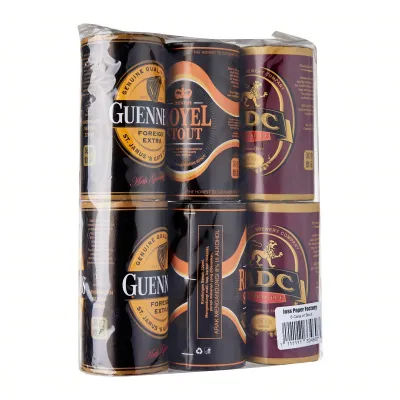
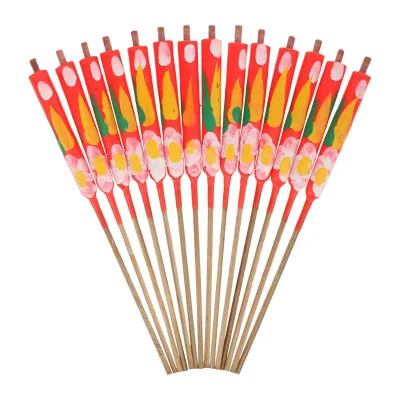
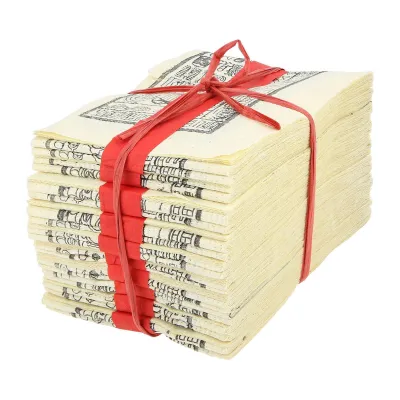
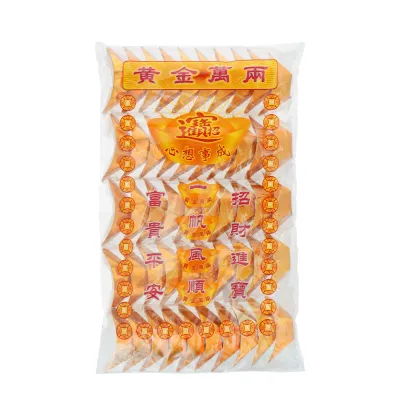
Prices are valid at publication and may change. Please refer to the product page for the latest price.
Gold Paper (Jin Zhi)
Gold joss paper is characterized by a small square of gold foil pasted in the center of a sheet of bamboo or recycled paper. Sometimes, the paper is also stamped with red ink depicting auspicious symbols, deities, or classical Chinese characters. Gold represents the highest spiritual currency and is reserved strictly for heavenly deities, gods, and enlightened beings. Offering gold paper is an act of reverence, gratitude, and devotion to the divine.
Silver Paper (Yin Zhi)
Silver joss paper features a silver foil square in the center rather than gold. It represents a different tier of spiritual currency meant for ancestors, recently deceased relatives, and wandering spirits. Because ancestors occupy a different realm than heavenly deities, silver is the appropriate medium of exchange to show filial piety and provide them with basic resources in the afterlife.
Hell Bank Notes and Printed Money
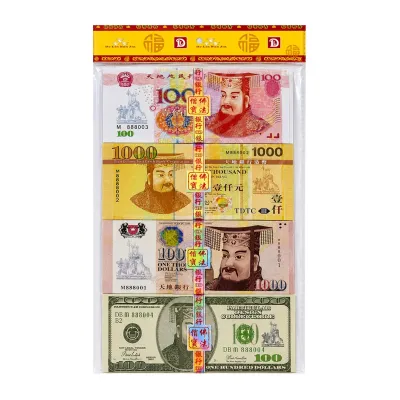
Hell bank notes are modern printed sheets designed to resemble legal tender, often featuring incredibly high denominations ranging from tens of thousands to billions of dollars. These notes are typically issued by the mythical “Bank of Heaven and Earth” and feature portraits of the Jade Emperor or the Yanluo Wang (the King of the Underworld). Unlike traditional gold and silver foil sheets, these notes are specifically intended to help spirits pay off debts, navigate the underworld economy, and secure comfortable lodging in the afterlife.
Ancestor Money and Specialty Prints
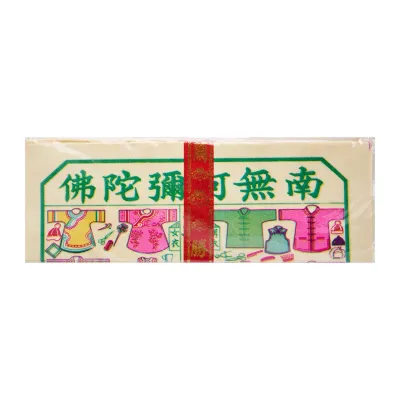
Beyond currency, the afterlife economy is believed to require physical goods. Specialty paper prints—often referred to generally as ancestor money or paper replicas—allow practitioners to send material comforts to their loved ones. These items are crafted from thin, highly combustible paper and printed to look like modern luxuries. Common variations include paper clothing, shoes, designer bags, smartphones, high-end electronics, luxury cars, passports, credit cards, and even multi-story villas.
Eco-Friendly and Recycled Options
With modern environmental awareness and the challenges of high-density urban living, manufacturers have developed eco-friendly joss paper products. These alternatives are made from highly refined wood pulp or recycled paper and are printed using non-toxic, soy-based inks. They are designed to burn completely with minimal smoke, significantly reduced ash output, and fewer floating embers, making them a considerate choice for residential neighborhoods.
Which Joss Paper to Use for Different Rituals and Deities
Using the wrong type of paper during a ritual is considered a breach of traditional etiquette. To avoid spiritual faux pas, you must match the paper product to the specific recipient and occasion.

Worshipping Deities and Gods
When praying to heavenly deities—such as the Jade Emperor (Tian Gong), Guan Yin (Goddess of Mercy), or Tua Pek Kong—you must use gold paper. Specific deities often require specialized gold paper sets. For example, worship of the Jade Emperor involves large, elaborate sheets of “Tian Gong Jin,” while daily prayers to the Earth God (Tu Di Gong) use smaller, square gold sheets known as “Shou Jin.”
Under no circumstances should you offer silver paper, hell bank notes, or paper replica items to deities. Doing so is traditionally viewed as highly disrespectful, as it treats divine beings as if they were wandering spirits or ghosts who require earthly or underworld currency.
Ancestral Worship and Qingming Festival
Ancestral worship occurs on death anniversaries, during the Spring Festival, and most notably during the Qingming Festival (Tomb Sweeping Day). For these occasions, your selection should focus on silver paper (both large and small sizes, known as “Da Yin” and “Xiao Yin”), traditional ancestor money, and personalized replica items.
During Qingming, families visit columbaria or gravesites to clean the resting places of their ancestors. It is customary to burn a combination of silver paper and replica items that reflect the deceased’s earthly preferences. If a late relative enjoyed traveling, offering paper passports and suitcases is a common way to show ongoing care and remembrance.
Hungry Ghost Festival and Wandering Spirits
The Seventh Lunar Month marks the Hungry Ghost Festival, a period when the gates of the underworld are believed to open, allowing spirits to roam the human realm. To appease these wandering spirits and prevent them from causing mischief, communities burn offerings along roadsides.
For wandering spirits, use hell bank notes, silver paper, and smaller, generic multi-colored papers (often called “seven-color paper” or “Qi Yi”). It is crucial to keep these roadside offerings separate from ancestral worship. Traditional taboos dictate that roadside offerings must be conducted outside the home, whereas ancestral offerings are kept strictly within the family altar or a clearly designated family burner to prevent wandering spirits from entering the household.
Daily and Monthly Household Offerings
Many households maintain small altars dedicated to the Earth God, the Kitchen God, or family ancestors, performing simplified rituals on the first (初一) and fifteenth (十五) days of each lunar month.
For these regular maintenance rituals, a simplified, standard combination is sufficient. A typical household set includes a small bundle of gold paper for the household deities and a small bundle of silver paper for the ancestors. These modest offerings maintain spiritual harmony without requiring the large-scale burning associated with major annual festivals.
Burning Safely: HDB Rules and Eco-Friendly Choices
Performing traditional rituals in a modern, high-density environment like Singapore requires a careful balance between religious freedom and civic responsibility. Practicing safely ensures you protect your community and respect your neighbors.
HDB and Condo Burning Rules
In Singapore, Housing & Development Board (HDB) estates and condominium managements establish strict rules regarding where and how religious offerings can be burned. Residents must use the designated red or silver metal incinerator bins provided by the town councils or building management.
Burning joss paper directly on the ground, on grass patches, in common corridors, or on stairwells is strictly prohibited. These acts present severe fire hazards, damage public property, and leave behind unsightly, hard-to-clean burn marks. Always locate the nearest designated burner before beginning your ritual.
Fire Safety Boundaries
When using public incinerators, always maintain a safe distance from dry vegetation, parked vehicles, and outdoor electrical installations. Never leave a burning bin unattended. Strong winds can easily carry lit embers onto nearby dry grass or low-hanging trees, sparking accidental fires. Before leaving the site, verify that the fire inside the bin has completely died down and is fully extinguished.
Choosing Eco-Friendly Products
To minimize the impact of smoke and ash on your neighbors—especially those living on lower floors or suffering from respiratory conditions—consider purchasing low-smoke or reduced-ash joss paper. These products are formulated to burn cleaner and faster, producing less airborne particulate matter. Choosing these options demonstrates a respectful, civic-minded approach to preserving traditional customs in a modern urban landscape.
How to Prepare, Fold, and Burn Joss Paper Properly
To ensure your offerings burn completely and reach their intended recipients in an orderly fashion, proper preparation and burning techniques are essential.
Traditional Folding Methods
Before burning gold and silver paper, it is traditional to fold the flat sheets into the shape of Chinese gold or silver ingots (Yuan Bao). This folding process is a mindful, meditative practice that symbolically transforms the flat paper into actual three-dimensional wealth for the spirits. Even a simple fold that creases the foil center upward is believed to “activate” the paper, making it ready for acceptance in the spiritual realm.
Proper Stacking and Feeding Techniques
Throwing thick, tightly bound stacks of joss paper into an incinerator all at once is highly inefficient. It starves the fire of oxygen, resulting in heavy, black smoke, incomplete combustion, and large amounts of flying ash.
Instead, gently ruffle the edges of the paper bundles to separate the individual sheets. Feed the paper into the incinerator gradually, a few sheets at a time. This allows air to circulate freely within the bin, ensuring a clean, complete burn with minimal smoke and floating embers.
Post-Burning Cleanup
Once the ritual is complete, allow the ashes to cool completely inside the designated bin. Avoid sweeping or moving hot ashes, as hidden embers can easily reignite. If any ash has spilled onto the surrounding pavement during the process, wait for it to cool, then sweep it up and dispose of it in the general waste bins provided nearby to keep the estate clean and pleasant for all residents.
Frequently Asked Questions (FAQ)
Can I use the same joss paper for both deities and ancestors?
No, you should not mix them. There is a strict traditional division between gold paper (reserved exclusively for deities) and silver paper or hell bank notes (reserved for ancestors and wandering spirits). Offering silver paper to deities is considered disrespectful, while offering gold paper to ancestors or wandering spirits is inappropriate for their spiritual status.
What should I do with unburnt joss paper or ash?
Store any leftover, unburnt joss paper in a clean, dry cupboard away from moisture and direct sunlight. Because Singapore’s climate is highly humid, keeping the paper dry prevents it from clumping or growing mold. For completely cooled ash left over from your rituals, sweep it up carefully and dispose of it in the general trash bins.
Do I need to write specific names on the joss paper bundles?
Yes, especially during major festivals like Qingming or the Hungry Ghost Festival when many families burn offerings simultaneously. Writing the ancestor’s full name, their relationship to you, and your own name on a dedicated paper envelope or on the packaging of the bundle helps ensure the offerings reach the correct recipient in the spiritual realm without being intercepted by wandering spirits.
Community discussion
Share your experience or ask a question. Comments are reviewed before publication.