
Selecting the ideal LED table clock for your bedroom requires balancing sleep-friendly display technology, silent operation, and practical bedside utility. Unlike clocks designed for living rooms or offices, a bedroom clock operates in a highly sensitive environment where even minor light emissions or faint electronic hums can disrupt your rest. By focusing on features like multi-level dimming, warm color temperatures, silent circuitry, and integrated charging ports, you can transform a simple timekeeper into a supportive bedside companion that enhances both your sleep quality and your morning routine.
Why Bedroom Environments Demand Specific LED Clock Features
Your bedroom is a sanctuary dedicated to recovery, and its environmental conditions directly influence your sleep architecture. The human brain is highly sensitive to light cues, particularly during the evening when the pineal gland begins producing melatonin to signal sleep readiness. Standard LED displays designed for high-visibility environments often emit a sharp, blue-enriched white light that can trick the brain into thinking it is still daytime. This disruption to your circadian rhythm can make falling asleep more difficult and reduce the overall quality of your deep sleep cycles.
Noise is another critical factor that is often overlooked until the lights go out. While digital LED clocks do not have the physical gears of mechanical clocks, poorly manufactured electronic components can still produce subtle, high-frequency noises. This phenomenon, often referred to as coil whine, occurs when electrical currents pass through transformers or inductors, causing them to vibrate at audible frequencies. In a quiet bedroom, this faint hum can become highly distracting, especially for light sleepers who require absolute silence to remain asleep.
Products mentioned in this guide
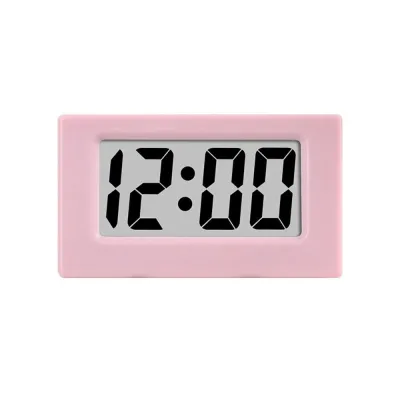
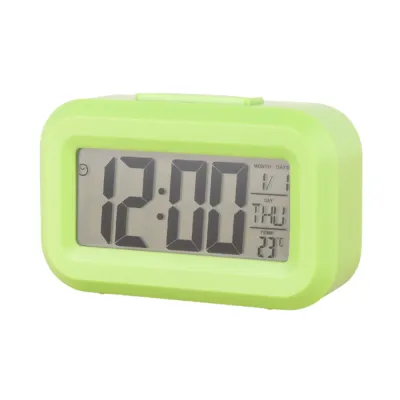
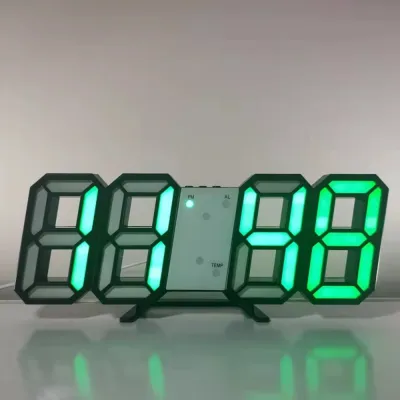
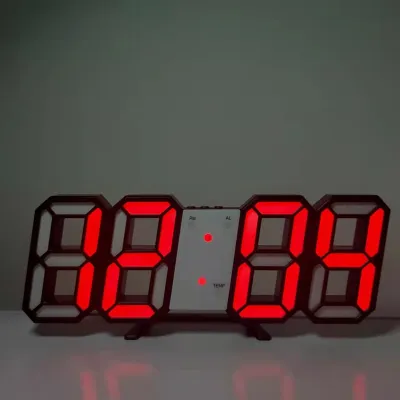
Prices are valid at publication and may change. Please refer to the product page for the latest price.
Additionally, modern bedside tables are increasingly crowded with personal devices, lamps, and chargers. Introducing a standalone clock can lead to a tangle of power cords, which not only looks untidy but can also pose minor safety hazards if cables are pinched behind furniture. Selecting an LED clock that consolidates power delivery—such as one featuring integrated USB charging ports—helps streamline your bedside setup, reduces the load on your wall sockets, and ensures a cleaner, safer sleeping environment.
Essential Display and Lighting Adjustments
When evaluating an LED table clock, the ability to control the display brightness is paramount. Many basic models offer only a single, high-intensity brightness setting that can illuminate an entire bedroom at night. To prevent this, look for clocks that feature manual adjustable brightness levels, ideally with a wide range of steps or a stepless rotary dial. A stepless dial allows you to fine-tune the illumination to the exact level that feels comfortable for your eyes in complete darkness.

Alternatively, some advanced clocks incorporate ambient light auto-dimming sensors. These sensors detect the light levels in the room and automatically lower the display brightness as the sun sets and the bedroom lights are turned off. While convenient, it is important to verify that the sensor’s lowest setting is dim enough for your personal comfort, as some automatic systems still leave the display too bright for sensitive sleepers.
The color temperature of the LED display also plays a significant role in sleep hygiene. Cold white, bright blue, and vivid green displays are highly visible during the day but can be harsh and disruptive at night. Warm color options, such as amber, orange, or deep red, are far gentler on the eyes. Red light, in particular, has a longer wavelength that is less likely to suppress melatonin production or disrupt your night vision when you wake up briefly in the dark.
For those who prefer absolute darkness while sleeping, a display auto-off timer or sleep mode is an invaluable feature. This function completely shuts down the LED panel after a short period of inactivity, leaving the room dark. The display can then be temporarily reactivated by a gentle tap on the nightstand, a clap, or a dedicated button when you need to check the time. If you choose this option, ensure the activation mechanism is reliable and does not require excessive force or loud noises that might wake a sleeping partner.
Finally, consider the viewing angle of the clock’s display. Because a bedside clock is typically positioned on a nightstand slightly above or below eye level when you are lying down, the screen must remain legible from various angles. Some low-cost LED and LCD panels suffer from severe contrast degradation or color inversion when viewed from an angle. Checking the display technology—such as opting for high-contrast LED segments or vertical alignment (VA) screens—ensures you can easily read the time without having to sit up or adjust your posture in bed.
Sound Profiles and Power Connectivity
A truly silent bedroom clock is essential for uninterrupted rest. While digital clocks lack the physical ticking of a sweeping second hand, you must still watch out for electronic noises. High-quality LED clocks utilize solid-state circuitry and well-insulated internal components to eliminate any potential electrical hum or coil whine. When researching models, look for user feedback regarding silent operation, and avoid clocks that use mechanical relays to trigger alarms, as these can produce a loud, startling click just before the alarm sound begins.
Bedside utility is greatly enhanced by integrated USB charging ports, which allow you to charge your smartphone, tablet, or e-reader directly from the clock. When assessing these ports, check their output capacity, which is measured in amperes (A) or watts (W). A standard 5V 1A (5W) port is sufficient for slow, overnight trickle charging, which is highly gentle on your device’s battery health. However, if you require faster charging speeds, look for clocks equipped with USB-C ports that support higher power delivery standards.
Cable management and the physical footprint of the clock are also key practical considerations. A compact, weighted base prevents the clock from sliding or tipping over when you reach to turn off an alarm in the morning. Examine the length of the included power cord to ensure it can comfortably reach your nearest wall outlet without being stretched taut. Additionally, consider the size of the power adapter itself; bulky wall warts can block adjacent sockets on a multi-way extension strip, which is a common issue in compact bedroom layouts.
Power reliability is another crucial factor to address before making a purchase. Mains-powered LED clocks are vulnerable to brief power interruptions, which can reset the time and erase your programmed alarms. To prevent this inconvenience, select a clock that features an internal battery backup system. Typically powered by a small button cell battery (such as a CR2032), this backup system keeps the internal quartz movement running and retains your settings during a power outage, though it usually does not illuminate the main LED display.
Building Your Shortlist: A Pre-Purchase Checklist
Before finalizing your purchase, it is helpful to run through a structured checklist to ensure the clock fits your specific bedroom environment. Begin by measuring the available surface area on your nightstand. A clock with a narrow depth and a stable, low center of gravity is ideal for smaller tables, as it leaves ample room for other essentials like a water glass, reading glasses, or a bedside lamp.
Next, verify the electrical specifications and local compatibility of the power adapter. In Singapore, electrical appliances must operate safely on a 230V, 50Hz electrical supply. Ensure the power adapter is certified with the local Safety Mark, which indicates it has undergone rigorous testing for electrical safety and fire prevention. If the clock is powered via a USB cable, confirm that you have a certified, high-quality USB wall charger available to pair with it. Additionally, ensure that all power cables are routed safely away from humidifiers, damp areas, or heat sources to prevent electrical hazards.
The user interface of the clock should be intuitive and easy to navigate, especially in low-light conditions. Look for models with physical, tactile buttons that are easy to distinguish by touch alone. A large, easily accessible “Snooze” button on the top of the clock is highly desirable, while the controls for setting the time and alarms should be straightforward enough that you do not need to consult the manual every time you want to adjust your wake-up schedule.
Lastly, review the manufacturer’s warranty and return policies. Because LED displays consist of multiple individual light segments, there is always a small risk of a single segment failing over time, which can make the numbers difficult to read. A reliable manufacturer warranty of at least six to twelve months provides peace of mind and ensures you can easily obtain a replacement if any electronic or display defects arise after purchase.
Frequently Asked Questions (FAQ)
Do LED clocks emit blue light that affects sleep?
Yes, many standard LED clocks emit blue light, which can suppress the production of melatonin, the hormone responsible for regulating sleep-wake cycles. To minimize this effect, look for clocks that feature warm-colored LEDs, such as red, orange, or amber, which have longer wavelengths and are much gentler on your eyes at night. If your clock only has a white or blue display, utilize its lowest dimming setting, enable an auto-off sleep mode, or place a dimming sheet over the screen to reduce blue light exposure.
Is a battery backup necessary for a bedside table clock?
While not strictly mandatory, a battery backup is highly recommended for any mains-powered LED clock. In the event of a brief power fluctuation or an accidental unplugging, the backup battery (usually a small button cell) ensures the clock retains the correct time and your alarm settings. Without this feature, you would have to manually reprogram the clock after every power interruption, and you would risk missing your alarm if a power outage occurred overnight.
Can I use a smart speaker with a built-in LED display instead of a dedicated table clock?
You can, but there are distinct trade-offs to consider. Smart speakers offer advanced features like voice control and music streaming, but they also require a continuous internet connection and can sometimes display distracting notifications or light up unexpectedly. A dedicated LED table clock offers a simpler, distraction-free alternative with intuitive physical buttons, reliable offline operation, and specialized sleep-friendly display adjustments that are specifically designed to preserve your bedroom’s tranquility.

Community discussion
Share your experience or ask a question. Comments are reviewed before publication.