
Selecting the right window treatment for your Singapore home involves balancing light control, privacy, and visual appeal. When navigating local showrooms or online marketplaces, you will frequently encounter the terms “Korean blinds” and “Combi blinds.” To make an informed decision for your living room or bedroom, it is helpful to establish a clear distinction between them. Choose Korean blinds if you prefer flexible, incremental light filtering with a modern, striped aesthetic created by alternating sheer and solid fabric bands. Choose Combi blinds if you require a dual-layer system—such as a distinct sheer layer and a separate solid layer—that allows you to switch completely between daytime diffusion and nighttime privacy.
In the Singapore retail market, naming conventions are not always standardized. Some suppliers use “Korean blinds,” “Combi blinds,” “rainbow blinds,” and “zebra blinds” interchangeably to describe any double-layered roller system. To avoid costly ordering errors, do not rely solely on the product title. Instead, examine the physical mechanism, the number of fabric layers, and how the panels move. A standard Korean blind features a single continuous loop of fabric with alternating horizontal bands of sheer mesh and solid polyester. A true Combi system often utilizes two separate layers of fabric on a dual-channel track, allowing you to operate a sheer day blind and a thick night blind independently within a single installation.
Understanding these structural differences is essential when outfitting compact HDB flats or condominiums, where space is at a premium and neighboring units are often in close proximity. The right choice depends on how you use each room, your tolerance for light leakage, and the specific layout of your windows.
Products mentioned in this guide
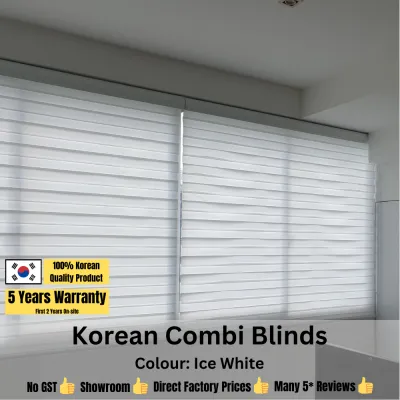
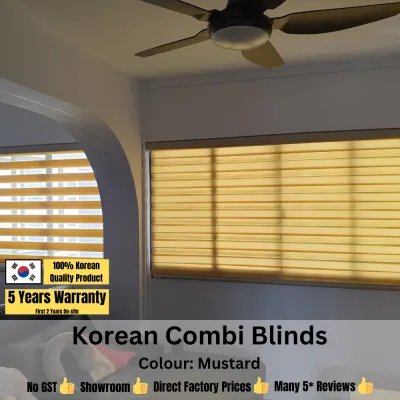
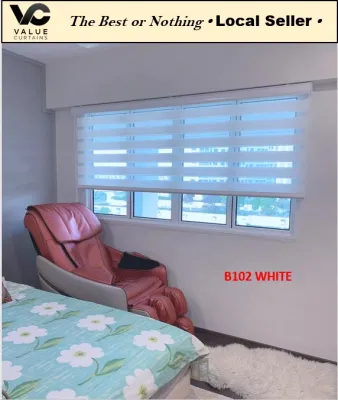
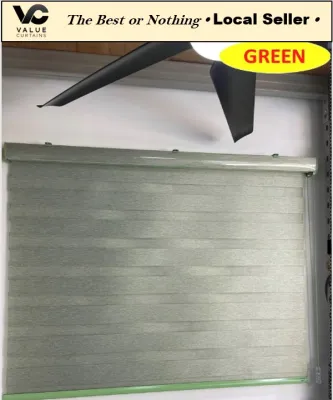
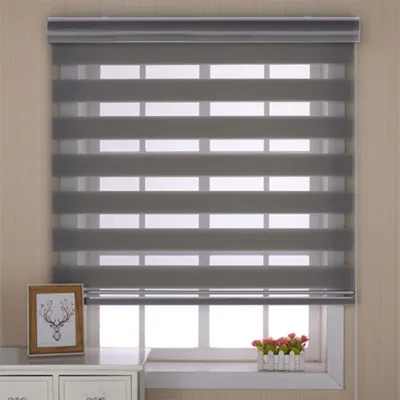
Prices are valid at publication and may change. Please refer to the product page for the latest price.
Light Control and Privacy: Matching Blinds to Room Needs
The primary function of any window covering is to regulate natural light and secure your home from outside eyes. Korean blinds achieve this through a simple alignment mechanism. By pulling the control chain, you align the solid bands of the front and back layers to block out direct sunlight, or align the sheer bands to let light filter through. While this allows for quick, incremental adjustments, the sheer mesh sections only diffuse light; they do not block visibility entirely. During the day, this setup offers excellent glare reduction while maintaining a view of the outdoors.
At night, however, the privacy dynamics shift. When your indoor lights are switched on, the contrast between the bright interior and the dark exterior makes the sheer bands of Korean blinds semi-transparent from the outside. If your HDB flat or condo unit faces a neighboring block or a high-traffic common corridor, passersby may be able to see silhouettes and movement. To maintain complete privacy at night, you must roll the blinds to the fully offset position, where the solid bands cover the sheer sections entirely.
For bedrooms, light exclusion is often the top priority, especially for light sleepers or shift workers. It is important to note that neither Korean nor Combi blinds can guarantee absolute blackout. Because these systems rely on fabric panels running along a roller mechanism, there will always be small gaps between the fabric edges and the window frame, leading to light leakage. Furthermore, light can seep through the stitching or the weave of lighter-colored fabrics. If total darkness is required, you will need to install supplementary solutions, such as side channels that seal the edges, or pair the blinds with heavy, floor-to-ceiling blackout curtains on a separate track.
Aesthetics and Space Perception in HDBs and Condos
Beyond utility, window treatments significantly influence the interior design and perceived size of a room. Korean blinds, with their horizontal alternating stripes, introduce a structured, contemporary pattern to a space. This linear design can work to your advantage in compact Singapore living rooms by drawing the eye horizontally, which visually widens narrow walls. However, in rooms with lower ceilings, bold or highly contrasting horizontal stripes can sometimes make the space feel shorter or visually cluttered.

In contrast, dual-fabric Combi systems offer a softer, more traditional drape. Because they often feature separate layers of solid and sheer fabrics, they mimic the classic look of double curtains but with the clean lines of a roller system. This makes them highly adaptable to various decor styles, from minimalist Scandinavian to cozy modern luxury.
When selecting fabrics, the physical bulk of the system is a practical consideration. Dual-layer systems require a larger top cassette to house the rollers and fabric. In smaller bedrooms, a protruding cassette can look heavy or interfere with nearby wardrobe doors. To ensure the visual weight matches your room, always request physical material samples from your installer. Hold these samples up against your windows at different times of the day. A fabric color that looks warm and neutral under showroom lighting may appear cool or overly dark when exposed to the direct afternoon sun or the cool morning light in your specific home.
Cleaning and Daily Maintenance Effort
Singapore’s tropical climate presents unique maintenance challenges. High humidity, combined with airborne dust from open windows or nearby construction, can settle quickly on fabric surfaces. The sheer mesh sections of Korean blinds feature a fine grid structure that can trap dust and small insects over time. If left uncleaned, moisture can cause this dust to cling to the fibers, leading to discoloration or mold growth.
Daily maintenance for both types of blinds should focus on gentle, dry cleaning methods to preserve the fabric’s shape and protective coatings. Use a vacuum cleaner equipped with a soft brush attachment on its lowest suction setting to sweep away loose dust from the top of the cassette down to the bottom hem. For light spots or smudges, gently wipe the fabric with a dry or slightly damp microfiber cloth. Avoid using harsh chemical detergents, bleach, or abrasive scrubbing pads, as these can strip away flame-retardant or UV-resistant coatings and cause the fabric to warp or fray.
If your blinds are installed near an open-concept kitchen where grease can settle on the fabric, or if they develop deep water stains from a sudden rain shower, DIY cleaning may not be sufficient. In these cases, avoid soaking the entire blind assembly in water, which can rust the internal spring mechanisms and damage the adhesive holding the fabric to the roller tube. Instead, check the manufacturer’s care label or consult a professional blind cleaning service that specializes in ultrasonic cleaning or specialized fabric restoration.
Decision Framework: Which Blind Fits Your Room?
To help streamline your selection process, consider how your specific room conditions align with the characteristics of each blind type.
Choose Korean blinds if:
- You want a single, lightweight system that offers quick, manual adjustments between light filtering and privacy.
- You prefer a modern, clean-lined aesthetic with horizontal patterns that can visually expand narrow walls.
- Your windows are of standard dimensions, and you want a straightforward installation with a compact top cassette.
Choose Combi blinds if:
- You require distinct day and night functionality, allowing for maximum light diffusion during the day and complete privacy at night.
- You prefer a softer, layered fabric appearance that complements classic or cozy interior design styles.
- You want the flexibility of operating two separate fabric layers independently to customize your light levels throughout the day.
Before finalizing your purchase, verify the environmental conditions of the target room. For high-moisture areas such as bathrooms or windows directly adjacent to kitchen sinks, standard fabric blinds are susceptible to mold and mildew. In these spaces, look for specialized moisture-resistant or PVC-based roller options instead. Similarly, if your living room or bedroom faces intense, direct afternoon sun, verify that the selected fabrics have a high UV-protection rating to prevent premature fading of both the blinds and your indoor furniture.
Finally, conduct physical measurements of your window frame. Measure the recess depth to ensure there is sufficient clearance for the roller cassette to sit flush with the wall. Check for any physical obstructions, such as protruding window grilles, window handles, crank levers, or nearby air conditioning trunking, which could catch on the fabric as it rolls up or down.
Installation and Safety Checks Before You Buy
Because dual-layer roller systems and Combi blinds carry more fabric weight than standard single-roller shades, secure mounting is critical. Before installation, inspect the mounting surface. Concrete ceilings and solid wooden architraves provide excellent support, whereas hollow plasterboard ceilings or thin partition walls may require specialized heavy-duty toggle anchors or additional timber reinforcement to prevent the brackets from pulling loose over time.
Safety is another vital consideration, particularly in households with young children or pets. Traditional continuous loop pull cords present a significant strangulation hazard if left hanging loose. When ordering cord-operated blinds, ensure they are supplied with safety cleats or tensioning devices that keep the cord taut and anchored securely to the wall. Alternatively, consider cordless manual designs or motorized systems that eliminate pull cords entirely.
For any installation involving drilling into structural concrete, working at heights, or routing electrical wiring for motorized tracks, prioritize safety by consulting a qualified professional. If you opt for a motorized system, ensure that any hardwired electrical connections are completed by a licensed electrician, and always isolate the power supply before commencing installation or maintenance work.
Frequently Asked Questions (FAQ)
Can Korean or Combi blinds be motorized for smart home integration?
Yes, many modern Korean and Combi blind systems can be motorized, but compatibility depends on the specific roller tube diameter and the track hardware provided by the manufacturer. Before purchasing, check whether the system supports battery-operated motors or requires a hardwired power source near the window frame. Battery-operated motors are generally easier to retrofit in existing HDB flats and condos, while hardwired motors offer consistent power but may require professional electrical routing and conduit installation.
Do these blinds provide complete blackout for shift workers?
No, neither Korean nor Combi blinds can provide a 100% complete blackout on their own. Because the fabric panels must glide freely within the window frame, light will inevitably leak through the gaps along the sides, top, and bottom of the installation. Additionally, light can pass through the sheer mesh sections of Korean blinds if they are not precisely aligned. For shift workers or anyone requiring absolute darkness during the day, it is highly recommended to pair these blinds with dedicated blackout curtains or opt for a single-panel blackout roller blind fitted with side channels.

Community discussion
Share your experience or ask a question. Comments are reviewed before publication.