
Quick Answer: Which Cushion Material Offers the Best Support?
To find the ideal large seat cushion for extended sitting, you must first understand that support is not a one-size-fits-all concept. The right choice depends on your specific physical needs, your daily sitting habits, and how your body responds to different types of pressure relief.
For strict ergonomic support and deep pressure relief during long hours of sitting, high-density memory foam and latex generally outperform polyester fiberfill. Memory foam excels at contouring directly to your anatomy, distributing your body weight evenly and reducing pressure on the tailbone and hips. However, standard memory foam can retain body heat, which is a significant factor in Singapore’s warm, humid climate.
Latex offers a highly responsive, bouncy support that keeps you lifted rather than sinking deeply into the seat. It features an open-cell structure that naturally promotes airflow, making it a cooler alternative, and it boasts exceptional durability, though it typically requires a higher initial investment.
Products mentioned in this guide
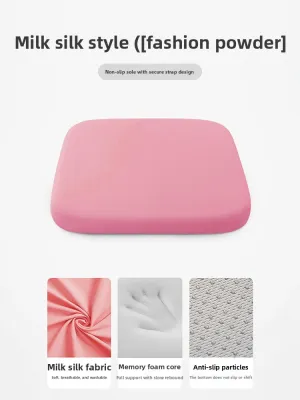
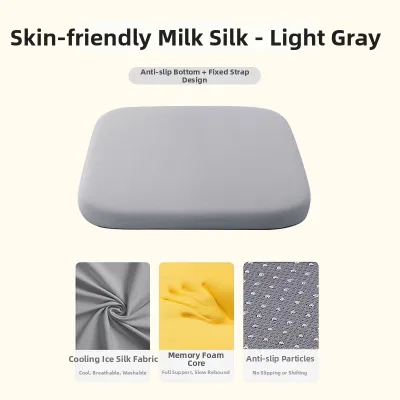
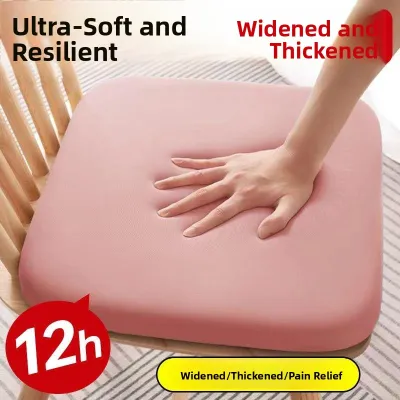
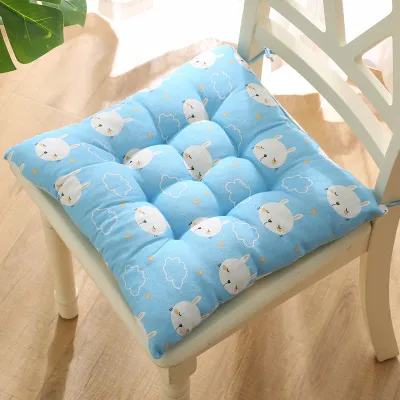
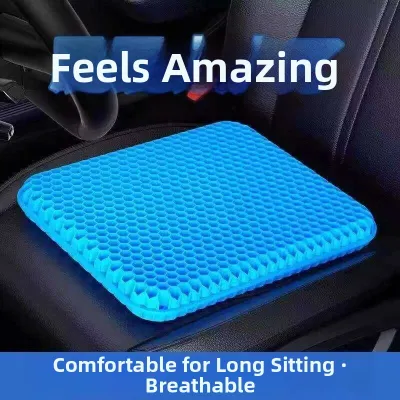
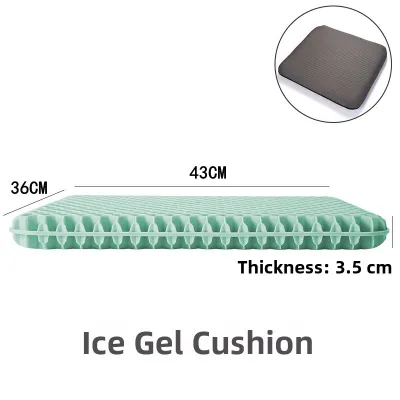
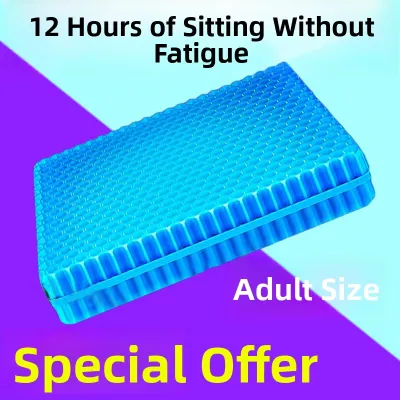
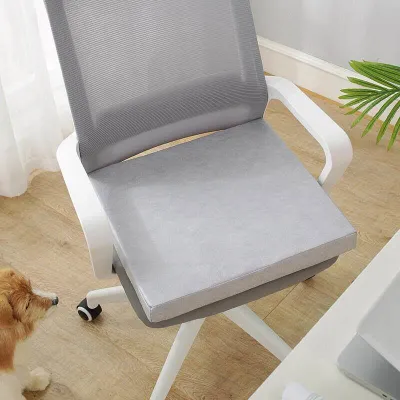
Prices are valid at publication and may change. Please refer to the product page for the latest price.
Polyester fiberfill, on the other hand, provides a lightweight, plush, and highly affordable option. While it feels incredibly soft initially, it compresses and flattens relatively quickly under consistent weight, making it less suitable for long-term ergonomic support.
Comparing Comfort, Support, and Durability by Material
When evaluating a large seat cushion, the core decision comes down to balancing three primary performance dimensions: comfort, support, and durability. Comfort refers to the immediate tactile feel when you sit down. Support is the material’s ability to keep your spine aligned and prevent bottoming out over hours of use. Durability determines how many months or years the cushion can perform this job before flattening.

Each material processes these forces differently. Understanding the internal physics of memory foam, latex, and polyester fiberfill allows you to look past marketing claims and select a cushion based on how it actually handles your body weight.
Memory Foam: Contouring Comfort and Pressure Relief
Memory foam, or viscoelastic polyurethane foam, is famous for its slow-recovery properties. When you sit on a memory foam cushion, the material reacts to both your body weight and your body heat. This dual reaction allows the foam to soften and mold precisely to your unique shape, creating a customized cradle that distributes your weight across a wider surface area.
This deep contouring is highly effective at reducing peak pressure points, particularly around the ischial tuberosities (your sit bones) and the coccyx (tailbone). For individuals who experience localized discomfort from sitting on hard office chairs or wooden dining seats, this pressure distribution can provide immediate relief. The material absorbs movement and dampens vibrations, which is why it is also a popular choice for driver’s seats.
However, memory foam has distinct physical limitations that you must verify before buying. Because it relies on heat to soften, standard formulations tend to trap warmth. In a tropical climate like Singapore, a non-ventilated memory foam cushion can become uncomfortably warm during long study or work sessions. Additionally, memory foam takes several seconds to regain its original shape when you stand up or shift positions, which can make quick movements feel slightly restrictive.
To mitigate these issues, always check the manufacturer’s specifications for foam density and cooling technologies. High-density memory foam (typically 4 to 5 pounds per cubic foot, or roughly 60 to 80 kg/m³) offers much better structural support and longevity than low-density alternatives. Furthermore, look for formulations that feature open-cell structures, ventilation holes, or cooling gel infusions, which are designed to help dissipate heat more effectively than solid, standard viscoelastic foam.
Latex: Responsive Support and Long-Term Durability
Latex cushions provide a completely different physical sensation compared to memory foam. Instead of sinking into the material, latex offers an active, upward pushback that creates a “floating” sensation. This responsiveness means the cushion adapts instantly to your movements, shifting shape the millisecond you adjust your posture without any recovery lag.
The primary benefit of latex is its exceptional structural integrity. High-quality latex is highly resistant to sagging, packing down, or flattening, even after years of daily, heavy use. This makes it an outstanding investment for those seeking a highly durable large seat cushion. Additionally, latex naturally possesses an open-cell structure, which allows air to circulate far more freely than it does through standard memory foam, keeping the seating surface cooler.
On the downside, latex cushions are noticeably heavier and less flexible than other materials, making them less convenient to transport between your office, home, and car. They also carry a premium price tag, often costing significantly more than memory foam or polyester alternatives.
When shopping for a latex cushion, it is crucial to verify the product labels to determine whether the material is natural, synthetic, or a blend. Natural latex, derived from the sap of the Hevea brasiliensis (rubber tree), offers the highest levels of elasticity and durability, but it may not be suitable for individuals with latex allergies. Synthetic latex (styrene-butadiene rubber) is more uniform and often more affordable, but it generally lacks the extreme longevity and springiness of its natural counterpart.
Polyester Fiberfill: Lightweight Softness and Budget Appeal
Polyester fiberfill consists of synthetic polyester fibers blown or stuffed into a fabric casing. It is the most common material found in standard decorative cushions, outdoor patio pads, and budget-friendly seat toppers. Its primary appeal lies in its immediate, pillowy softness and its lightweight, highly portable nature.
For short-term sitting or decorative purposes, polyester fiberfill performs adequately. It provides a soft barrier between you and a hard chair, and it is highly resistant to moisture, making it a popular choice for outdoor furniture. It is also incredibly easy to wash and dry compared to solid foam cores, and it represents the most budget-friendly entry point on the market.
However, polyester fiberfill has severe limitations when it comes to long-term ergonomic support. Because the interior consists of loose or lightly bonded fibers rather than a solid, engineered block, the material lacks structural resistance. Under the continuous pressure of human body weight, the fibers quickly compress, slide past one another, and clump together.
Over a relatively short period, a polyester cushion will flatten out, leaving you sitting directly against the hard surface of the chair underneath. This compression means the cushion loses its supportive qualities quickly, requiring frequent fluffing or complete replacement. Consequently, while the initial cost is low, the long-term cost of ownership can rise if you must replace the cushion regularly to maintain basic comfort.
Material Comparison at a Glance
To help you quickly evaluate these options, the table below summarizes the key performance characteristics of memory foam, latex, and polyester fiberfill based on general material properties.
| Material | Support Level | Comfort Feel | Durability | Best Use Case |
|---|---|---|---|---|
| Memory Foam | High (Contouring) | Deep sink-in, slow-recovery cradle | Medium to High (Density dependent) | Extended office work, pressure point relief, car commutes |
| Latex | High (Responsive) | Springy, floating, instant-recovery pushback | High to Very High | Long-term ergonomic seating, hot environments, users who move frequently |
| Polyester Fiberfill | Low to Medium | Plush, pillowy, immediate softness | Low (Prone to clumping and flattening) | Short-term seating, dining chairs, outdoor patio use, decorative setups |
How to Choose the Right Large Seat Cushion Fill for Extended Sitting
Selecting the right large seat cushion requires matching your personal physical requirements, sitting environment, and budget to the specific characteristics of each material. Use the following structured decision framework to guide your purchase.
Choose Memory Foam if:
- You need targeted pressure relief: If you suffer from localized soreness in your sit bones or tailbone after sitting, memory foam’s ability to distribute weight and eliminate pressure spikes is highly beneficial.
- You prefer a cradled sensation: If you enjoy the feeling of sinking slightly into your seat and having the cushion mold completely to your body shape.
- You sit for long, continuous blocks: This material is excellent for dedicated office workers or professional drivers who remain stationary for hours at a time.
- You can manage heat: Choose this if you sit in an air-conditioned room or can select a high-quality model featuring cooling gel or ventilation channels.
Choose Latex if:
- You want active, springy support: If you dislike the feeling of being "stuck" in a foam contour and prefer to sit on top of the cushion with immediate freedom of movement.
- You sit in warm or humid spaces: The open-cell structure of latex makes it highly breathable, helping to prevent the buildup of heat and sweat during long sitting sessions.
- You want a long-term investment: If you are willing to spend more upfront on a durable cushion that will maintain its shape and supportive qualities for years without sagging.
- You have no latex allergies: Always confirm that you do not have a sensitivity to natural rubber proteins before purchasing.
Choose Polyester if:
- You need a budget-friendly solution: If you want a quick, inexpensive way to add a layer of softness to multiple chairs.
- You only sit for short periods: Ideal for dining chairs, breakfast bar stools, or guest seating where people rarely sit for more than an hour or two.
- You need easy maintenance: If you want a lightweight cushion that you can easily toss into a standard washing machine to clean spills and dust.
- You are using it outdoors: The moisture-resistant nature of polyester makes it highly suitable for covered balconies, patios, or garden seating.
Verify first if:
- You have specific allergies: Always check product labels for synthetic vs. natural materials, fire retardant chemicals, or latex warnings.
- You require medical intervention: If you are experiencing chronic, severe back, hip, or pelvic pain, do not rely solely on a consumer seat cushion. Consult a qualified medical professional or orthopedic specialist to address the root cause of your pain.
Sizing, Covers, and Care: What to Check Before You Buy
Even the highest-quality fill material will fail to provide adequate support if the cushion does not fit your chair or is difficult to maintain. Before finalizing your purchase of a large seat cushion, pay close attention to the physical dimensions, cover materials, and cleaning instructions.
First, measure your chair’s seat pan carefully. A “large” cushion must align properly with the width and depth of your chair. If the cushion is too wide or too deep, it will overhang the edges, which creates structural instability and can cause you to slide forward or tilt. An oversized cushion can also press against the armrests or backrest of an office chair, preventing you from sitting fully back and compromising your spinal alignment. Conversely, a cushion that is too small will leave your thighs unsupported and can create uncomfortable pressure ridges at the edges.
Second, evaluate the cushion cover. For daily use, a removable, zippered cover is essential for maintaining hygiene. Look for breathable fabrics like mesh, cotton, or specialized cooling knits that allow air to reach the inner core. If you plan to use the cushion in a car or on a slick office chair, ensure the cover features a non-slip rubberized bottom or integrated tie straps to keep it firmly in place as you sit down and stand up.
Finally, always read the care label instructions provided by the manufacturer before attempting to clean your cushion. While polyester cushions can often be washed whole, solid foam and latex cores are highly sensitive to moisture and heat.
Frequently Asked Questions (FAQ)
Can I wash a memory foam or latex seat cushion?
No, you should never place a solid memory foam or latex cushion core into a washing machine, submerge it fully in water, or tumble dry it. The mechanical agitation of a washing machine and the intense heat of a dryer can permanently tear, crack, or disintegrate the delicate cell structures of these materials. If water gets trapped inside the dense pores of memory foam or latex, it can take days to dry, creating an ideal environment for mold, mildew, and bacteria to grow.
To clean these cushions, always remove the outer fabric cover and wash it according to its specific care label. If the inner core becomes soiled, gently spot-clean the affected area using a damp cloth and a tiny amount of mild detergent. Allow the core to air dry completely in a well-ventilated, shaded indoor area, keeping it entirely out of direct sunlight, as ultraviolet rays can rapidly degrade both natural latex and polyurethane foams.
How do I know if a large seat cushion will fit my office chair?
To determine if a large seat cushion will fit your office chair, you must measure the flat surface of your chair’s seat pan using a tape measure. Measure the width from side to side at the widest point, and measure the depth from the very front edge of the seat to the base of the backrest. Compare these measurements directly against the dimensions listed on the cushion’s product page.
Ideally, the cushion should cover the majority of the seat pan without spilling over the front or sides. If your office chair has contoured plastic edges or raised side bolsters, choose a cushion that fits snugly within those boundaries rather than resting on top of them, which can cause the cushion to wobble. Additionally, check that the added height of the cushion (typically 5 to 10 centimeters) will not raise your hips so high that your knees press against the underside of your desk, and ensure your chair’s gas lift mechanism can be adjusted downward to compensate for the extra height.
Community discussion
Share your experience or ask a question. Comments are reviewed before publication.