
Selecting the perfect LED candle for your home in Singapore requires balancing visual realism with structural durability. While traditional candles offer an authentic glow, they introduce open flames, smoke, and soot, which are less than ideal for enclosed, air-conditioned apartments or homes with active pets and children. High-quality LED alternatives mimic the gentle flicker of a real flame using sophisticated optical and mechanical designs. However, because Singapore’s tropical climate features high humidity and elevated ambient temperatures, your choice of outer shell material and internal battery components is just as critical as the flame technology itself. By understanding how these devices are engineered, you can confidently evaluate options on e-commerce platforms and in local home decor boutiques to find a model that suits your space.
How to Judge Flame Realism in LED Candles
To achieve a convincing illusion, manufacturers employ two primary flame simulation technologies. The first is the moving-wick design, which utilizes a lightweight, flame-shaped plastic piece suspended on a delicate pivot. An internal electromagnetic coil creates a subtle magnetic field that pushes and pulls the wick, causing it to dance randomly. When a warm LED light shines upward onto this moving piece, it casts a flickering shadow and reflection on nearby walls, closely replicating a physical flame. This design is highly effective when viewed from a distance, though the mechanical movement can sometimes produce a faint clicking sound in silent rooms.
The second approach is the static-wick or 3D-flame design. In these models, the wick remains completely stationary, but the LED inside is programmed with a custom integrated circuit that varies the light intensity. Some advanced static models feature a multi-directional LED core that projects light across a three-dimensional, teardrop-shaped bulb, creating the illusion of a burning wick from any viewing angle. This method operates in absolute silence and has fewer moving parts to wear out over time, making it a highly durable option.
Products mentioned in this guide
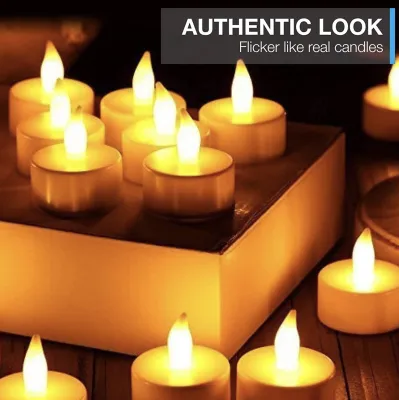
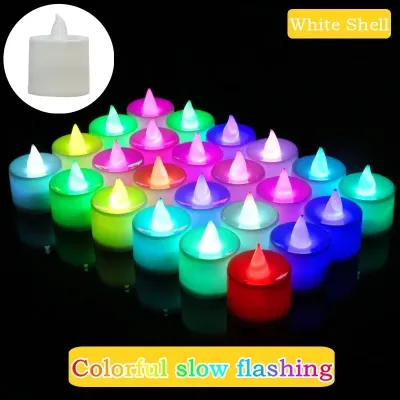
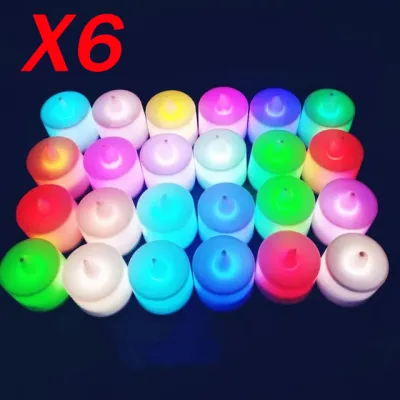
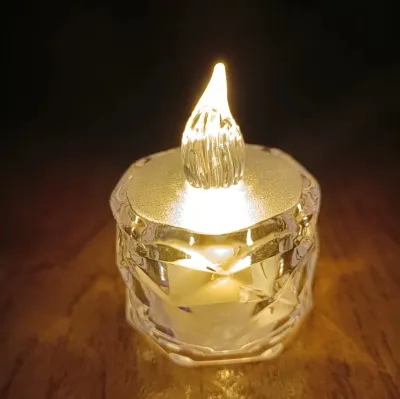
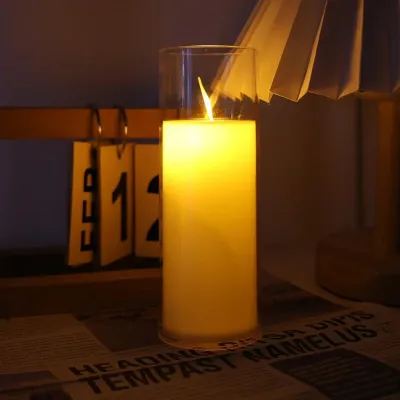
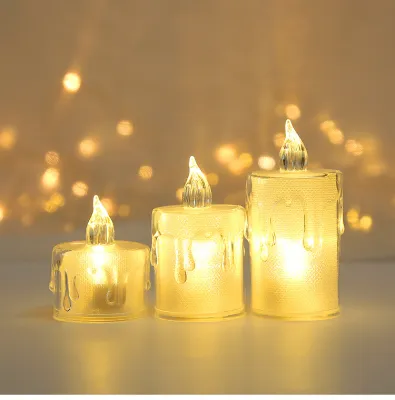
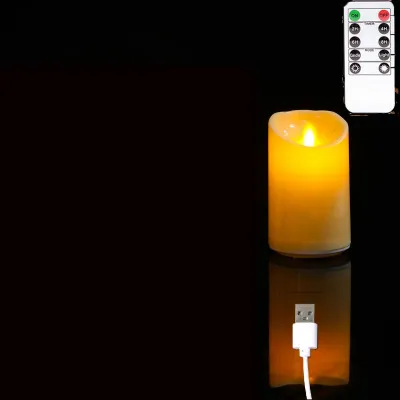
Prices are valid at publication and may change. Please refer to the product page for the latest price.
Color temperature is another critical factor in realism. Traditional paraffin or soy wax candles burn at a very warm color temperature, typically between 2200K and 2400K. When evaluating LED candles, look for specifications that detail the light output. Avoid models that emit a cool, bluish-white light (above 3000K), as this immediately betrays the artificial nature of the candle. A high-quality LED candle should emit a soft, amber-toned glow that mimics the natural warmth of a burning cotton wick.
The texture and finish of the candle body complete the visual illusion. Many premium models use an outer shell made of genuine paraffin wax. These shells often feature a melted, wavy top edge or simulated wax drips running down the sides to suggest a candle that has already been burning for several hours. For a modern aesthetic, some brands offer glass-cylinder LED candles, where the simulated flame sits inside a tinted or frosted glass vessel, diffusing the light beautifully while hiding the mechanical components of the wick.
Checking Build Quality and Material Durability
The longevity of an LED candle is directly tied to its physical construction, starting with the battery compartment located at the base. Because these devices are frequently moved or switched on and off, the battery door must secure tightly with a robust latch or a threaded screw. Loose battery covers can cause the batteries to shift, leading to intermittent power loss or a complete failure to turn on. Inspect the metal contact points inside the compartment; they should be made of corrosion-resistant materials like brass or nickel-plated steel to withstand Singapore’s high relative humidity.

The choice of outer shell material determines how well the candle handles physical wear. Real wax shells provide an unmatched, authentic texture and a natural matte finish, but they are inherently fragile. If dropped on a hard tiled floor, a real wax candle can easily chip, crack, or dent. Conversely, shells molded from high-impact plastic or acrylic resin are exceptionally durable. These synthetic materials resist cracking and scratching, making them ideal for busy households, though they may have a slightly glossier appearance that looks less authentic under direct overhead lighting.
Internal electronics and accessory quality also warrant close inspection. Many LED candles are operated via an infrared (IR) or radio-frequency (RF) remote control. The remote should feel solid, with responsive buttons that do not stick. The internal timer circuit is another common failure point; high-quality models use precise quartz crystal oscillators to ensure the candle turns on and off at the exact same time every day, whereas cheaper alternatives may drift by several minutes each week, eventually requiring manual resetting.
Essential Features to Compare When Shopping
When comparing different models online or in-store, the power source is a primary consideration. Many standard LED candles run on replaceable alkaline batteries, such as AA or AAA cells. While these offer a low upfront cost, the ongoing expense of replacing batteries can accumulate if you use the candles daily. For frequent users, look for models compatible with rechargeable NiMH batteries, or consider investing in premium LED candles that feature built-in lithium-ion batteries rechargeable via a standard USB-C port.
Control features greatly enhance the daily usability of your lighting decor. Basic models often feature a simple on/off switch on the bottom, requiring you to lift and flip the candle every time you want to use it. More advanced options include multi-hour timers (typically 2, 4, 6, or 8-hour cycles) that automatically extinguish the light and turn it back on 24 hours later. Some remotes also allow you to adjust the brightness level or switch between a steady light mode and a flickering candle mode, giving you full control over the ambient atmosphere.
Finally, review the package inclusions to ensure you are getting good value. Some manufacturers sell candles individually, while others offer multi-packs of varying heights (such as 10cm, 12.5cm, and 15cm) to create an instant, balanced cluster. Check whether the package includes the necessary remote control, charging cables, or decorative accessories. If you plan to place the candles in specific holders, verify the diameter of the LED candle base—standard pillars are usually around 7.5cm in diameter, but variations exist.
Safety and Placement Rules for Singapore Homes
While LED candles eliminate the fire hazards associated with open flames, they still require careful placement, especially in Singapore’s tropical climate. Real paraffin wax has a relatively low melting point, often starting to soften or deform at temperatures around 40 degrees Celsius. If you place a real-wax LED candle on a sunny windowsill, near a hot balcony door, or in an unairconditioned room during the warmer months, the shell can warp, sag, or even melt completely, potentially damaging the internal electronics.
Battery maintenance is crucial for preventing damage to your devices. Singapore’s high humidity can accelerate the corrosion of alkaline batteries, particularly when they are left inside a device that is rarely used. If you plan to store your LED candles during certain seasons or travel for an extended period, always remove the batteries. If a battery does leak, the acidic residue can ruin the metal contacts and destroy the circuit board, rendering the candle unusable.
If you intend to use LED candles in damp environments like bathrooms, kitchens, or semi-outdoor patios, you must verify their moisture resistance. Standard indoor LED candles are not sealed against water ingress; steam from hot showers or wind-blown rain on a balcony can easily penetrate the battery compartment and cause a short circuit. For these areas, look for models specifically rated for outdoor use, which typically feature rubber gaskets sealing the battery compartment and water-resistant plastic shells.
Decision Framework: Which LED Candle Fits Your Space?
To choose the right LED candle, start by assessing where the candle will be placed and how closely it will be observed. If you are styling a formal dining table, a fireplace mantel, or a living room coffee table where guests will see the candles up close, prioritize visual realism. In these settings, a moving-wick model with a real paraffin wax shell is highly recommended, as the physical movement and authentic texture create a convincing candlelight experience.
For high-traffic areas, households with young children or curious pets, or semi-outdoor spaces like balconies and covered patios, durability should take precedence. In these scenarios, select LED candles made from weather-resistant resin or heavy-duty plastic. These models can withstand accidental knocks, resist melting in the afternoon heat, and are much easier to wipe clean if they accumulate dust or outdoor grime.
Lastly, consider how the candles will integrate into your daily routine. If you want a hassle-free setup, prioritize models with reliable 24-hour automatic timers or those that can be controlled via a single remote. This allows you to place the candles in hard-to-reach areas, such as high shelves or deep inside decorative lanterns, without the inconvenience of manually turning them on and off every evening.
Frequently Asked Questions (FAQ)
Do LED candles with real wax melt in Singapore's climate?
Yes, LED candles made with genuine paraffin wax can soften, warp, or melt if exposed to high temperatures. While typical air-conditioned indoor spaces are perfectly safe, unshaded windowsills, enclosed balconies, and unairconditioned rooms can easily reach temperatures that compromise the structural integrity of real wax. To prevent deformation, keep real-wax models away from direct sunlight and heat-emitting appliances, or opt for plastic and resin alternatives for warmer areas of your home.
How long do batteries typically last in LED candles?
Battery life varies significantly depending on the candle’s design and your usage habits. Models with physical moving wicks draw more power because of the electromagnetic motor, typically offering between 150 to 300 hours of run time on a set of standard alkaline batteries. Static-wick models with simple flickering LEDs are much more energy-efficient and can often run for 500 hours or more. Using the built-in timer function also introduces a small, continuous standby power drain, so it is wise to use high-quality batteries or rechargeable options to minimize long-term costs.
Community discussion
Share your experience or ask a question. Comments are reviewed before publication.