
Selecting the right lighting for a standard Housing & Development Board (HDB) flat in Singapore requires careful planning, especially when dealing with a standard 2.6-metre ceiling height. At this height, the physical distance between the light source and your eyes is significantly shorter than in private properties with loftier ceilings. Consequently, choosing an inappropriate led ceiling downlight can lead to issues ranging from blinding glare and visual discomfort to premature fixture failure caused by trapped heat in shallow ceiling voids.
To achieve a comfortable, well-lit home, you do not need to rely on vague brand promises or marketing hype. Instead, you must understand how to evaluate downlight specifications, physical dimensions, and safety certifications against the unique structural constraints of an HDB flat. By focusing on objective technical criteria, you can confidently select fixtures that deliver optimal visual comfort, fit your ceiling depth, and operate safely for years to come.
Why 2.6m Ceilings Change Your Downlight Requirements
A standard ceiling height of 2.6 metres fundamentally alters how light behaves in a room and how occupants experience it. In a space with higher ceilings, light has more vertical distance to disperse before reaching eye level, which naturally softens the illumination. In a standard HDB flat, however, the light source sits much closer to your line of sight. When you are standing or walking, the distance between your eyes and the ceiling is often less than one metre, making you highly susceptible to direct glare if the light source is flush with the ceiling surface.
Products mentioned in this guide
![[Buy 3 Free 1]BWL LED LIGHT Recessed Light/LED Downlight Square/ Round Downlight Tri-Tone/3000k/6000k/6W/8W/15W/20W](https://img.lazcdn.com/g/p/669964dfab7a8886c5255221b92d6dd8.jpg_400x400q80.jpg_.webp)
![[BUY 2 FREE 1] BWL LED Recessed Downlight With Safety Mark Driver/Downlight Square/ Round 9W 12W 18W](https://img.lazcdn.com/g/p/847af43887ea141a64347d7bb89e1dfd.jpg_400x400q80.jpg_.webp)
![[BUY 3 FREE 1] DFS Led SG Stock Recessed Downlight 6W 8W 15W 20W Adjustable/Tri-Tone/3000k/4000k/6000k](https://img.lazcdn.com/g/p/268a361f750c4bf47f03692c96c38976.jpg_400x400q80.jpg_.webp)
![[SG Seller] LED Ceiling light Slim Downlight 9W 12W | Goldberg Home](https://img.lazcdn.com/g/p/e9beacab3b7fb5e2568a629e9c3afac0.png_400x400q80.png_.webp)
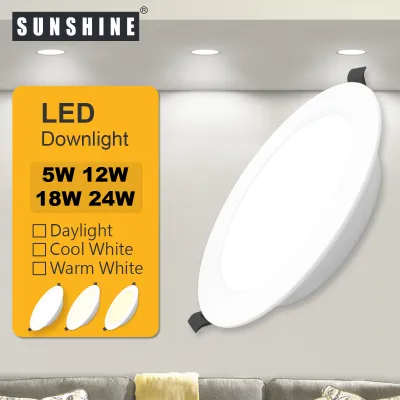
![Third generation [Ready Stock] [Superior Quality] LED Downlight 170V-265V Spotlight Tricolor 3W 5W 9W 12W 15W 18W Recessed LED Ceiling Downlight Cold & Warm White Light For Commercial Building Bedroom Decoration Spot light Led Panel Light](https://img.lazcdn.com/g/p/e3364a41b4260165d26a7fd8d72351e8.jpg_400x400q80.jpg_.webp)
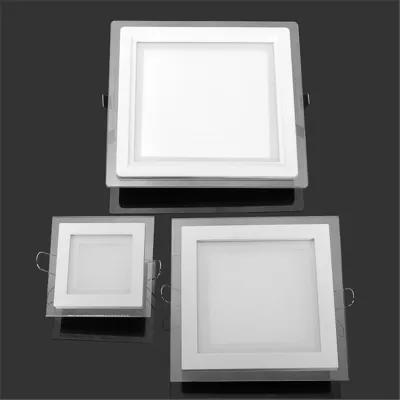
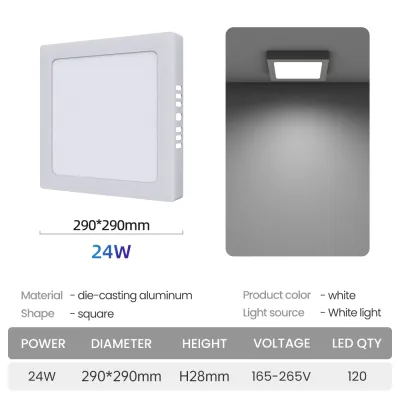
Prices are valid at publication and may change. Please refer to the product page for the latest price.
This limited vertical clearance also restricts the depth of any false ceiling you might install to house recessed downlights. To preserve comfortable headroom and comply with local spatial standards, most homeowners drop their false ceilings by only 75mm to 100mm. This creates an incredibly shallow plenum space behind the plasterboard. Because heat naturally rises, this confined void becomes a thermal trap where heat from the LED chips and drivers can quickly accumulate, potentially shortening the lifespan of the electronic components.
Furthermore, the physical dimensions of the downlight housing and its external driver become critical limiting factors in a shallow ceiling. Standard recessed downlights with deep heat sinks may require 100mm or more of vertical clearance, leaving virtually no room for airflow or driver placement. If a driver is crammed tightly against a hot fixture or forced into a pinched position against concrete, it can overheat or suffer mechanical stress, leading to flickering, premature failure, or electrical hazards.
Essential Specs for LED Ceiling Downlights in Low Ceilings
To overcome the challenges of a 2.6-metre ceiling, you must look closely at the beam angle and light distribution of the fixtures. For general ambient lighting in a low-ceiling environment, a wider beam angle of 60 degrees or more is generally preferred. This wide spread allows the light cones from adjacent fixtures to overlap smoothly at a lower height, preventing harsh, high-contrast “hot spots” on the floor and dark, shadowy gaps on the walls. Conversely, narrow beam angles under 36 degrees should be reserved strictly for accent lighting on artwork or feature walls, as they can create a distracting “flashlight” effect when used for general illumination.

Anti-glare design is another non-negotiable specification for low ceilings. Look for downlights that feature a deeply recessed light source, often referred to as a “dark light” or deep-baffle design. In these fixtures, the LED chip is set back 15mm to 30mm inside the housing, meaning the light source is shielded from your direct line of sight until you are standing almost directly beneath it. Utilizing fixtures with black inner baffles or honeycomb louvers further minimizes stray lateral light reflections, ensuring the ceiling remains visually quiet and comfortable to look at.
Color temperature and the Color Rendering Index (CRI) directly dictate the visual comfort and atmosphere of your home. For living rooms and bedrooms, a warm white color temperature of 3000K provides a cozy, inviting ambiance, while a cool white of 4000K is excellent for task-oriented areas like kitchens and study rooms. Regardless of the color temperature, prioritize fixtures with a CRI of Ra 90 or higher. High-CRI lighting ensures that wood grains, fabrics, and skin tones appear natural and vibrant, preventing the washed-out, greyish cast often associated with low-quality LEDs.
Finally, you must balance the trade-off between ultra-slim panel downlights and deep recessed fixtures. Ultra-slim surface-mounted or recessed panels (often under 20mm in thickness) are incredibly easy to fit into shallow voids, but because their light-emitting surface is flush with the ceiling, they can cause significant glare. Deep recessed fixtures offer superior glare control but require a deeper false ceiling. If your void is exceptionally shallow, look for specialized shallow-recessed downlights that feature a curved or stepped baffle design, which offers a compromise by reducing glare while requiring only 50mm to 60mm of installation depth.
Checklist for Evaluating Downlight Brands and Quality
When comparing different LED downlight brands in Singapore, the first and most critical step is to verify local safety compliance. In Singapore, LED drivers are classified as controlled goods under the Consumer Protection (Safety Requirements) Registration Scheme. Ensure that any brand you consider provides products with a valid Safety Mark issued by Enterprise Singapore. This mark guarantees that the electrical driver has undergone rigorous testing for insulation resistance, short-circuit protection, and fire safety, protecting your home from electrical faults.
Beyond basic safety, evaluate the brand’s technical transparency regarding lumen maintenance and warranty terms. Reliable manufacturers will clearly state their product’s lifetime using standard industry metrics, such as L70 at 25,000 hours, which means the fixture will retain at least 70% of its original brightness after that duration. Avoid brands that offer vague lifetime claims without specifying lumen depreciation. Furthermore, look for a comprehensive warranty of at least two to three years that covers both the LED light engine and the external driver, as the driver is typically the first component to fail.
Flicker-free performance and dimming compatibility are essential for long-term visual comfort. Low-quality LED drivers often exhibit high-frequency flicker that, while invisible to the naked eye, can cause eye strain, headaches, and fatigue over time. Verify that the manufacturer explicitly specifies “flicker-free” operation. If you plan to install dimmer switches, check the brand’s compatibility charts to ensure their dimmable drivers work seamlessly with your chosen wall dimmer protocol, whether it is leading-edge, trailing-edge, or a smart dimming system.
Lastly, consider the long-term availability of replacement parts and local after-sales support. Because LED downlights feature integrated light sources rather than replaceable bulbs, a failed fixture requires replacing the entire module or driver. Choosing an established brand with a physical presence or dedicated distributor in Singapore ensures that you can easily source an exact matching replacement years down the road. This saves you from the frustration of having to patch and recut your plasterboard ceiling because a discontinued, off-brand fixture failed and no matching size could be found.
HDB Installation Boundaries and Electrical Safety Checks
Before purchasing any fixtures or commencing installation, you must establish clear safety boundaries and understand the structural limitations of your HDB flat. First, assess the condition of your existing electrical wiring. If you are replacing old fluorescent or halogen fixtures, verify that the existing wiring insulation is intact and that the circuit breaker in your distribution board is rated appropriately for the total wattage of the new LED downlights. While LEDs consume significantly less power, overloading a single circuit with too many daisy-chained fixtures can still pose a hazard.
In Singapore, all fixed electrical wiring works must be carried out by a Licensed Electrical Worker (LEW) registered with the Energy Market Authority (EMA). Attempting to wire new light points, modify existing circuits, or connect drivers to the mains power yourself is not only highly dangerous but also a violation of local regulations. A professional electrician will ensure that all connections are securely housed in proper junction boxes, that the circuit is correctly earthed, and that the wiring complies with the SS 638 national standard for electrical installations.
Structural checks of your false ceiling are equally vital. Before cutting installation holes, your installer must use a stud finder to map out the location of the metal support channels (joists) holding up the plasterboard. Cutting through a structural metal channel to accommodate a downlight can compromise the structural integrity of the false ceiling, leading to sagging or eventual collapse. Ensure there is a clearance of at least 50mm between the edge of the cut-out hole and any nearby metal joists to allow the fixture’s spring clips to engage securely.
Always establish strict stop conditions for any DIY inspection or maintenance. If you encounter brittle or discolored wires, smell burning plastic, or notice that your circuit breaker trips immediately when a light switch is flipped, immediately isolate the power at the main distribution board and contact a licensed professional. Never attempt to troubleshoot live electrical components. Prior to any inspection, cleaning, or driver replacement, ensure that the main breaker is switched off and locked out to prevent accidental re-energization.
Frequently Asked Questions (FAQ)
Can I install smart LED downlights in a standard HDB false ceiling?
Yes, you can install smart LED downlights in a standard HDB false ceiling, provided you account for their physical dimensions and wiring requirements. Smart downlights often feature slightly larger external drivers or bulkier housings to accommodate the wireless communication modules (such as Zigbee, Wi-Fi, or Bluetooth). You must measure your false ceiling void carefully to ensure there is sufficient clearance for these larger components to sit comfortably without touching the concrete soffit.
Additionally, consider your wiring setup. Many smart switches and smart lighting systems require a neutral wire at the switch box to remain powered when the lights are turned off. Standard HDB flats are typically wired using a single-phase system without a neutral wire at the wall switch. If you plan to use smart switches to control your smart downlights, you may need to have your licensed electrician pull a neutral wire from the ceiling distribution point to the switch box, or opt for smart fixtures that operate on wireless protocols compatible with no-neutral switches.
How do I prevent LED downlights from overheating in a shallow ceiling void?
Preventing overheating in a shallow ceiling void requires maintaining adequate physical clearance and ensuring proper heat dissipation. Always maintain a minimum clearance of 50mm of free air space around the sides and top of the downlight fixture and its driver. This space allows air to circulate naturally, carrying heat away from the aluminum heat sink. Never pack insulation material, wiring bundles, or debris directly over or around the fixture.
If your false ceiling contains thermal or acoustic insulation, you must use fixtures that are explicitly rated for insulation contact (often designated as IC-rated). Non-IC-rated fixtures must never be covered by insulation, as this will trap heat, rapidly degrade the LED chip, and create a serious fire hazard. Additionally, ensure that the external driver is placed flat on the plasterboard ceiling away from the hot metal body of the downlight itself, allowing both components to dissipate heat independently.

Community discussion
Share your experience or ask a question. Comments are reviewed before publication.