
For a standard 2.6m HDB ceiling, the best LED downlight specifications feature a wide beam angle of 90 to 120 degrees for general ambient lighting, a low-glare deep recessed trim or frosted diffuser, and a moderate brightness of 400 to 600 lumens per fixture (typically 5W to 9W). Because the ceiling is relatively low, choosing ultra-thin or slim profile housings that require less than 50mm of false ceiling void ensures the fixtures fit comfortably without hitting concrete slabs or structural beams. This combination provides even, comfortable illumination across your living space while preventing harsh glare and visual clutter.
Understanding How a 2.6m Ceiling Affects Lighting
A 2.6m ceiling height, typical of standard Housing & Development Board (HDB) flats in Singapore, presents unique lighting challenges. Because the light source is physically closer to your eyes and furniture, the cone of light emitted by each fixture has less vertical distance to spread out. This limited height can easily lead to harsh, localized pools of light directly beneath the fixtures, leaving the upper walls and corners in shadow.
When standard high-ceiling lighting specifications are applied to a 2.6m space, the results are often uncomfortable. Narrow beam angles or excessively bright bulbs create intense hot spots on the floor and cast deep, unflattering shadows on faces. This high contrast forces your eyes to constantly adjust between bright spots and dark areas, leading to eye strain and making the room feel smaller and more cramped than it actually is.
Products mentioned in this guide
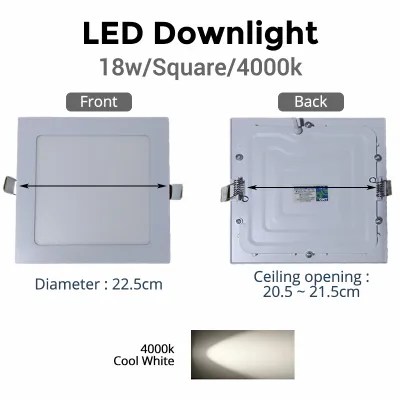
![[BUY 2 FREE 1] DFS LED Recessed Downlight With Safety Mark Driver/Downlight Square/ Round 6W 9W 12W 18W](https://img.lazcdn.com/g/p/1bbba251513d2f446d42ef7aed2d1fe8.jpg_400x400q80.jpg_.webp)
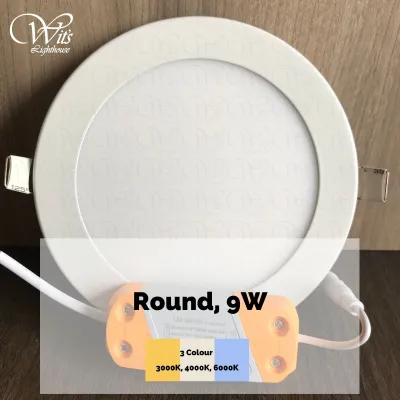
![[Buy 3 Free 1] LED PRO LED LIGHT Recessed Light/LED Downlight Light LED Downlight Square/ Round Downlight Tri-Tone/3000k/4000k/6000k 6W/8W/15W/20W](https://img.lazcdn.com/g/p/b3a12d1d401d4b6df3faabccd5153aff.jpg_400x400q80.jpg_.webp)
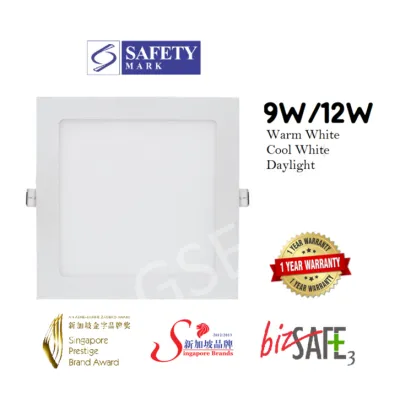
![[Buy 3 Free 1]BWL LED LIGHT Recessed Light/LED Downlight Square/ Round Downlight Tri-Tone/3000k/6000k/6W/8W/15W/20W](https://img.lazcdn.com/g/p/bdff589ffb0369083f1620824cfa18b4.jpg_400x400q80.jpg_.webp)
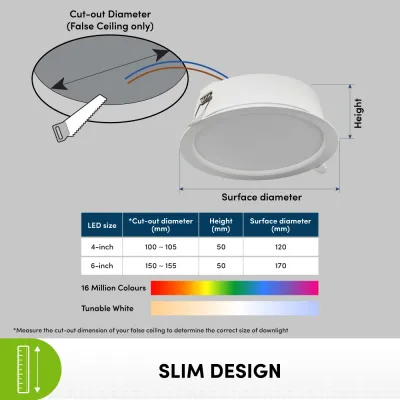
![[BUY 3 FREE 1] DFS Led SG Stock Recessed Downlight 6W 8W 15W 20W Adjustable/Tri-Tone/3000k/4000k/6000k](https://img.lazcdn.com/g/p/9b0b06054a118af0000d9ffc3b4f99e6.jpg_400x400q80.jpg_.webp)
Prices are valid at publication and may change. Please refer to the product page for the latest price.
Achieving spatial comfort in a low-ceiling HDB flat requires a delicate balance between adequate brightness and soft, even distribution. Instead of relying on raw power to illuminate a room, the goal is to wash the walls and floors with diffused light. This approach minimizes harsh shadows, softens the transition between light and dark zones, and visually opens up the space, making the 2.6m ceiling feel higher and more inviting.
Calculating Lumens and Wattage for Low Ceilings
To determine the right brightness for your HDB flat, you must look at lumens rather than wattage alone. For general living areas and bedrooms, a target of roughly 100 to 150 lumens per square meter is usually sufficient for comfortable ambient lighting. In task-oriented spaces like kitchens or study areas, this target should be increased to about 200 to 300 lumens per square meter to ensure clear visibility for cooking or reading.

For a 2.6m ceiling, opting for lower-wattage LED downlights with high luminous efficacy is highly beneficial. Fixtures drawing between 5W and 9W typically produce around 400 to 700 lumens, which is the ideal sweet spot for low ceilings. Lower-wattage fixtures generate less heat, which is crucial for preserving the lifespan of the LED driver and the surrounding false ceiling materials, while also keeping energy consumption low.
Your brightness calculations should also adapt to the room’s design and natural light levels. If your HDB flat features dark accent walls, matte finishes, or heavy curtains, these surfaces will absorb more light, requiring slightly higher lumen outputs or additional fixtures. Conversely, rooms with white walls, glossy floor tiles, or large windows can achieve the same perceived brightness with fewer, lower-lumen downlights.
Choosing Beam Angles and Anti-Glare Features
Beam angle selection is critical to avoiding the “flashlight effect” in low-ceiling spaces. For general ambient lighting in an HDB flat, wide beam angles of 90 to 120 degrees are highly recommended. These wide angles allow the light cones from adjacent fixtures to overlap smoothly at a lower height, creating a uniform wash of light across the room and eliminating dark gaps between fixtures.
To protect your eyes from direct glare, look for LED downlights designed with deep recessed trims, internal baffles, or specialized anti-glare reflectors. These design features physically shield the LED chip from your direct line of sight when walking through the room. By keeping the light source recessed within the fixture housing, the light is directed downward and outward without shining directly into your eyes at a shallow angle.
Narrow beam spotlights (typically 15 to 36 degrees) should be used sparingly in a 2.6m ceiling environment. Reserve these fixtures for specific accent lighting tasks, such as highlighting a piece of artwork, a feature wall, or a decorative niche. Ensure these spotlights are positioned away from primary seating areas, dining tables, or main walking paths to prevent uncomfortable glare and harsh shadows on people sitting below.
Matching Trim Depth and Housing to Your False Ceiling
Before purchasing any LED downlights, it is essential to measure the physical depth of your false ceiling void. In many HDB renovations, the false ceiling is dropped by only 50mm to 100mm to maximize the remaining headroom. You must also check for structural obstructions, such as concrete beams, electrical conduits, or air conditioning pipes, which can significantly restrict the available space behind the plasterboard.
For shallow ceiling voids, ultra-thin or slim LED downlights are the most practical choice. These integrated fixtures often have a total housing depth of less than 30mm, allowing them to fit comfortably in tight spaces without touching the concrete soffit above. Ensure there is still a small gap of at least 10mm to 20mm above the fixture to allow for adequate heat dissipation and to prevent heat buildup.
Accurately planning your ceiling layout also requires matching the cut-out hole diameters of your downlights to your ceiling grid. Standard cut-out sizes typically range from 75mm (3 inches) to 150mm (6 inches). If you are replacing existing fixtures, measure the existing holes carefully before buying new downlights; if you are installing a new false ceiling, coordinate the cut-out dimensions with your renovation contractor to ensure a seamless fit.
Selecting Color Temperature and Dimming Options
Color temperature plays a major role in how spacious and comfortable your HDB flat feels. For living rooms and bedrooms, warm white (2700K to 3000K) creates a cozy, relaxing atmosphere that softens the visual boundaries of a low ceiling. For kitchens, bathrooms, and study areas, cool white (4000K) or daylight (6000K) provides crisp, high-contrast illumination that aids focus and task performance.
Dimmable LED downlights offer excellent flexibility for adapting a 2.6m ceiling space to different times of day and activities. Dimming the lights in the evening lowers the visual plane, making the room feel more intimate and helping your eyes transition to rest. During the day, keeping the lights at full brightness complements natural daylight and keeps the space feeling open and airy.
When planning a dimmable system, always verify the compatibility between your LED downlights and the dimmer switch. LED fixtures require specific trailing-edge or leading-edge dimmers, and using incompatible switches can lead to annoying flickering, buzzing, or premature driver failure. Check the manufacturer’s specifications to ensure the total wattage load of your downlights falls within the dimmer’s rated operating range.
Installation Safety and Electrical Boundaries
Safety must be your top priority when selecting and installing electrical fixtures in Singapore. Always verify that your chosen LED downlights are rated for the local 230V voltage and carry recognized safety certifications, such as the Safety Mark. These certifications ensure the fixtures have undergone rigorous testing for electrical safety, insulation, and fire resistance.
Before undertaking any installation, replacement, or maintenance work on your ceiling lights, you must isolate the power. Turn off the main circuit breaker at your HDB flat’s distribution board (DB box) rather than relying solely on the wall switch. Use a reliable voltage tester to confirm the wires are completely dead before touching any electrical connections.
While replacing a simple plug-and-play downlight driver can sometimes be done by a homeowner, any fixed wiring modifications must be handled with care. For installing new wiring runs, modifying the false ceiling structure, or installing fixtures in damp areas like bathrooms, always engage a licensed electrical worker (LEW). Professional installation ensures compliance with local electrical standards and prevents hazards like short circuits or electrical fires.
Frequently Asked Questions (FAQ)
Can I use standard recessed downlights in a 2.6m HDB ceiling?
Standard recessed downlights often feature deep housings that require a false ceiling void of 100mm or more. In a 2.6m HDB flat, dropping the ceiling this much can make the room feel cramped and reduce valuable headroom. If your false ceiling void is shallow, standard housings may physically hit the concrete slab above, making installation impossible. For these compact spaces, ultra-thin surface-mounted downlights or slim recessed models are much better suited.
How many LED downlights do I need for a standard HDB bedroom?
For a typical HDB bedroom measuring around 10 to 12 square meters, four to six LED downlights rated at 5W to 7W (approx. 400 to 500 lumens each) are generally sufficient. Space the fixtures roughly 1m to 1.2m apart, keeping them at least 0.5m away from the walls to prevent harsh shadows. Instead of a rigid grid, position the lights over functional zones, such as the wardrobe path or the foot of the bed, while avoiding placing fixtures directly over the pillow area to prevent glare when lying down.
Community discussion
Share your experience or ask a question. Comments are reviewed before publication.