
In Singapore, finding the most energy-efficient LED Edison bulb is not a matter of relying on brand prestige, but rather of understanding how to read and verify the technical specifications printed on the product packaging. Because independent, standardized efficiency rankings for decorative lighting brands are rarely published, consumers must take an active role in comparing key performance metrics. The optimal balance between energy savings and vintage light quality is achieved by cross-referencing lumens per watt, color temperature, and dimmer compatibility for your specific fixture. By learning to decode these specifications, you can confidently select bulbs that enhance your home’s interior design while keeping your monthly utility bills low.
Key Packaging Specifications to Compare for Energy Efficiency
To accurately assess the energy efficiency of any LED Edison bulb, you must look past marketing buzzwords and focus on objective metrics. The primary indicator of a bulb’s efficiency is its luminous efficacy, measured in lumens per watt (lm/W). Lumens represent the total amount of visible light emitted by the bulb, while watts measure the electrical power consumed. By dividing the lumen output by the wattage, you can determine how much light the bulb produces per unit of electricity. For example, a bulb that produces 400 lumens while consuming 4 watts has an efficacy of 100 lm/W. When comparing different brands on the shelves, always look for a higher lm/W ratio, as this indicates a more efficient conversion of electricity into light.
Another common point of confusion is the “incandescent equivalent” wattage printed prominently on many boxes. Manufacturers often label a 4-watt LED bulb as a “40-watt equivalent” to help consumers transition from older lighting technologies. While this comparison is useful for estimating brightness, it should never be used to calculate actual energy consumption or efficiency. The true energy draw is always the lower LED wattage rating. Relying solely on the equivalent wattage can lead to overestimating your energy savings or selecting a bulb that is too bright for your intended space.
Products mentioned in this guide
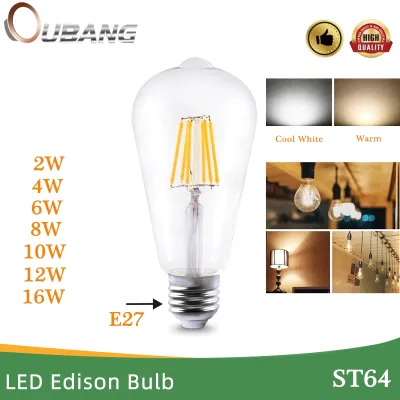
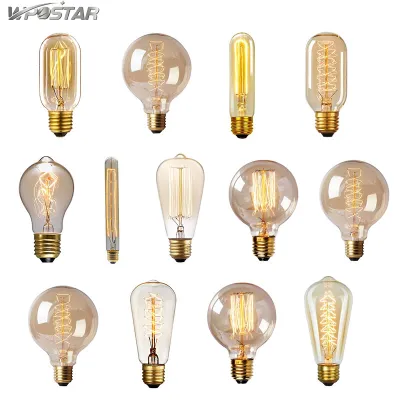
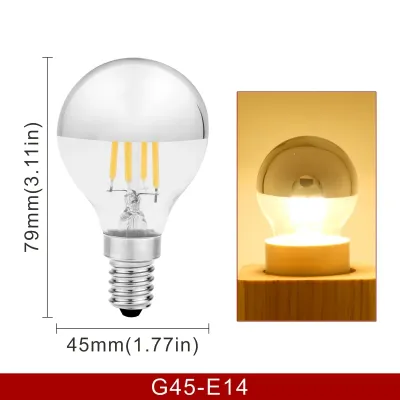
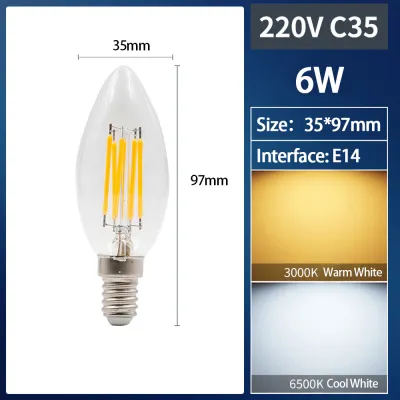
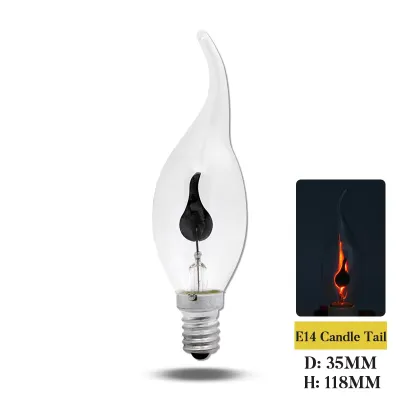
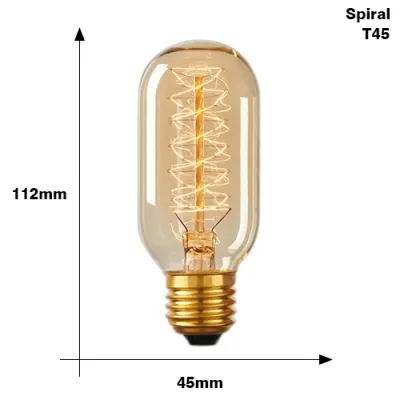
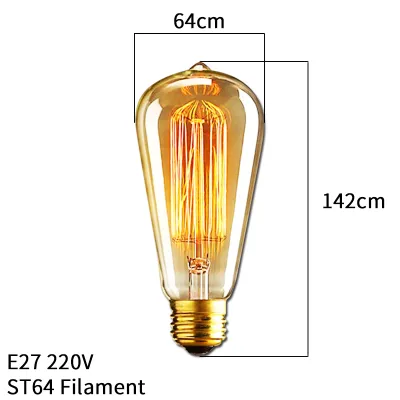
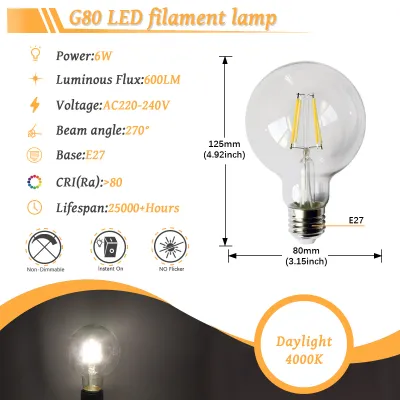
Prices are valid at publication and may change. Please refer to the product page for the latest price.
Additionally, consumers should look for official certification marks and energy labels on the packaging. In Singapore, regulated electrical appliances must carry the Safety Mark, which is issued by the Consumer Product Safety Office. This mark ensures that the bulb has been tested and certified to meet local safety standards, preventing electrical hazards in your home. While decorative LED bulbs may not always carry the mandatory multi-tick energy labels found on larger household appliances, checking for reputable international certifications—such as the CE mark or RoHS compliance—provides further assurance of build quality and environmental safety.
Evaluating Light Quality for a Vintage Aesthetic
While energy efficiency is crucial, decorative lighting must also deliver the desired visual atmosphere. The classic appeal of an Edison bulb lies in its warm, amber glow, which mimics the look of early 20th-century carbon filament lamps. This warmth is measured by color temperature, expressed in Kelvin (K). Traditional incandescent Edison bulbs typically operate at a very warm color temperature of 2000K to 2200K. Many modern LED alternatives are available in this ultra-warm range, as well as standard warm white (2700K) and neutral white (4000K). Choosing the right color temperature is a matter of personal preference and spatial design; however, keep in mind that ultra-warm bulbs (2000K) often have a slightly lower luminous efficacy than their cooler counterparts due to the phosphor coatings used to achieve the amber hue.

Another critical factor in light quality is the Color Rendering Index (CRI), which measures how accurately a light source reveals the true colors of objects, surfaces, and skin tones. CRI is rated on a scale from 0 to 100, with higher numbers indicating better color accuracy. For residential spaces, a CRI of 80 or above is generally recommended to ensure that your home decor, furniture, and food appear natural and vibrant. If you are installing LED Edison bulbs over a dining table or in a living room where color presentation is important, look for brands that explicitly state a CRI of 80 or higher on their packaging.
The physical design of the internal LED filaments also plays a significant role in both aesthetics and light distribution. Modern LED Edison bulbs utilize linear Chip-on-Board (COB) filaments, which consist of multiple tiny LED chips mounted on a transparent substrate. These filaments are arranged in various styles, such as straight vertical lines, spiral coils, or complex “squirrel cage” patterns. Straight filaments tend to be highly efficient and provide a bright, direct light, but they can sometimes produce noticeable glare if the bulb is completely exposed. Spiral or curved filaments offer a softer, more diffused light distribution that closely resembles antique carbon filaments, making them ideal for eye-level pendant lights, though they may consume slightly more power to achieve the same perceived brightness.
Verifying Fixture Compatibility and Installation Limits
Before purchasing any LED Edison bulbs, you must verify that they are physically and electrically compatible with your existing light fixtures. The first step is to match the base type of the bulb to the fixture’s socket. In Singapore, the most common base types are the E27 (Edison screw, 27mm diameter) and the B22 (bayonet cap, 22mm diameter). Attempting to force an incompatible base into a socket can damage the fixture or create an electrical hazard. Additionally, pay close attention to the physical dimensions of the bulb. Edison bulbs are often larger than standard A60 household bulbs; common shapes like the elongated ST64 or the spherical G95 may not fit inside tight glass shades or enclosed decorative cages.
Electrical compatibility is equally vital for safety and longevity. Singapore’s domestic electrical grid operates at a standard voltage of 230V AC and a frequency of 50Hz. You must ensure that any bulb you purchase is rated for this voltage range (typically labeled as 220V–240V / 50Hz). Importing bulbs from regions with different voltage standards, such as North America (which uses 110V), without verifying compatibility can lead to immediate product failure, short circuits, or electrical hazards. Always look for the local Safety Mark on the packaging to confirm that the bulb is certified for safe use on Singapore’s electrical grid.
Dimming compatibility is another area where issues frequently arise. Not all LED Edison bulbs are dimmable, and using a non-dimmable bulb on a dimmer circuit can cause rapid flickering, audible buzzing, and premature failure of the internal LED driver. If you plan to use a dimmer switch, ensure the bulb packaging explicitly states that it is “dimmable.” Furthermore, older wall dimmers designed for high-wattage incandescent bulbs (leading-edge dimmers) often do not work well with low-wattage LED bulbs. For smooth, flicker-free dimming, you may need to have a qualified professional install a modern trailing-edge dimmer switch specifically rated for LED loads.
For installations involving fixed wiring, work at height (such as high-ceiling pendant lights), or fixtures located in damp environments like bathrooms or outdoor balconies, safety must be your top priority. Always isolate the power at the main distribution board before attempting to install or replace any light fixture. If the installation requires modifying your home’s fixed electrical wiring or mounting heavy, suspended fixtures, you should engage a licensed electrical worker to perform the work in accordance with local safety regulations.
Decision Framework: Choosing the Right Bulb for Your Fixture
To make the final purchasing decision, you should evaluate the primary function of the light fixture within your space. If the fixture serves as the primary source of ambient or task lighting in a room—such as a multi-bulb dining chandelier or a study lamp—prioritize high luminous efficacy (lm/W) and a higher total lumen output. Look for bulbs that produce between 400 and 800 lumens, and opt for a color temperature of 2700K. This provides a bright, functional warm white light that is comfortable for reading and socializing while maintaining a touch of classic style.
Conversely, if the fixture is intended purely for accent, mood, or decorative lighting—such as a single exposed pendant over a kitchen island or a bedside table lamp—you can prioritize aesthetics over maximum efficiency. In these scenarios, look for bulbs with a lower lumen output (150 to 300 lumens) and an ultra-warm color temperature of 2000K to 2200K. This creates a cozy, intimate atmosphere without causing uncomfortable glare. For these fixtures, selecting a bulb with an intricate spiral filament design and an amber-tinted glass finish will enhance the vintage aesthetic, even if the overall lm/W ratio is slightly lower than that of a standard clear-glass bulb.
Finally, consider how the bulb will integrate with your overall home automation setup. If you want the flexibility of adjusting your lighting levels but do not have dedicated dimmer switches installed, smart LED Edison bulbs are an excellent alternative. These bulbs feature built-in wireless receivers that allow you to dim the light, set schedules, or even adjust the color temperature using a smartphone app or voice commands. When choosing smart bulbs, verify that they are compatible with your existing smart home ecosystem (such as Apple Home, Google Home, or Zigbee-based hubs) and ensure they remain powered on at the physical wall switch to maintain their smart functionality.
Frequently Asked Questions (FAQ)
Do LED Edison bulbs generate significant heat?
While LED Edison bulbs run significantly cooler than traditional incandescent bulbs, they are not entirely heat-free. The internal electronic driver located in the base of the bulb, along with the LED filaments themselves, still generates a small amount of thermal energy during operation. Because of this, these bulbs require adequate ventilation to dissipate heat effectively. If you install an LED Edison bulb inside a tightly enclosed glass or metal fixture, the trapped heat can cause the internal components to degrade prematurely, shortening the lifespan of the bulb. Always check the manufacturer’s instructions to see if a bulb is rated for use in fully enclosed fixtures.
Can I use dimmable LED Edison bulbs on non-dimmable switches?
Yes, dimmable LED Edison bulbs can be used safely on standard, non-dimmable wall switches. When connected to a standard switch, the bulb will simply operate at its maximum brightness level. However, the reverse is not true: you must never use a non-dimmable LED bulb on a dimmer switch. Doing so can cause severe flickering, loud buzzing noises, and can permanently damage the bulb’s internal driver or the dimmer switch itself. If you are unsure about your wall switch type, it is safest to purchase dimmable bulbs or consult a qualified electrician.
How do I clean the glass of an LED Edison bulb safely?
To clean your LED Edison bulbs safely and maintain their decorative clarity, always start by turning off the power at the wall switch and letting the bulb cool down completely. Once the bulb is cool to the touch, gently wipe the glass surface with a dry, clean microfiber cloth to remove dust and fingerprints. For stubborn smudges, you can slightly dampen the microfiber cloth with water, taking care not to let any moisture come into contact with the metal base or the electrical socket. Avoid using harsh chemical cleaners, abrasive pads, or glass sprays, as these can strip away decorative amber coatings or damage the seal between the glass envelope and the metal base.
Community discussion
Share your experience or ask a question. Comments are reviewed before publication.