
Selecting the right LED panel light for a standard Singapore Housing & Development Board (HDB) flat requires balancing physical dimensions with balanced light distribution. Because a standard HDB ceiling height is 2.6 meters, the distance between the light source and eye level is significantly shorter than in properties with higher ceilings. This proximity means that choosing an incorrect fixture can easily lead to harsh glare, uneven shadows, and a visually cramped living space. Rather than relying on unverified brand lists or generic recommendations, homeowners must evaluate fixtures based on physical thickness, optical diffusion, driver reliability, and local safety certifications. By understanding how these technical specifications interact with a 2.6m mounting height, you can select a reliable lighting solution that enhances both visual comfort and spatial openness.
Understanding Lighting Challenges at 2.6m Mounting Heights
At a mounting height of 2.6 meters, the physical proximity of the light source to the occupants of the room is the primary factor influencing visual comfort. In a typical room, once you account for the height of furniture such as dining tables, beds, and sofas, the active visual plane is often less than 1.5 meters away from the ceiling. This close distance increases the likelihood of direct glare, which occurs when the light source enters the occupant’s field of vision at a sharp angle. Direct glare can cause eye strain, headaches, and general discomfort over extended periods, making it essential to select fixtures designed to mitigate this effect.
Furthermore, light distribution becomes highly sensitive to the fixture’s design when the ceiling is low. In rooms with higher ceilings, light has more vertical distance to spread and blend before reaching the floor, which naturally minimizes harsh shadows. At 2.6 meters, however, a light source with an inadequate beam angle or poor diffusion will create localized “hotspots” of intense illumination directly underneath the fixture. This leaves the corners of the room in deep shadow, creating a high-contrast environment that visually shrinks the room and makes the ceiling feel lower than it actually is.
Products mentioned in this guide
![[OKLIFE. SG]Kitchen Light Room Light LED Panel Light Ultra-Thin Round Surface Mount Downlight Ceiling Light](https://img.lazcdn.com/g/p/337d507c98d68fcda9f68c4f2642e5cb.jpg_400x400q80.jpg_.webp)
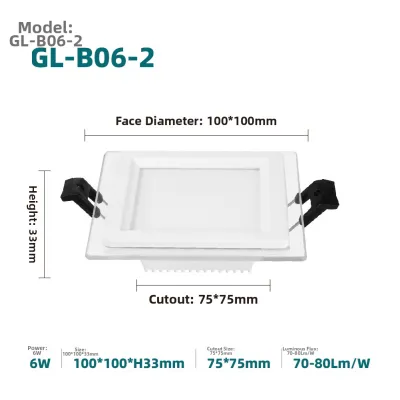
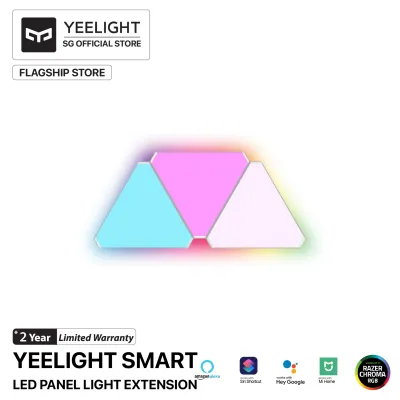
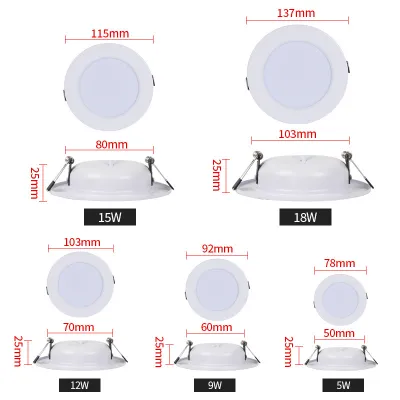
Prices are valid at publication and may change. Please refer to the product page for the latest price.
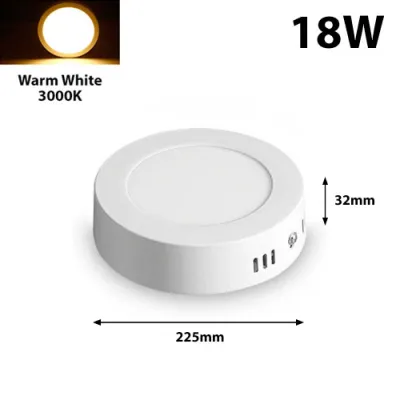
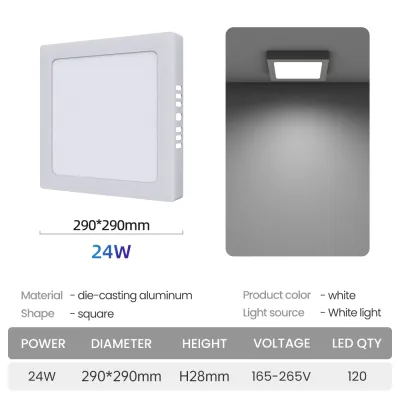
The physical profile of the LED panel light also plays a crucial role in the perceived volume of the space. Traditional surface-mounted ceiling lights often protrude downward by 50mm to 100mm or more, which physically reduces the clearance height and draws the eye upward to a bulky fixture. In contrast, ultra-slim LED panel lights—typically measuring under 25mm in thickness—sit nearly flush against the ceiling. This low-profile design minimizes visual clutter, allowing the eye to travel across the ceiling plane uninterrupted, which creates the illusion of a more spacious and open interior.
Essential Specifications for Lower Ceiling Installations
To achieve comfortable and effective illumination at a 2.6m mounting height, homeowners must carefully evaluate several technical parameters on the product specification sheet. The first consideration is the relationship between lumen output and wattage. Over-illumination is a frequent mistake in HDB flats; installing a high-wattage panel light designed for commercial spaces can result in an uncomfortably bright environment and unnecessary heat buildup. For a standard HDB bedroom or study, a lumen output of 1200 to 1800 lumens is generally sufficient, while living rooms may require multiple lower-output panels or a single larger panel emitting 2400 to 3000 lumens, depending on the room’s footprint.

The beam angle and the quality of the diffuser are equally critical for ensuring even light distribution. A wide beam angle of 110 to 120 degrees is highly recommended for low ceilings, as it encourages the light to spread horizontally as quickly as possible upon leaving the fixture. To prevent the individual LED chips from appearing as bright, piercing dots, the panel should feature a high-quality diffuser made of polymethyl methacrylate (PMMA) or polycarbonate. These materials scatter the light evenly across the entire surface of the panel, transforming a collection of point light sources into a single, soft, and uniform plane of light.
When evaluating premium LED panel lights, look for indications of optical comfort, such as a low Unified Glare Rating (UGR). While UGR values are more commonly calculated for commercial offices, residential fixtures designed for low-ceiling environments may incorporate micro-prismatic diffusers or recessed bezels that redirect light away from the typical horizontal line of sight. Checking product labels for these anti-glare optical features can significantly improve long-term comfort in spaces where you spend hours reading, working, or relaxing.
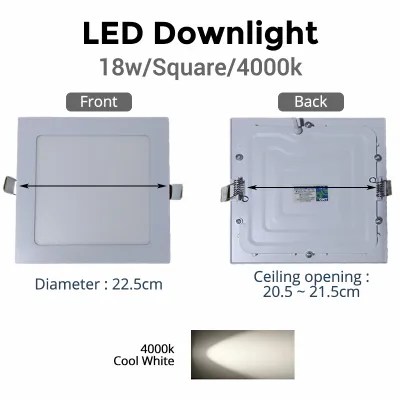
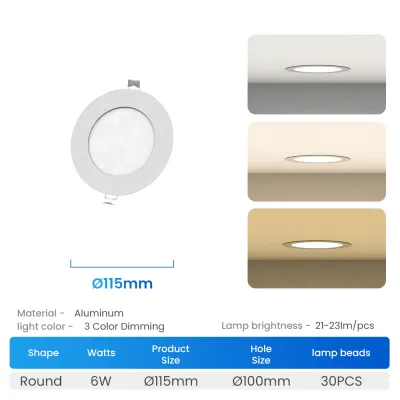
Color temperature is another essential specification that influences the psychological perception of space and comfort. LED panel lights are widely available in warm white (3000K), cool white (4000K), and daylight (6500K). In a compact room with a 2.6m ceiling, extremely cool daylight can sometimes feel clinical and harsh, emphasizing the physical boundaries of the room. Conversely, warm white can occasionally make a small space feel overly enclosed if not balanced with adequate ambient light. Cool white (4000K) is frequently selected as a versatile middle ground, offering a clean, modern aesthetic that maintains visual clarity without feeling sterile, though the final choice remains a matter of personal preference and interior design coordination.
How to Evaluate LED Panel Light Brands and Reliability
In the absence of independent performance testing for every brand on the market, homeowners must rely on objective verification methods to assess product quality and longevity. The most critical step when purchasing electrical appliances in Singapore is verifying local safety certifications. Any LED panel light or external LED driver sold for residential use must carry the Safety Mark issued by Enterprise Singapore. This mark indicates that the product has undergone rigorous testing to ensure compliance with local electrical safety standards, significantly reducing the risk of short circuits, electrical fires, or insulation failure.
Beyond safety certifications, the reliability of an LED panel light is heavily dependent on the quality of its internal components, particularly the LED driver. The driver regulates the electrical current flowing to the LEDs; a low-quality driver is the primary cause of premature fixture failure, flickering, and audible humming. When reviewing technical specifications, look for brands that specify high-quality driver components with low total harmonic distortion (THD) and a high power factor (typically 0.9 or above). Furthermore, reputable manufacturers will provide clear ratings for lumen maintenance, such as an L70/B50 rating of 25,000 to 50,000 hours, which indicates how long the LEDs will retain at least 70% of their original brightness.
A brand’s commitment to customer support is reflected in its warranty terms and local presence. Homeowners should look for brands that offer a comprehensive local warranty of at least one to three years, backed by an authorized distributor or a physical service center in Singapore. A local warranty ensures that if a driver or panel fails prematurely, you can easily obtain a replacement without dealing with international shipping delays or uncooperative online sellers.
Finally, analyzing verified user feedback on local forums and e-commerce platforms can provide valuable insights into real-world performance. Pay close attention to reviews that mention long-term issues such as color shifting—where the light output gradually turns yellow, green, or blue over several months of use—or persistent flickering under standard voltage conditions. Brands that consistently receive positive feedback regarding silent operation, stable light output, and hassle-free warranty claims are generally more reliable choices for long-term residential use.
Installation and Safety Checks for HDB Ceilings
Installing LED panel lights in an HDB flat requires a clear understanding of the structural and electrical boundaries of your home. Standard HDB flats are constructed with reinforced concrete structural ceilings. According to HDB renovation guidelines, structural hacking, drilling deep holes, or attempting to recess fixtures directly into the concrete slab is strictly prohibited to preserve the structural integrity of the building. Consequently, unless you plan to install a false ceiling, you must select surface-mounted LED panel lights that utilize slim mounting brackets secured with standard masonry plugs.
If your flat features an existing false ceiling, you have the flexibility to install recessed LED panel lights. However, you must verify that the false ceiling plasterboard and its supporting metal framework can safely bear the weight of the fixtures. Additionally, ensure there is sufficient clearance space (typically at least 50mm to 75mm) behind the plasterboard to allow heat to dissipate from the LED panel and its driver. Trapping heat in a confined ceiling space can drastically shorten the lifespan of the electronic components and pose a safety hazard.
Before commencing any installation or replacement work, it is vital to perform basic electrical safety checks. Always isolate the power supply at the main distribution board (DB box) by switching off the corresponding circuit breaker, rather than relying solely on the wall switch. Verify that the existing wiring is in good condition, without brittle insulation or exposed copper strands, and ensure that the junction box is compatible with the mounting bracket of your new panel light.
While replacing a simple surface-mounted fixture on an existing point can sometimes be managed as a minor home improvement task, any modification to fixed electrical wiring, the installation of new lighting points, or working at height on unstable ladders presents significant risks. In Singapore, all fixed electrical wiring work must be performed by a licensed electrical worker (LEW) to ensure compliance with the CP 5 code of practice. If you encounter complex wiring configurations, dimming compatibility issues, or structural mounting challenges, you should immediately stop and consult a qualified professional to ensure a safe and compliant installation.
Frequently Asked Questions (FAQ)
Can I install recessed LED panels in a standard HDB concrete ceiling?
No, you cannot install recessed LED panel lights directly into a standard HDB concrete ceiling. HDB structural guidelines strictly prohibit any hacking, channeling, or recessing into the concrete structural slabs of the flat, as this can compromise the building’s structural integrity. If you prefer the flush look of recessed lighting, you must first install a gypsum false ceiling to create the necessary cavity for the fixtures. Alternatively, you can select ultra-slim surface-mounted LED panel lights, which feature a very low profile (often under 20mm) and can be mounted directly to the concrete ceiling using a slim bracket, providing a similar minimalist aesthetic without structural modifications.
What is the ideal color temperature for an HDB living room?
The ideal color temperature for an HDB living room depends on how you use the space and your personal design preferences. For a cozy, relaxing atmosphere suitable for evening wind-down and watching television, warm white (3000K) is highly recommended. If the living room also serves as a workspace, study, or play area where visual clarity is important, cool white (4000K) offers a balanced, neutral light that enhances alertness without feeling overly clinical. Some homeowners prefer to install smart or tri-color LED panel lights, which allow you to toggle between warm white, cool white, and daylight (6500K) using a wall switch or remote control, providing maximum flexibility for different times of day and activities.

Community discussion
Share your experience or ask a question. Comments are reviewed before publication.