
Selecting the correct light bulb holder is the most critical step in ensuring a new bulb physically fits and operates safely within your home’s light fixtures. In Singapore, residential lighting relies on a few standardized socket designs, but purchasing the wrong base type remains a common mistake. A mismatch not only prevents the bulb from installing correctly but can also lead to electrical safety hazards if forced or adapted improperly.
To identify which bulb matches your existing fixture, you must evaluate the mechanical connection style—whether it screws in, twists to lock, or uses pins—and measure the key dimensions of the socket. Understanding these physical characteristics allows you to navigate the hardware store or online marketplaces with confidence, ensuring a seamless and secure installation.
How to Identify Your Existing Light Bulb Holder
Before conducting any physical inspection or taking measurements of a light bulb holder, safety must be your absolute priority. Always switch off the wall switch controlling the fixture. For ceiling-mounted lights or fixtures with suspected wiring issues, go to your home’s main distribution board and switch off the corresponding circuit breaker to ensure the circuit is fully isolated.
Products mentioned in this guide
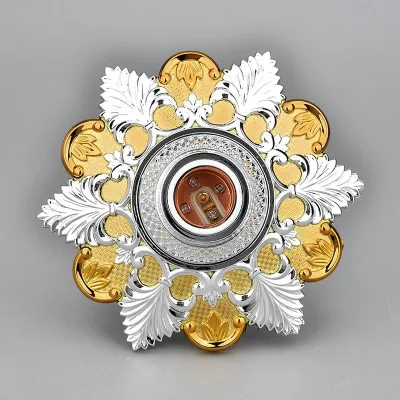
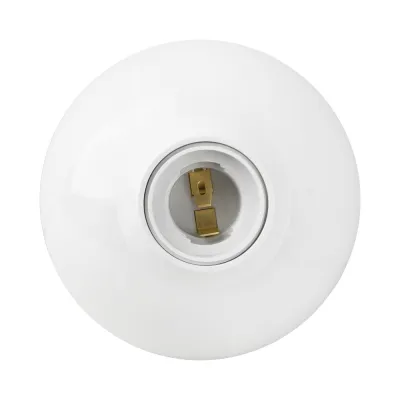
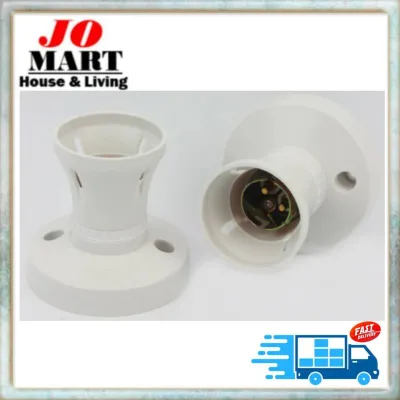
![[BUNDLE DEAL] E27 B22 light bulb holder / ceiling light bulb battern holder](https://img.lazcdn.com/g/ff/kf/S8b3ac8a69d254209b2307a4740eb27262.jpg_400x400q80.jpg_.webp)
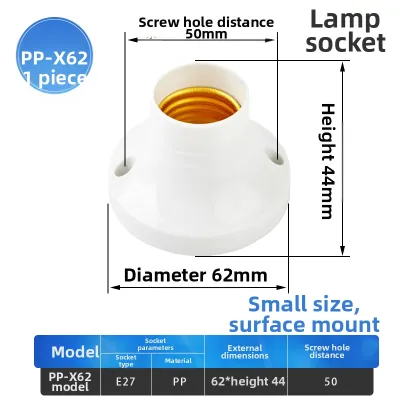
![[SG Local Stock] Lightbulb Holder // Ceiling Light Holder // LED Light Fixture Holder // LED Starter](https://img.lazcdn.com/g/p/d91864ac5ce6c90924aa6204c80155a0.png_400x400q80.png_.webp)
Prices are valid at publication and may change. Please refer to the product page for the latest price.
Once the power is verified as off, you can visually distinguish the holder type by looking at its interior shape. Sockets with a continuous spiral thread inside are designed for screw-in bases. Sockets with a smooth collar and two small L-shaped slots on opposite sides are built for bayonet bases. If the socket features two small, circular entry holes designed to receive straight metal prongs, it is a pin-style base.
To determine the exact size without a professional caliper, you can use common household reference items or a standard ruler. For instance, the wide E27 screw base has a diameter of 27mm, which is slightly wider than a Singapore 50-cent coin (23mm). The smaller E14 screw base measures 14mm, which is roughly the thickness of a standard AA battery. For pin bases, measuring the precise distance between the center points of the two holes with a ruler will tell you the pin spacing in millimeters.
If you want to bypass manual measurements, look closely at the old bulb you are replacing. Manufacturers almost always stamp the specific base code, voltage rating, and wattage directly onto the plastic or ceramic collar of the bulb. If the bulb is missing or broken, inspect the inside of the fixture socket itself; many modern lamps and downlight canisters feature a small adhesive safety label detailing the exact compatible holder type.
Common Light Bulb Holder Types Decoded
The technical alphanumeric codes used for light bulb bases follow an international classification system that simplifies identification once you understand the formula. The leading letter indicates the mechanical shape or design of the base, while the numbers that follow represent the key dimensions in millimeters. This standardized system ensures that any bulb marked with a specific code will fit any matching socket, regardless of the brand.

By decoding these letters and numbers, you can instantly visualize how the bulb connects to the socket and where it is most commonly applied in a residential environment. The four most prevalent types in modern homes are the E27, E14, B22, and GU10.
Edison Screw Bases: E27 and E14 Explained
The letter “E” designates the Edison Screw base, named after Thomas Edison. This classic design utilizes a threaded metal base that screws directly into a matching threaded sleeve inside the light bulb holder. The numbers 27 and 14 represent the outer diameter of the screw thread in millimeters.
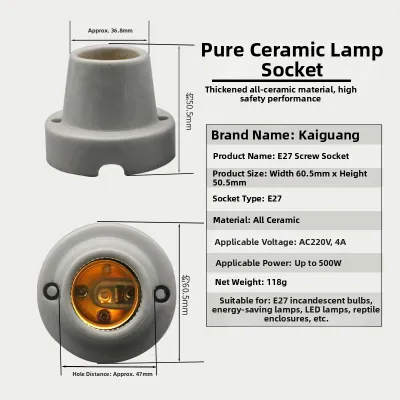
- E27 (Standard Edison Screw): Measuring 27mm across, the E27 is the standard screw base used across Singapore. It is the default choice for general ambient lighting, commonly found in ceiling pendants, wall-mounted sconces, study desk lamps, and outdoor gate lights. Its wide thread provides a strong mechanical hold that easily supports larger, heavier glass globes.
- E14 (Small Edison Screw): Measuring 14mm across, the E14 is a much narrower, compact variant. It is designed specifically for smaller decorative fixtures where a bulky E27 socket would look unsightly or fail to fit physically. Typical applications include multi-arm chandeliers, bedside table lamps, candelabra fixtures, and internal appliance lights.
Visually, the E14 base features a significantly finer thread pitch and a slender profile compared to the robust, chunky appearance of the E27. Because of this size difference, they are not interchangeable, and attempting to fit one into the other without a specialized adapter is impossible.
Push-and-Turn vs. Pin Bases: B22 and GU10 Explained
Unlike the continuous threading of Edison screws, bayonet and pin bases rely on distinct mechanical locking mechanisms to secure the bulb. These designs are highly resistant to loosening from physical vibrations.
- B22 (Bayonet Cap): The "B" stands for bayonet, and the number 22 denotes a base diameter of 22mm. This holder features a push-and-twist mechanism. The bulb base is smooth with two small metal pins protruding from opposite sides. To install it, you push the bulb upward into the socket and give it a slight clockwise turn until the pins lock into the L-shaped slots. B22 holders are highly common in older Singaporean residential estates, particularly on simple ceiling batten holders and traditional floor lamps.
- GU10 (Twist-and-Lock Pin Base): The "G" indicates a multiple-pin base, while the "U" signifies a universal design that provides mechanical locking support. The number 10 indicates that the two thick, flat-bottomed pins are spaced exactly 10mm apart. To install a GU10 bulb, you insert the pins into the socket's keyhole slots and twist it clockwise to lock it firmly in place.
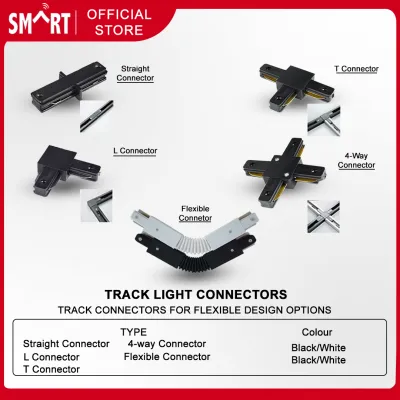
While B22 bulbs are typically used for general, wide-angle room lighting, GU10 bulbs are the industry standard for directional lighting. You will find GU10 holders almost exclusively in ceiling-recessed downlights, track lighting systems, and adjustable spotlights where directional beam control is required.
Essential Fixture Specifications Beyond the Base Type
Finding a bulb that physically fits into your light bulb holder is only the first step. To ensure safe operation and prevent electrical hazards, you must verify several critical electrical and physical specifications of your fixture.
- Voltage Compatibility: Singapore's standard mains electricity operates at 230V at a frequency of 50Hz. Always verify that both the fixture and the replacement bulb are rated for 230V. This is especially important if you have purchased imported decorative light fixtures online, as some regions use 110V systems. Connecting a low-voltage bulb directly to a 230V holder without a compatible step-down transformer will destroy the bulb instantly and can cause a short circuit.
- Maximum Wattage Limits: Every light bulb holder has a maximum wattage rating, which is typically printed on a safety sticker inside the socket (e.g., "Max 40W"). Exceeding this limit causes extreme heat buildup, which can melt the plastic housing of the holder, degrade the wire insulation, and pose a severe fire risk. While modern LED bulbs consume very little power, always double-check this limit if you are installing high-output halogen or incandescent bulbs.
- Physical Dimensions and Enclosure: Ensure the physical length and width of the bulb fit comfortably within the fixture's shade or glass cover. A bulb that touches the sides of an enclosure can trap heat, dramatically shortening the lifespan of the bulb's internal driver electronics. If you are replacing a bulb in a fully enclosed fixture, verify that the bulb is explicitly rated for enclosed use.
- Dimming Compatibility: If your light fixture is controlled by a wall dimmer switch, you must ensure both the bulb and the dimmer are compatible. Standard non-dimmable LED bulbs will flicker, buzz, or fail prematurely if connected to a dimming circuit. Check the manufacturer's packaging to confirm that the bulb supports the specific dimming technology installed in your home.
Safe Handling and Compatibility Verification
When working with electrical fixtures, safe handling practices prevent personal injury and damage to your home. Always turn off the power at the wall switch, and allow any recently used bulb to cool down completely before touching it to avoid thermal burns.
Never force a bulb into a light bulb holder. A compatible bulb should slide, screw, or twist into its matching socket smoothly with minimal physical effort. If you encounter resistance, stop immediately and re-verify the base type. Forcing a mismatched bulb can crack the glass, bend the internal contact tabs, or strip the threads of the holder.
Inspect your light bulb holders periodically for signs of physical wear or thermal degradation. If you observe brown or black scorch marks, brittle or cracked plastic, a persistent burning smell, or loose internal metal contacts, discontinue using the fixture immediately. These symptoms indicate high electrical resistance, which is an active fire hazard.
While replacing a standard bulb is a simple DIY task, modifying a fixture’s internal wiring, converting a socket to a different base type, or installing fixed ceiling tracks requires professional expertise. In Singapore, always engage a licensed electrical worker (LEW) for any fixed electrical wiring modifications to ensure full compliance with local safety standards, such as SS 638.
Frequently Asked Questions (FAQ)
Can I use an adapter to fit an E27 bulb into an E14 holder?
While E14-to-E27 adapters are widely available on online marketplaces and are electrically functional, using them introduces notable physical and safety risks. An adapter adds physical length and bulk, which often causes the bulb to protrude awkwardly from the lampshade or prevents protective glass covers from closing. Furthermore, E14 fixtures are engineered for lower heat dissipation and lower maximum wattages than E27 fixtures. If you use an adapter to install a high-wattage E27 bulb, you risk overheating the delicate E14 socket and wiring. If you must use an adapter, strictly ensure the bulb’s actual wattage draw is well below the fixture’s maximum rating.
Why do GU10 bulbs have a thicker base compared to other pin types?
The thick, flat-bottomed pins of a GU10 bulb are specifically designed to support its robust twist-and-lock mechanism. Unlike standard bi-pin bulbs that rely purely on friction to stay in place, the flared pins of a GU10 bulb slide into a keyhole slot and lock firmly when rotated. This secure mechanical connection is essential because GU10 bulbs are primarily installed in downward-facing ceiling spotlights, track heads, and recessed downlights. The twist-and-lock design ensures that gravity, thermal expansion, and structural vibrations from daily household activity cannot cause the bulb to loosen or fall out of the holder over time.
Community discussion
Share your experience or ask a question. Comments are reviewed before publication.