
Selecting the right long ceiling light for a Housing & Development Board (HDB) flat with a standard 2.6-metre ceiling height is a balancing act between maximizing vertical clearance and ensuring even illumination. Because a 2.6-metre ceiling is relatively low, bulky or deeply suspended light fixtures can make a room feel cramped and restrict physical movement. The most effective solution is to opt for ultra-slim, surface-mounted linear LED fixtures or low-profile flush-mount panels.
These designs deliver a streamlined aesthetic, keep the light source close to the ceiling plane, and distribute light horizontally across rectangular spaces like living rooms, dining areas, and corridors. By focusing on slim profiles, appropriate proportions, and high-quality diffusers, you can achieve a bright, open, and visually balanced home without sacrificing precious headroom.
Understanding Ceiling Clearance and Light Drop in 2.6m HDB Flats
When planning the lighting layout for a 2.6-metre HDB ceiling, calculating the available vertical clearance is the first and most critical step. To maintain a safe and comfortable living environment, standard residential spaces require a minimum headroom clearance of approximately 2.1 to 2.2 metres. This ensures that tall occupants can walk freely, raise their arms, or carry household items without risk of contacting the light fixture.
Products mentioned in this guide
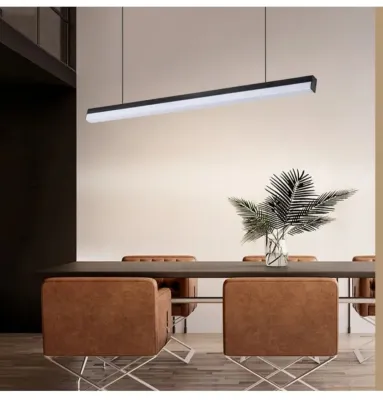
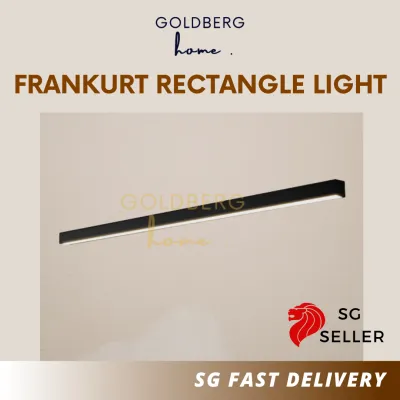
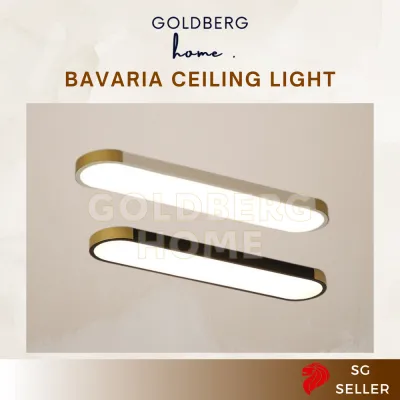
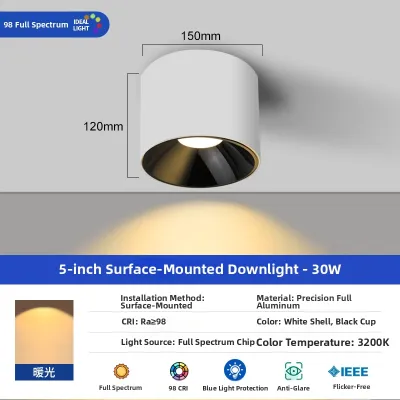
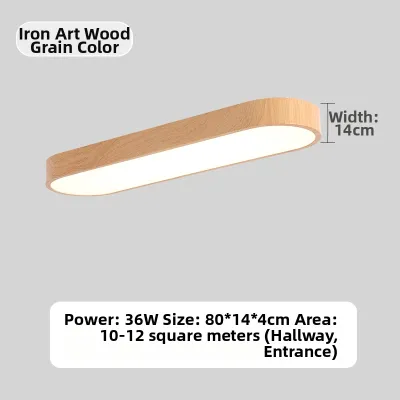
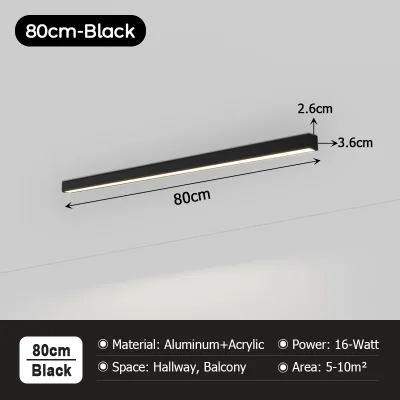
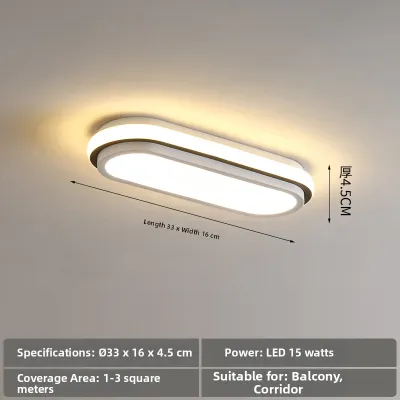
Prices are valid at publication and may change. Please refer to the product page for the latest price.
Subtracting this required headroom from the 2.6-metre ceiling height leaves a maximum allowable light drop of 40 to 50 centimetres. However, to prevent the space from feeling visually oppressive, interior design standards suggest keeping the actual fixture drop much shallower—ideally under 10 to 15 centimetres. This keeps the visual plane high and makes the room feel more spacious.
This clearance constraint makes the choice between flush-mount and semi-flush-mount designs highly consequential. Flush-mount long ceiling lights sit entirely flat against the concrete ceiling slab, leaving no gap between the fixture and the mounting surface. This design maximizes vertical clearance, eliminates overhead shadows, and prevents dust, insects, and cobwebs from accumulating on top of the fixture.
Semi-flush-mount lights, on the other hand, are suspended by a short stem or bracket, creating a small gap of 5 to 15 centimetres between the fixture and the ceiling. While semi-flush-mounts can create an appealing halo effect by reflecting light off the ceiling, they reduce valuable headroom. They are generally less suited for the lowest areas of a 2.6-metre HDB flat unless placed directly over a permanent furniture piece like a dining table.
Additionally, structural variations within HDB flats can further restrict your lighting choices. Many units feature structural concrete beams that drop below the standard 2.6-metre ceiling line, sometimes reducing the local clearance to 2.4 metres or less. If you plan to install a long ceiling light near these beams, or near a ceiling fan, you must account for both physical clearance and optical interference.
Installing a long linear light too close to a ceiling fan can create a highly distracting strobing effect as the fan blades repeatedly cut through the light path. To avoid this, ensure that any long ceiling light is positioned well outside the sweep radius of the fan blades and mounted flush enough to remain above the fan’s horizontal plane.
Proportion and Placement: Sizing Long Lights for HDB Rooms
Achieving visual balance in an HDB flat requires selecting a long ceiling light that matches the proportions of the room it illuminates. A fixture that is too short will look lost and may fail to light the corners of the room, while an oversized fixture can overwhelm the space and make the ceiling feel lower than it actually is.

A reliable guideline for linear or long rectangular fixtures is to keep the length of the light between one-half and two-thirds of the length of the furniture piece or the specific zone it is meant to define. For example, if you are mounting a long ceiling light directly above a 1.8-metre dining table, a fixture length of 90 to 120 centimetres provides excellent visual symmetry and functional coverage.
The ideal dimensions of a long ceiling light also depend heavily on the layout of the room. In narrow HDB corridors, a single, slim linear light running parallel to the walls can draw the eye forward, creating an illusion of length and continuity while providing uniform illumination along the entire walkway.
For rectangular living rooms, placing a long ceiling light parallel to the main seating arrangement or the television console helps define the living zone within an open-plan layout. In modern open-concept HDB designs, where the living and dining areas merge, using coordinated long ceiling lights of varying lengths can help visually separate the two functional zones without the need for physical partitions.
When sizing these fixtures, it is equally important to consider the beam angle and light spread. Long, narrow fixtures often project light in a directional downward pattern. If the fixture is too narrow or lacks a wide-angle diffuser, it can create a harsh runway effect, leaving the upper walls and corners of the room in deep shadow.
To prevent this visual crowding and ensure a comfortable, open feel, look for long ceiling lights that feature wrap-around diffusers or secondary upward-lighting components. These designs bounce light off the ceiling, making the 2.6-metre height feel more expansive and less restrictive.
Key Specifications to Check Before Purchasing
Before purchasing a long ceiling light, it is essential to verify several technical and structural specifications to ensure compatibility with your HDB flat’s electrical infrastructure. First, check the weight of the fixture and the load-bearing capacity of your ceiling’s junction box. While HDB concrete ceilings are highly durable and can support heavy fixtures when properly anchored, standard electrical junction boxes often have specific weight limits.
If your chosen long light is exceptionally heavy or features a wide mounting plate, you must ensure that the mounting bracket can be anchored directly into the concrete slab using appropriate masonry plugs rather than relying solely on the junction box screws. This prevents structural failure and ensures the fixture remains securely attached over time.
Another critical decision is choosing between integrated LED panels and fixtures with replaceable bulbs. Integrated LED long lights offer the slimmest profiles—often under 5 centimetres in thickness—making them ideal for 2.6-metre ceilings. They provide highly even, dot-free illumination across their entire length.
However, because the LEDs are permanently soldered to the internal circuit board, if the light source or the internal driver fails, the entire fixture or driver unit must be replaced. In contrast, long fixtures that utilize replaceable linear bulbs or multiple individual bulbs are typically thicker and heavier, but they offer simpler long-term maintenance since you can replace individual bulbs without removing the entire fixture from the ceiling.
Electrical compatibility is another vital checkpoint. Ensure that the fixture is rated for Singapore’s standard residential voltage of 230V at 50Hz and carries recognized safety certifications, such as the Safety Mark, which indicates compliance with local electrical safety standards.
Furthermore, if you plan to use a dimmer switch to adjust the light levels, you must verify that both the LED driver inside the fixture and your wall switch are compatible. Standard HDB wall switches are simple on/off controls; upgrading to a dimmable setup requires a dimmable LED driver (such as a Triac, phase-cut, or smart wireless driver) and a compatible dimmer switch or smart home hub to prevent flickering and premature driver failure.
Evaluating Light Quality and Visual Comfort
In a low-ceiling environment like a 2.6-metre HDB flat, the light source sits closer to eye level than it would in a high-ceiling landed property. This proximity makes light quality and visual comfort paramount. To prevent eye strain and harsh glare, pay close attention to the design of the fixture’s cover or diffuser.
Avoid long fixtures with exposed bulbs or clear glass covers, as they can project intense, concentrated points of light directly into your line of sight. Instead, prioritize fixtures with high-quality, frosted acrylic or polycarbonate diffusers. These materials scatter the light evenly across the entire surface of the fixture, softening shadows and reducing direct glare.
The Colour Rendering Index (CRI) is another crucial specification to evaluate. CRI measures how accurately a light source reveals the true colours of objects compared to natural sunlight. For living rooms, dining areas, and kitchens, look for long ceiling lights with a CRI of 90 or higher.
A high CRI ensures that food looks appetizing, home decor colours appear vibrant and true, and skin tones look natural. Lower CRI lights can make spaces feel clinical, dull, or slightly grey, which can be particularly noticeable in compact HDB interiors.
Additionally, consider the colour temperature of the light, which is measured in Kelvin (K). The choice of colour temperature is a matter of personal preference and room function. Warm white (2700K to 3000K) creates a cozy, relaxing atmosphere suitable for bedrooms and dining areas.
Cool white (4000K) offers a balanced, neutral light that is excellent for general living spaces, study areas, and kitchens where tasks are performed. Daylight (6000K to 6500K) provides a bright, bluish-white light that is highly functional for utility yards or bathrooms but can feel overly harsh in a low-ceiling living room. Many modern long LED ceiling lights offer tri-colour switching or smart CCT (Correlated Colour Temperature) tuning, allowing you to adjust the warmth of the light to suit different times of day.
Installation Boundaries and When to Consult a Professional
Installing a long ceiling light in an HDB flat involves specific structural and electrical boundaries that must be respected to ensure safety and compliance with local regulations. Before beginning any installation or maintenance work, always isolate the electrical power at the main distribution board (DB box) by switching off the corresponding circuit breaker.
Use a reliable, non-contact voltage detector pen to verify that the wires at the ceiling junction box are completely dead before touching them. Working at height, even on a standard step ladder in a 2.6-metre room, requires stable equipment and a clear workspace to prevent falls.
Structural considerations are equally important when mounting long fixtures. HDB ceilings are typically constructed of solid precast concrete. Drilling into this material requires a rotary hammer drill equipped with masonry drill bits; a standard impact drill will struggle to penetrate the concrete and may overheat.
You must also be extremely careful not to drill into embedded electrical conduits or structural steel reinforcement bars (rebar). If your new long ceiling light has a mounting plate that does not align perfectly with the existing ceiling rose, or if you need to offset the light to center it over a dining table, you will need to run casing (casing trunking) along the ceiling to protect the extended wiring.
While basic like-for-like light fixture replacements can sometimes be performed by experienced DIY enthusiasts who understand electrical safety, complex installations require professional expertise. If your installation involves modifying fixed electrical wiring, adding new switch lines, drilling near structural beams, or mounting exceptionally heavy or complex suspended fixtures, you must engage a licensed electrical worker (LEW) or a qualified professional electrician.
A professional ensures that the wiring is safely routed, the fixture is securely anchored to withstand its weight over time, and the entire installation complies with Singapore’s electrical safety standards.
Frequently Asked Questions (FAQ)
Can I install a long ceiling light if my HDB flat has a false ceiling?
Yes, you can install a long ceiling light on a false ceiling, but the installation method depends heavily on the weight of the fixture. False ceilings in HDB flats are typically made of plasterboard, which cannot support heavy loads on its own. For lightweight linear LED fixtures, specialized hollow-wall anchors or toggle bolts can be used to secure the mounting bracket directly to the plasterboard.
However, for heavier long ceiling lights, the fixture must be anchored directly to the structural concrete slab above the false ceiling using threaded rods or long concrete anchors, or secured to the metal support framing of the false ceiling itself. Always verify the weight limits of your false ceiling before mounting any large fixture.
How do I clean a long ceiling light without damaging the diffuser?
To clean a long ceiling light safely, always start by turning off the power switch and allowing the fixture to cool down completely to avoid thermal shock or electrical hazards. For routine maintenance, gently wipe the exterior of the diffuser with a dry, soft microfiber cloth to remove dust and cobwebs.
If the diffuser has accumulated grease or stubborn dirt—which is common in open-concept HDB kitchens—you can wipe it with a slightly damp microfiber cloth dipped in a mild solution of water and a drop of dishwashing liquid. Avoid using harsh chemical cleaners, alcohol, or abrasive scrubbing pads, as these can scratch, cloud, or yellow the acrylic or polycarbonate diffuser over time. Ensure the fixture is completely dry before restoring power.

Community discussion
Share your experience or ask a question. Comments are reviewed before publication.