
Direct Answer: Is There a Single Longest-Lasting Brand?
No single brand universally outlasts all others in Singapore, as the actual lifespan of any fragrance product depends heavily on its chemical formulation, the physical environment of your home, and your maintenance habits. While many premium and local brands advertise impressive longevity, these claims are often tested under idealized, climate-controlled laboratory conditions that rarely match the reality of a tropical household.
In Singapore’s unique climate, a diffuser that is rated to last three months might deplete in half that time if placed in a naturally ventilated room with high humidity, or in a space with constant air conditioning drafts. Rather than relying solely on brand names or marketing promises, identifying a truly long-lasting scent solution requires looking closely at the product’s base ingredients, the quality of its reeds, and how well its design matches the specific airflow of your room.
What Actually Determines How Long a Diffuser Lasts?
The evaporation rate of a diffuser is governed by the chemical properties of its carrier liquid. Most commercial home fragrances utilize either an alcohol base or a synthetic glycol-based carrier to suspend the scent molecules. Alcohol-based formulas evaporate rapidly, providing an intense initial burst of fragrance but depleting the bottle quickly. Conversely, glycol-based or specialized low-volatility carriers release the scent at a much slower, more controlled rate, significantly extending the product’s functional lifespan.
Products mentioned in this guide
![(100+ Selections) Shangri-La Hotel/ Hilton Hotel/ Marriott Hotel/ Lavender/ Lemongrass/ Jasmine/ Rose/ Eucalyptus/ English Pear Freesia scent Premium Home Fragrance Aromatherapy Reed Diffuser (50ml) / Reed Refill (60ml) Essential Oil Scents [Re.D]](https://img.lazcdn.com/g/p/08262451279c0e1aa71a32ff04974804.jpg_400x400q80.jpg_.webp)
![(80+ Selections) Shangri-La Hotel/ Hilton Hotel/ Westin Hotel/ Lavender/ Jasmine/ Gardenia/ Ocean/ Bluebell/ Rose/ Osmanthus/ English Pear Freesia scent Premium Home Fragrance Reed Diffuser (50ml/ 180ml) / Reed Refill (60ml) Essential Oil [Re.D]](https://img.lazcdn.com/g/p/3531ee3b6bef554bf3880b269eb596d5.jpg_400x400q80.jpg_.webp)
Prices are valid at publication and may change. Please refer to the product page for the latest price.

Another critical factor is the concentration of the fragrance or essential oils within the mixture. High-quality formulations feature a higher ratio of pure oils to carrier liquids, ensuring that the scent remains robust and noticeable even as the liquid level gradually drops. Lower-concentration formulas may seem to last a long time physically, but the actual fragrance throw often fades to near-nothingness long before the liquid is fully gone.
The physical medium of dispersion also plays a major role in longevity. Natural rattan reeds contain irregular, organic capillary channels that can easily become clogged by heavy oil molecules or airborne dust over time. Synthetic fiber reeds are engineered with highly uniform, open pores that draw the liquid upward at a consistent rate, offering a more reliable scent throw but sometimes consuming the liquid slightly faster due to their high capillary efficiency.
Finally, Singapore’s environmental conditions present distinct challenges for home fragrance preservation. High ambient humidity can slow down the evaporation of certain water-soluble components, but it can also damp down the physical travel of scent molecules. More importantly, the widespread use of air conditioning units and ceiling fans creates continuous drafts that strip moisture and fragrance from the reeds at an accelerated rate. Placing a diffuser near large, sunlit windows also heats the glass vessel, causing the liquid to volatilize prematurely.
Reed vs. Pillar Scent Diffusers: Which Format Lasts Longer?
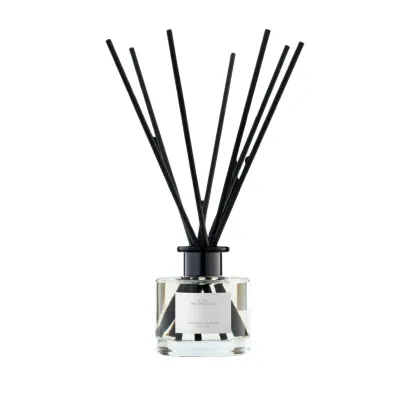
To optimize home fragrance longevity, it is helpful to compare traditional reed diffusers with the increasingly popular pillar scent diffuser format. Reed diffusers rely on passive capillary action, drawing liquid up through multiple thin sticks to expose a large cumulative surface area to the surrounding air. This open-air design means evaporation is continuous and highly susceptible to ambient drafts, temperature changes, and humidity fluctuations.
A pillar scent diffuser—which can take the form of a solid scented wax pillar, a porous ceramic column, or a sleek, pillar-shaped electronic device—operates on a more controlled physical mechanism. Solid or porous ceramic pillars have a fixed, restricted surface area that naturally limits the rate of fragrance release, resulting in a highly stable and long-lasting scent profile. Electronic pillar diffusers allow you to program diffusion intervals, completely eliminating passive waste when the room is unoccupied.
From an aesthetic and spatial perspective, both formats offer distinct advantages for Singaporean home decor. Reed diffusers provide a classic, delicate look with their elegant glass bottles and slender reeds, making them ideal accents for vanity units, bathroom ledges, or narrow entryway consoles. Pillar scent diffusers, with their architectural shapes and solid profiles, serve as bolder decorative statements that blend seamlessly with modern minimalist, Scandinavian, or industrial interior styles on coffee tables and open shelving.
In terms of maintenance and long-term costs, reed diffusers require regular reed flipping and eventual replacement of both the liquid and the sticks. Refills are widely available, making them a highly customizable and cost-effective option over time. Pillar scent diffusers, particularly solid or passive ceramic types, require almost no daily maintenance but may need to be entirely replaced or refreshed with concentrated oil drops once their scent fades, representing a different long-term investment pattern.
How to Read Labels and Verify Brand Longevity Claims
When shopping for home fragrances, you can bypass vague marketing claims by evaluating the physical specifications printed on the product packaging. First, compare the net liquid volume in milliliters (ml) against the manufacturer’s expected lifespan. As a general baseline, a standard 100ml reed diffuser should realistically last between 4 to 8 weeks, while a larger 200ml or 250ml vessel is typically required to achieve a lifespan of 12 weeks or more under normal household conditions.
Next, inspect the ingredient list for indicators of carrier oil quality. Look for terms such as “alcohol-free,” “non-flammable base,” or “soy-based carrier,” which suggest a slower-evaporating formula. Brands that openly state their fragrance oil concentration percentage (often ranging from 15% to 30% for premium blends) are generally more reliable, as higher concentrations maintain a consistent scent throw without requiring you to use as many reeds.
Finally, examine the quality and quantity of the included reeds. A package that includes high-density polyester or nylon fiber reeds is often a better choice for longevity than one containing cheap, compressed paper or low-grade rattan. Ensure the reeds are thick enough (ideally 3mm to 4mm in diameter) to support steady capillary action without warping, and check that the brand provides at least six to eight reeds to allow you to customize the scent intensity.
Decision Framework: Choosing the Right Diffuser for Your Room
To select the most suitable diffuser setup for your home, you must match the product’s physical characteristics to the specific environmental conditions of each room:
- For Large, Open-Plan Living Areas: Opt for a high-concentration reed diffuser of at least 200ml, paired with synthetic fiber reeds. The engineered fibers will maintain a strong, continuous capillary draw to compete with the active airflow from ceiling fans or air conditioning units, ensuring the fragrance successfully reaches the corners of the space.
- For Small, Enclosed Bedrooms or Studies: Choose a subtle, slow-evaporating pillar scent diffuser or a smaller 100ml reed diffuser using only three or four natural rattan reeds. This setup restricts the overall evaporation rate, preventing the fragrance from becoming overwhelming while maximizing the product's physical lifespan.
- For High-Humidity Bathrooms: Verify if the space has natural ventilation or constant dampness. In these areas, a solid or porous ceramic pillar scent diffuser often performs better than a liquid reed diffuser, as it is less prone to mold growth and does not rely on capillary action that can be disrupted by high moisture levels.
- For Sunlit Areas and High-Traffic Zones: Avoid placing liquid reed diffusers in direct afternoon sunlight or right next to main doorways. If you must scent these high-exposure zones, use a solid pillar scent diffuser or adjust your reed diffuser placement to a shaded, sheltered corner to prevent rapid, wasteful evaporation.
Simple Maintenance Steps to Extend Fragrance Throw
You can significantly extend the functional life and scent projection of your chosen diffuser by adopting a few simple, low-risk maintenance habits. First, manage your reed flipping frequency carefully. Flip the reeds only when you notice the fragrance beginning to fade, which is typically once every one to two weeks. Avoid flipping them daily, as constant exposure of wet oil to the air accelerates evaporation and depletes the liquid prematurely.
Second, recognize when to replace your reeds versus when to replace the entire liquid base. Over time, reeds become completely saturated with household dust and heavy oil compounds, which blocks their microscopic pores and stops the capillary action. If you notice that the liquid level in your bottle has stopped dropping but there is no scent in the air, do not discard the remaining liquid. Simply remove the old reeds, wipe the neck of the bottle clean, and insert a fresh set of reeds to restore the diffusion process.
Lastly, pay close attention to the physical placement of your diffuser. Keep the vessel away from active heat sources, such as the tops of television consoles, refrigerators, or sunny windowsills. A stable, shaded location with gentle, natural air circulation—such as an interior hallway table or a mid-height bookshelf—will allow the fragrance to disperse evenly throughout your home without causing the carrier oil to dry out prematurely.
Frequently Asked Questions (FAQ)
Are reed diffusers safe to use around pets and children?
While reed diffusers do not require heat or open flames, they must be kept strictly out of reach of children and pets to prevent accidental ingestion, spills, or skin contact. Many common essential oils used in home fragrances, such as tea tree, eucalyptus, citrus, and peppermint, can be highly toxic to cats and dogs if absorbed through the skin or ingested. Always review the specific ingredient list of your chosen brand, opt for pet-safe formulations when possible, and place all diffuser formats on high, stable shelving.
Can I mix different diffuser oils or reuse old reeds?
Mixing different diffuser oils is not recommended, as different brands utilize distinct carrier bases that may not blend properly, potentially causing the liquid to separate, cloud, or evaporate unevenly. Reusing old reeds with a new fragrance is also ineffective. The pores of the old reeds are already fully saturated with the previous oil and airborne dust, which will block the new scent from traveling upward and result in a weak, distorted fragrance throw. Always use a fresh set of reeds when refilling or changing your diffuser liquid.

Community discussion
Share your experience or ask a question. Comments are reviewed before publication.