
Standard HDB flats built in Singapore typically feature a floor-to-ceiling height of 2.6 meters. While this height is highly functional, it presents unique challenges when planning your interior lighting. Selecting the wrong fixture can instantly make a room feel cramped, lower the visual ceiling line, and even pose safety hazards for taller occupants. To maintain an airy, spacious feel, homeowners must prioritize low-profile ceiling lights that deliver ample illumination without encroaching on valuable vertical space.
Choosing the right lighting involves balancing aesthetics, spatial limits, and technical specifications. By understanding how different fixtures interact with a 2.6-meter clearance, you can make informed decisions that enhance both the functionality and the visual volume of your home. This guide outlines the essential design features, evaluation criteria, and safety protocols to help you select the perfect low-profile ceiling lights for your HDB flat.
Understanding HDB Ceiling Constraints and Lighting Needs
The vertical envelope of a standard 2.6-meter HDB ceiling leaves very little room for error. When you consider that a standard door frame stands at approximately 2.1 meters, you are left with only 50 centimeters of clearance above the door line. Introducing a bulky, dangling light fixture into this zone immediately disrupts the visual flow of the room. The eye is naturally drawn to the lowest point of the fixture, which artificially lowers the perceived height of the ceiling and creates an oppressive, cave-like atmosphere.
Products mentioned in this guide
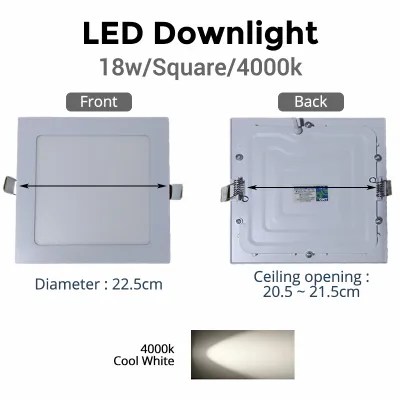
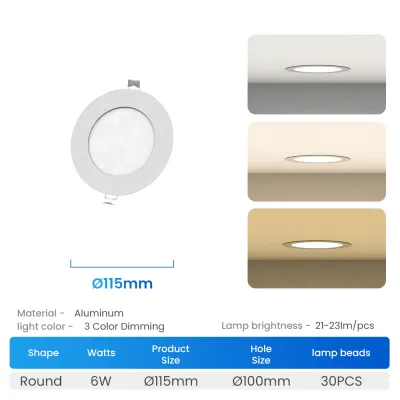
![[Local Seller] LED Ceiling Surface Mounted Downlight LED Panel Light Square Round](https://img.lazcdn.com/g/ff/kf/Sdd11b528478549189cb70a967ccae3d2t.jpg_400x400q80.jpg_.webp)
Prices are valid at publication and may change. Please refer to the product page for the latest price.
To avoid this cramped feeling, it is crucial to understand the functional differences between flush-mount, semi-flush, and low-profile pendant designs. Flush-mount fixtures are designed to sit directly against the concrete ceiling slab, leaving no gap between the light housing and the ceiling surface. This is the most space-efficient option available, making it the default choice for high-traffic areas like hallways, kitchens, and standard bedrooms. Semi-flush fixtures, which feature a small stem that suspends the light body a few centimeters below the ceiling, can work well if the overall drop is kept under 15 centimeters, but they still run the risk of catching tall objects or blocking sightlines in smaller rooms.
Low-profile pendant lights, on the other hand, should be used selectively and strategically. Because they hang lower, they are generally unsuitable for central room lighting where family members walk frequently. However, they can be highly effective when positioned over fixed furniture pieces, such as dining tables, kitchen islands, or bedside tables. In these specific zones, the physical barrier of the furniture prevents people from walking directly under the light, allowing you to enjoy the decorative appeal of a pendant without sacrificing functional headroom.
In addition to physical clearance, you must consider the light distribution needs of typical HDB layouts. A standard living room or bedroom requires broad, even illumination to eliminate dark corners, which naturally make a space feel smaller and more confined. Fixtures with a wide beam angle—ideally 120 degrees or more—are excellent for low ceilings because they spread light horizontally across the room, bouncing illumination off the walls and creating a brighter, more open environment.
Key Design Features for Low-Profile Ceiling Lights
When shopping for low-profile ceiling lights, the physical dimensions of the fixture should be your primary consideration. For a standard 2.6-meter ceiling, aim for a maximum fixture thickness of 50 millimeters (5 centimeters) or less. Ultra-slim LED panel lights are particularly well-suited for this application, with many modern designs measuring a mere 10 to 20 millimeters in thickness. These ultra-thin profiles blend seamlessly into the ceiling plane, providing a clean, minimalist look that preserves every millimeter of vertical space.

The diameter of the fixture also plays a critical role in maintaining visual balance. A fixture that is too small will look lost on a spacious living room ceiling, while an excessively large fixture can dominate the room and make the ceiling feel lower. As a general rule, a medium-sized HDB bedroom of about 10 to 12 square meters pairs well with a ceiling light diameter of 350 to 450 millimeters. For larger living areas, a diameter of 500 to 600 millimeters provides sufficient light coverage without overwhelming the space, provided the thickness remains ultra-slim.
To prevent harsh glare in low-clearance areas, pay close attention to the light diffusion materials used in the fixture. Because the light source sits closer to eye level on a 2.6-meter ceiling, direct exposure to bare LED chips can cause significant eye strain and discomfort. Look for fixtures equipped with high-quality acrylic (PMMA) or frosted glass diffusers. Acrylic is highly recommended for residential use because it is lightweight, shatterproof, and offers excellent light transmission while softening the output to create a gentle, even glow across the room.
Color temperature and brightness planning are equally important when tailoring your lighting to different HDB zones. Since many HDB spaces serve multiple purposes, multi-tone or tri-color LED fixtures offer excellent flexibility. These fixtures allow you to toggle between warm white (3000K) for a cozy evening ambiance in the bedroom, cool white (4000K) for general daytime activities in the living room, and daylight (6500K) for task-oriented areas like the kitchen or home office. Dimmable options further enhance this adaptability, allowing you to adjust the brightness levels to suit the time of day and your specific activities.
Finally, consider the internal design of the LED panel, specifically choosing between edge-lit and direct-lit configurations. Edge-lit LED panels house the LED chips along the inner frame of the fixture, directing the light sideways into a specialized light guide plate that distributes it evenly downward. This technology allows for an incredibly thin profile and a highly uniform, glare-free light output. Direct-lit panels, conversely, feature LEDs mounted across the backplate pointing straight down. While direct-lit panels are often highly energy-efficient, they require a deeper housing to allow the light to diffuse properly without creating visible hot spots, making them slightly bulkier than their edge-lit counterparts.
How to Evaluate Lighting Brands for HDB Flats
With countless lighting brands available in the market, evaluating them based on safety, compliance, and local support is far more reliable than relying on unverified online rankings. In Singapore, electrical safety is a critical concern due to our standard 220V-240V power grid. When shortlisting brands, your first step should always be to check for the Enterprise Singapore Safety Mark on the product or its accompanying LED driver. This certification indicates that the electrical components have undergone rigorous testing to ensure they comply with local safety standards, significantly reducing the risk of electrical fires, short circuits, or premature component failure.
Beyond safety certifications, the quality of the warranty and the availability of local customer support are vital indicators of a brand’s reliability. LED ceiling lights are highly durable, but the electronic driver—the component that regulates the electrical current to the LEDs—is often the most vulnerable to voltage fluctuations and heat buildup. Choosing a brand with a physical presence or an authorized distributor in Singapore ensures that you can easily claim warranty services if a component fails. Look for brands that offer at least a one-to-two-year local warranty and, crucially, those that sell standalone replacement LED drivers. This allows you to simply swap out a failed driver in the future rather than having to purchase and install an entirely new light fixture.
If you plan to build a smart home, compatibility with your preferred ecosystem is another key evaluation metric. Many modern low-profile ceiling lights offer smart capabilities, allowing you to control brightness, color temperature, and scheduling via mobile apps or voice assistants. When assessing smart lighting brands, verify whether they utilize Wi-Fi or Zigbee protocols. Wi-Fi-enabled lights are convenient for single-room setups as they connect directly to your home router, but a large number of smart devices can strain your wireless network. Zigbee-compatible lights offer a more stable, low-latency connection that operates independently of your Wi-Fi, though they require a compatible smart hub to function.
It is also helpful to compare brand specializations to ensure their product lines align with your aesthetic and functional goals. Some brands specialize in commercial-grade utility lighting, producing highly efficient but visually sterile flat panels that may feel out of place in a cozy home environment. Other brands focus on residential decorative lighting, offering ultra-slim flush mounts finished with elegant wood trims, metallic accents, or textured fabric borders. By identifying brands that balance technical compliance with residential design sensibilities, you can find fixtures that elevate your interior decor while meeting all safety requirements.
Installation, Safety, and Electrical Checks
Before purchasing or installing any new ceiling lights, a thorough assessment of your HDB flat’s existing electrical infrastructure is essential. Standard HDB flats feature solid concrete ceilings, which limit how wiring can be routed. If you are replacing an existing fixture in the exact same location, the process is relatively straightforward. However, if you plan to relocate light points or add additional fixtures, you must account for the fact that wiring cannot be easily concealed inside a concrete slab. Any new wiring must run through surface-mounted PVC conduits, unless you choose to install a false ceiling to hide the cables.
While some homeowners may feel comfortable handling basic, like-for-like light replacements, it is highly recommended to engage a licensed professional for any complex electrical work. In Singapore, any modification to the fixed electrical wiring, installation of new light points, or replacement of consumer units must be performed by an Energy Market Authority (EMA) licensed electrical worker. Hiring a licensed electrician ensures that all work complies with the Singapore Standard SS 638, which governs the safety and performance of electrical installations. This not only guarantees your safety but also prevents potential compliance issues when you eventually sell or renovate your flat.
If you are undertaking a simple, permitted replacement yourself, strict safety protocols must be followed. Always isolate the electrical power at the main distribution board (DB box) by switching off the circuit breaker corresponding to the room you are working in. Do not rely solely on the wall switch, as some older wiring configurations may still carry a live current even when the switch is turned off. Use a reliable, non-contact voltage tester to verify that the wires are completely dead before disconnecting the old fixture. Additionally, ensure you are working from a stable, slip-resistant A-frame ladder, and have a family member nearby to assist you and secure the ladder.
Finally, be mindful of HDB guidelines regarding ceiling modifications. When mounting a new low-profile fixture, drilling into the concrete ceiling is required to secure the mounting bracket. Use a rotary hammer drill with the correct masonry bit, but take care not to drill too deeply. HDB concrete slabs contain embedded steel reinforcement bars (rebar), and striking these bars can damage your drill bit and compromise the structural integrity of the slab. Never hack, cut, or groove the structural concrete ceiling to conceal wiring, as this is strictly prohibited under HDB renovation guidelines. Keep all wiring modifications neat, compliant, and safely enclosed in approved conduits.
Frequently Asked Questions (FAQ)
Can I install a ceiling fan with a light in a 2.6m HDB room?
Yes, you can install a ceiling fan with an integrated light in a 2.6-meter HDB room, but you must adhere to strict safety clearance guidelines. To prevent accidental contact and ensure safe operation, the fan blades must maintain a minimum clearance of 2.4 meters from the floor. In a standard 2.6-meter room, this leaves a maximum of 20 centimeters for the entire fan assembly, which rules out standard rod-suspended fans.
To make this setup work safely, you must select an ultra-low-profile, hugger-style ceiling fan specifically designed for low ceilings. These fans mount flush against the concrete slab, keeping the blades as close to the ceiling as possible. Alternatively, you can consider wall-mounted fans or compact, bladeless fan-light combinations that distribute air laterally without the hazard of spinning blades hanging low into the living space.
Are recessed downlights better than flush-mount ceiling lights for 2.6m ceilings?
Recessed downlights offer a highly modern, clean aesthetic because the fixtures sit completely flush with the ceiling surface, eliminating any visual protrusion. However, installing recessed downlights in a standard HDB flat requires the construction of a plaster false ceiling to house the fixtures, drivers, and wiring.
Building a false ceiling typically lowers your effective room height by 10 to 15 centimeters, reducing your overall clearance from 2.6 meters down to 2.45 meters or less. In smaller rooms, this loss of physical headroom can make the space feel significantly more enclosed and cramped. For most standard HDB flats, surface-mounted low-profile flush lights are the more practical and cost-effective choice, as they preserve the maximum physical height of the room while still delivering a sleek, contemporary look.

Community discussion
Share your experience or ask a question. Comments are reviewed before publication.