
When designing a comfortable living room in Singapore, lighting plays a pivotal role in transforming a functional space into a relaxing sanctuary. The Luna Ultra 360 has emerged as a popular option for homeowners seeking an immersive, atmospheric glow. However, determining how this omnidirectional lamp compares to other ambient floor lamps requires a careful look at your specific living room layout, aesthetic preferences, and daily habits. The Luna Ultra 360 is exceptionally suited for open-concept layouts, such as combined living and dining areas in modern HDB flats or condominiums, where its even, 360-degree light distribution can illuminate multiple seating angles without casting harsh shadows.
In contrast, alternative lighting styles serve completely different spatial and functional purposes. For instance, an arc lamp is designed to sweep over furniture, delivering focused downward light that is ideal for reading on a specific sofa but leaving the rest of the room in cozy, low-contrast shadow. Meanwhile, a torchiere lamp projects its light upward to bounce off the ceiling, which can make a compact room feel taller and more spacious, though it relies heavily on the quality and color of your ceiling surface. Ultimately, choosing between the Luna Ultra 360 and these alternatives comes down to a balance of floor space, visual weight, and how you intend to use your living room.
What Defines the Luna Ultra 360 Lighting Experience?
To understand the appeal of the Luna Ultra 360, it is helpful to look at the mechanics of omnidirectional light diffusion. Traditional floor lamps often direct light in a single direction—either upward toward the ceiling or downward toward the floor—which can create distinct zones of high contrast and deep shadow. The Luna Ultra 360 utilizes a cylindrical or multi-directional diffuser that allows light to escape evenly along the entire horizontal plane. This design philosophy aims to eliminate harsh shadows entirely, creating a uniform, soft baseline of light that wraps around the entire room. It mimics the gentle, scattered light of late afternoon, providing a highly relaxing visual environment.
Products mentioned in this guide
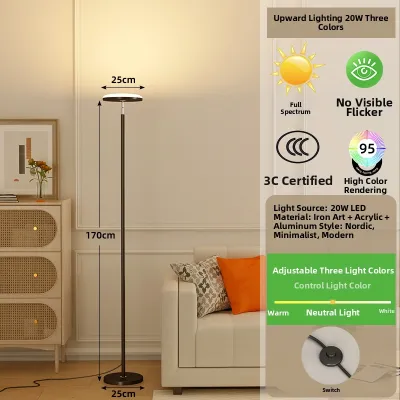
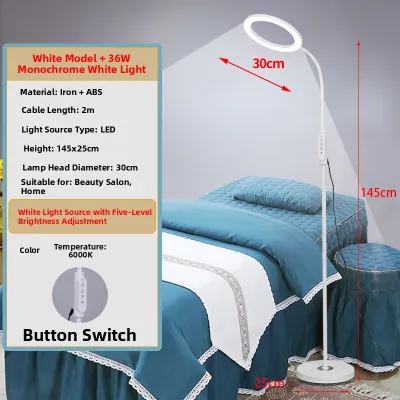
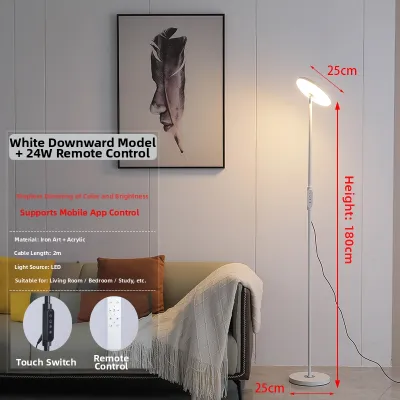
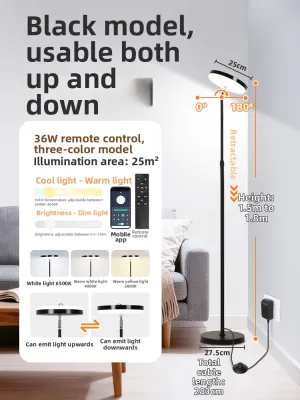
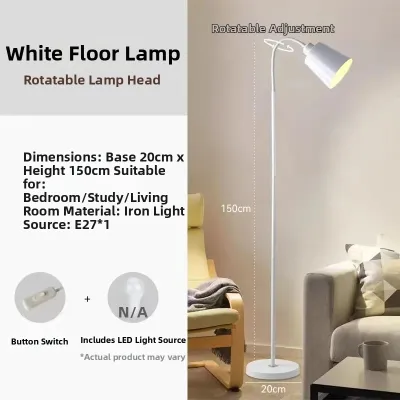
Prices are valid at publication and may change. Please refer to the product page for the latest price.
When evaluating the Luna Ultra 360 or similar omnidirectional models, you must verify several physical and technical specifications on the product label or the manufacturer’s website. First, look at the total lumen output. Because the light is diffused across a full 360-degree radius, a higher lumen rating is often required to achieve the same perceived brightness as a directional lamp. Second, check the Correlated Color Temperature (CCT) range. For living room environments, a warm CCT of 2700K to 3000K is ideal for creating a cozy, welcoming atmosphere, while a neutral white of 4000K can be useful for daytime tasks. Third, verify the dimming method. A stepless dimming system offers far greater flexibility than fixed step-dimming, allowing you to fine-tune the brightness to match the natural light levels throughout the evening.
The materials used in the diffuser also play a critical role in the quality of the light and the overall aesthetic of your home. Frosted glass diffusers offer excellent light scattering and a premium, solid feel, but they are heavy and fragile. Acrylic diffusers are lightweight, highly durable, and shatter-resistant, making them a practical choice for busy households, though lower-grade acrylic can sometimes yellow over time or show hot spots where individual LED diodes are located. Fabric diffusers introduce a soft, organic texture to the room, but they tend to accumulate dust more easily and require regular, gentle cleaning to maintain their light-transmitting efficiency.
Finally, do not overlook the physical footprint and base weight of the lamp. Because 360-degree lamps are designed to stand free of surrounding furniture to maximize their light distribution, they are more exposed to physical contact. A heavy, well-engineered base is essential to lower the lamp’s center of gravity. This is a crucial safety consideration in Singapore homes, particularly those with active young children, curious pets, or robotic vacuum cleaners that might bump into the fixture.
Light Distribution: 360-Degree Glow vs. Directional Styles
Choosing the right floor lamp requires a clear understanding of how different optical designs distribute light throughout a room. The way a lamp projects its light dictates not only the atmosphere of the space but also how functional the room is for different activities.

Omnidirectional Diffusion (Luna Ultra 360)
The primary strength of the Luna Ultra 360 lies in its ability to act as a foundational ambient light source. By casting light in a complete circle, it fills the entire room with a soft, low-glare glow. This wide distribution reduces the need for multiple secondary light sources, such as table lamps or accent spotlights, simplifying your living room’s design and reducing the number of electrical cords cluttering your floor.
This omnidirectional pattern is particularly beneficial for social living rooms. If your seating is arranged in a U-shape, a large L-shaped sectional, or a circular layout, a centrally positioned 360-degree lamp ensures that every seat receives an equal amount of comfortable light. No guest is left sitting in a dark corner, and no one is forced to look directly into a harsh, exposed bulb. However, this soft, scattered light is not designed for high-focus tasks. If you enjoy detailed work, such as reading fine print, sewing, or crafting, the diffuse glow of the Luna Ultra 360 may not provide the concentrated lux required, meaning you may still need to supplement it with a dedicated task light.
Focused Task and Accent Lighting (Arc and Spot Lamps)
Arc floor lamps offer a stark contrast to the omnidirectional approach. Featuring a long, sweeping arm that extends horizontally from a heavy base, an arc lamp allows the light source to hang directly over a specific area, such as the center of a coffee table or the arm of a lounge chair. This design delivers targeted downward illumination, making it exceptionally functional for reading or working on a laptop without requiring overhead ceiling lights.
The trade-off is that arc lamps create localized pools of light, leaving the rest of the room in relative darkness. While this high contrast can create a cozy, dramatic atmosphere, it can also lead to eye strain if you frequently look between your brightly lit book and the dark surroundings. Spot lamps take this directional focus even further, using narrow beam angles to highlight specific features like artwork, indoor plants, or architectural details. While excellent for adding depth and visual interest, spot lamps are unsuitable as primary ambient light sources, as their direct, unshielded beams can easily cause uncomfortable glare if they cross your line of sight.
Indirect Ceiling Bounce (Torchiere Lamps)
Torchiere lamps take yet another approach to ambient lighting by directing their entire light output upward toward the ceiling. The ceiling then acts as a massive reflector, scattering the light back down into the room in a soft, indirect pattern. This indirect bounce is highly effective at making a small room feel larger and more open, as it draws the eye upward and eliminates the harsh shadows associated with direct downlighting.
Because the light source itself is completely shielded from direct view, torchieres are virtually glare-free. However, their performance is highly dependent on your living room’s physical characteristics. To reflect light efficiently, torchieres require a relatively low, flat ceiling painted in a light, matte color, such as flat white. If your ceiling features exposed concrete beams, dark paint, wood paneling, or is interrupted by ceiling fans and air conditioning units, the light will be absorbed or blocked, casting awkward, distracting shadows. The Luna Ultra 360, by contrast, diffuses light at mid-level, making its performance entirely independent of your ceiling’s color or structure.
Space and Layout Constraints in Singapore Homes
Integrating a floor lamp into a Singapore home requires a practical assessment of local housing realities. Whether you live in a compact HDB flat, a suburban executive condominium, or a private landed property, spatial constraints and layout designs will heavily influence which lamp style is most viable.
Floor Footprint and Furniture Clearance
In many Singapore apartments, living room floor space is highly optimized, leaving little room for bulky decorative items. To perform effectively, the Luna Ultra 360 needs to be placed somewhat away from walls and corners. If you tuck a 360-degree lamp deep into a corner, a significant portion of its light output is immediately absorbed by the adjacent walls, which can create unsightly hot spots on your paintwork and reduce the lamp’s overall efficiency. This requirement for an open or semi-central placement means you must carefully evaluate your furniture clearance and walkways. If your living room is narrow or features a high-traffic path between the sofa and the television console, a free-standing column lamp may restrict movement or feel like an obstacle. In such layouts, a slim-profile torchiere or a minimalist linear corner lamp is often more practical, as they can be pushed flush against a wall or nestled neatly behind an armchair, preserving valuable floor space.
Ceiling Height and Visual Weight
Standard ceiling heights in Singapore HDB flats typically range from 2.4 to 2.6 meters. In these relatively low-ceilinged spaces, the visual weight of a floor lamp is an important design consideration. A tall, thick cylindrical lamp can dominate the room visually, drawing attention to the limited vertical space and making the room feel smaller. To maintain a balanced, open aesthetic, look for lamps that offer a sense of visual lightness. Minimalist designs with thin metal stems, open tripod bases, or slender profiles allow the eye to travel through the space, preserving the illusion of openness. If you choose a prominent 360-degree lamp, ensure its height and diameter are proportional to your seating. A lamp that stands too tall may feel imposing when you are seated on a low-profile modern sofa, so verifying the physical dimensions before purchasing is essential.
Cord Routing and Traffic Flow
Because an omnidirectional lamp is most effective when positioned away from walls, managing the power cord becomes a critical safety and aesthetic challenge. In a typical Singapore living room, electrical outlets are located along the perimeter walls. If your lamp is placed next to a central sofa or between two armchairs, the power cord must cross the floor to reach the nearest outlet. Stretching a cord across a primary walkway creates a severe tripping hazard, particularly in households with elderly family members, young children, or active pets. To mitigate this risk, you must plan for secure cord routing. Running the cord under a heavy area rug is a common solution, but you must ensure the cord lies completely flat and is not pinched under heavy furniture legs, which can damage the internal copper wires over time. Alternatively, you can use low-profile, paintable cord covers that adhere to the floor or run along the baseboards. If your layout does not allow for safe cord routing, a lamp designed for corner placement, close to an outlet, is a much safer alternative.
Glare and Screen Interference
Modern Singapore living rooms are often multi-functional spaces where the television is the focal point. When positioning an ambient floor lamp, you must consider how its light interacts with reflective surfaces, including television screens, glass cabinet doors, and large living room windows. Because the Luna Ultra 360 emits light in all directions, placing it directly opposite a television or a large window can create distracting reflections and glare. This glare can wash out the contrast on your screen, forcing you to increase the TV’s brightness or close your curtains. To prevent this, position the lamp slightly behind or to the side of your primary viewing angle. Avoid placing it in the direct line of sight between your seating and the screen. If reflections remain an issue, a dimmable lamp is essential, allowing you to lower the light intensity during movie nights.
Electrical Standards and Safety Checks
Before purchasing or installing any floor lamp, ensuring electrical compatibility and safety is paramount. Singapore has strict electrical standards designed to protect homes from electrical hazards, and understanding these requirements is crucial, especially when shopping online.
Voltage and Plug Compatibility
Singapore operates on a 230V, 50Hz electrical system and utilizes the Type G three-pin rectangular plug. Many floor lamps sold on international online marketplaces are designed for different markets, such as North America, which uses a 110V system. Connecting a 110V lamp directly to a Singapore 230V outlet will cause immediate, irreversible damage to the lamp’s internal driver or LED chips, and poses a severe fire hazard. Always check the power adapter or product label to ensure it is rated for “100-240V” or “230V”. If the lamp is rated for dual voltage, you only need a simple, passive plug adapter to fit the Type G wall socket. Avoid using bulky step-down voltage transformers, as they generate heat, consume standby power, and introduce an unnecessary point of electrical failure in your living room.
Safety Marks and Certifications
For peace of mind, prioritize lighting fixtures that carry recognized safety certifications. In Singapore, look for the Enterprise Singapore Safety Mark on the power adapter or the product itself. This mark indicates that the electrical appliance has been tested and certified to meet local safety standards, reducing the risk of short circuits, electrical fires, or shocks. This is particularly important for high-wattage ambient lamps or fixtures that remain illuminated for several hours every evening.
Thermal Safety and Material Care
While modern LED floor lamps run significantly cooler than older incandescent or halogen fixtures, they still generate heat, primarily at the driver and the base of the LED chips. You must verify the manufacturer’s clearance requirements, especially if the lamp is positioned close to synthetic curtains, wooden furniture, or delicate wallpaper. Ensure that the diffuser material—whether acrylic, fabric, or glass—is kept clean and free of dust. Accumulated dust can act as an insulator, trapping heat and potentially shortening the lifespan of the LEDs or causing the diffuser material to discolor over time. Always follow the manufacturer’s care instructions, and wipe the lamp only when it is completely powered off and cool to the touch.
Professional Boundaries
Most floor lamps are plug-and-play appliances that do not require complex installation. However, if you plan to integrate your floor lamp into a fixed wall switch, hardwire it into your home’s electrical grid, or connect it to a sophisticated smart-home automation panel that requires modifying your distribution board, you must observe strict safety boundaries. Always isolate the mains power at the distribution board before attempting any electrical work. Any task involving fixed wiring, modification of wall outlets, or work at height must be performed in strict accordance with manufacturer instructions and handled by a licensed electrical worker (LEW) in Singapore to ensure compliance with local building codes and safety regulations.
Final Decision Framework: How to Choose Your Floor Lamp
To help you make the final decision for your Singapore living room, use this straightforward framework based on your layout, space, and lighting goals.
Choose the Luna Ultra 360 if:
- Your living room features a spacious, open-concept layout (such as a combined living and dining area in a larger HDB or condo).
- Your furniture is arranged in a central, social configuration (like a U-shape or modular setup) where light needs to reach multiple angles.
- Your primary goal is to create a soft, uniform, shadow-free ambient glow for relaxing, hosting guests, or watching movies.
- You have a safe way to route the power cord without creating a tripping hazard across main walkways.
Choose an Arc Lamp if:
- You need a highly functional, dual-purpose light that can transition from a gentle ambient glow to a focused task light.
- You want to position the lamp behind or beside a sofa, extending the light source directly over your favorite reading chair.
- You prefer a dramatic, localized pool of light that highlights a specific seating zone rather than illuminating the entire room.
Choose a Torchiere Lamp if:
- Your living room is highly compact, and floor space is strictly limited to tight corners or narrow gaps between furniture.
- You want to create an illusion of height in a room with a standard or low ceiling by bouncing light off a clean, white ceiling surface.
- You want a completely glare-free, indirect light source that remains hidden from direct line of sight.
Verify First if:
- You are purchasing your floor lamp from an overseas retailer or online marketplace. Always double-check the voltage rating (ensuring it supports 230V), the plug type (Type G compatibility), and the seller's return and warranty policies for electrical goods before finalizing your purchase.
Frequently Asked Questions (FAQ)
Do I need a voltage converter for imported floor lamps in Singapore?
If the imported floor lamp or its power adapter is labeled as dual-voltage (100-240V), you do not need a voltage converter; a simple, passive plug adapter to convert the physical pins to the Singapore Type G standard is sufficient. However, if the lamp is strictly rated for 110V, you would require a step-down voltage transformer. Using a transformer is generally discouraged for high-wattage ambient lamps due to safety risks, continuous standby power consumption, and the physical bulk of the transformer unit. It is always safer and more efficient to purchase a lamp natively rated for 230V.
How do I manage floor lamp cords safely in a high-traffic living room?
To manage power cords safely, position your floor lamp as close to a wall outlet as possible. If the lamp must be placed away from walls, route the cord beneath a heavy, non-slip area rug, ensuring the cord lies completely flat and is not pinched under heavy furniture legs, which can damage the insulation. Alternatively, install low-profile, paintable floor cord protectors that adhere securely to your flooring to prevent trips. Never stretch a cord tightly across a primary walkway, and avoid using daisy-chained extension cords, which can create electrical hazards and clutter your living space.
Community discussion
Share your experience or ask a question. Comments are reviewed before publication.