
Choosing the right sofa pillow fill is a balance of understanding your personal seating habits, physical comfort requirements, and maintenance preferences. The ideal choice depends entirely on how you use your living space. If you require structured, firm support to alleviate lower back discomfort during long periods of sitting, memory foam is highly suitable. For those who prefer a plush, cloud-like surface to sink into during casual lounging, down alternative offers a luxurious feel without the allergen concerns of natural feathers. Meanwhile, standard polyester fiberfill serves as an accessible, lightweight option that is easy to clean, making it excellent for decorative accents and high-traffic family rooms.
Understanding the Core Sofa Pillow Fill Materials
To make an informed decision, it is essential to understand the physical construction of each material. Memory foam, or viscoelastic polyurethane foam, is highly regarded for its density and pressure-relieving properties. In sofa pillows, it typically appears in two formats: solid blocks or shredded pieces. Solid memory foam provides a highly structured, rigid support system that contours slowly in response to body heat and weight. Shredded memory foam, on the other hand, consists of small torn pieces of foam packed inside an inner lining. This format allows for greater adjustability, better airflow, and a slightly softer feel while still retaining the characteristic contouring support of polyurethane.
Down alternative is a synthetic filling designed to replicate the loft and plushness of natural goose or duck down. It is primarily composed of extremely fine polyester microfibers. These microfibers are engineered to trap air in tiny pockets, creating a lightweight, fluffy volume known as loft. Because these fibers are synthetic, they do not contain the organic proteins or sharp quills found in natural feathers, making down alternative an excellent hypoallergenic choice for sensitive households. It offers a soft, enveloping sensation that yields immediately to pressure.
Products mentioned in this guide
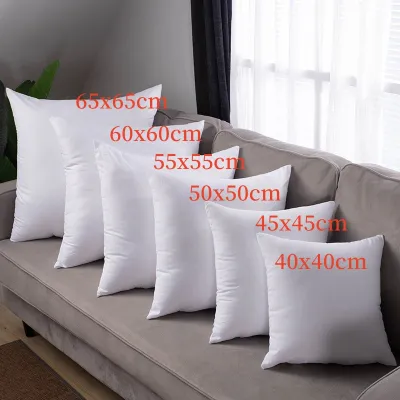
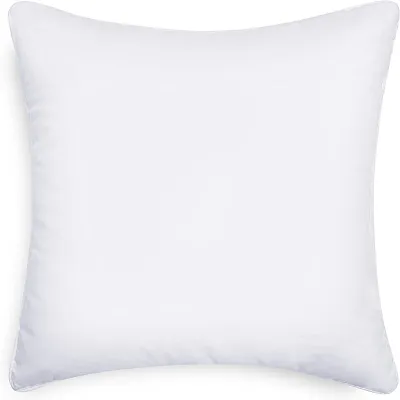
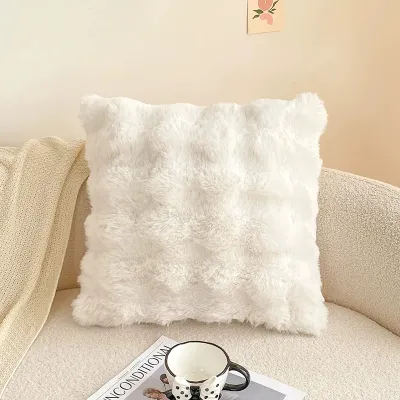
Prices are valid at publication and may change. Please refer to the product page for the latest price.
Polyester fiberfill, often referred to simply as poly-fill, is the most common and widely available synthetic stuffing material. It consists of extruded polyester threads blown into the pillow casing. The fibers are typically crimped or curled to create a spring-like resilience, allowing the pillow to bounce back quickly after initial compression. Polyester fill is manufactured in several grades, including slick fibers coated with silicone to prevent friction and clumping, and conjugated hollow fibers that feature a spiral shape for enhanced loft. While highly resilient at first, standard polyester fibers tend to slide past one another and compress permanently over time.
Comparing Comfort, Support, and Durability
Evaluating these materials across key performance dimensions reveals distinct trade-offs in comfort, support, and longevity. Comfort is highly subjective and depends on whether you prefer a firm, contouring surface or a soft, sink-in feel. Down alternative provides the ultimate plushness, allowing your body to sink deeply into the cushion with minimal resistance. Memory foam offers a more supportive, slow-rebounding comfort; it molds to your specific shape over several seconds, distributing weight evenly and reducing pressure points. Standard polyester sits between the two, offering a springy, lightweight bounce that feels supportive initially but lacks the deep contouring of foam or the luxurious softness of down alternative.

Support and shape retention are critical for maintaining proper posture and keeping your sofa looking tidy. Memory foam is the clear leader in structural support, making it highly effective for lumbar alignment. It resists flattening under sustained weight and slowly recovers its original shape once you stand up. Down alternative provides very little structural support; it compresses easily under weight and requires regular manual fluffing to restore its loft and prevent a deflated appearance. Standard polyester provides moderate initial support, but the fibers are prone to shifting and matting together, which leads to localized flattening and a loss of edge support over months of daily use.
Durability and lifespan vary significantly based on the material’s physical properties and how well it is maintained. High-density memory foam is exceptionally durable, often retaining its shape and contouring ability for several years when kept dry and protected by a quality cover. Down alternative also boasts a respectable lifespan, especially when high-quality microfibers are used, though it requires consistent upkeep to prevent clumping. Standard polyester fiberfill has the shortest functional lifespan; under daily use, the fibers inevitably mat together, requiring the pillow to be refilled or replaced much sooner than its competitors.
The following comparison matrix outlines these key characteristics to help you verify which specifications align with your household needs:
| Performance Dimension | Memory Foam | Down Alternative | Polyester Fiberfill |
|---|---|---|---|
| Primary Tactile Feel | Contouring, dense, and firm | Plush, soft, and cloud-like | Springy, light, and bouncy |
| Structural Support | High (excellent for posture) | Low (sinks under weight) | Moderate (declines over time) |
| Shape Retention | Excellent (recovers slowly) | Low (requires regular fluffing) | Moderate (prone to flattening) |
| Allergy Suitability | High (dense, dust-mite resistant) | High (hypoallergenic synthetic) | High (standard synthetic) |
| Expected Lifespan | Long (with proper moisture care) | Moderate to long (with fluffing) | Short to moderate (prone to matting) |
| Primary Care Method | Spot clean cover only | Machine washable (verify label) | Machine washable (verify label) |
Matching Fill Types to Your Seating Habits
Your daily routine and how you interact with your sofa should guide your final selection. Choose a memory foam sofa pillow if your seating habits involve sitting upright for extended periods, working from the couch, or reading. The dense, structured support of memory foam is highly beneficial for maintaining proper spinal alignment and preventing lower back fatigue. It is also an excellent choice if you prefer a neat, tailored living room aesthetic, as these pillows maintain their crisp, defined edges without needing to be constantly plumped or rearranged.
Choose a down alternative fill if your sofa is primarily a place for relaxation, casual lounging, and afternoon naps. This material is ideal for those who love to curl up against a soft, yielding surface that conforms gently to any angle. Down alternative is also the preferred choice if you appreciate the classic, lived-in look of styled cushions, as it allows you to easily perform the “chop” technique to create a relaxed yet elegant drape on your sofa.
Choose standard polyester fiberfill if you are furnishing a high-traffic family room, a children’s play area, or a rental property where items are subject to frequent spills, rough handling, and regular washing. Polyester is highly economical, making it easy to replace when it eventually loses its loft. It is also the practical choice for purely decorative accent pillows that serve to add a pop of color or texture to your decor rather than provide daily physical support.
Before making your purchase, always verify specific household constraints. If anyone in your home suffers from severe respiratory sensitivities, ensure the pillow casing is tightly woven to prevent dust mites from colonizing the fill. Additionally, check your laundry capabilities; while polyester and down alternative are generally easy to wash at home, dense memory foam requires specialized care and cannot be laundered in standard residential machines.
Care, Maintenance, and Longevity Checks
Proper maintenance is essential to preserve the structural integrity and hygiene of your sofa pillows. Washing and drying constraints vary dramatically by material, and ignoring manufacturer instructions can ruin the fill. Solid memory foam must never be submerged in water or placed in a washing machine, as moisture breaks down the foam’s cellular structure and creates an environment ripe for mold; instead, spot-clean the foam with a damp cloth and wash the removable protective cover. Down alternative and polyester pillows are typically machine-washable on a gentle cycle with mild detergent. However, you must verify the heat limits on the care label; drying these synthetic materials on high heat can melt or fuse the polyester fibers, resulting in permanent, hard lumps.
Fluffing and reshaping routines are necessary to combat the natural compression that occurs during use. Down alternative pillows require regular, active maintenance; shaking them vigorously and massaging them from the corners inward at least once a week helps redistribute the microfibers and restore the air pockets that provide loft. Standard polyester pillows also benefit from occasional fluffing, though once the fibers have matted together from heavy use, manual reshaping will have limited success. Memory foam requires no manual fluffing, as its viscoelastic properties allow it to return to its original shape automatically once pressure is removed.
Recognizing replacement triggers will help you maintain a comfortable and supportive seating environment. For polyester and down alternative pillows, perform a simple compression test: fold the pillow in half and release it. If the pillow remains folded or recovers very slowly, the fibers have lost their elasticity and can no longer provide adequate support. For memory foam, look for physical degradation such as cracking, crumbling, or a noticeable loss of its slow-rebound characteristic. Persistent lumps, uneven support, or lingering odors that survive a wash are clear indicators that the fill has reached the end of its functional life.
Frequently Asked Questions (FAQ)
Can I mix different fill materials in one sofa pillow?
Yes, combining different fill materials is an excellent way to achieve a balance of deep support and surface plushness. Many manufacturers offer hybrid sofa pillows designed with a structured core—such as solid or shredded memory foam—surrounded by an outer chamber filled with soft down alternative. This configuration allows you to enjoy the immediate, cloud-like comfort of synthetic down while benefiting from the underlying spinal support and shape retention of memory foam. When shopping for hybrid options, check the product specifications to see if the inner core is adjustable, which allows you to customize the pillow’s loft and firmness to match your seating habits.
How do I know when my sofa pillow fill needs replacing?
You can determine if your sofa pillow fill needs replacing by performing a few simple, observable checks. Visually inspect the pillow when it is resting on the sofa; if it appears flat, saggy, or lumpy even after you attempt to fluff it, the internal fibers have permanently degraded. Pay attention to your physical comfort as well; if you experience neck stiffness or lower back discomfort after sitting, or if you find yourself constantly folding or bunching the pillow to get comfortable, the fill is no longer providing adequate support. Finally, check for physical breakdown, such as shredded foam crumbling inside the cover or synthetic fibers clumping into hard, inseparable knots.
Community discussion
Share your experience or ask a question. Comments are reviewed before publication.