
Selecting the right orthopedic seat cushion depends on understanding how different materials interact with your body weight, sitting habits, and local environment. While memory foam, gel, and high-density foam all aim to improve sitting comfort, they offer distinct levels of support, heat management, and durability. Choosing the wrong material can lead to insufficient pressure relief, excessive heat buildup, or a cushion that flattens within weeks. By evaluating how each material responds to pressure and temperature, you can select a cushion that provides lasting comfort and proper postural alignment throughout the day.
Understanding Memory Foam, Gel, and High-Density Foam
To make an informed decision, it is essential to understand the structural characteristics and basic properties of the three primary cushion materials. Each material is manufactured differently, resulting in distinct physical behaviors when subjected to body weight and ambient temperature.
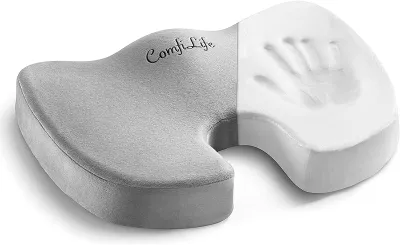
Memory foam, scientifically known as viscoelastic polyurethane foam, is celebrated for its temperature-sensitive and contouring nature. When you sit on memory foam, your body heat softens the material, allowing it to mold precisely to your unique shape. This creates a custom cradle that distributes weight evenly across the seating surface, reducing pressure points on the hips and tailbone. However, because it relies on warmth to conform, its firmness can change depending on the temperature of the room.
Products mentioned in this guide
![[SG INSTOCK] Seat Cushion Memory Foam Orthopedic Pressure Relief Car Home Soft Office Chair Pad Wheelchair for Tailbone Sciatica Back Pain Relief](https://img.lazcdn.com/g/p/005adf43d933a7c5edf0e3585d56492d.jpg_400x400q80.jpg_.webp)
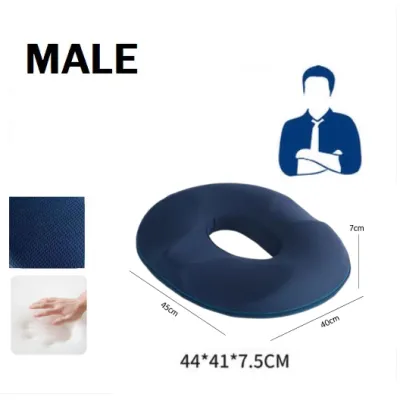
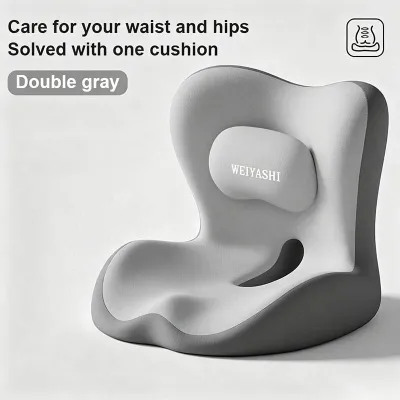
Prices are valid at publication and may change. Please refer to the product page for the latest price.
Gel cushions generally come in two forms: gel-infused foam or solid, molded gel grids. Gel-infused foam incorporates tiny gel beads into standard foam to help dissipate initial heat, while solid gel grids feature a flexible, honeycomb-like structure made of elastomeric polymer. These grids do not rely on body heat to conform; instead, they buckle under pressure to cradle your body while maintaining open air channels. This design focuses on immediate responsiveness and active cooling.
High-density foam consists of a firm, closely packed polyurethane structure designed primarily for rigid support and push-back. Unlike memory foam, high-density foam does not contour deeply or soften significantly with body heat. Instead, it acts as a sturdy barrier that resists compression, keeping your pelvis elevated and preventing you from sinking down to the hard surface of the chair beneath.
When shopping, it is important to verify the actual material composition against the manufacturer’s technical specifications. Marketing terms on packaging can sometimes be misleading, blending different material categories or exaggerating the presence of premium components. Checking the official product specifications sheet ensures you know exactly what materials are supporting you.
Comparing Support, Breathability, and Durability
Each material handles pressure, manages heat, and resists wear in its own way. Understanding these practical trade-offs is key to finding a cushion that remains comfortable over long hours of use.

Support and pressure distribution vary significantly across these three options. Memory foam offers a slow-rebound sensation, slowly sinking under your weight and holding its shape to minimize localized pressure. High-density foam provides immediate, firm push-back support, which helps maintain pelvic alignment but may feel too rigid for individuals with sensitive pressure points. Gel grids offer a unique middle ground, buckling under prominent bony areas like the sitz bones while remaining firm and supportive across the surrounding areas.
Breathability and heat retention are critical factors, especially in warm or humid climates. Traditional memory foam has a dense, closed-cell structure that tends to trap body heat, which can lead to a warm and sweaty seating experience over time. Gel layers and open gel grids are specifically engineered to improve airflow, allowing heat to escape through the open spaces in the grid. The breathability of high-density foam depends heavily on its specific cell structure; open-cell high-density foams allow moderate airflow, whereas closed-cell varieties can trap heat similarly to memory foam.
Durability and shape retention determine how long your cushion will provide effective orthopedic support. To assess long-term resilience, look for the manufacturer’s density ratings, usually measured in kilograms per cubic meter or pounds per cubic foot, as well as the provided warranty terms. Softer, low-density foams may feel comfortable initially but tend to compress and flatten permanently under heavy daily use. High-density foam and solid gel grids generally offer superior shape retention, maintaining their structural integrity and support characteristics over years of continuous sitting.
Matching the Material to Your Body Type and Sitting Habits
Your physical profile, daily routine, and seating environment should directly dictate your choice of cushion material. A cushion that works perfectly for one person may cause discomfort for another due to differences in body weight and sitting duration.
Body weight plays a decisive role in how a cushion material behaves. Heavier individuals often require the robust support of high-density foam or thick gel grids to prevent the cushion from bottoming out, which occurs when the material compresses completely and leaves you sitting on the hard chair surface. Conversely, lighter individuals may not exert enough force or generate enough body heat to soften firm high-density foam or dense memory foam, making a softer, highly contouring memory foam or a responsive gel grid a more comfortable choice.
Sitting duration and your physical environment also influence which material is most suitable. If you sit for extended periods in a warm, humid environment, such as a non-air-conditioned home office or a vehicle parked in Singapore’s tropical climate, a highly breathable gel grid or an open-cell high-density foam cushion will help keep you cool. Traditional memory foam is better suited for shorter sitting sessions or strictly climate-controlled, air-conditioned offices where the ambient temperature remains cool and stable.
Mobility and ease of movement are often overlooked when choosing a cushion. The slow-rebound nature of memory foam creates a deep contour that can make it feel as though you are “stuck” in one position, requiring more effort to shift or stand up. If you frequently adjust your posture, reach for items on your desk, or transition between sitting and standing, the responsive bounce of a gel grid or the firm surface of high-density foam will support these movements much more naturally.
Essential Checks Before Purchasing an Orthopedic Seat Cushion
Before purchasing an orthopedic seat cushion, running through a practical checklist will help ensure the product meets your specific ergonomic, maintenance, and safety needs.
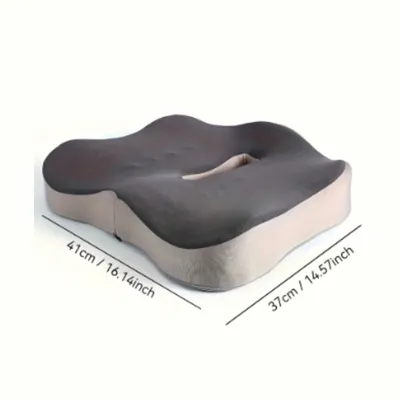
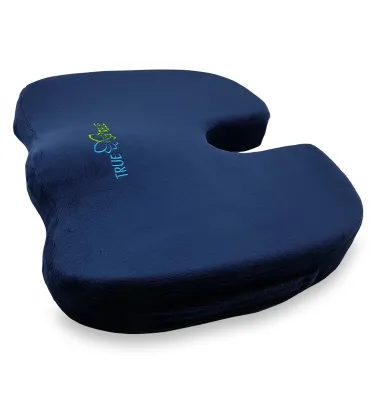
First, evaluate the cushion’s ergonomic design and physical shape. A cushion’s material is only one part of the equation; its physical shape—such as a U-shaped coccyx cutout, a sloped wedge design, or a contoured surface—must align with your specific postural goals. For instance, a coccyx cutout is designed to suspend the tailbone and relieve direct pressure, while a wedge shape tilts the pelvis forward to encourage natural spinal curvature. Ensure the shape matches your physical needs, as a flat block of even the highest-quality material may not provide the targeted relief you require.
Second, inspect the cover material and maintenance instructions. Because seat cushions are subjected to daily wear, friction, and sweat, a removable, machine-washable cover is essential for maintaining hygiene. Look for covers made of breathable mesh to maximize airflow, and ensure the bottom of the cover features a reliable non-slip grip material to prevent the cushion from sliding around on smooth office chairs or car seats.
Third, carefully review the manufacturer’s specifications on the product label or official website. Rather than relying on generic category names, look for exact material compositions, density indicators, and recommended weight capacity limits. This technical data provides a realistic expectation of how the cushion will perform under your weight and how well it will resist flattening over time.
Finally, verify the seller’s trial and return policies. Because comfort, pressure distribution, and support are highly subjective experiences, a cushion that looks ideal on paper may not feel right once you sit on it. Opting for a retailer that offers a flexible trial period or a clear return policy allows you to test the cushion on your actual office or car chair, ensuring it delivers the relief you expect before making a permanent commitment.
Frequently Asked Questions (FAQ)
Can I use a memory foam cushion on a heated car seat?
It is generally not recommended to use a memory foam cushion directly on a heated car seat without checking the manufacturer’s guidelines first. Memory foam is highly temperature-sensitive, and the external heat from a car seat can cause the foam to soften excessively, reducing its ability to provide proper orthopedic support. Furthermore, prolonged exposure to high temperatures can degrade the polyurethane structure over time, shortening the lifespan of your cushion or potentially creating a safety hazard depending on the cushion’s materials and cover.
How do I clean a gel-infused orthopedic cushion?
To clean a gel-infused or gel-hybrid cushion, always start by removing the outer fabric cover and washing it according to the care label instructions, which usually allow for machine washing. The inner foam or gel core should never be submerged in water or placed in a washing machine, as water can trap itself inside the foam cells and lead to mold growth or material breakdown. Instead, spot-clean the inner core using a damp cloth and a mild, diluted detergent, then allow it to air dry completely in a well-ventilated area away from direct sunlight.
Community discussion
Share your experience or ask a question. Comments are reviewed before publication.