
Quick Answer: Which Material Wins for Desk Work?
Choosing between memory foam and latex is not about finding a universal winner, but matching the material’s physical properties to your body weight, sitting posture, and local environment. Neither material is universally superior; the ideal choice depends on individual sitting habits, weight distribution, and heat sensitivity.
Memory foam excels at targeted pressure relief and deep contouring, making it highly effective for those who want a cradled feel that relieves pressure on the tailbone. Latex is preferable for buoyant support and a cooler surface, making it ideal for those who dislike sinking or who sit in warm environments.
Head-to-Head Material Breakdown
To understand how these materials perform during an eight-hour workday, we must look at their physical composition. Memory foam is a synthetic viscoelastic polyurethane, while latex can be natural or synthetic.
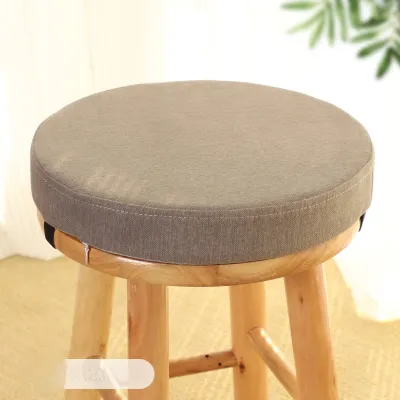
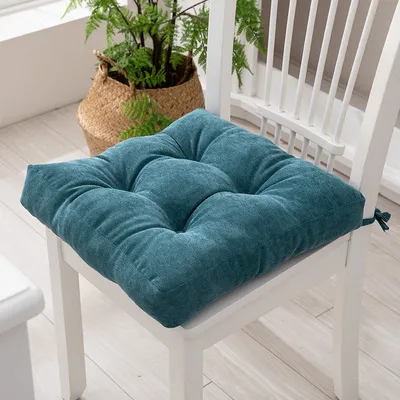
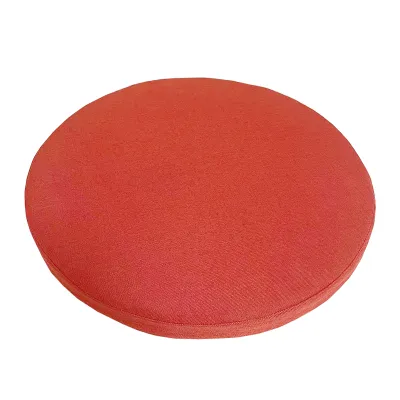
Products mentioned in this guide
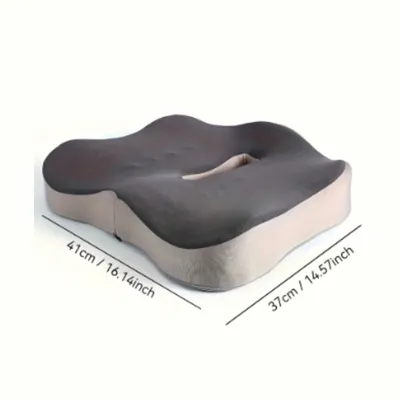
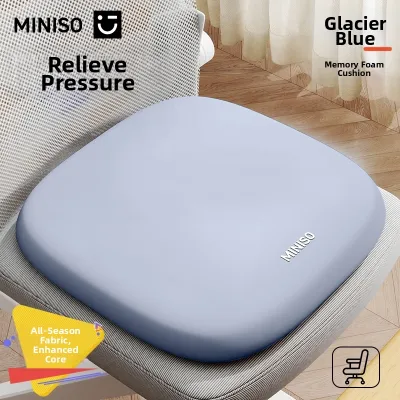
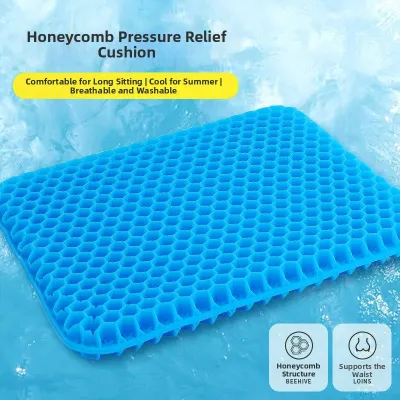
![[SG Stock] Honeycomb Gel Seat Cushion With Cover Silicon Ice Gel Seat Cushion Cooling Mat Egg Support Non Slip Summer Ice Cool Pad Gel Chair Car Office Seat](https://img.lazcdn.com/g/p/bd452066c1c33bff5dd160e661df4be8.jpg_400x400q80.jpg_.webp)
Prices are valid at publication and may change. Please refer to the product page for the latest price.

Beyond the raw material, factors like density, overall thickness, and the breathability of the outer cover fabric will drastically alter your daily sitting experience. Let’s look at how they compare across key performance categories.
Comfort and Pressure Relief
Memory foam is famous for its slow-rebound property. When you sit down, the material slowly compresses under your weight and body heat, distributing your load evenly across the surface. This minimizes high-pressure spots on your sit bones and tailbone. If you suffer from sharp, localized discomfort after sitting for an hour, memory foam’s cradling effect can offer immediate relief by mimicking your body’s contours.
Latex does not rely on heat to conform to your body. Instead, it responds instantly to pressure with an upward, elastic resistance. This creates a buoyant feel that distributes weight across a broader area without letting you sink deeply. While it may feel less cozy initially compared to memory foam, it prevents that heavy, stuck-in-one-place sensation, allowing you to shift positions easily throughout the day.
Support and Posture Alignment
Memory foam is excellent for pressure relief, but its support can degrade over a long session. As the foam absorbs your body heat, it becomes softer and compresses further. If the cushion is too thin or has a low density, you run the risk of bottoming out—where the foam compresses completely, leaving you sitting on the hard chair pan beneath. This deep compression can cause your pelvis to tilt backward, leading to a slouched posture and lower back strain.
Latex maintains its structural integrity and height regardless of temperature. Its natural elasticity provides consistent resistance, keeping your pelvis in a neutral, upright position. By preventing excessive sinking, a latex cushion helps preserve the natural curve of your spine and ensures your hips remain slightly higher than your knees, which is the ideal ergonomic posture for desk work.
Breathability and Heat Retention
Memory foam has a dense, closed-cell structure that relies on trapping heat to contour to your body, meaning it naturally acts as an insulator. In warm or humid climates, such as Singapore, a standard memory foam cushion can quickly become uncomfortably warm and sweaty. To mitigate this, look for advanced formulations like gel-infused memory foam, ventilated channels, or open-cell structures designed to encourage heat dissipation.
Latex is inherently more breathable due to its manufacturing process, which creates a matrix of tiny open cells. Additionally, most latex cushions are molded with a pattern of vertical pinholes that allow air to circulate freely with every movement. This natural ventilation makes latex a superior choice for non-air-conditioned spaces or for individuals who naturally run hot, though you must still pair it with a breathable cover to experience the full cooling benefit.
Durability and Long-Term Shape Retention
Memory foam lifespan depends heavily on its density. Low-density foams may begin to sag or lose their rebound ability within a few months of daily use, leaving a permanent indentation where you sit. High-density memory foam lasts significantly longer but will still gradually soften over years of continuous compression and exposure to body heat.
Latex is highly resilient and famous for its longevity. It resists permanent sagging and retains its original shape and springiness for years, even under heavy daily use. However, natural latex is sensitive to environmental factors; exposure to direct sunlight or extreme heat can cause the rubber to dry out, crumble, and degrade. Keeping the cushion covered and away from direct UV rays is essential for preserving its lifespan.
Feature Comparison Checklist
| Feature | Memory Foam Cushion | Latex Cushion | Best Suited For |
|---|---|---|---|
| Primary Feel | Deep contouring, slow-rebound sink | Buoyant, responsive, springy lift | Memory Foam: Tailbone relief / Latex: Active posture |
| Heat Retention | Higher (traps body heat) | Lower (open-cell, pinhole airflow) | Memory Foam: Air-conditioned rooms / Latex: Humid climates |
| Support Type | Localized pressure point cradling | Consistent pelvic & spinal alignment | Memory Foam: Sensitive sit bones / Latex: Long-term desk work |
| Durability | Moderate (softens and indents over time) | High (retains shape and height for years) | Memory Foam: Light-to-medium use / Latex: Heavy daily use |
| Maintenance | Spot clean core; cover is usually washable | Spot clean core; avoid heat and sunlight | Both: Require removable, washable covers |
| General Budget | Budget-friendly to mid-range | Mid-range to premium | Memory Foam: Cost-effective / Latex: Long-term investment |
Decision Framework: Choose Your Ideal Seat Cushion
To finalize your choice, evaluate your specific physical needs, sitting habits, and workspace environment.
Choose Memory Foam if:
- You experience sharp, localized pain in your tailbone or sit bones and need deep, cradling pressure relief.
- You prefer a plush, enveloping sensation that molds specifically to your body shape.
- Your workspace is consistently air-conditioned, minimizing the risk of heat buildup.
Choose Latex if:
- You tend to run hot or work in a warm, humid environment without constant air conditioning.
- You prefer an active, springy feel that makes it easy to stand up and shift positions.
- You want a highly durable cushion that will maintain its height and support for several years.
Neither may fit if: Your primary discomfort stems from incorrect chair seat depth or armrest height rather than the seat pan itself. Adding a thick cushion to an already high chair can force your knees into the desk or prevent your feet from resting flat on the floor. Always verify your chair’s adjustability and dimensions before buying any cushion.
Essential Specs to Verify Before Checkout
Before purchasing any cushion, take a few minutes to measure your current setup to avoid common compatibility issues.
Dimensions and chair compatibility: Measure your chair’s seat pan width and depth. A cushion that is too wide won’t sit flat between the armrests, while one that is too deep will prevent you from sitting all the way back, rendering your chair’s lumbar support useless. Also, consider the added height; a thick cushion will raise your seating position, so ensure your chair’s height and armrests can be adjusted downward to compensate.
Cover material: The cushion’s cover is your direct contact point. Prioritize removable, machine-washable covers made from breathable, moisture-wicking fabrics like 3D mesh, bamboo-derived rayon, or linen. This is especially important in humid climates to prevent sweat buildup and bacterial growth.
Non-slip base: A cushion that slides around every time you shift will ruin your posture and cause frustration. Look for a cushion with a textured, non-slip base—typically featuring silicone or rubberized dots—to keep it securely anchored on leather, mesh, or polished plastic chair seats.
Frequently Asked Questions (FAQ)
Can I use a memory foam cushion on a mesh office chair?
While you can place a memory foam cushion on a mesh chair, it often alters the chair’s intended ergonomics. Mesh chairs are designed to suspend your weight evenly across a flexible, tensioned surface. Adding a thick, dense memory foam cushion can concentrate weight unevenly, stretch the mesh over time, and raise your seating height significantly, which might misalign your arms with the armrests.
How do I clean a latex seat cushion if it gets stained?
To clean a latex cushion, first remove the outer cover and wash it according to its care label. For the latex core itself, never submerge it in water or put it in a washing machine, as this will destroy the cell structure. Instead, gently spot-clean the stained area using a clean cloth dampened with a mild, highly diluted detergent solution. Allow the core to air-dry completely in a well-ventilated, shaded indoor area, keeping it strictly away from direct sunlight and heat sources.
Does cushion thickness matter more than material for lower back pain?
Cushion thickness is critical because it directly impacts your overall sitting geometry. If a cushion is too thick, it elevates your hips too high relative to the chair’s built-in lumbar support, leaving your lower back unsupported and increasing strain. Conversely, a cushion that is too thin will bottom out, offering no relief. For optimal lower back support, choose a moderate thickness (typically 5 to 8 centimeters) that allows your feet to remain flat on the floor while keeping your hips slightly above your knees.
Community discussion
Share your experience or ask a question. Comments are reviewed before publication.