
Choosing the right window cushion can transform an underutilized bay window into the most popular spot in your home. Whether you use your window seat as a cozy reading nook, a morning coffee retreat, or an extra seating area for guests, the internal filling material determines how comfortable, durable, and practical the space will be. The ideal material depends on your primary activities, how often the seat is used, and your budget.
Memory foam is the premier choice for deep, contouring pressure relief during long, stationary reading sessions. Natural or synthetic latex offers a highly resilient, buoyant support that keeps you sitting upright without sinking, making it excellent for active spaces. Polyester fiberfill provides a soft, lightweight, and budget-friendly option that is perfect for decorative accent cushions, occasional seating, or irregular window shapes that require flexible, easily replaceable inserts.
Comfort and Support: How Each Fill Feels
The tactile sensation of sitting on a window seat is directly tied to how the filling material responds to your body weight and temperature. Because window benches are typically built over hard wooden or concrete ledges, the depth and response of the cushion fill are critical to preventing discomfort over time.
Products mentioned in this guide
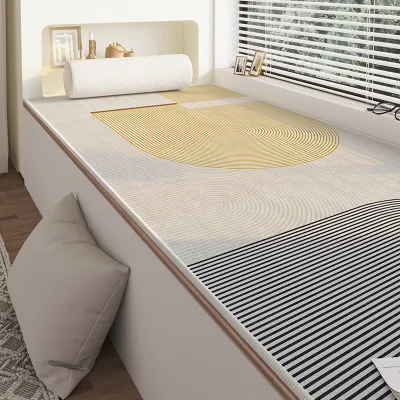
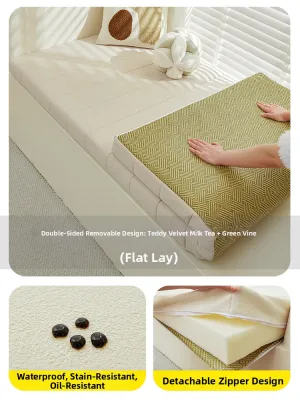
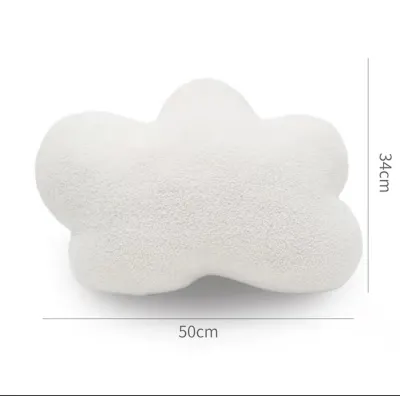
Prices are valid at publication and may change. Please refer to the product page for the latest price.
Memory Foam: Contouring and Pressure Relief
Memory foam, or viscoelastic polyurethane foam, is famous for its slow-conforming response to heat and pressure. When you sit on a memory foam window cushion, your body heat softens the material, allowing it to mold precisely to your unique contours. This even distribution of body weight relieves pressure on the hips, tailbone, and thighs, which is incredibly beneficial if you plan to sit and read for hours.
However, this contouring effect comes with a distinct sinking sensation. Because the foam takes several seconds to recover its shape when you move, shifting your position can feel like climbing out of a shallow impression. If you prefer a surface that allows you to move freely without feeling restricted, standard memory foam might feel too sluggish.
Latex: Bouncy and Resilient Support
Latex provides an entirely different sitting experience characterized by instant recovery and buoyant uplift. Instead of contouring to your body shape by sinking, latex pushes back against your weight to keep you floating on top of the cushion. This responsive elasticity makes it much easier to transition between sitting, reclining, or standing up.
For upright seating or multi-use window spaces, latex provides excellent structural support that keeps your spine aligned. It is available in different firmness levels, typically categorized by its manufacturing process. Dunlop latex tends to be denser and firmer at the bottom, making it ideal for supportive base layers, while Talalay latex offers a softer, more uniform consistency that mimics a plush, springy mattress feel.
Polyester Fiberfill: Soft and Plush
Polyester fiberfill consists of fine, synthetic polyester strands blown or layered into a fabric casing. This material mimics the cloud-like fluffiness of down feathers at a fraction of the cost. When you first sit on a brand-new polyester window cushion, it feels incredibly soft, pillowy, and inviting.
Despite this initial plushness, polyester fill lacks a solid structural core. Under the weight of an adult, the loose fibers compress rapidly, often allowing you to feel the hard window sill underneath. For this reason, loose polyester fiberfill is best reserved for backrest cushions, throw pillows, or window seats that are primarily decorative rather than intended for daily, extended sitting.
Durability and Shape Retention: Which Fill Lasts Longest?
A window cushion is a long-term addition to your home decor, and its longevity depends on how well the filling resists permanent compression and sagging under repeated use.

Memory Foam and Latex: Long-Term Resilience
Both memory foam and latex are highly durable solid foam materials, but they handle aging differently. High-quality, high-density memory foam can retain its shape for several years, but lower-density variants are prone to developing permanent body impressions or softening prematurely in high-use areas.
Latex is widely regarded as the most durable cushioning material available. Its natural elasticity allows it to bounce back to its original shape thousands of times without sagging or crumbling. However, both latex and polyurethane-based memory foam share a common vulnerability: ultraviolet (UV) radiation. Direct sunlight streaming through a window will accelerate the chemical breakdown of these foams, causing them to turn yellow, brittle, and dusty. To protect your investment, always use a high-quality, UV-resistant fabric cover over foam inserts placed in sunny spots.
Polyester Fill: The Flattening Factor
Polyester fiberfill has the shortest lifespan of the three materials when subjected to regular sitting. Under constant weight and friction, the individual synthetic fibers slide past one another, bunch up, and lose their original crimp. This process leads to clumping, thinning, and a noticeably uneven surface.
While you can temporarily restore some loft to a polyester cushion by manually shaking, kneading, or fluffing it, the material will eventually reach a point of permanent compaction. If your window seat experiences daily use, a polyester insert will likely need to be replaced within one to two years to maintain basic comfort, whereas a high-density foam or latex core can easily last five to ten years with proper care.
Price and Value: Budgeting for Your Window Cushion
When planning your window seat project, the cost of the filling material will likely be the largest variable in your overall budget. Understanding the price tiers helps you balance upfront costs with long-term value.
Polyester fiberfill represents the most budget-friendly tier. Because synthetic polyester is inexpensive to manufacture and easy to cut or stuff, these cushions are highly accessible. If you have a very long or unusually shaped bay window, opting for polyester inserts keeps your initial costs low. It is also an excellent, low-risk choice if you like to change your home decor style frequently and do not mind replacing the inserts every couple of seasons.
Memory foam sits in the mid-range price category. The cost of a memory foam cushion is directly tied to its density and thickness. Solid, high-density memory foam slabs cost more than shredded memory foam or low-density alternatives, but they provide significantly better support and longevity. If you want a comfortable, long-lasting seat without paying premium prices, a high-density memory foam core wrapped in a thin layer of polyester batting offers an excellent balance of comfort and cost.
Latex occupies the premium end of the pricing spectrum. Natural latex, harvested from the sap of rubber trees, is an expensive raw material that requires specialized processing. Synthetic latex and blended options are slightly more affordable but still cost more than memory foam. When shopping, always read product descriptions carefully to distinguish between 100% natural latex, synthetic latex, and blended variations, as pure natural latex commands the highest price due to its eco-friendly sourcing, superior breathability, and unmatched durability.
Maintenance and Climate Considerations in Singapore
Singapore’s tropical climate, characterized by high temperatures and year-round humidity, introduces unique challenges for household textiles. Window seats are particularly vulnerable because they are positioned next to exterior glass, where heat build-up and moisture from condensation or sudden rain showers are common.
Breathability and Heat Retention
Traditional memory foam has a dense, closed-cell molecular structure that tends to trap body heat. In a warm room, sitting on a memory foam cushion can lead to a sweaty, uncomfortable experience as the foam absorbs and holds your body warmth. If you choose memory foam for a sunny window nook, look for advanced formulations such as open-cell structures or gel-infused foams designed to help dissipate heat.
Latex naturally excels in warm, humid environments. Its open-cell physical structure allows air to circulate freely, and most latex cushion cores are manufactured with vertical ventilation pinholes that actively pump warm air out as you sit and move. Polyester fiberfill also offers decent breathability because the loose fibers allow air to pass through, though the synthetic material itself does not absorb moisture, which can sometimes lead to a clammy feel if paired with a non-breathable outer cover.
Cleaning and Moisture Management
High humidity levels near windows increase the risk of mold, mildew, and dust mite accumulation. This makes regular maintenance essential for keeping your window nook hygienic.
Polyester fiberfill is the easiest material to clean. Many polyester cushion inserts are fully machine-washable and dry relatively quickly on a line or in a dryer on a low setting. This makes them ideal for homes with pets or young children where spills are frequent.
In contrast, solid memory foam and latex cores must never be submerged in water, machine-washed, or tumble-dried. Water trapped inside the dense cell structures of these foams is incredibly difficult to extract, leading to internal mold growth and physical degradation of the material. Instead, foam and latex must be spot-cleaned with a damp cloth and mild detergent, then allowed to air-dry completely in a well-ventilated indoor space. Because direct sunlight degrades these materials, they should never be left to dry in the sun. Always check the manufacturer’s specific care label on your cushion before attempting any cleaning routine.
Material Comparison at a Glance
To help you quickly weigh your options, this table summarizes how memory foam, latex, and polyester fiberfill perform across key decision categories.
| Material | Comfort Feel | Durability & Shape Retention | Relative Price | Breathability & Cooling | Best Use Case |
|---|---|---|---|---|---|
| Memory Foam | Deep contouring, slow-sinking pressure relief | Very good (high-density options resist sagging) | Mid-range | Moderate (tends to retain heat) | Long reading sessions, cozy lounging |
| Latex | Buoyant, springy, active upright support | Excellent (highest longevity, resists compression) | Premium | High (natural open-cell structure) | Daily seating, warm rooms, eco-conscious homes |
| Polyester Fill | Soft, fluffy, cloud-like initially | Low (compresses and clumps quickly) | Budget-friendly | Good (loose fibers allow airflow) | Decorative cushions, occasional use, budget setups |
Final Decision Framework: Making Your Choice
To select the perfect fill for your window seat, evaluate how you intend to use the space, your local environmental conditions, and your budget limits.
- Choose Memory Foam if: You plan to spend long, uninterrupted hours sitting or lying on your window seat, you suffer from joint or lower back pressure, and you enjoy a cozy, contouring sensation that lets you sink deeply into your seating space.
- Choose Latex if: You want a highly durable cushion that will maintain its shape for many years, you prefer a cool and breathable sitting surface that handles tropical humidity well, and you have the budget to invest in premium, resilient materials.
- Choose Polyester if: You are styling a window seat primarily for visual appeal, you need lightweight cushions that can be easily moved or washed, or you are working with a tight budget and do not mind replacing the inserts after a period of heavy use.
Verify first if: You have any specific material sensitivities, such as a latex allergy, which would make natural latex cushions unsuitable for your home. Additionally, measure your window sill dimensions carefully before purchasing. If your window bay features non-standard angles or curved edges, you may need a custom-cut foam insert, which is easier to execute with solid memory foam or high-density polyurethane blocks than with pre-molded latex cores.
Community discussion
Share your experience or ask a question. Comments are reviewed before publication.