
Illuminating a staircase is one of the most critical lighting decisions you will make for your home, directly affecting both daily safety and evening aesthetics. Selecting the right sensor for your staircase step light system depends heavily on your specific foot traffic patterns, environmental conditions, and energy priorities. Motion sensor step lights are designed for intermittent, on-demand illumination, making them highly effective for indoor staircases, basement steps, or private outdoor paths where you want to save energy and prevent light spill. Conversely, dusk-to-dawn step lights provide continuous, hands-free illumination from sunset to sunrise, making them ideal for high-traffic outdoor pathways, main entryways, or communal steps where immediate, zero-delay visibility is essential. By understanding how these sensor technologies interact with your daily routines, you can choose a system that provides the perfect balance of convenience, safety, and efficiency.
How Motion and Dusk-to-Dawn Sensors Actually Work
To make an informed decision, it is essential to understand the underlying technology that powers each sensor type. Motion-activated step lights typically rely on Passive Infrared (PIR) sensors, which detect changes in infrared radiation within their field of view. Every warm-blooded body emits heat, and when a person, pet, or vehicle moves across the sensor’s detection zone, the PIR sensor registers this shift in thermal energy and completes the electrical circuit to turn the light on. Many of these fixtures feature adjustable integrated timers, allowing you to control how long the light remains active—frequently ranging from 30 seconds to 5 minutes—after movement ceases. Some models also include sensitivity adjustments to narrow or widen the detection field, ensuring the light only triggers when someone actually approaches the steps.
Dusk-to-dawn step lights operate on an entirely different principle, using a light-sensitive component known as a photocell. This sensor continuously monitors the ambient light levels in the immediate environment, measuring the light in lux. When natural daylight fades below a pre-set threshold—typically around 10 to 20 lux as twilight sets in—the photocell’s electrical resistance changes, automatically turning the step light on. Once the sun rises and ambient light levels exceed this threshold, the sensor opens the circuit and turns the light off. This creates a completely automated schedule that adjusts itself naturally throughout the year as seasonal daylight hours shift, requiring no manual programming or physical intervention.
Products mentioned in this guide
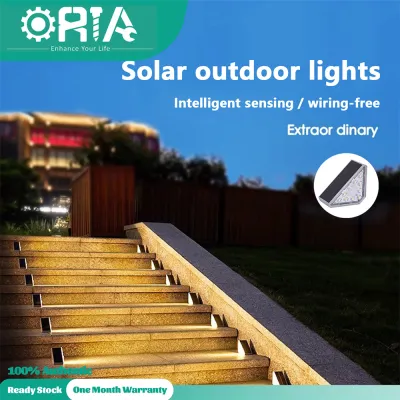
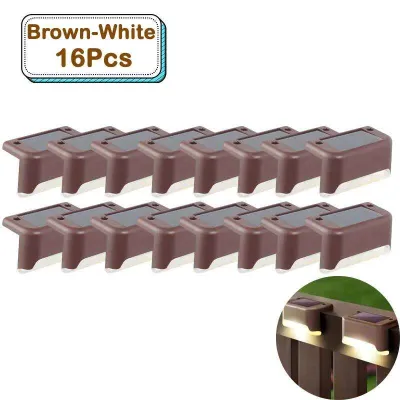
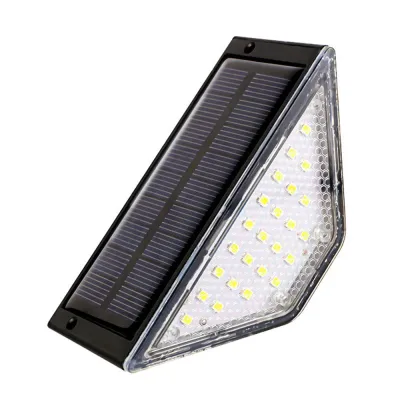
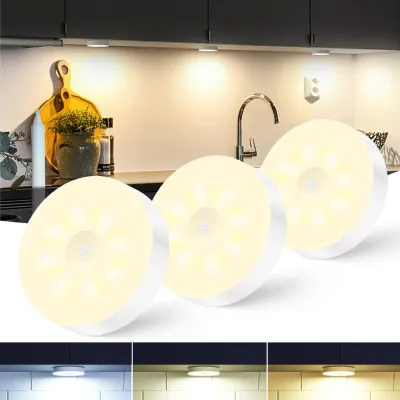
Prices are valid at publication and may change. Please refer to the product page for the latest price.
For homeowners seeking a middle ground, dual-sensor step lights offer a highly efficient hybrid solution. These advanced fixtures integrate both a photocell and a motion sensor into a single unit. The step light remains completely dormant during the day, even if someone walks past, because the photocell detects sufficient daylight. Once darkness falls, the photocell activates the motion sensor, which then waits to trigger the light only when physical movement is detected. This hybrid approach is particularly beneficial for outdoor paths where you want the energy-saving benefits of motion detection but want to guarantee the lights never turn on during bright daylight hours.
Key Differences: Energy Use, Triggering, and Lifespan
When comparing these two technologies, several practical performance dimensions come into play, starting with the triggering mechanism and overall responsiveness. Motion sensors operate reactively, meaning there is often a brief physical delay—usually between 0.5 to 2 seconds—as the sensor registers movement and signals the driver to illuminate the LEDs. While this delay is minor, it can occasionally feel unsettling if you are walking quickly and must take the first step or two in relative darkness before the light activates. Dusk-to-dawn lights, on the other hand, offer zero-delay readiness because they are already illuminated. When you step onto the staircase, the entire path is fully visible from the very first moment, eliminating any momentary hesitation or safety risks associated with delayed activation.

Energy efficiency and long-term operating costs also differ significantly between the two systems. A standard low-voltage LED step light typically draws between 1 and 3 watts of electricity. If you install a motion sensor system on a staircase that is used only occasionally, the cumulative daily run time might be less than 30 minutes, resulting in negligible power consumption. In contrast, a dusk-to-dawn step light will run continuously for approximately 10 to 12 hours every night, regardless of whether anyone is using the stairs. While a single 2-watt light running 12 hours a night consumes a modest 24 watt-hours daily, a comprehensive installation of 10 to 15 step lights across a large property can add up to a measurable, albeit still relatively low, increase in your monthly utility bills.
The operational patterns of each sensor type also directly impact the physical lifespan and wear of the lighting components. LED chips and their electronic drivers degrade over time due to heat accumulation and cumulative operating hours. A dusk-to-dawn fixture running 12 hours a night will accumulate roughly 4,380 operating hours per year, meaning it will reach a standard 50,000-hour L70 lifespan in about 11 years, at which point the light output will have dimmed noticeably. A motion-activated step light, running only a fraction of that time, will easily preserve its LED chips for decades. However, the mechanical or electronic relays within motion sensors undergo physical wear with every single trigger cycle, which means the sensor mechanism itself may eventually fail and require replacement long before the LED light source degrades.
To help visualize how these two options compare across key practical performance categories, the table below outlines the core differences:
| Feature | Motion Sensor Step Light | Dusk-to-Dawn Step Light |
|---|---|---|
| Trigger Mechanism | Heat and movement detection (PIR) | Ambient light level threshold (lux) |
| Nightly Run Time | Intermittent (minutes per night) | Continuous (10 to 12 hours nightly) |
| Energy Efficiency | Extremely high (on-demand operation) | Moderate (continuous low-wattage draw) |
| Activation Delay | 0.5 to 2 seconds detection delay | Zero delay (already fully illuminated) |
| Component Lifespan | Long LED life; sensor relay may wear out | Shorter LED life due to high run hours |
| Best Environment | Indoor stairs, bedrooms, low-traffic paths | Outdoor entryways, main stairs, garden paths |
| Potential Drawbacks | False triggers (pets, wind); sudden shutoffs | Light pollution; sensor confusion from streetlights |
Matching the Step Light Sensor to Your Staircase or Pathway
Choosing the right sensor technology is not just about comparing technical specifications; it is about matching the physical layout, environmental conditions, and usage patterns of your specific staircase or pathway.
When to Choose Motion Sensor Step Lights
Motion-activated step lights are highly recommended for indoor staircases, basement steps, or private outdoor stairs where illumination is only required when someone is actively navigating the space. In indoor environments, especially near bedrooms or family living areas, having lights that remain on continuously throughout the night can cause unwanted light spill that disrupts sleep patterns. A motion sensor ensures that the steps are brightly lit when you need to walk down the hall for a glass of water, but return to restful darkness immediately afterward. This localized, temporary illumination is also highly beneficial in dense residential estates where continuous outdoor lighting might shine directly into a neighbor’s window, causing friction or complaints about light pollution.
When planning a motion-activated installation, strategic sensor placement is critical to ensuring user safety. The detection zone of the sensor must cover the approach to the staircase, rather than just the stairs themselves. If a motion sensor is positioned too far down the stairwell or has a restricted field of view, a user may have to take the first step or two in complete darkness before triggering the light. To prevent this hazard, look for fixtures with wide detection angles—ideally 120 to 180 degrees—and position them at the very top and bottom landings of the staircase. This ensures that the moment a foot approaches the transition zone, the entire pathway illuminates instantly, providing a secure and confident footing from the very first step.
When to Choose Dusk-to-Dawn Step Lights
Dusk-to-dawn step lights are the superior choice for outdoor front porches, long garden pathways, and heavily trafficked entry stairs where continuous visibility is vital for safety, security, and architectural appeal. For main entryways, having a consistently lit path welcomes family members and guests without requiring them to wave their arms or walk close to a sensor to trigger a light. This constant illumination is also a powerful deterrent against potential intruders, as it eliminates dark shadows and blind spots around the perimeter of your home. A well-lit exterior sends a clear signal that the property is active and monitored, enhancing overall home security.
Another major advantage of dusk-to-dawn lighting is the complete elimination of activation delay. When you open your front door to step outside at night, the entire pathway is already fully visible, allowing you to identify wet patches, debris, or uneven steps immediately. This is particularly valuable for households with elderly family members or young children, where even a two-second delay in light activation could lead to a misstep or fall. Furthermore, continuous low-level lighting highlights the architectural features of your landscaping and masonry, transforming your outdoor steps into a beautiful design feature that enhances the nighttime curb appeal of your property.
Installation and Wiring Considerations for Singapore Homes
Implementing these lighting systems in Singapore requires careful consideration of local power infrastructure, building designs, and environmental factors.
When evaluating wiring and power options, homeowners can choose between battery-operated, solar-powered, and hardwired (230V AC or low-voltage DC) systems. Battery-operated step lights offer a highly convenient, drill-free installation that is excellent for retrofitting existing indoor staircases, though they require regular battery replacements that can become tedious over time. Solar-powered step lights are popular for outdoor garden paths, but they are highly dependent on direct sunlight. In Singapore’s tropical climate, heavy cloud cover or shade from dense foliage and neighboring high-rise buildings can limit solar panel charging, leading to weak or short-lived illumination at night. Hardwired installations are the most reliable and permanent option, but they require careful planning to verify existing switch loops, conduit pathways, and neutral wire availability behind your walls or stair risers.
Singapore’s unique urban environment also introduces specific environmental interferences that can affect sensor performance. For dusk-to-dawn systems, the high density of housing estates means that bright nearby HDB corridor lights, streetlamps, or security floodlights from adjacent properties can shine directly onto your photocell. This external light spill can trick the sensor into detecting daytime conditions, preventing your step lights from turning on when you need them. For motion sensors, Singapore’s intense tropical downpours, strong winds blowing through garden foliage, or community cats roaming near outdoor steps can cause frequent false triggers. This continuous cycling not only wastes energy but also accelerates the wear and tear on the fixture’s internal relay components.
To ensure safety and compliance with local electrical standards, always observe strict safety boundaries during installation. Before inspecting, servicing, or installing any hardwired step light, you must switch off the main power at your home’s main distribution board (DB box) and verify that the circuit is completely dead using a reliable voltage tester. It is strongly advised to consult and hire an EMA-licensed electrician to handle any new wiring, conduit installation, or integration with existing smart home switches, particularly for damp outdoor locations where improper sealing can lead to short circuits. Additionally, always check the manufacturer instructions of both the step light and any existing electrical components to ensure compatibility.
Weatherproofing is another critical factor for outdoor installations in Singapore’s high-humidity and high-rainfall climate. Any step light installed in an exposed outdoor area, such as garden steps or uncovered front entryways, must have a verified Ingress Protection (IP) rating. Look for fixtures rated IP65 or higher, which guarantees that the housing is completely dust-tight and protected against water jets from any direction. For covered outdoor areas like sheltered patios or balconies, an IP44 rating may be acceptable, but choosing a higher IP rating provides extra peace of mind against driving rain and moisture ingress during routine floor cleaning or pressure washing.
Final Verdict: Which Step Light Should You Install?
Ultimately, the choice between motion sensor and dusk-to-dawn step lights comes down to a clear trade-off between targeted energy efficiency and continuous safety.
You should choose motion sensor step lights if your primary goals are maximizing energy savings, illuminating low-traffic or indoor staircases, and preventing light spill into nearby bedrooms or neighboring properties. They are the ideal choice when you want a highly responsive, modern lighting system that only draws power when actively guiding someone’s steps, and where a minor one-to-two second activation delay does not pose a safety concern.
You should choose dusk-to-dawn step lights if you require constant, reliable safety lighting for high-traffic outdoor entryways, prioritize home security, and want zero activation delay when transitioning from indoors to outdoors. This option is best when you prefer a beautifully illuminated landscape throughout the night and do not mind the modest, continuous power draw of low-wattage LED fixtures.
Regardless of the sensor technology you select, pay close attention to the light’s lumen output and color temperature to ensure comfortable visibility. For step lights, a lower lumen output—typically between 50 and 150 lumens—is ideal, as it provides sufficient illumination to see the stair treads clearly without causing harsh glare that can temporarily blind a user walking in the dark. Opt for a warm white color temperature, such as 2700K to 3000K, which creates a soft, inviting glow that is gentle on the eyes and enhances the natural materials of your staircase, ensuring a safe and aesthetically pleasing path through the dark.
Community discussion
Share your experience or ask a question. Comments are reviewed before publication.