
Selecting the ideal modular lighting system for a corridor or hallway requires a careful balance of spatial geometry, aesthetic intent, and structural feasibility. There is no single universal choice for every home; instead, the right selection depends on your hallway’s physical dimensions, architectural features, and specific lighting goals. While Nanoleaf Lines excel in narrow, linear spaces by providing indirect, low-profile illumination, Shapes and Canvas are better suited for wide feature walls where they can serve as bold, interactive focal points. For homeowners seeking a subtle, organic aesthetic that blends seamlessly with natural decor, Nanoleaf Elements offers a wood-grain finish that remains visually appealing even when powered off.
To achieve a successful installation, you must evaluate how each product line interacts with your corridor’s physical constraints. Hallways are high-traffic transition zones that demand careful planning regarding physical clearance, power accessibility, and mounting security. By analyzing your space’s dimensions and matching them to the unique design characteristics of each modular system, you can transform a utilitarian corridor into a beautifully lit architectural feature.
Assessing Your Hallway Dimensions and Lighting Needs
Before purchasing any modular lighting system, you must conduct a thorough assessment of your hallway’s physical layout and environmental conditions. Begin by measuring the exact width of the corridor, the height of the ceiling, and the total available wall surface area. In compact residential layouts, such as high-density apartments or condominiums, hallways are often narrow, sometimes measuring less than 1.2 meters in width. In these tight spaces, any wall-mounted fixture that protrudes significantly can restrict movement or feel visually overwhelming. Conversely, wide entryways or open-plan landing areas provide expansive vertical surfaces that can easily accommodate larger, more complex panel configurations without crowding the walking path.
Products mentioned in this guide
Prices are valid at publication and may change. Please refer to the product page for the latest price.
Next, define the primary lighting goal for the space. Are you looking for functional illumination to ensure safe passage during the night, or is your objective to create a dramatic, decorative focal point? If the hallway is already well-lit by recessed ceiling downlights, your modular panels will serve primarily as ambient mood lighting or artistic accents. However, if the corridor lacks existing light sources, you will need a system capable of delivering sufficient direct light output to illuminate the floor safely.
Finally, inspect the physical condition of the walls and the location of electrical outlets. Take note of the wall texture—smooth plaster, drywall, concrete, or textured wallpaper—as this directly affects how well adhesive mounting strips will perform. Locate the nearest power outlet and plan how the power cable will reach the installation site. In high-traffic corridors, exposed, dangling cables are not only an aesthetic distraction but also a potential tripping hazard. Identifying stud locations behind drywall or assessing the hardness of concrete walls will help you determine whether you can rely on adhesive tape or if you must prepare for mechanical screw mounting.
Nanoleaf Lines: Best for Narrow Corridors and Linear Spaces
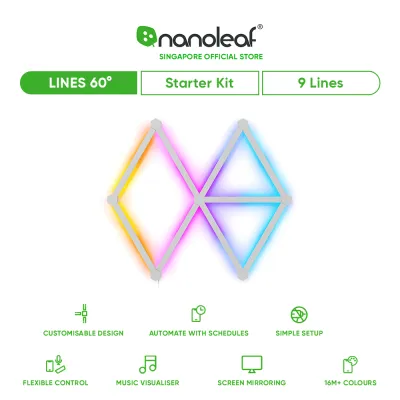
For narrow hallways and long, linear corridors, Nanoleaf Lines present an exceptionally practical and visually striking solution. Unlike traditional flat panels that project light outward into the room, Lines feature a low-profile, linear design that projects light backward onto the wall surface. This indirect, backlit effect creates a soft, diffused glow that minimizes harsh glare in confined spaces, making the corridor feel wider and more open. Because the physical light bars are elevated off the wall on small mounting connectors, they maintain a very slim profile that does not encroach on the limited physical clearance of a narrow passage.

The linear nature of this system allows you to design layouts that mimic or enhance the architectural lines of your home. By utilizing the 60-degree or 90-degree connectors, you can create continuous geometric paths that stretch along the length of the hallway, visually elongating a short corridor or guiding the eye toward a doorway or transition zone. The dual-zone color customization within each light bar enables you to program subtle color gradients or directional lighting patterns, which can simulate movement and add a dynamic flow to an otherwise static space.
Before committing to a physical layout, it is essential to verify the flatness of your hallway walls. Because the light bars rely on precise alignment between mounting nodes, even minor wall curvature can put stress on the connectors, potentially causing the adhesive to fail over time. Use a level to check the wall surface and utilize the layout assistant in the manufacturer’s mobile application to map out your design digitally. This step ensures that your planned configuration fits perfectly within the measured boundaries of your wall before you peel off the adhesive backing.
Nanoleaf Shapes and Canvas: Best for Wide Hallways and Feature Walls
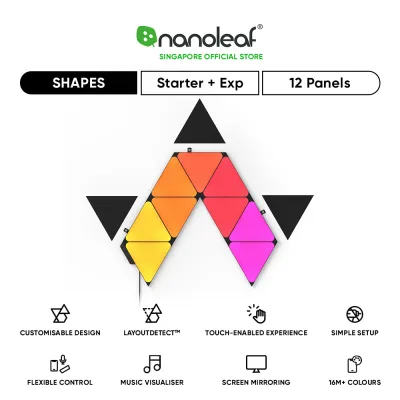
When dealing with wide hallways, spacious entryways, or prominent landing walls, Nanoleaf Shapes and Canvas offer the creative freedom needed to build expansive, eye-catching installations. The Shapes line—which includes Hexagons, Triangles, and Mini Triangles—features a modular design that allows you to mix and match different geometric forms within a single layout. This flexibility is ideal for creating custom mosaic-like patterns that serve as the primary decorative element in a large transition space. The Canvas line, characterized by its square, touch-sensitive panels, offers a clean, grid-like aesthetic that can cover larger surface areas to create a modern, interactive light wall.
However, installing larger panels in a hallway requires careful consideration of physical clearance. You must check the protrusion depth of the chosen panels to ensure they do not interfere with daily traffic, especially when carrying groceries, moving furniture, or navigating the space in the dark. In some regions, local building codes specify minimum clearance widths for corridors; ensuring your light panels do not violate these standards is crucial for safety and compliance.
Additionally, larger configurations require a robust mounting strategy. As you add more panels to a layout, the cumulative weight increases significantly. You must review the manufacturer’s weight specifications and assess whether your wall substrate can safely support the load. While adhesive tape may suffice on smooth, painted drywall, heavier configurations on concrete, brick, or highly textured plaster walls often require mechanical mounting kits. Using screws and wall anchors ensures that the panels remain securely attached to the wall, preventing accidental falls in high-traffic areas where family members or pets might brush against them.
Nanoleaf Elements: Best for Subtle, Ambient Hallway Accents
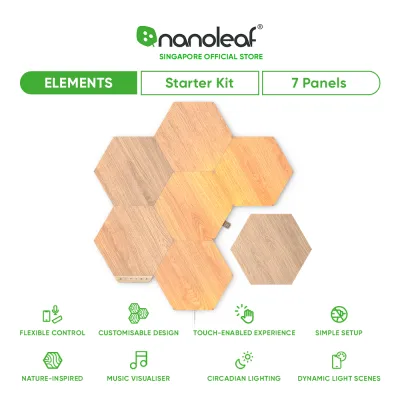
For homeowners who prefer a warm, minimalist, or nature-inspired aesthetic, Nanoleaf Elements provides an elegant alternative to standard plastic light panels. Featuring a wood-grain textured finish, Elements panels are designed to look like sophisticated wall art when turned off, blending seamlessly with wooden furniture, neutral color palettes, and organic decor. When illuminated, they emit a soft, warm glow through the wood-grain veneer, creating a cozy, welcoming atmosphere in entryways and transition zones.
It is important to understand that Elements is designed primarily as an ambient accent rather than a high-intensity functional light source. The light output is softer and more diffused than that of the Shapes or Canvas lines, and the color options are limited to a spectrum of warm to cool whites. This makes Elements highly suitable for corridors that already have adequate primary lighting but require an additional layer of warmth to make the space feel more inviting.
Before selecting this line, check the specific light output (measured in lumens) and the color temperature range listed on the product packaging to ensure it aligns with your visibility needs. If your hallway is completely dark and relies solely on the wall panels for safe navigation at night, Elements may need to be paired with other light sources, or configured in a larger layout, to provide sufficient illumination.
Installation and Electrical Checks for Hallway Lighting
A successful hallway lighting installation relies heavily on proper electrical planning and structural preparation. First, verify that your home’s local voltage matches the requirements of the Nanoleaf power supply unit (PSU). In Singapore, the standard domestic voltage is 230V at 50Hz. Ensure that the specific power supply and linkers you use are rated for this voltage and can safely handle the total wattage of your planned panel layout. Each PSU has a maximum panel capacity; exceeding this limit can cause the lights to flicker, fail to power on, or overload the controller.
Safety boundaries must be strictly observed when planning the physical installation. If you intend to hardwire the power supply into your home’s electrical system, route cables behind drywall, or install panels on a wall that shares a boundary with a damp area (such as a bathroom or an external wall exposed to tropical humidity), you must hire a qualified electrician. Attempting to run standard low-voltage power cables through wall cavities without proper in-wall rated cabling violates electrical safety codes and poses a fire hazard. Always isolate the power at the main distribution board before performing any electrical checks or adjustments near existing wiring.
Finally, match your mounting hardware to the specific wall material in your hallway. For smooth, painted drywall, the manufacturer’s double-sided adhesive tape is generally sufficient, provided the wall is thoroughly cleaned with isopropyl alcohol beforehand to remove dust and oils. However, for masonry, concrete, or heavily textured plaster walls, adhesive tape is highly prone to failure. In these scenarios, utilize the official screw-mounting brackets to secure each panel. This mechanical connection is essential in high-traffic corridors where physical contact is more likely to occur, ensuring your investment remains safely anchored to the wall.
Frequently Asked Questions (FAQ)
Can Nanoleaf panels be installed on hallway ceilings?
While it is physically possible to mount Nanoleaf panels on a hallway ceiling, doing so introduces significant structural challenges and safety risks. The standard double-sided adhesive tape provided with the panels is designed primarily for shear strength on vertical walls, not for resisting the constant downward pull of gravity on a ceiling. Over time, temperature fluctuations and humidity can weaken the adhesive, leading to a high risk of panels detaching and falling, which is particularly dangerous in a high-traffic corridor. If you decide to proceed with a ceiling installation, you must check the manufacturer’s official guidelines and use supplemental mechanical fasteners, such as screw-mounting kits, to ensure the panels are securely and permanently anchored.
How do I manage power cables in a hallway without visible wires?
Achieving a clean, wire-free look in a hallway requires careful layout planning relative to your electrical outlets. The most straightforward approach is to design your panel configuration so that the controller and power cable originate near an existing outlet, allowing you to conceal the wire behind furniture or run it along the baseboard using paintable cable trunking. If you prefer a completely hidden installation where no cables are visible on the wall, you must consult a licensed electrician. A professional can install a recessed outlet directly behind the panel layout or safely route the power supply through the wall cavity using code-compliant, in-wall rated wiring, ensuring a seamless aesthetic without compromising home safety.
Community discussion
Share your experience or ask a question. Comments are reviewed before publication.