
Natural beeswax is a premium, renewable candle material prized for its clean burn, long burn time, and warm, golden glow. Secreted naturally by honey bees to construct honeycombs, it acts as a highly dense and aromatic base that significantly influences how fragrance is retained and released. Because of its tight molecular structure and its own distinct, sweet honey aroma, beeswax naturally restricts the dispersion of added scents, resulting in a more subtle and intimate fragrance experience compared to soy or paraffin waxes.
To understand how this material behaves, it helps to look at its origin. Honey bees produce liquid wax from specialized glands, which solidifies into scales. Beekeepers harvest this wax during honey extraction. The raw wax undergoes natural filtration to remove impurities, leaving behind a clean, usable material. This minimal processing ensures the wax remains free from synthetic additives, making it a highly sought-after choice for environmentally conscious households.
Visually, unrefined natural beeswax is easily identified by its rich, golden-yellow hue, though it can also be filtered to a creamy white shade. Olfactorily, it carries a built-in baseline scent of sweet honey and warm pollen. This natural aroma is a key differentiator; while other candle waxes are completely odorless, beeswax brings its own olfactory profile to the table before any fragrance oils are introduced.
Products mentioned in this guide

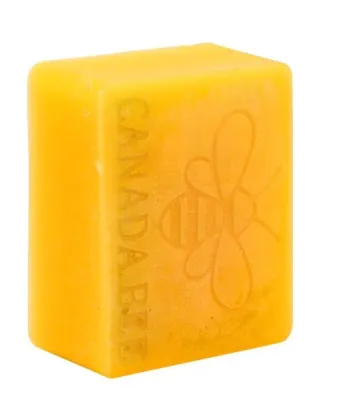

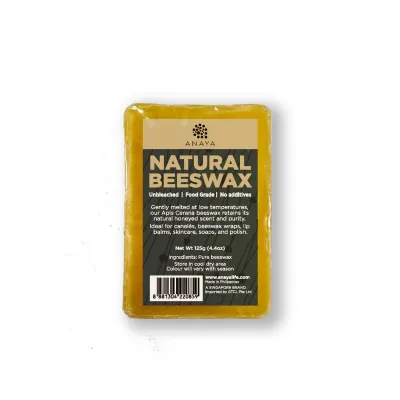



Prices are valid at publication and may change. Please refer to the product page for the latest price.
Physically, beeswax is characterized by an exceptionally high melting point, typically ranging between 62°C and 65°C. This is significantly higher than soy wax, which usually melts between 45°C and 52°C. This high melting point, combined with its dense molecular structure, means beeswax candles burn much slower and last longer. However, this same density also presents unique challenges when it comes to blending and releasing fragrances, directly impacting what candle makers call “scent throw.”
How Natural Beeswax Affects Scent Throw
The term “scent throw” refers to how well a candle projects its fragrance. It is divided into “cold throw”—the aroma a candle emits while sitting unlit—and “hot throw”—the fragrance released as the candle burns. The physical and chemical properties of natural beeswax create a unique environment for fragrance oils, often resulting in a milder, more localized scent throw compared to other wax types.
The primary factor limiting scent throw in beeswax candles is molecular density. Because the molecules in beeswax are tightly packed, they form a highly stable crystalline structure. When the candle is lit, this dense structure does not release fragrance molecules easily. As the wax melts, the fragrance oils bound within the crystalline matrix are released slowly and gradually. While this results in a very consistent scent, it lacks the rapid, room-filling dispersion or “hot throw” characteristic of softer, more porous waxes like soy.
Furthermore, this high density imposes strict limits on the wax’s fragrance load capacity. Fragrance load refers to the percentage of fragrance oil that can be successfully bound to the wax without sweating or pooling. While soy wax can often hold a fragrance load of 10% to 12%, pure natural beeswax typically caps out at around 6% to 8%. Attempting to force more fragrance oil into dense beeswax can cause the oil to separate from the wax, creating a safety hazard when lit or leading to poor burn quality.
The natural honey aroma of beeswax also plays a major role in shaping the final scent profile, particularly during cold throw. Because the wax itself has a distinct sweet, warm scent, it acts as a base note that interacts with any added fragrance. This natural scent can beautifully complement warm, spicy, or woody fragrance profiles, but it can easily mask or distort delicate, light, or citrusy notes. Consequently, the cold throw of a beeswax candle is often a blend of the added fragrance and the underlying honey aroma.
How to Choose and Evaluate Beeswax Scented Candles
When shopping for beeswax scented candles, understanding how to read labels and evaluate product specifications will help you find a candle that matches your fragrance expectations. Because pure beeswax has a naturally mild throw, many candle makers create hybrid blends. Learning to distinguish between 100% pure beeswax and blended options is the first step in selecting the right candle.

Look closely at the ingredient list on the packaging. A candle labeled “beeswax blend” often combines beeswax with soy wax or coconut wax. These blends are specifically formulated to leverage the benefits of both materials: the slow, clean burn of beeswax combined with the superior fragrance-holding capacity and softer texture of soy or coconut wax. If your primary goal is a strong, room-filling scent throw, a high-quality soy-beeswax blend is often a more practical choice than a 100% pure beeswax candle.
The type of fragrance used also dictates how well it binds with the dense wax. Synthetic fragrance oils are often engineered to bond effectively with various wax types, whereas natural essential oils can be more volatile and difficult to bind to dense beeswax. When evaluating a candle, check if the manufacturer specifies the fragrance type. Essential oil-infused beeswax candles offer a completely natural product but will have a much gentler, more intimate scent throw. Synthetic fragrance oils in beeswax may offer a slightly more pronounced throw.
Wick selection is another critical element to inspect. Because beeswax has a high melting point and high viscosity, it requires a robust heat source to melt evenly. Look for candles with thick, tightly braided cotton wicks or natural wood wicks. A wick that is too thin will fail to melt the dense wax across the entire diameter of the container, leading to tunneling and a severely diminished scent throw. A properly sized wick ensures a deep melt pool, which is essential for releasing the bound fragrance oils.
Maximizing Scent Throw and Burn Performance
To get the most out of your natural beeswax scented candle, proper burn habits and maintenance are essential. Because of the wax’s high melting point, simple mistakes during the initial burns can permanently damage the candle’s performance and limit its fragrance release.
The most important rule for burning a beeswax candle is to achieve a full melt pool during the very first burn. This means allowing the candle to burn until the liquefied wax reaches all the way to the outer edges of the container. Because beeswax is so dense, it has a “memory.” If you extinguish the candle before a full melt pool is established, subsequent burns will follow the same narrow path down the center, creating a tunnel. Tunneling leaves a thick ring of hard wax along the sides, wasting valuable material and trapping the fragrance oils.
Regular wick maintenance is also crucial for clean burning and optimal scent release. Before lighting your candle, always trim the wick to approximately 5mm to 6mm. A wick that is too long can produce a large, flickering flame that burns through the wax too quickly, creating soot and a smoky smell that overpowers the delicate fragrance. Conversely, trimming the wick too short can drown the flame in the dense melted wax, resulting in a weak burn and minimal scent throw.
Finally, match the candle to the appropriate room size. Due to the naturally mild and localized scent throw of beeswax, these candles are best suited for smaller, enclosed spaces such as bedrooms, home offices, or bathrooms. Placing a pure beeswax candle in a large, open-concept living area with high ceilings or active drafts will likely result in the fragrance dispersing too quickly to be noticed. For larger spaces, consider burning multiple candles or opting for a beeswax blend.
Frequently Asked Questions (FAQ)
Is a beeswax blend better than 100% pure beeswax for scent throw?
Yes, if your primary goal is a strong and far-reaching fragrance, a beeswax blend is generally superior to 100% pure beeswax. Blending beeswax with softer waxes like soy or coconut wax lowers the overall melting point and reduces the molecular density of the candle. This structural change allows the wax to hold a higher percentage of fragrance oil—often up to 10% or 12% compared to the 6% to 8% limit of pure beeswax. The softer blend also melts more easily, creating a wider and deeper melt pool that releases the fragrance more rapidly into the air. However, if you prioritize an entirely natural, slow-burning, and soot-free candle with a subtle, clean aroma, 100% pure beeswax remains the ideal choice.
Why does my beeswax candle smell like honey instead of the added fragrance?
This occurs because unrefined, natural yellow beeswax possesses a strong, sweet honey and pollen aroma of its own. This natural scent is highly dominant and can easily overpower or blend with added fragrance oils, especially lighter notes like citrus, lavender, or soft florals. When candle makers add delicate scents to unrefined beeswax, the natural honey base notes often mask the top and middle notes of the added fragrance, resulting in a candle that primarily smells of warm honey. To avoid this, look for candles made with naturally filtered, white beeswax, which has had much of its natural honey scent removed during filtration, allowing the added fragrance oils to stand out more clearly.
Community discussion
Share your experience or ask a question. Comments are reviewed before publication.