
Evaluating the Nitecore EDC29 for emergency preparedness in a Singapore Housing & Development Board (HDB) flat requires looking beyond raw performance specifications to assess real-world utility. For most HDB residents, an emergency light must be compact, easy to locate in pitch-black conditions, simple to operate, and capable of running long enough to outlast a typical localized power outage. The nitecore edc29 offers a compelling, ultra-flat design and high output, but its suitability depends on how you manage its thermal step-down, built-in battery, and unique physical profile.
While high-lumen flashlights are often marketed for outdoor search-and-rescue, indoor HDB emergencies present entirely different challenges. Navigating a dark household shelter, checking a tripped circuit breaker, or walking down a windowless emergency stairwell during a block-wide blackout requires sustained, low-to-medium illumination rather than a blinding burst of light. This evaluation examines whether the physical design, thermal behavior, user interface, and battery configuration of this flat-style flashlight align with the practical demands of HDB emergency preparedness.
Identifying Real Emergency Lighting Needs in HDB Flats
Emergency lighting needs in Singapore public housing are distinct from those of rural or suburban environments. Power outages in HDB estates are generally rare and localized, typically caused by a tripped residual current circuit breaker (RCCB) within the flat’s distribution board (DB) box, localized cable damage, or scheduled maintenance of common area switchrooms. When these incidents occur, the immediate priority is safely navigating the flat to locate the DB box, which is often situated near the entrance or inside a utility closet, to reset the tripped switch.
Products mentioned in this guide
Prices are valid at publication and may change. Please refer to the product page for the latest price.
Beyond the walls of the flat, residents must occasionally contend with darkness in common areas. High-rise HDB blocks rely on emergency backup lighting for common corridors and stairwells, but these systems can occasionally fail or offer only dim, localized illumination. Navigating concrete stairwells, elevator lobbies, and shared utility areas like refuse rooms during a broader utility disruption requires a reliable light source that can project a wide, clear beam to prevent trips and falls on steps or uneven thresholds.
Storage conditions also dictate what makes an emergency light practical in an HDB flat. Most residents store their emergency gear in utility cabinets, shoe cupboards, or designated household shelters (commonly referred to as bomb shelters). These spaces are highly congested, holding household supplies, tools, and dry food items. An emergency light must not only be small enough to fit into tight storage organizers but also remain easily accessible so that it can be retrieved instantly in total darkness without rummaging through clutter.
Storage and Form Factor: Fitting into Compact HDB Spaces
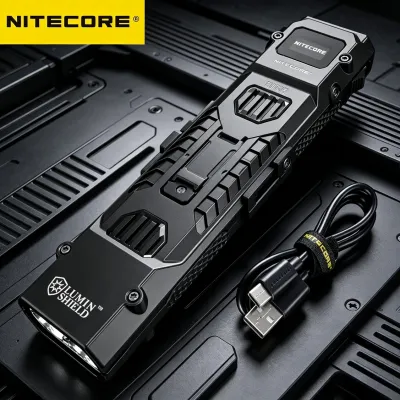
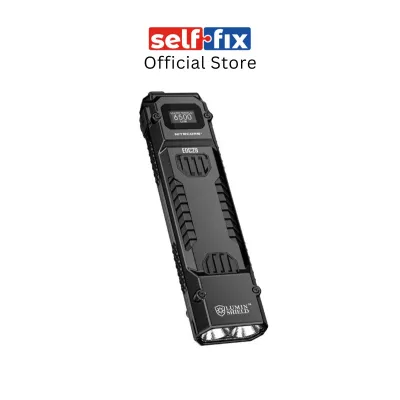
The physical profile of the nitecore edc29 is one of its most distinctive features, departing from the traditional cylindrical shape of standard flashlights. Its flat, rectangular body is highly advantageous for storage in space-constrained HDB flats. Traditional cylindrical lights tend to roll around when placed in shallow utility drawers or on metal shelving units inside a household shelter. The flat design remains stationary wherever it is placed, allowing it to be stacked neatly alongside other emergency gear, slipped into a wall-mounted organizer, or tucked into a compact first-aid kit.

This slim profile also makes the device highly portable when you need to move around the estate. It slides easily into a pocket or clips securely to a waistband, leaving both hands free to carry emergency supplies, guide family members, or hold onto stairwell handrails. For household shelters where every square centimeter of storage space is optimized, a light that takes up no more room than a small smartphone is highly efficient.
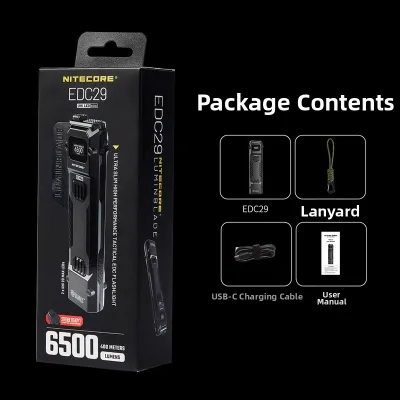
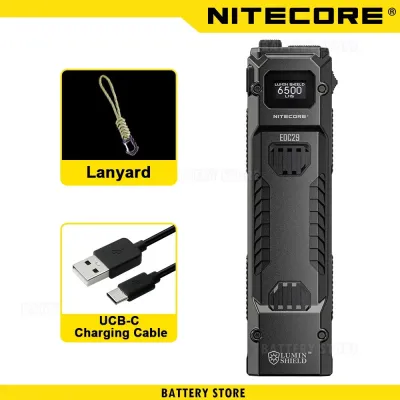
However, this flat form factor introduces ergonomic trade-offs that residents should consider before relying on it as a primary emergency tool. Traditional cylindrical flashlights often feature deep knurling or rubberized sleeves that provide a secure grip under various conditions. The flat, smooth metal sides of this device can be more difficult to hold securely, particularly in Singapore’s hot and humid climate where hands can quickly become sweaty during a stressful situation. To mitigate the risk of dropping the light on hard surfaces, users should make use of the included lanyard or verify if aftermarket grip tape is necessary to ensure a secure hold.
Brightness and Thermal Management During Blackouts
When evaluating high-output compact flashlights, it is vital to understand the relationship between peak brightness and thermal management. The manufacturer specifies exceptionally high maximum lumen outputs for this class of device, which can be useful for briefly illuminating a large outdoor area or signaling for help. However, in an enclosed HDB flat during a power failure, activating a high-power turbo mode is rarely practical. The intense glare reflecting off light-colored interior walls can cause temporary night blindness, making it harder to see details in your immediate surroundings.
Furthermore, high-output compact lights generate significant heat almost instantly. Because the flat, dense aluminum body has limited surface area for heat dissipation, the device relies on aggressive thermal throttling (step-down) to protect its internal circuitry and battery from heat damage. If activated on its highest settings, the light will automatically reduce its brightness to a fraction of its peak output within seconds or minutes, depending on ambient temperatures. In a warm, unventilated HDB flat during a blackout—where fans and air conditioning are non-functional—this heat generation is accelerated, making the flashlight body uncomfortable to hold without gloves.
For practical emergency use, residents must prioritize lower output levels. Utilizing medium or low modes (typically ranging from 15 to several hundred lumens) provides more than enough light to illuminate a room or navigate a corridor safely. Operating the light at these lower levels prevents rapid thermal throttling, keeps the device cool to the touch, and dramatically extends the battery runtime. Before storing the light, users should familiarize themselves with the runtime specifications for these lower modes to ensure they have a realistic plan for sustained illumination during a multi-hour outage.
Interface and Charging Usability When the Power Fails
During a sudden power failure, the usability of a flashlight’s interface can determine how quickly and safely you can respond to the situation. This model features an integrated OLED display that provides real-time information, including the current brightness level, remaining runtime, and battery voltage. In an emergency, knowing exactly how many hours of light you have left at a specific setting eliminates guesswork and allows for precise power management. However, users should be aware that digital displays introduce a minor standby battery drain and carry a long-term risk of screen burn-in if left on high-brightness display settings for extended periods.
Another critical factor is the charging mechanism. The device utilizes a standard USB-C port, which aligns perfectly with the modern charging ecosystem found in most Singapore households. If an HDB flat loses mains power for an extended period, the flashlight can be recharged using portable power banks, laptop ports, or solar chargers. This cross-compatibility is a significant advantage over older emergency lights that require proprietary charging cradles or rare battery sizes, ensuring you can keep the light operational using the same backup power sources you keep on hand for your mobile phone.
Operating the flashlight in complete darkness requires an intuitive tactile interface. The dual-stage tail switches must be easy to locate by feel alone, without relying on the OLED screen for guidance. Because the buttons are positioned at the rear of the flat body, users should practice accessing the primary switch and navigating the modes beforehand. Understanding the tactile feedback of a half-press versus a full-press is essential for preventing accidental activation of the high-power strobe or turbo modes, which could startle family members or cause unwanted glare in a confined space.
Daily Carry vs. Dedicated Drawer Backup: Which Strategy Works Best?
Deciding how to integrate this flashlight into your household emergency plan depends on whether you view it as an everyday carry (EDC) tool or a dedicated backup light. The flat design and pocket clip make it exceptionally well-suited for daily carry in a pocket, work bag, or purse. If you carry the light daily, it is highly likely to be fully charged and immediately available when an emergency strikes, whether you are at home, commuting on the MRT, or walking through a dark parking lot.
Alternatively, keeping the flashlight as a dedicated backup in a drawer or emergency box requires a different maintenance mindset. Lithium-ion batteries naturally lose charge over time when stored, a phenomenon known as parasitic or standby drain. If a rechargeable light is left unmonitored in a humid utility cabinet for months or years, the battery may degrade or completely discharge, leaving you without light when a real emergency occurs. Unlike traditional emergency lights that use primary lithium or alkaline batteries with a ten-year shelf life, built-in rechargeable batteries demand regular attention.
To help determine the best strategy for your household, consider the following decision framework:
- The Daily Carry Strategy: Best for residents who value having a high-performance light on their person at all times. The battery is naturally monitored and topped up through regular use, minimizing the risk of a dead battery during a home blackout.
- The Dedicated Backup Strategy: Best for residents who want a set-and-forget emergency kit. If you choose this path, you must establish a strict quarterly maintenance schedule to retrieve the light, check the battery level via the OLED screen, and recharge it to optimal storage levels (typically around 50% to 70% for long-term battery health, topping up to 100% only when an outage is imminent or during active use cycles).
Ultimately, the practical value of the device in an HDB flat depends on your willingness to manage its rechargeable battery system. If you prefer a maintenance-free emergency light, a simple model that accepts standard, long-shelf-life AA lithium batteries may be more practical. However, if you want a highly compact, powerful, and easily rechargeable tool that fits seamlessly into a modern digital lifestyle, this flat-body flashlight is an excellent addition to your HDB emergency preparedness kit, provided you understand and manage its operational limits.
Frequently Asked Questions (FAQ)
Can the Nitecore EDC29 charge a smartphone during a power outage?
No, this flashlight does not support reverse-charging or power bank functionality. Its USB-C port is strictly an input port designed for recharging the flashlight’s internal battery. It cannot output power to charge external devices such as smartphones, tablets, or other emergency gear. For emergency preparedness, residents should maintain separate, dedicated portable power banks to keep their communication devices powered during a prolonged blackout.
How does the flat body handle drops on hard HDB corridor tiles?
Most HDB common corridors, lift lobbies, and stairwells are finished with hard ceramic, homogenous, or terrazzo tiles that offer very little shock absorption. You should check the manufacturer’s official specifications for the impact resistance rating of the device, which typically outlines the safe drop height onto a hard surface. Because flat-body lights feature integrated OLED screens and glass optical lenses, a direct impact on these rigid tiles can scratch or crack the display and lens. Using the included lanyard to secure the light to your wrist is highly recommended to prevent accidental drops during use.
Community discussion
Share your experience or ask a question. Comments are reviewed before publication.