
When evaluating a high-performance tactical flashlight like the Nitecore EDC29, technical specification sheets can be overwhelming. The headline numbers—such as a massive peak output of up to 6,500 lumens and a flat, compact form factor—sound impressive on paper. However, understanding how these figures translate into actual performance in your hand is crucial before making an investment.
For everyday carry (EDC) enthusiasts and homeowners preparing for emergency power outages, a flashlight must offer more than just raw power. Real-world utility depends on how long the device can sustain its brightness, how heat is managed in humid climates, and how easily the interface can be operated in the dark. By decoding these key specifications, you can determine if this specialized light fits your specific daily or emergency needs.
Decoding Light Output: Lumens, Intensity, and Beam Distance
Flashlight manufacturers frequently highlight peak lumen ratings, which represent the absolute maximum light output a device can produce. For the Nitecore EDC29, the maximum output is a momentary burst designed for tactical deterrence or brief area illumination rather than continuous use. It is vital to differentiate between this peak output and the regulated, sustained lumen levels that the flashlight can maintain over longer periods. Sustained levels are typically much lower to prevent the LED and internal circuitry from overheating.
Products mentioned in this guide
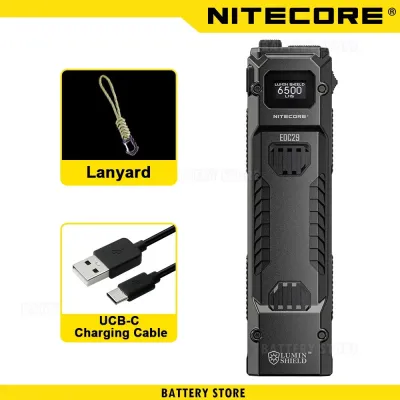
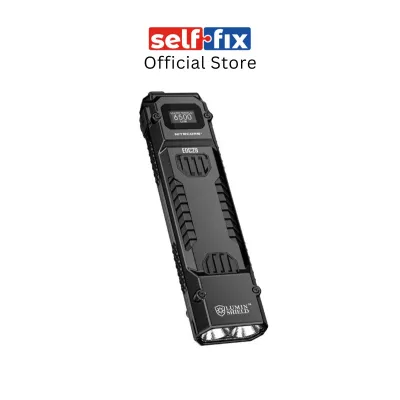
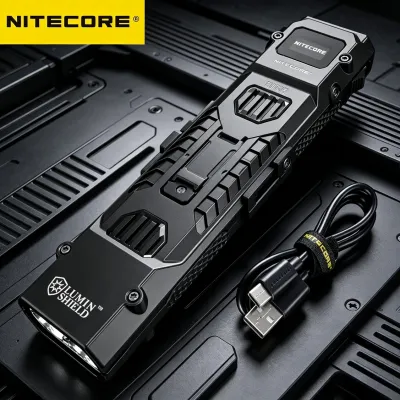
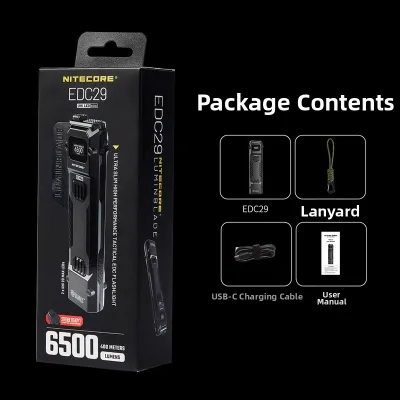
Prices are valid at publication and may change. Please refer to the product page for the latest price.
To understand how far and how wide the light will shine, you must look at beam distance and candela (luminous intensity) ratings alongside raw lumens. A high candela rating indicates a tightly focused beam (throw) that can cut through darkness over long distances, whereas a lower candela rating with high lumens suggests a wide, dispersing beam (flood). In typical urban environments, such as navigating dimly lit HDB void decks or residential corridors during a localized power failure, a balanced beam profile is highly beneficial. A pure throw beam might create a blinding hotspot on nearby concrete walls, while a pure flood beam might fail to illuminate the end of a long, dark pathway in a local park.
When comparing specifications, always verify that the manufacturer tests their products against standardized baselines, such as the ANSI/PLATO FL 1 standard. This standard ensures that measurements for light output, beam distance, and runtimes are conducted under uniform conditions, allowing for fair comparisons across different brands. Without these standardized ratings, numerical claims can be highly misleading.
Relying solely on the highest numerical value can lead to poor real-world performance. A flashlight boasting thousands of lumens might drop its output to a fraction of that power within seconds due to thermal throttling. Understanding the balance between flood and throw ensures you select a beam profile that matches your physical surroundings rather than just chasing paper-thin marketing victories.
Battery and Runtime: Translating Capacity into Real-World Endurance
The Nitecore EDC29 utilizes a built-in rechargeable lithium-ion battery, a design choice that offers distinct advantages and trade-offs. Built-in batteries allow for a slimmer, more integrated physical profile and often support faster charging speeds. However, for long-term emergency readiness, built-in cells mean you cannot simply swap in fresh disposable batteries when the power goes out for days. Once the internal cell drains, you must have access to an active power source, such as a power bank, to recharge the device.

Understanding runtime curves is essential for planning how to use your light during an extended outage. Flashlights do not maintain their maximum brightness continuously until the battery dies; instead, they follow a downward curve. Operating the light on its highest settings drains the battery rapidly and generates intense heat, triggering internal thermal regulation to step down the output. To maximize practical usability during a prolonged emergency, you should rely on lower, regulated modes (such as medium or low), which can provide steady, reliable illumination for many hours or even days.
The charging interface is another critical specification to verify. The integration of a modern USB-C port allows you to use the same cables and chargers as your smartphone or tablet. When evaluating a light, check the manufacturer’s specified charging time and power delivery requirements. A fast-charging capability ensures the flashlight can be quickly topped up between uses, reducing downtime when you rely on it daily.
For emergency lights that may sit unused in a drawer, storage box, or backpack for months, battery retention rates are a vital consideration. All lithium-ion batteries experience gradual self-discharge over time, even when turned off. It is wise to choose a flashlight with low parasitic drain and to establish a routine maintenance schedule—such as checking and recharging the device every three to six months—to ensure it remains fully operational when a sudden blackout occurs.
Form Factor and Ergonomics: Size, Weight, and Emergency Handling
The physical design of a flashlight directly influences how often you will carry it and how easily you can deploy it under stress. The Nitecore EDC29 features a distinct flat, rectangular body shape rather than the traditional cylindrical tube. This flat profile is constructed from aluminum alloy, a material chosen for its excellent strength-to-weight ratio, high drop resistance, and efficient heat dissipation properties. While polymer bodies can be lighter, they generally do not conduct heat away from high-power LEDs as effectively as metal.
Carrying solutions play a significant role in daily portability. A deep-carry pocket clip allows the flat flashlight to sit low and secure inside a pocket, minimizing its footprint and preventing it from snagging on clothing. Lanyard holes provide an alternative securing method, allowing you to loop the device around your wrist to prevent accidental drops during active movement or when working at heights. The overall thickness of a flat-style light makes it feel much more like a modern smartphone in the pocket, making it highly comfortable for daily carry.
Switch design is crucial for intuitive, blind operation during high-stress or low-visibility situations. The EDC29 utilizes tail switches that offer distinct tactile feedback, allowing you to locate and activate the light instantly without looking. Dual-switch setups often separate basic on/off functions from instant access to maximum output or strobe modes. When selecting an emergency light, ensure the switches are easy to operate even when wearing gloves, and verify that a physical or electronic lockout feature is present to prevent accidental activation inside your bag.
Prioritizing Specs: Everyday Carry vs. Emergency Backup Needs
To avoid feature fatigue when shopping for a flashlight, you must align the technical specifications with your primary use case. If your main goal is an everyday carry (EDC) light, you should prioritize compact dimensions, lightweight construction, and comfortable medium-output runtimes. For daily tasks—such as searching for dropped keys under a car seat, navigating a dark stairwell, or inspecting a home appliance—a highly pocketable light with a smooth, floody beam profile is far more useful than a heavy, long-range searchlight.
Conversely, if you are selecting a light primarily for emergency backup or outdoor search-and-rescue scenarios, your priorities should shift. For these situations, you should focus on maximum beam distance, long-term battery retention, robust build quality, and a simple, fail-safe user interface. The ability to throw a beam far down a dark trail or across an open field becomes highly valuable, as does the assurance that the battery will hold its charge during months of storage.
During the selection process, you can safely deprioritize secondary or niche specifications that have little impact on standard real-world performance. For example, ultra-high peak strobe frequencies or highly complex programmable mode sequences often add unnecessary confusion without providing practical benefits to the average user. Focus instead on the core pillars of reliable output, durable construction, and intuitive operation to find the ideal lighting tool for your lifestyle.
Frequently Asked Questions (FAQ)
Is a higher lumen count always better for everyday use?
Pushing a flashlight to its absolute highest lumen limit is rarely practical for everyday tasks. High-output modes generate extreme heat and drain the battery within minutes, forcing the flashlight’s internal thermal regulation to quickly step down the brightness anyway.
Additionally, using thousands of lumens in confined spaces—such as narrow residential corridors, small rooms, or vehicle interiors—can cause blinding glare and harsh reflections off light-colored walls. This intense bounce-back light can temporarily impair your night vision and cause eye strain.
For routine daily activities, a well-regulated medium-output mode (typically between 100 and 500 lumens) paired with a balanced beam profile is much more comfortable. This range provides more than enough illumination for most tasks while ensuring long battery runtimes and keeping the flashlight cool to the touch.
Community discussion
Share your experience or ask a question. Comments are reviewed before publication.