
Evaluating the Nitecore UT27 as an emergency lighting option for Housing & Development Board (HDB) flats reveals a highly versatile tool that excels where traditional stationary emergency lights fall short. While originally engineered as an ultralight trail running headlamp, its dual-beam design, hybrid power system, and hands-free form factor translate exceptionally well to residential blackout scenarios. For Singapore homeowners seeking a reliable backup light, this compact device offers a practical balance of localized brightness, extended runtime, and ease of use during unexpected power outages.
What HDB Flats Need During a Power Outage
Modern HDB flats, ranging from compact two-room Flexi units to spacious five-room and Executive apartments, feature layouts with distinct spatial challenges during a blackout. Enclosed areas such as household shelters (bomb shelters), central corridors, windowless bathrooms, and deep kitchen cabinets can become pitch black instantly when the power fails. Navigating these tight spaces safely requires immediate, reliable illumination that can adapt to different rooms without requiring you to carry a heavy light source from place to place.
During a power outage, household needs split into two categories: stationary area illumination and hands-free mobility. While a stationary lamp can light up a dining table or living room, it leaves you in the dark the moment you step away to check other rooms. Conversely, a standard handheld flashlight occupies one of your hands, making it difficult to perform essential tasks like finding keys, handling delicate items, or assisting young children and elderly family members.
Products mentioned in this guide
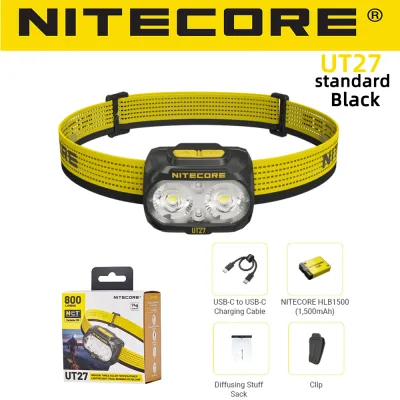
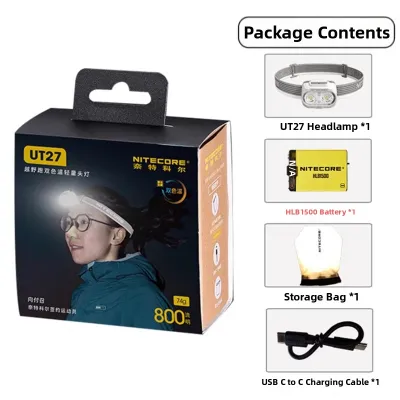
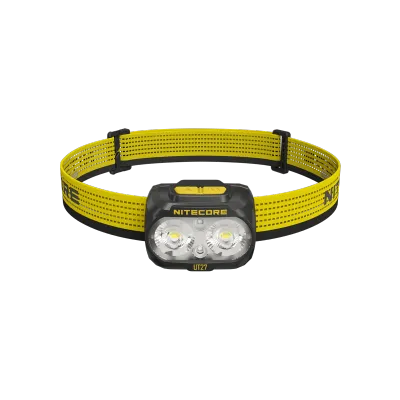
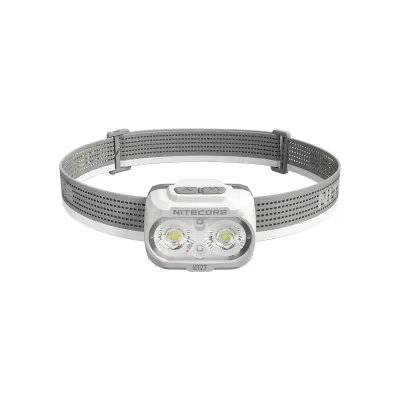
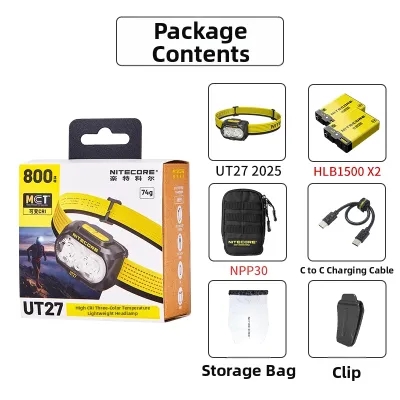
Prices are valid at publication and may change. Please refer to the product page for the latest price.
This is where a hybrid wearable light like a headlamp becomes invaluable. It provides immediate, directional light that automatically follows your line of sight, leaving both hands completely free. This hands-free capability is crucial when you need to locate and inspect your home’s Distribution Board (DB) box, which is typically situated near the main entrance or inside the household shelter, to check if a tripped circuit breaker caused the blackout.
Furthermore, emergency lighting in an HDB flat must address glare and visual comfort. In compact, white-walled rooms, high-intensity beams can reflect harshly off painted walls, mirrors, and glass panels, causing temporary blindness or eye strain. A suitable emergency light must offer adjustable brightness levels and diffused beam patterns to keep indoor environments comfortable for extended periods.
Matching UT27 Brightness and Modes to HDB Spaces
According to Nitecore’s official specifications, the UT27 features a maximum output of 800 lumens in Turbo mode, utilizing a dual-beam system that includes a Warm White floodlight (3000K) and a Cool White spotlight (5700K). It also includes an auxiliary red light. This selection of modes allows you to tailor the light output to the specific spatial characteristics of your HDB flat.

The Warm White floodlight (3000K) is particularly well-suited for general indoor use. At its High setting (500 lumens) or Low setting (100 lumens), it delivers a wide, diffused beam that minimizes harsh reflections off flat walls and glossy furniture. The warm color temperature mimics standard residential warm-white lighting, creating a softer, more calming atmosphere that can help reduce anxiety for children or pets during a sudden blackout.
In contrast, the Cool White spotlight (5700K) is designed for distance and detail. While too focused and harsh for general ambient room lighting, the spotlight mode is highly effective when you need to inspect dark, hard-to-reach areas. If you need to peer behind large appliances, look deep into utility closets, or check for water leaks near air conditioning ledges or service yards, the cool white beam provides the high contrast and reach necessary for clear visibility.
For late-night navigation, the auxiliary red light (10 lumens) offers a highly functional alternative. If the power outage occurs overnight, using a bright white light to navigate to the bathroom or kitchen can disrupt your family’s sleep cycles and ruin your eyes’ natural adaptation to the dark. The low-intensity red light provides just enough illumination to safely traverse corridors and bedrooms without waking others or causing visual discomfort.
The physical design of the UT27 also enhances its indoor utility. Equipped with a 90-degree tilting bracket, the headlamp does not have to be worn on the head at all times. You can place the device flat on a dining table or kitchen countertop, tilt the lens upward, and bounce the light off a white ceiling. This technique creates a soft, indirect ambient glow that can comfortably illuminate an entire living room or kitchen area, mimicking a standard ceiling fixture.
Battery Runtime and Power Management for Blackouts
When evaluating an emergency light, battery performance and power management are critical to ensuring you are not left in the dark during an extended outage. The Nitecore UT27 utilizes a hybrid “dual-fuel” power system. It comes packaged with Nitecore’s HLB1300 rechargeable lithium-ion battery pack (1300mAh) but can also run on three standard AAA batteries, offering excellent flexibility when charging options are limited.
According to manufacturer specifications, the runtime varies significantly depending on the selected mode and light source. When using the HLB1300 rechargeable battery pack, the Warm White floodlight runs for approximately 6 hours on High (500 lumens) and extends to about 11 hours on Low (100 lumens). The Cool White spotlight offers identical runtimes of 6 hours on High and 11 hours on Low. The auxiliary red light can operate for up to 20 hours on a single charge.
In Singapore, the electricity grid managed by SP Group is highly reliable, meaning most localized power outages or tripped breakers are resolved within one to three hours. Under these typical circumstances, a fully charged HLB1300 battery pack running on the 100-lumen Low floodlight setting is more than sufficient to last the entire duration of the blackout, with plenty of power to spare. Even if you require the brighter 500-lumen setting, a six-hour runtime easily covers standard recovery windows.
For rare, prolonged outages, the UT27’s charging and backup options provide reliable contingency plans. The HLB1300 battery pack features an integrated USB-C charging port directly on the battery itself. This allows you to recharge the pack using a standard portable power bank—an accessory already common in most Singapore households. If your power banks are depleted, you can simply remove the rechargeable pack and insert three standard AAA alkaline or NiMH batteries into the headlamp’s battery compartment.
To manage power effectively during an emergency, avoid using the 800-lumen Turbo mode, which drains the battery rapidly and is unnecessary for indoor distances. Stick to the 100-lumen Low floodlight mode for general moving about, and drop to the 10-lumen red light mode when stationary or resting to maximize battery longevity. This disciplined approach ensures your light source remains functional throughout the night.
Storing and Maintaining Your Emergency Light at Home
An emergency light is only useful if it is functional and easy to find when the power goes out. Proper storage and regular maintenance of the Nitecore UT27 will ensure it is ready for immediate deployment in your HDB flat. Storing the headlamp in a centralized, highly accessible location—such as a drawer near your home’s DB box, a bedside table, or a hook just inside your household shelter—ensures you can locate it quickly in total darkness.
Singapore’s tropical climate, characterized by high relative humidity, requires careful consideration when storing electronic gear. Avoid keeping your emergency light in damp areas like bathrooms, under kitchen sinks, or in unventilated service yards. Even though the UT27 features an IPX6 water-resistance rating, prolonged exposure to high humidity can accelerate the degradation of the elastic headband and potentially affect the battery contacts over several years. A dry, ventilated drawer or a sealed storage box with a small silica gel packet is ideal.
For the lithium-ion HLB1300 battery pack, long-term storage requires specific care to prevent capacity loss and battery degradation. Storing a lithium-ion battery at 100% full charge or completely empty (0%) for months at a time can permanently reduce its overall lifespan. For optimal battery health, charge the battery to approximately 50% to 60% before storing it. Set a recurring calendar reminder every three to six months to check the charge level, top it up slightly if needed, and inspect the battery casing for any signs of swelling.
If you choose to keep AAA alkaline batteries as a backup, store them in their original packaging or a dedicated plastic organizer rather than leaving them inside the headlamp’s battery compartment. Alkaline batteries left inside unused devices for long periods are prone to leaking corrosive chemicals, which can permanently ruin the UT27’s electrical contacts. Only insert the backup AAA batteries when the primary rechargeable pack is depleted and active use is required.
Finally, perform a quick physical inspection of the headlamp every few months. Check that the elastic headband retains its tension and has not become brittle or stretched out. Ensure the plastic tilting bracket moves smoothly and holds its angle securely. If children live in the household, make sure the headlamp is stored out of their reach to prevent accidental eye exposure to the high-intensity beams, while ensuring all adult family members know exactly where the light is stored and how to operate it.
Frequently Asked Questions (FAQ)
Is the Nitecore UT27 safe to use indoors without overheating?
Yes, the Nitecore UT27 is safe for indoor use, but it requires basic operational awareness. High-output LED lights generate physical heat when run at high wattages. To manage this, the UT27 features an Advanced Temperature Regulation (ATR) module that automatically monitors the device’s temperature and reduces the lumen output if the housing gets too hot, protecting the internal electronics and battery from thermal damage.
However, you should avoid leaving the headlamp running on its High (500 lumens) or Turbo (800 lumens) settings while it is resting face-down on a bed, sofa, wooden table, or any other flammable surface. The concentrated light beam can generate localized heat capable of scorching fabrics. For stationary indoor use, stick to the Low settings (100 lumens), which generate minimal heat, or ensure the headlamp is worn on your head or suspended in open air where heat can dissipate naturally.
Can the UT27 be used as a primary reading light during a blackout?
Yes, the UT27 is highly suitable as a reading light during a power outage. The Warm White floodlight mode (3000K) is particularly well-suited for close-up tasks like reading or playing board games. Unlike cool white light, which contains more blue light and can cause eye fatigue during prolonged reading, the warm white beam provides a softer contrast that is gentler on the eyes.
To minimize eye strain and harsh shadows, avoid pointing the beam directly at the page from a close distance. Instead, utilize the headlamp’s 90-degree tilting bracket to angle the light downward while wearing it. Alternatively, you can hang the headlamp from a high point, such as a curtain rod or a cabinet handle, and set it to the 100-lumen floodlight mode. This creates a broader, more diffused overhead light source that evenly illuminates your book or board game without creating distracting hotspots.
Community discussion
Share your experience or ask a question. Comments are reviewed before publication.