
Comparing Osram and Philips LED bulbs in Singapore requires looking past brand names and focusing on the technical specifications printed on each product’s packaging. While both manufacturers produce highly efficient lighting solutions, neither brand holds a universal monopoly on energy savings. Instead, efficiency is determined by luminous efficacy—the ratio of light output to energy consumed—which varies across different product tiers, bulb shapes, and color temperatures. To find the most energy-efficient option for your home or office, you must evaluate specific metrics like lumens per watt, check local safety certifications, and match the bulb to your existing fixtures.
Understanding LED Energy Efficiency Metrics
To make an informed decision when comparing lighting brands, it is essential to understand the technical metrics that define modern LED efficiency. For decades, consumers relied on wattage as a shorthand for brightness. However, in the era of solid-state lighting, wattage represents only the rate of electrical energy consumption, not the volume of light produced.
To evaluate how efficiently a bulb converts electricity into visible light, we must look at luminous efficacy, which is measured in lumens per watt (lm/W). Luminous efficacy is calculated by dividing the total luminous flux (the total amount of visible light emitted, measured in lumens) by the active power consumption (measured in watts). For example, if an LED bulb produces 900 lumens of light while drawing 9 watts of electricity, its luminous efficacy is 100 lumens per watt.
Products mentioned in this guide
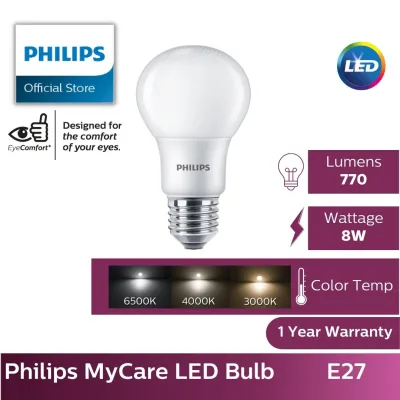
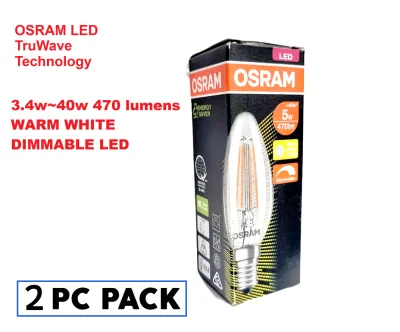
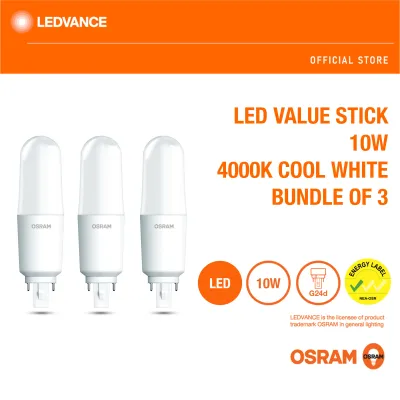
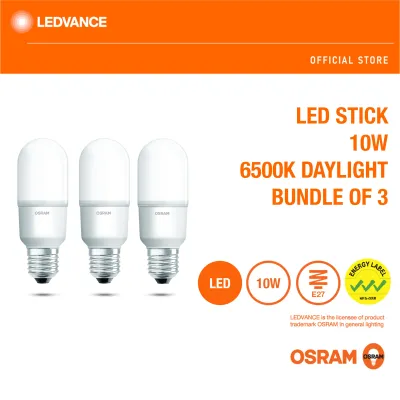
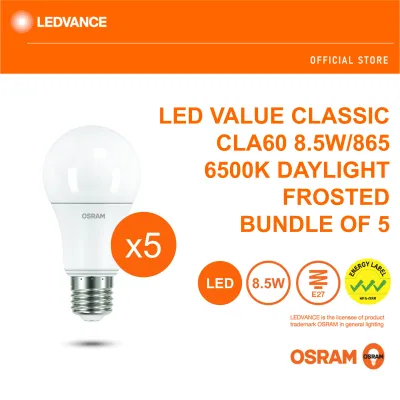
Prices are valid at publication and may change. Please refer to the product page for the latest price.
If a competing bulb produces the same 900 lumens but draws 10 watts, its efficacy drops to 90 lumens per watt. The bulb with the higher lumens-per-watt rating is objectively more efficient, as it delivers the same level of brightness while drawing less power from your electrical grid.
When shopping in Singapore, these technical metrics are simplified through standardized energy labels. Local environmental authorities mandate energy labeling schemes for household lamps to help consumers identify high-efficiency products quickly. These labels feature a tick-rating system where more ticks represent superior energy efficiency.
While these labels provide an excellent starting point for a quick comparison on the retail shelf, verifying the exact lumen and wattage ratings on the product specification sheet remains the most accurate way to compare the performance of Osram, Philips, and other brands.
Key Specifications to Compare Across Brands
To conduct a fair comparison between Osram, Philips, or any other lighting brand, you must know how to extract and interpret the data points found on product packaging or online technical datasheets. The primary figures to locate are the nominal luminous flux and the rated wattage. Manufacturers are legally required to print these values clearly.

By comparing these two figures across similar bulb shapes—such as classic GLS, candle, or spotlight shapes—you can determine which brand offers the higher efficacy for that specific form factor.
Secondary factors, such as color temperature and the Color Rendering Index (CRI), also play a significant role in how you perceive brightness and efficiency. Color temperature is measured in Kelvins (K) and describes the color appearance of the light. Warm white bulbs (typically 2700K to 3000K) emit a soft, yellowish light suitable for bedrooms and living areas, while cool daylight bulbs (6000K to 6500K) emit a crisp, bluish-white light ideal for task lighting.
It is important to note that cool daylight bulbs often have a slightly higher perceived brightness and sometimes a marginally higher measured efficacy than warm white bulbs of the same product line, due to the physics of LED phosphors. CRI, measured on a scale up to 100, indicates how accurately the light source renders colors. High-CRI bulbs (CRI 90 and above) provide exceptional color clarity but may require slightly more power to achieve the same lumen output as standard CRI 80 bulbs.
These trade-offs mean that color temperature and CRI preferences should be treated as conditional design choices rather than absolute measures of energy efficiency.
Beyond performance metrics, electrical safety and local compliance are critical verification steps. In Singapore, all household electrical appliances, including LED bulbs, must comply with local safety regulations. Look for the Safety Mark on the packaging or the bulb itself.
This certification ensures that the bulb has been rigorously tested to operate safely under Singapore’s standard electrical supply of 230V at 50Hz. Operating uncertified bulbs can lead to electrical instability, flickering, or hazardous short circuits, completely undermining any potential energy savings.
Navigating Osram and Philips LED Product Lines
Finding and interpreting efficiency data requires a basic understanding of how major manufacturers like Osram and Philips structure their product lines. Osram, whose consumer lighting products are widely distributed under the LEDVANCE brand, organizes its portfolio into several tiers, ranging from budget-friendly value lines to premium, high-performance series.
When examining Osram packaging, the technical specifications are usually consolidated in a clear data block on the back or side of the box. This block details the exact lumen output, wattage, power factor, and estimated lifespan. Osram’s premium lines often utilize advanced chip designs and superior thermal management systems, which help maintain high luminous efficacy over the bulb’s entire operating life.
Philips categorizes its extensive LED range into distinct product families, such as their standard essential lines, core performance lines, and specialized eco-efficient ranges. Philips packaging frequently highlights energy-saving percentages compared to traditional incandescent lamps, alongside specific eco-labels that denote compliance with international environmental standards.
To make an objective comparison, look past the prominent marketing claims on the front of the box and locate the detailed technical specifications. Compare the absolute lumens and watts of a Philips bulb directly against an Osram bulb of the same category to see which one actually delivers more lumens per watt.
Stated lifespans and warranty periods are also vital indicators of a bulb’s long-term value and efficiency. A highly efficient LED bulb that fails after only a few months of use will not yield the financial savings intended. Most reputable brands specify a rated lifetime in hours, often ranging from 15,000 to 25,000 hours or more under standard operating conditions.
Additionally, check the local warranty terms offered by the distributor in Singapore. A longer warranty period reflects the manufacturer’s confidence in the bulb’s driver and thermal design, ensuring that your investment in energy-efficient lighting remains protected over several years of daily use.
Decision Framework: Choosing the Right Bulb for Your Space
Selecting the right bulb involves matching the specific characteristics of Osram or Philips to your unique household requirements and fixture constraints. Osram bulbs are highly regarded for applications requiring precise optical control, robust build quality, and excellent directional lighting.
If you are sourcing bulbs for track lights, recessed spotlights, or outdoor fixtures where beam angle accuracy and consistent color rendering are paramount, Osram’s technical product lines often provide the exact specifications needed to achieve professional-grade lighting.
On the other hand, Philips is an excellent choice if your priority is seamless integration into a smart home ecosystem or if you require advanced dimming capabilities. The Philips Hue ecosystem is a market leader in smart lighting, offering extensive compatibility with various smart home protocols.
Furthermore, for traditional dimmable fixtures, Philips provides a wide selection of dimmable LED bulbs engineered to work smoothly with existing wall dimmers, reducing the risk of annoying hums or flickering. If you have existing dimmer switches, always verify whether the LED bulb is explicitly labeled as dimmable, and check the manufacturer’s dimmer compatibility list to ensure stable operation.
Before finalizing any purchase, perform a comprehensive compatibility check. Verify the base type (such as E27 screw, E14 small screw, or B22 bayonet), the physical dimensions of the bulb to ensure it fits within your fixture’s housing, and the fixture’s maximum wattage rating.
If you plan to install bulbs in enclosed fixtures, ensure they are rated for enclosed environments, as trapped heat can rapidly degrade LED components and lower their efficiency. Finally, prioritize safety during installation. For any tasks involving fixed electrical wiring, working at heights, installing heavy suspended fixtures, or fitting lights in damp areas like bathrooms, always isolate the power at the main distribution board and engage a licensed electrical professional to carry out the work safely.
Frequently Asked Questions (FAQ)
Do higher wattage LED bulbs always produce more light?
No, a higher wattage rating does not guarantee a brighter light. Wattage simply measures the amount of electrical power the bulb consumes. Because different manufacturers use different LED chips, driver designs, and thermal management technologies, the efficiency of converting electricity to light varies significantly.
A highly efficient 8-watt LED bulb can easily produce the same or greater light output (lumens) as a less efficient 10-watt bulb. To compare brightness accurately across different brands, you must look at the lumen rating rather than the wattage.
How do I calculate the actual energy savings of switching to a specific LED brand?
To calculate the potential energy savings when comparing two different LED bulbs, you can use a simple formula based on your daily usage and local electricity rates. First, identify the wattage of both bulbs you are comparing and estimate how many hours they will be switched on each day.
You can use the following calculation template to estimate your savings:
- Step 1: Calculate the Power Difference (kW)
Power Difference = (Wattage of Bulb A – Wattage of Bulb B) / 1000
- Step 2: Calculate Daily Energy Savings (kWh)
Daily Energy Savings = Power Difference * Daily Operating Hours
- Step 3: Calculate Annual Cost Savings (S$)
Annual Cost Savings = Daily Energy Savings 365 Days Local Electricity Tariff (S$ per kWh)
By entering your specific daily usage hours and the current electricity tariff in Singapore (expressed in S$ per kWh), you can determine the exact monetary savings a more efficient bulb will provide over a year, helping you decide if a higher upfront cost is justified.
Community discussion
Share your experience or ask a question. Comments are reviewed before publication.