
When comparing Osram and Philips LED bulbs, neither brand can claim a universal victory in lowering your electricity bill. Both manufacturers produce highly efficient lighting solutions, but the actual energy savings you realize depend entirely on the specific bulb models you choose, their wattage, and your daily usage habits.
To find the option that saves the most money, you must look past the brand logo and evaluate the technical specifications printed on each product’s packaging. This guide will show you how to decode these metrics, calculate your projected energy costs, and make an informed decision tailored to your home.
Decoding Energy Consumption and Light Output
To understand how much electricity a bulb will consume, you must look at the relationship between wattage and lumens. Wattage measures the rate at which a bulb draws electrical power, while lumens measure the total amount of visible light emitted. In the past, homeowners relied on wattage to judge brightness, but modern LED technology has broken this link. Today, two bulbs from different brands might both consume 9 watts of power but produce significantly different levels of brightness.
Products mentioned in this guide
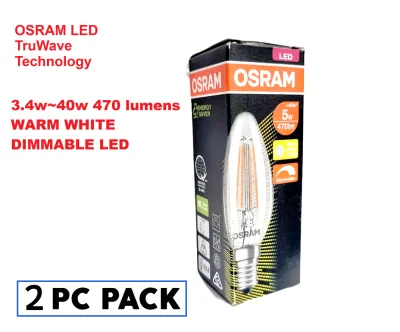
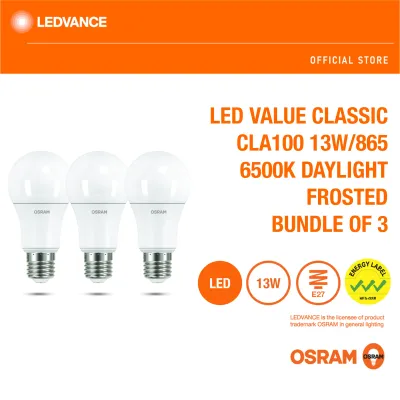
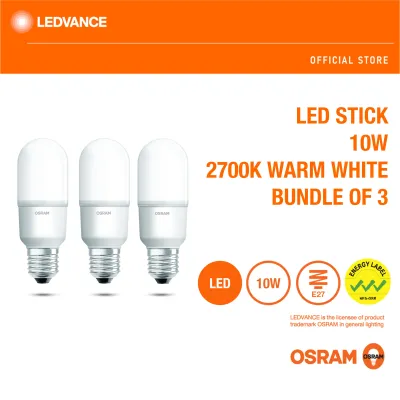
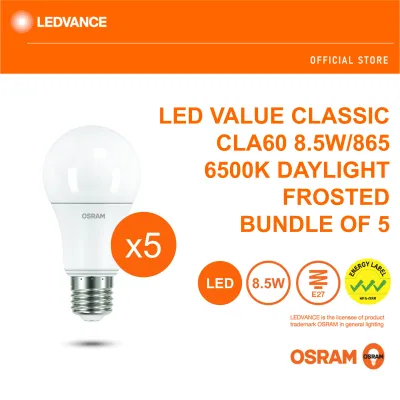
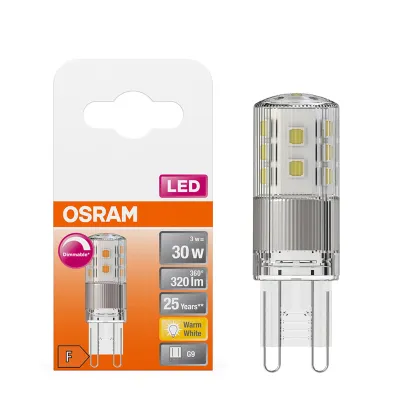
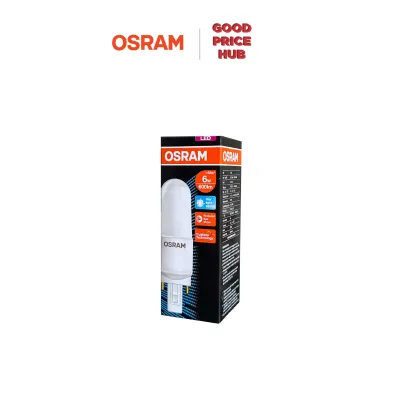
Prices are valid at publication and may change. Please refer to the product page for the latest price.
The true measure of a bulb’s efficiency is its luminous efficacy, which is expressed in lumens per watt (lm/W). You can calculate this by dividing the total lumen output by the wattage listed on the packaging. For example, if an Osram bulb delivers 900 lumens while drawing 9 watts, its efficacy is 100 lm/W. If a competing Philips bulb delivers 810 lumens at the same wattage, its efficacy is 90 lm/W. In this scenario, the model with the higher lumens-per-watt rating provides more light for the exact same energy cost, making it the more efficient choice.
Beyond raw efficiency, perceived brightness is heavily influenced by beam angle and color temperature. A bulb with a narrow beam angle concentrates light in a single direction, making a specific spot look exceptionally bright, which is ideal for task lighting. Conversely, a wide beam angle diffuses light across a larger area, which is better suited for general room illumination.
Color temperature, measured in Kelvin (K), also plays a psychological role in how bright a room feels. Cool daylight (around 6500K) often appears brighter and crisper to the human eye than warm white (around 2700K), even if both bulbs emit the exact same number of lumens. When comparing brands, ensure you are matching identical color temperatures and beam angles to make a fair comparison of their light output and efficiency.
Calculating Long-Term Cost Savings and Lifespan
Evaluating the financial value of an LED bulb requires looking beyond the initial retail price to calculate the total cost of ownership. This calculation combines the purchase price, the projected electricity costs over time, and the frequency of replacement.

To estimate the yearly electricity cost of any bulb, you can use a straightforward mathematical formula. Multiply the bulb’s wattage by the number of hours it will run each day, then multiply that by 365 to find the annual watt-hours. Divide this number by 1,000 to convert it to kilowatt-hours (kWh). Finally, multiply the total kWh by your current local electricity tariff rate in S$. For instance, running a 9W bulb for 8 hours a day over a year consumes approximately 26.28 kWh. At a hypothetical tariff rate of S$0.32 per kWh, this single bulb costs roughly S$8.41 to operate annually. Repeating this calculation for different models allows you to see the exact difference in operating costs.
Lifespan is another critical factor in long-term savings. LED bulbs are typically rated in operating hours, often ranging from 15,000 to 25,000 hours or more. If you run a bulb for an average of 5 hours per day, a 15,000-hour bulb should theoretically last about 8 years, while a 25,000-hour bulb could last over 13 years. A longer lifespan reduces the frequency of purchases, saving you money on replacements and reducing the hassle of changing hard-to-reach fixtures.
However, these lifespan ratings are estimates based on optimal operating conditions. To protect your investment against premature failure, always review the manufacturer’s warranty terms. Check the packaging or the brand’s official website to verify the warranty duration, which often ranges from one to five years. Be sure to understand the specific conditions required to make a claim, such as retaining your original purchase receipt and verifying whether the warranty is handled by a local distributor or requires shipping the product back to the manufacturer.
Verifying Compatibility, Safety, and Smart Features
Before purchasing any LED bulb, you must verify that it is fully compatible with your home’s electrical system and physical fixtures. Installing an incompatible bulb can lead to flickering, buzzing, reduced lifespan, or even safety hazards.
Start by checking the physical specifications of your fixtures. You must match the base type exactly, whether it is an E27 screw base, a B22 bayonet base, or a GU10 bi-pin connector. Additionally, measure the physical dimensions of the bulb, especially if you are installing it inside a compact or enclosed fixture. Enclosed fixtures trap heat, which can rapidly degrade LED electronics. If your fixture is enclosed, you must verify that the bulb is explicitly rated for enclosed use.
If you plan to use a dimmable LED bulb, compatibility becomes even more critical. Standard LED bulbs cannot be dimmed, and attempting to do so can damage the bulb or the switch. If you purchase a dimmable model from either Osram or Philips, you must verify that it is compatible with your specific dimmer switch type, such as leading-edge or trailing-edge dimmers. Manufacturers often publish dimmer compatibility lists online, which you should consult before buying.
Safety must always be your top priority when dealing with household lighting. Look for recognized safety certification marks, such as the Safety Mark, on the packaging to ensure the product complies with local electrical safety standards. Always verify that the bulb’s rated voltage matches your household supply, which is typically 220V-240V AC at 50Hz.
For any installation involving fixed wiring, damp environments like bathrooms or outdoor balconies, work at height, or suspended loads, safety boundaries are paramount. Always isolate the power at the main distribution board before touching any wiring or changing bulbs in challenging locations. If you are unsure about the installation process or need to modify your home’s fixed electrical wiring, always consult a qualified professional, such as a licensed electrical worker, to complete the work safely.
Decision Framework: Choosing the Right LED Bulb for Your Home
To choose the right bulb between these two reputable brands, you can use a structured decision framework based on your specific household needs and fixture environments.
When to Choose Philips LED Bulbs
- Smart Home Integration: If you want to build a comprehensive smart lighting system, certain Philips lines offer seamless integration with major smart home ecosystems and dedicated wireless protocols.
- High Color Rendering: If you need precise color accuracy for areas like dining rooms, art displays, or vanity mirrors, look for models with a high Color Rendering Index (CRI) of 90 or above.
- Widespread Local Availability: If you prefer buying replacements quickly from local supermarkets or neighborhood hardware stores, these models are often highly accessible.
When to Choose Osram LED Bulbs
- Specialized Fixtures: If you have specific architectural fixtures, track lighting, or spotlight setups, certain Osram lines offer highly specialized beam angles and compact form factors.
- Industrial or Heavy-Duty Needs: If you require robust thermal management for semi-outdoor areas or spaces with higher ambient temperatures, look for models designed with advanced heat-dissipation materials.
- Alternative Smart Protocols: If your smart home setup relies on specific open-standard protocols like Zigbee, certain product lines under the brand's ecosystem may align better with your existing hub.
Regardless of the brand you select, always inspect the physical installation environment first. If a fixture is located in a damp area, exposed to direct sunlight, or completely enclosed, you must select a bulb that carries the specific ingress protection (IP) rating or thermal rating required for those conditions.
Frequently Asked Questions (FAQ)
Do Osram and Philips LED bulbs work with the same dimmer switches?
Dimmability depends entirely on the specific bulb model and the technology of your dimmer switch rather than the brand name. While both brands offer dimmable options, you must check the manufacturer’s official compatibility list to ensure the bulb will function smoothly with your existing wall dimmer without flickering or buzzing.
How can I check the actual energy rating of an LED bulb in store?
You can quickly compare energy efficiency by looking at the product packaging in the store. Locate the technical specifications panel to find the wattage and the lumen output. Divide the lumens by the wattage to find the efficacy rating. Additionally, look for standardized energy labels or local efficiency grading marks printed on the box, which provide a quick visual reference of the bulb’s energy performance.
Community discussion
Share your experience or ask a question. Comments are reviewed before publication.