
The most reliable motion sensor for an outdoor solar spotlight depends on your specific installation environment, potential physical obstructions, and the solar light’s battery capacity. There is no single sensor technology that excels in every scenario, as each operates on different physical principles that present distinct trade-offs in energy consumption and detection accuracy.
For standard, unobstructed walkways and residential driveways, a Passive Infrared (PIR) sensor is generally the most practical and energy-efficient choice. If you need to detect movement through light foliage, thin non-metallic barriers, or across wider angles, a Microwave (radar) sensor offers superior coverage but demands more power. For high-traffic or windy areas where minimizing false alarms is critical, a Dual-Tech sensor—which combines both PIR and microwave technologies—provides the highest reliability, provided the spotlight’s solar panel and battery system are robust enough to support its higher electrical draw.
How Sensor Choice Affects Solar Spotlight Performance
Unlike hardwired security lighting systems that draw continuous power from the electrical grid, an outdoor solar spotlight operates under strict energy limitations. These fixtures rely entirely on the electrical energy collected by their integrated or detached solar panels during daylight hours, which is then stored in an internal rechargeable battery for overnight use. Because of this finite power supply, the efficiency and accuracy of the motion sensor directly dictate the operational reliability of the entire lighting system.
Products mentioned in this guide
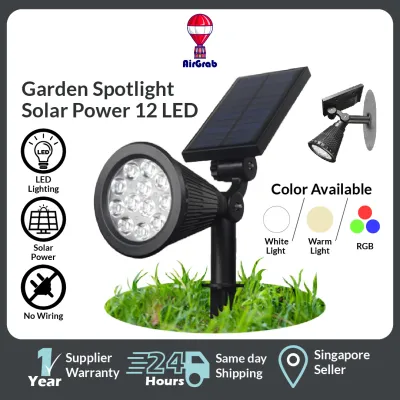
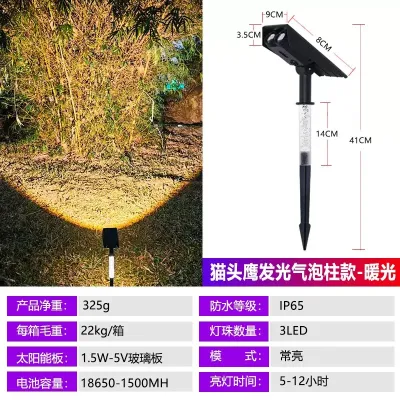
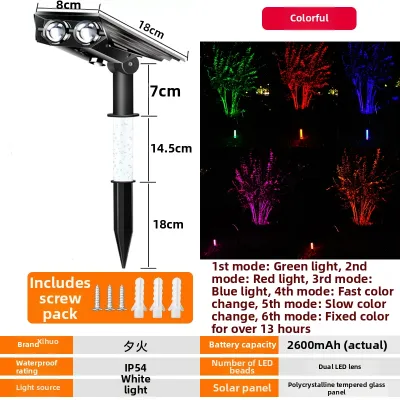
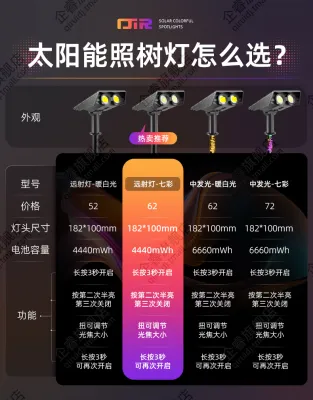
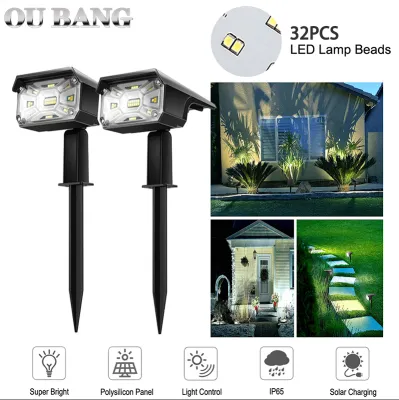
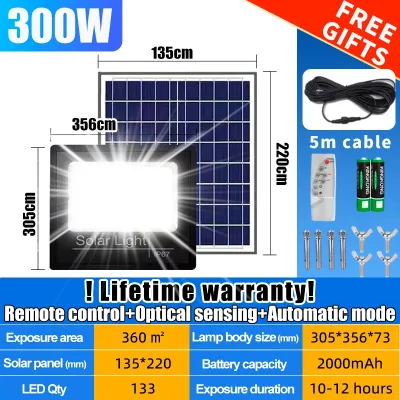
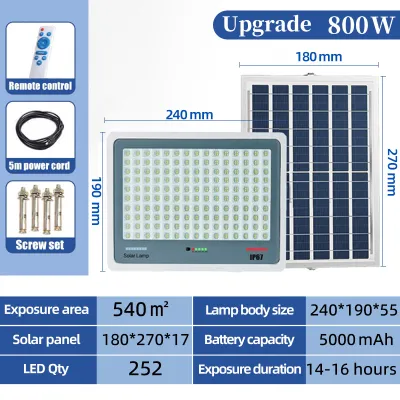
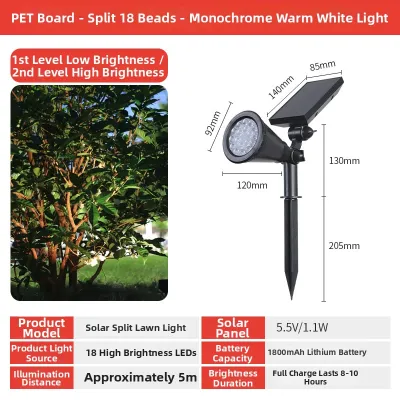
Prices are valid at publication and may change. Please refer to the product page for the latest price.
When a motion sensor is overly sensitive or poorly suited to its environment, it suffers from frequent false triggers. Common environmental disturbances such as wind-blown tree branches, heavy rain, or passing street traffic can cause the light to turn on repeatedly throughout the night. These unnecessary activations rapidly drain the stored battery power. If the battery is depleted early in the evening, the spotlight will fail to illuminate when an actual security event occurs, defeating the purpose of installing a security light.
This operational constraint highlights the fundamental trade-off between detection sensitivity and continuous power consumption. Advanced sensors that offer longer ranges or penetrate solid barriers require active electronic components that draw continuous standby current. To ensure these sophisticated sensors do not prematurely drain the system, they must be paired with larger solar panels and high-capacity batteries. Consequently, selecting the correct sensor type is not just about detection capability; it is about balancing the sensor’s power demands with your local solar charging conditions.
PIR vs. Microwave vs. Dual-Tech: Detailed Breakdown
Passive Infrared (PIR) Sensors
Passive Infrared (PIR) sensors are the most widely utilized motion-detection technology in residential solar lighting. Rather than emitting signals into the environment, a PIR sensor operates passively by monitoring the surrounding area for changes in infrared radiation. The sensor’s optical lens, often a segmented Fresnel lens, focuses incoming infrared energy onto a pyroelectric sensor chip. When a warm object, such as a human or a large animal, moves across these segmented fields of view, the sensor detects a rapid change in thermal energy and triggers the spotlight.

The primary advantage of PIR technology is its exceptionally low power consumption. Because the sensor does not actively transmit waves, its standby power draw is minimal, making it highly compatible with smaller solar batteries and compact spotlight designs. Furthermore, PIR sensors are highly effective at detecting lateral movement of warm bodies and are naturally resistant to false triggers caused by non-thermal environmental factors, such as wind, falling leaves, or heavy rain.
However, PIR sensors have notable limitations. They require a direct, unobstructed line-of-sight to detect motion; their signals cannot penetrate glass, solid walls, or dense hedges. Additionally, their performance can degrade in hot climates. In regions like Singapore, where ambient outdoor temperatures regularly reach 30°C to 34°C, the thermal contrast between human body heat (approximately 37°C) and the surrounding air is significantly reduced. This narrow temperature differential can temporarily decrease the sensor’s detection range and sensitivity during the hottest parts of the day or warm evenings.
PIR sensors are ideal for standard residential pathways, front doors, and clear driveways where the detection zone is direct and free of dense vegetation or artificial heat sources.
Microwave (Radar) Sensors
Microwave sensors, also referred to as radar or radio-frequency (RF) sensors, operate on an active detection principle. The sensor continuously emits low-power, high-frequency electromagnetic waves into the surrounding environment and measures the reflection of those waves as they bounce back to the receiver. By utilizing the Doppler effect, the sensor analyzes changes in the frequency of the returning waves to detect physical movement within its coverage area.
One of the main strengths of microwave sensors is their superior sensitivity and coverage. They typically offer a wider detection angle and a significantly longer range than standard PIR sensors. Because radio waves can pass through thin, non-metallic materials, microwave sensors can detect movement through plastic light housings, light foliage, thin wooden fences, and glass. This allows the spotlight to be installed in hidden or protected locations. Additionally, because they detect physical movement rather than heat, their performance is completely unaffected by high ambient temperatures, making them highly reliable in tropical climates.
The primary disadvantage of microwave sensors is their high continuous power consumption. Active wave emission and continuous signal processing require a constant draw of electrical current, which can quickly deplete smaller solar batteries. Furthermore, their extreme sensitivity makes them highly prone to false alarms. Any physical motion—including swaying tree branches, heavy tropical downpours, wind-blown debris, or passing cars on a nearby road—can trigger the sensor. If installed in an active environment, the constant triggering can drain the battery within a few hours of sunset.
Microwave sensors are best suited for large, open yards, hidden installations behind non-metallic structures, or areas where the line-of-sight is partially obstructed by light vegetation, provided the fixture is equipped with a high-capacity battery.
Dual-Tech (PIR + Microwave) Sensors
Dual-Tech sensors combine passive infrared and active microwave technologies into a single integrated system to deliver high-precision motion detection. To activate the solar spotlight, these systems typically employ logical “AND” circuitry. This means that both the PIR sensor must detect a change in thermal energy and the microwave sensor must detect physical movement simultaneously before the light is allowed to turn on.
The outstanding benefit of Dual-Tech sensors is their ability to minimize false alarms. By requiring two completely different physical phenomena—heat and motion—to align before triggering, these sensors virtually eliminate false activations caused by wind, rain, swaying branches, or passing vehicles. This high level of accuracy ensures that the spotlight only illuminates when a genuine security event occurs, such as a person entering the property, thereby conserving valuable battery power.
However, the added complexity of Dual-Tech sensors results in a higher manufacturing cost and a more complex power profile. Running two sensor technologies simultaneously increases the baseline standby power draw. While some advanced models mitigate this by using the low-power PIR sensor as a gatekeeper to wake up the microwave sensor, they still require more energy than a standard PIR sensor. Consequently, Dual-Tech sensors are typically reserved for premium, high-end solar spotlights that feature larger solar panels and high-capacity lithium batteries.
These sensors are highly recommended for high-security areas, properties situated near busy public roads, or coastal zones with high wind and environmental movement, where maintaining battery life while preventing false alarms is critical.
Quick Comparison of Sensor Technologies
To help you evaluate these options side by side, the following table summarizes the key characteristics of each sensor technology based on standard technical principles.
| Sensor Type | Detection Method | Line-of-Sight Required | False Alarm Risk | Power Consumption | Ideal Environment |
|---|---|---|---|---|---|
| PIR | Infrared Heat Signature | Yes | Low | Low | Clear walkways, front doors, standard driveways |
| Microwave | Electromagnetic Waves | No | High | High | Large open yards, partially obstructed areas |
| Dual-Tech | Heat + Physical Motion | Yes (for PIR component) | Extremely Low | Medium to High | High-security zones, windy areas, busy streets |
While this table provides a general comparison of the underlying technologies, actual performance is heavily influenced by the specific product design. Before making a purchase, always review the manufacturer’s specification sheet to verify the exact detection angle, range limits, IP rating, and battery capacity (measured in milliampere-hours, mAh, or watt-hours, Wh) to ensure the light is suited for your specific property layout.
Decision Framework: Which Sensor Should You Choose?
Selecting the right motion sensor for your outdoor solar spotlight requires analyzing your property’s physical layout, environmental conditions, and security requirements. Use the following conditional framework to guide your decision:
- Choose PIR if: Your installation site offers a clear, unobstructed line of sight to the target area, such as a direct front path or a clean driveway. This is the ideal choice if you want to avoid false triggers from nearby street traffic, wind-blown plants, or heavy rain, and if you are using a standard-sized solar battery that requires strict conservation of energy.
- Choose Microwave if: You need to detect movement through light foliage, thin non-metallic barriers, or around corners where a direct line of sight is impossible. This option is suitable if you require a wider detection angle and a longer range, provided you install the light in an area with minimal environmental noise and have a high-capacity solar battery capable of handling potential false triggers.
- Choose Dual-Tech if: You live near a busy road, in a windy coastal area, or in an urban environment with significant environmental movement. This is the best choice when you require maximum security reliability with virtually zero false alarms, and you are prepared to invest in a premium solar spotlight equipped with a large solar panel and a high-capacity battery system.
Verify first if: Before finalizing your choice, verify that the solar spotlight has an appropriate Ingress Protection (IP) rating, such as IP65 or IP67, to withstand heavy tropical rainfall. Additionally, ensure that the solar panel’s wattage and the battery’s storage capacity are sufficient to support your chosen sensor’s power demands, particularly during extended periods of overcast weather or monsoon seasons when daily solar charging is limited.
Installation and Placement Tips for Maximum Reliability
Proper installation and placement are essential to optimize both the motion detection accuracy of your sensor and the charging efficiency of your solar spotlight.
- Solar Panel Placement: Ensure the solar panel is installed in a position that receives direct, unshaded sunlight for the maximum number of hours each day. In Singapore, which is located near the equator, solar panels should ideally be oriented to avoid shadows cast by high-rise buildings, roof overhangs, or dense tree canopies. Even partial shading on a small portion of the panel can drastically reduce its energy output, preventing the battery from fully charging to support the sensor's nightly operations.
- Sensor Height and Angle: Mount your solar spotlight at the manufacturer's recommended height, typically between 2 to 3 meters above the ground. This height range optimizes the detection zone for both PIR and microwave sensors, ensuring adequate coverage while preventing ground-level heat reflections or small pests from causing unnecessary triggers. Angle the sensor downward toward the primary path of movement to maximize its sensitivity.
- Avoiding Interference: To prevent rapid battery depletion, keep PIR sensors positioned away from artificial heat sources, such as air conditioning compressor exhausts, dryer vents, or outdoor kitchen areas. For microwave sensors, avoid pointing them directly toward high-traffic public roads, large moving metal objects like flagpoles, or active water features, as these continuous movements will trigger constant, battery-draining cycles.
Frequently Asked Questions (FAQ)
Can I adjust the sensitivity of my solar spotlight's motion sensor?
Many mid-to-high-end outdoor solar spotlights feature adjustable settings, typically controlled via dials or digital interfaces on the light housing. These adjustments often include sensitivity (SENS), light duration (TIME), and ambient light thresholds (LUX). If you are using a highly sensitive microwave sensor in a busy area, lowering the sensitivity can prevent the light from triggering on distant, irrelevant movement. Similarly, setting the light’s active timer to a shorter duration (such as 15 to 30 seconds) balances your security needs with battery conservation, ensuring the spotlight has enough stored power to last through the night.
Why does my solar security light stop detecting motion after a few hours?
If your solar spotlight stops responding to motion late at night, the issue is rarely a physical sensor failure; instead, it is almost always a symptom of battery depletion. When a sensor triggers frequently due to high traffic or environmental movement, the stored battery power is exhausted faster than the solar panel can replenish it during the day. To resolve this, check the solar panel for obstructions such as dirt, dust, or fallen leaves, and clean the surface with a damp cloth. You should also check if nearby trees have grown and are now shading the panel. If the environment naturally demands frequent nightly triggers, consider upgrading to a spotlight with a larger solar panel and a higher-capacity battery.
Community discussion
Share your experience or ask a question. Comments are reviewed before publication.