
When planning the lighting layout for a standard Singapore Housing & Development Board (HDB) flat, the ceiling height of 2.6 metres presents a distinct spatial puzzle. To maintain safe headroom and balanced visual proportions, the ideal pendant light drop length depends entirely on where the fixture is installed. For open walkways and high-traffic zones, the maximum safe drop length is 50 to 60 centimetres, ensuring a clear headroom of 2.0 to 2.1 metres. Conversely, when suspended over stationary surfaces like dining tables or kitchen islands, you can safely extend the drop length to 90 to 105 centimetres. Finding the right balance requires a careful mix of physical measurements, safety standards, and visual scaling.
Understanding Headroom and Clearance Standards
Establishing a baseline for safety and clearance is the first step when introducing hanging lights into a 2.6m living space. In open areas where household members and guests walk freely, maintaining adequate headroom is essential to prevent accidental collisions. Standard interior door frames in Singapore typically stand between 2.0 and 2.1 metres tall, which serves as an excellent physical reference point. To match this standard, any light fixture hanging in a walkway must leave at least 2.0 to 2.1 metres of clear space between the bottom of the fixture and the floor.
This clearance requirement changes significantly when a pendant light is positioned over a raised surface. Dining tables, kitchen counters, and kitchen islands naturally block foot traffic, meaning the space directly beneath the light is not a walkway. Over these surfaces, the light can hang much lower to create a more intimate atmosphere and focus the illumination precisely where it is needed.
Products mentioned in this guide
![[SG Stock] Nordic Glass & Iron Chandelier Ceiling Light Modern Pendant Light Dining Light LED Dimmable 10-14 Inch](https://img.lazcdn.com/g/p/d8df39f7c886cb188cf8caccec219082.jpg_400x400q80.jpg_.webp)
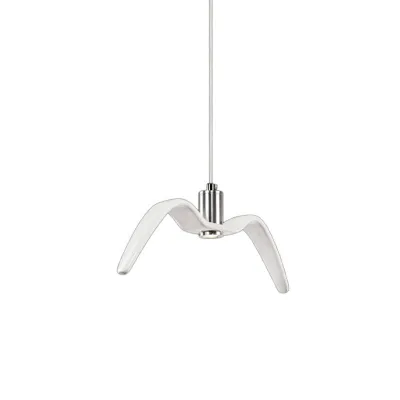
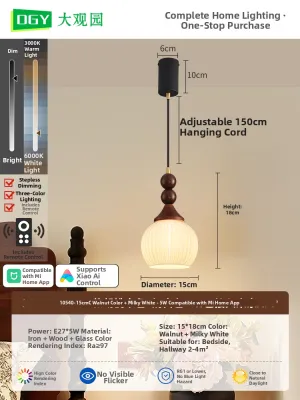
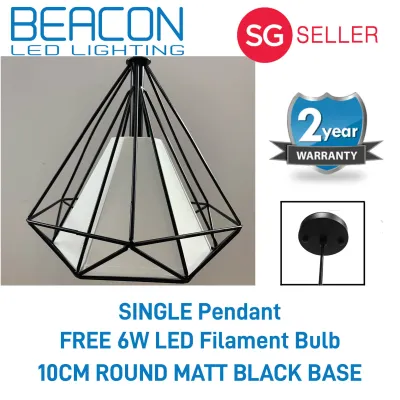
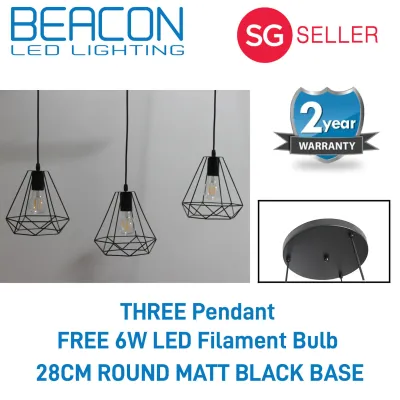
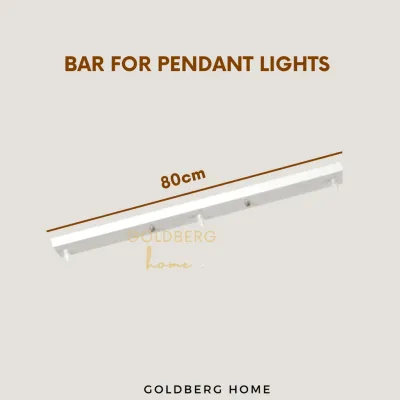
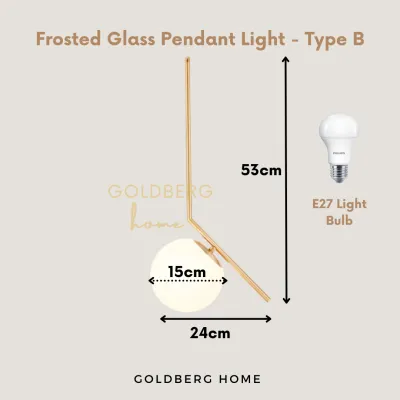
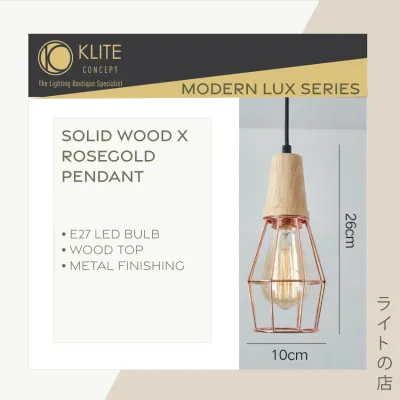
Prices are valid at publication and may change. Please refer to the product page for the latest price.
When calculating your available drop length, you must account for the entire anatomy of the light fixture. The total drop is not just the length of the cord; it includes the thickness of the ceiling canopy (or ceiling rose), the length of the suspension cord or chain, and the vertical height of the fixture body itself. For example, if a decorative glass pendant has a fixture body height of 40 centimetres and a canopy thickness of 5 centimetres, the minimum possible drop is already 45 centimetres, even before factoring in any exposed cord. Measuring these components individually prevents purchasing a fixture that is physically too tall for a 2.6m ceiling.
Calculating the Ideal Drop Length for Different Rooms
To determine the maximum hanging length for your pendant lights, you must evaluate the specific function of each room and the placement of the furniture below the fixture.

Dining Areas
In the dining room, the pendant light should sit low enough to illuminate the table effectively without blocking face-to-face conversations or causing uncomfortable glare. A standard dining table stands approximately 75 centimetres high. For a 2.6m ceiling, a comfortable clearance between the tabletop and the bottom of the pendant light is 75 to 90 centimetres.
To find your ideal drop length, use this simple calculation:
- Start with the ceiling height: 260 centimetres
- Subtract the table height: 75 centimetres
- Subtract the desired clearance: 80 centimetres
- Resulting drop length: 105 centimetres (including canopy, cord, and fixture body)
This drop length allows the fixture to act as a design focal point while keeping sightlines completely open across the table.
Living Rooms and Bedrooms
For open living rooms and bedrooms where the layout might change over time, stick strictly to the walkway clearance rule of 2.0 to 2.1 metres from the floor. This limits your total pendant drop length to a maximum of 50 to 60 centimetres.
If you plan to hang a pendant directly over a central coffee table, you can technically allow a longer drop. However, consider practical scenarios such as leaning over the table or vacuuming. In the bedroom, if pendants are used as bedside reading lights over side tables, they can hang lower—often 45 to 60 centimetres above the tabletop. If the pendant hangs directly over the bed, ensure there is enough clearance to sit up comfortably and change the bedsheets without striking the fixture.
Entryways and Corridors
Entryways and corridors require careful attention to door swings and high-traffic movement paths. Standard HDB front doors and bedroom doors swing inward or outward and require completely unobstructed overhead space. Measure the distance from the top of the door frame to the ceiling; if a pendant light falls within the door’s swing path, it must be short enough to clear the top of the door entirely. Because corridors are narrow, high-traffic zones, low-hanging pendants can make the space feel cramped and are easily bumped when carrying large items. For these areas, keeping the drop length to an absolute minimum is the safest approach.
Adjusting for Fixture Size and Visual Proportions
While physical clearance is a matter of safety, visual proportion is a matter of personal preference and spatial balance. A pendant light that is physically safe can still feel visually overwhelming if its scale is mismatched with a 2.6m ceiling.
Large, solid, or dark-coloured fixtures carry significant visual weight and can make a low ceiling feel even lower. For a 2.6m ceiling, look for fixtures with open-frame designs, clear glass shades, or slender profiles that allow light and sightlines to pass through. Keep the diameter of the fixture proportional to the room’s footprint; a massive dome pendant in a small bedroom will visually crowd the space, whereas a delicate, multi-tiered design might feel more balanced.
Multi-light clusters and linear pendants also alter how we perceive ceiling height. Linear pendants work exceptionally well over rectangular dining tables or kitchen counters because they distribute light horizontally, reducing the need for a deep vertical drop to achieve wide light coverage. Multi-light clusters can add visual interest, but they should be spaced carefully to avoid creating a dense mass of hardware near the ceiling.
Before finalizing your installation, always test the visual proportions. You can create a simple mockup by hanging a balloon or a cardboard cutout of the same dimensions from the ceiling using a piece of string and painter’s tape. Walk around the room, sit at the table, and observe the mockup from different angles. This hands-on check helps you visualize the physical presence of the light and adjust the drop length before making any permanent cuts to the wiring.
Installation Checks and Safety Boundaries
Before mounting any new pendant light, you must perform several structural and electrical checks to ensure a safe installation.
First, verify the weight capacity of your ceiling junction box. While HDB concrete ceilings are structurally robust, the mounting bracket, anchors, and junction box must be rated to support the specific weight of your chosen fixture. Heavy glass or metal pendants require secure anchoring to prevent them from loosening over time.
Next, verify the electrical specifications of the fixture. Ensure it is compatible with Singapore’s standard 230V voltage, check the bulb base or interface type (such as E27 or GU10), and confirm the maximum wattage limit to prevent overheating. If you plan to use a dimming switch, verify that both the fixture and the bulbs support your specific dimming method. Always review the manufacturer’s installation instructions for any specific requirements regarding cord shortening or mounting.
For any installation involving fixed wiring, working at heights, or complex multi-light configurations, safety must be your top priority. Always isolate the power at the main distribution board (DB box) before touching any electrical components. If the installation requires structural modifications, complex wiring, or if you feel unsure about handling the electrical connections safely, stop and consult a licensed electrical worker (LEW) or a qualified professional.
Frequently Asked Questions (FAQ)
Can I use a flush mount instead if my ceiling is exactly 2.6m?
Yes, a flush mount or semi-flush mount ceiling light is often an excellent alternative for a 2.6m ceiling, especially in high-traffic walkways, compact entryways, or low-clearance bedrooms. Flush mounts sit directly against the ceiling, maximizing headroom and distributing light broadly across the room. Semi-flush mounts hang down slightly—typically 10 to 20 centimetres—offering a compromise that provides the decorative appeal of a hanging fixture while preserving valuable vertical space. Choosing between them depends on whether you prefer wide, general room illumination or the focused, directional light that a pendant provides.
How do I shorten a pendant light cord that is too long?
Most modern pendant lights come with adjustable cords designed to be shortened during installation. Many fixtures include a cord grip or collar at the ceiling canopy; by loosening this grip, you can pull the excess cord up into the canopy cup, secure it, and hide it from view. If the cord is excessively long and cannot fit inside the canopy, it may need to be cut and rewired. Cutting and stripping electrical cords carries safety risks if done incorrectly. Always refer to the manufacturer’s instructions, and if the fixture does not have a built-in adjustment mechanism, hire a licensed electrician to safely cut, strip, and reconnect the wires.

Community discussion
Share your experience or ask a question. Comments are reviewed before publication.