
Determining whether a specific ceiling light works well in a standard HDB flat with a 2.6-meter ceiling requires evaluating its physical profile, light distribution, and visual proportion. Since exact dimensions and output can vary across different models within a product line, this guide provides a structured framework to help you verify the specifications, assess spatial compatibility, and ensure a safe installation without making the room feel cramped or under-lit.
By systematically checking the physical depth of the fixture, calculating the remaining headroom, and matching the lumen output to your room’s square footage, you can make an informed decision. Whether you are outfitting a cozy bedroom or a spacious living room, understanding these technical and spatial factors ensures your lighting choice enhances both the functionality and comfort of your home.
Assessing Profile Height and Visual Proportion
To determine if a ceiling light is suitable for a standard 2.6-meter HDB ceiling, you must first evaluate its physical profile. The structural clearance in standard Singapore public housing is relatively low compared to private landed properties. Therefore, every millimeter of fixture thickness directly impacts the spatial feel of your room. You should begin by checking the exact fixture height on the manufacturer’s specification sheet or product packaging, as different models within a product line can vary in depth.
Products mentioned in this guide
![[Climate Voucher] PHILIPS Apex 25W / 40W / 45W LED Ceiling Light 5700K Rectangle Long Slim Rectangular EyeComfort](https://img.lazcdn.com/g/p/028aeffe205f2e87c0b4e84645bb79dd.jpg_400x400q80.jpg_.webp)
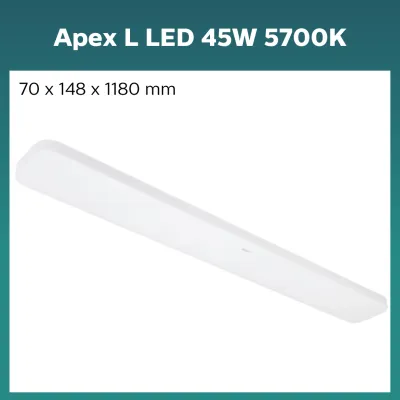
Prices are valid at publication and may change. Please refer to the product page for the latest price.
Calculating the remaining headroom is a straightforward but essential step. Start with the baseline structural height of 2600mm. If your HDB flat has a bare concrete ceiling, simply subtract the fixture’s profile height. For instance, a slim flush mount light with a profile of 50mm leaves 2550mm of clearance, which is highly comfortable for daily movement. However, if you have installed a false ceiling to conceal wiring or air conditioning trunking, you must subtract the depth of the false ceiling drop—typically between 100mm and 150mm—along with the fixture’s thickness to find the final clearance.
Comparing ultra-slim flush mount designs against standard profiles highlights how visual weight affects a room. Ultra-slim fixtures sit close to the ceiling plane, creating a clean, integrated look that makes compact spaces feel more open. Standard profiles that protrude further down can draw the eye upward, acting as a design focal point. However, in a 2.6m room, a thick fixture can create a visual “heavy” spot, making the ceiling feel lower than it actually is. Choosing a low-profile model helps maintain an airy, unobstructed atmosphere.
Evaluating Light Spread for HDB Room Sizes
Illumination needs vary significantly depending on the size and function of each room in an HDB flat. To ensure your chosen light provides adequate brightness without overwhelming the space, you must verify its lumen output and wattage against the square footage of your room. A standard HDB master bedroom typically measures around 10 to 12 square meters, while a living room can range from 20 to 30 square meters. Checking the product packaging for the lumen rating allows you to match the light’s output to these specific dimensions.

The physical diameter of the light panel plays a critical role in light distribution and visual comfort. A larger panel diameter spreads light over a wider surface area, which helps minimize harsh shadows and reduces direct glare. When light is emitted from a broader surface, the transition between illuminated areas and shadows is softer, creating a more comfortable environment for your eyes. Conversely, a small, high-wattage light source can create intense glare directly underneath the fixture while leaving the corners of the room in shadow.
It is also important to differentiate the lighting requirements of multi-functional living areas from rest-focused bedrooms. HDB living rooms are highly versatile spaces used for hosting, dining, and working, requiring bright, uniform ambient lighting. In contrast, bedrooms are personal sanctuaries where high-intensity light is rarely needed. For these spaces, a lower lumen output or a fixture with adjustable brightness levels is far more appropriate to support relaxation and sleep hygiene.
Installation and Electrical Compatibility Checks
Before purchasing any ceiling light, you must ensure it can be safely mounted on your HDB ceiling structure. Standard HDB ceilings are made of reinforced concrete, which provides excellent load-bearing capacity for surface-mounted fixtures. However, you must verify that the mounting bracket supplied with the light is compatible with your existing ceiling junction box. Using the correct masonry wall plugs and screws is essential to secure the bracket firmly to the concrete slab, preventing any risk of the fixture loosening over time.
Electrical compatibility is another critical factor that requires careful verification. In Singapore, the standard residential electrical supply operates at 230V and 50Hz. You must check the product label on the ceiling light to ensure its rated voltage matches this standard. Additionally, look for local safety certifications, such as the Enterprise Singapore SAFETY Mark, which indicates that the appliance has been tested and approved for safe use in Singapore households.
Safety must always be your top priority during any electrical installation. Before attempting to mount the fixture or handle any wiring, isolate the power supply by switching off the main circuit breaker at your home’s distribution board, rather than relying solely on the wall switch. Working at height to install a ceiling light requires a stable step ladder and proper precautions to prevent falls. If your installation involves modifying fixed wiring, running new conduits, or if you are unfamiliar with electrical connections, always engage a licensed electrical worker to complete the job safely and in compliance with local regulations.
Common Sizing and Placement Mistakes to Avoid
Achieving a balanced look in your HDB flat requires avoiding common sizing and placement errors. One frequent mistake is selecting a fixture diameter that is disproportionate to the room’s footprint. Installing a massive, wide-diameter light in a narrow hallway can make the corridor feel cramped and visually cluttered. On the other hand, placing a tiny flush mount in the center of a large living room can look awkward and leave the perimeter of the space poorly lit.
You must also account for existing ceiling fixtures, structural elements, and furniture placement. In many HDB flats, ceiling fans, air conditioning trunking, and tall wardrobes can interfere with the light’s path. If a ceiling light is placed too close to a ceiling fan, the rotating blades will chop through the light beam, creating a highly distracting strobing effect across the room. Ensure there is sufficient clearance between the light fixture and any fan blades or surface-mounted trunking to maintain a clean, uninterrupted light spread.
Finally, pay close attention to color temperature to avoid creating an uncomfortable atmosphere. Installing a harsh, daylight-balanced light (6500K) in a cozy bedroom can disrupt your circadian rhythm and make the space feel clinical. Conversely, using a very warm, yellow light (2700K) in a study or kitchen can make task-oriented work difficult. Verify the color temperature options of your chosen model to ensure they align with how you intend to use the space.
Frequently Asked Questions (FAQ)
Can this ceiling light be mounted on an existing false ceiling?
Yes, but you must take specific structural precautions. Standard gypsum board false ceilings are not designed to support the weight of heavy light fixtures directly. To install a ceiling light safely, you must locate the underlying metal support frames to secure the mounting bracket, or use specialized heavy-duty hollow-wall toggle bolts. If the fixture is particularly heavy, it should be anchored directly to the structural concrete ceiling slab above using threaded suspension rods. Always check the weight of the specific light model and consult your renovation contractor to verify your false ceiling’s load capacity.
Is the light output adjustable for smaller bedrooms?
Adjustability depends entirely on the specific model you select within the product line. Some models are designed with built-in step-dimming technology, allowing you to cycle through different brightness levels or color temperatures simply by toggling your standard wall switch. Other advanced models may support smart home integration or come with a dedicated remote control for precise dimming. Before purchasing, check the product specifications on the packaging to confirm if the model is dimmable, and verify whether it requires a compatible trailing-edge wall dimmer switch or operates via an independent control system.

Community discussion
Share your experience or ask a question. Comments are reviewed before publication.