
When shopping for E27 LED bulbs in Singapore, the decision often comes down to choosing an established brand like Philips or opting for a budget-friendly alternative. While a cheaper bulb might seem like an immediate win for your wallet, the real impact on your electricity bill depends on long-term energy efficiency and durability. To determine which bulb actually saves you more money, you must look beyond the purchase price and evaluate how efficiently each bulb converts electricity into light over its entire operational lifespan.
Evaluating the true value of an LED bulb requires analyzing technical specifications, understanding how build quality affects energy consumption, and calculating real-world usage costs. By comparing these factors systematically, you can make an informed decision that keeps your home well-lit while minimizing your monthly utility expenses.
Understanding the True Cost of an E27 LED Bulb
Many consumers make the mistake of focusing solely on the upfront purchase price when buying light bulbs. A budget E27 bulb might cost only a few dollars, while a premium Philips bulb often commands a higher price point. However, the initial purchase price represents only a small fraction of the total cost of ownership. The true cost of operating a light bulb over several years is heavily dictated by its energy consumption and how often it needs to be replaced.
Products mentioned in this guide
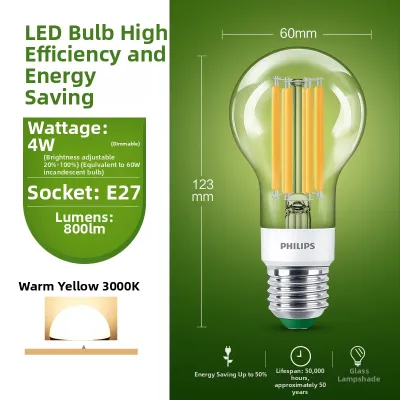
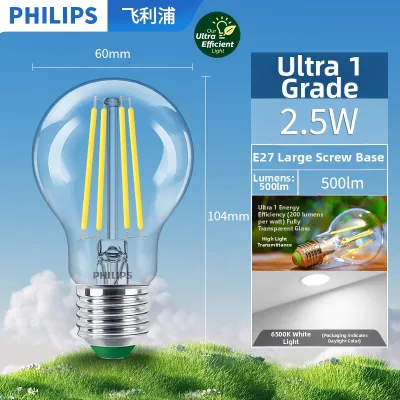
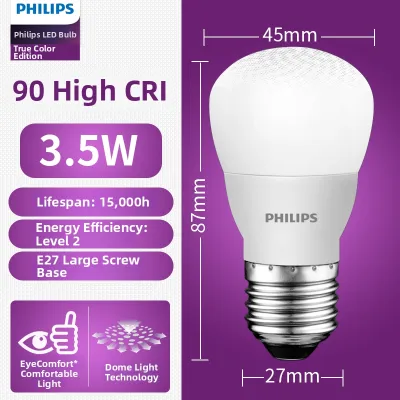
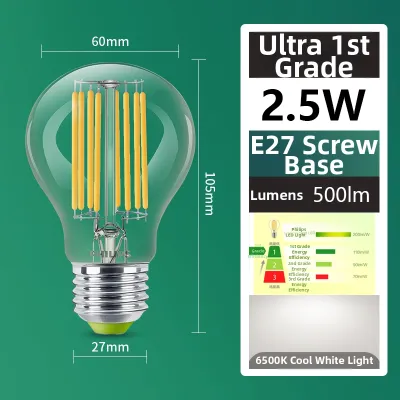
![[Bundle 4/Bundle 2] Philips Mycare 7.5W LED Light bulb | Goldberg Home](https://img.lazcdn.com/g/p/78dcc3b5c6f3df28e99f22462a851669.png_400x400q80.png_.webp)
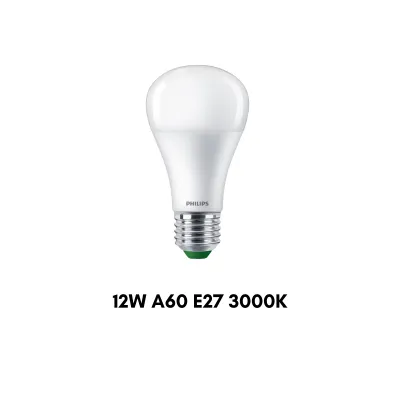
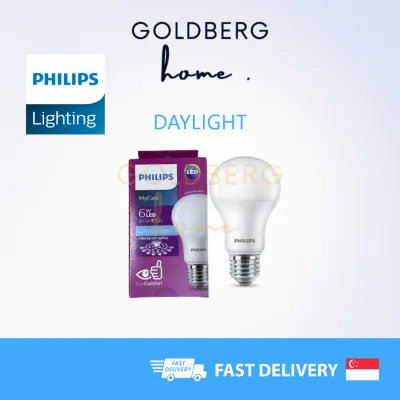
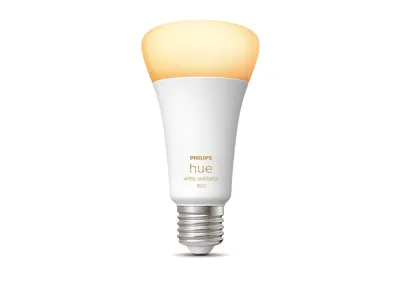
Prices are valid at publication and may change. Please refer to the product page for the latest price.
To compare the efficiency of different brands, you must look at the lumens-per-watt (lm/W) ratio. Lumens measure the total amount of visible light emitted by a source, while wattage measures the electrical power consumed. A bulb with a higher lm/W ratio is more efficient because it delivers the same amount of brightness while drawing less electricity from your grid. When comparing a Philips E27 bulb to a lesser-known brand, checking this ratio reveals which bulb will cost less to run over time.
Lifespan ratings also play a critical role in the financial equation. A bulb rated for 15,000 hours will last half as long as one rated for 30,000 hours under identical operating conditions. If a cheaper bulb burns out quickly, the cost of buying replacements—and the time spent changing them—can easily wipe out any initial savings. Therefore, a higher upfront investment in a durable bulb often yields better long-term value.
Key Specifications to Compare on the Packaging
When standing in a retail aisle or browsing an online marketplace, the product packaging is your primary source of truth. To make an accurate comparison between Philips and other brands, you must look past marketing slogans and focus on the standardized technical specifications printed on the box.

First, compare the wattage and lumen output directly. Do not assume that two 9-watt bulbs from different brands will produce the same amount of light. One brand might deliver 806 lumens from 9 watts, while a highly efficient Philips model might deliver the same 806 lumens using only 7.5 watts. Over multiple fixtures in a household, this small difference in power consumption accumulates into noticeable energy savings.
Second, look for local energy rating labels. In Singapore, electrical appliances and lamps often feature energy labels that display efficiency ticks or grading bands. These labels provide a standardized, independent assessment of the product’s energy performance, making it easier to identify high-efficiency models at a glance. Always verify that the bulb carries the appropriate local safety and electrical certifications, which indicate that the product has undergone rigorous testing for voltage stability and fire safety.
Finally, compare the light quality metrics, specifically Color Temperature (K) and the Color Rendering Index (CRI). Color temperature determines whether the light is warm yellow (e.g., 2700K) or cool daylight (e.g., 6500K). While color temperature is a matter of personal preference, CRI measures how accurately the light reveals the true colors of objects compared to natural light. A higher CRI (typically 80 or above) ensures better visual comfort and clarity, which is an important consideration for living areas and workspaces.
How to Calculate Your Potential Electricity Savings
Instead of relying on generic marketing claims about energy savings, you can calculate the exact operating costs of any E27 LED bulb using a simple mathematical formula. This allows you to estimate your actual utility bill impact based on your household’s specific usage patterns.
To calculate the daily operating cost of a bulb, use the following formula:
Daily Cost (S$) = (Bulb Wattage × Daily Operating Hours × Electricity Tariff per kWh) ÷ 1000
To find your exact electricity tariff, check your latest utility bill from your electricity retailer. The tariff rate represents the cost of one kilowatt-hour (kWh) of electricity. Once you have this rate, you can compare two different bulbs. For example, if you run a 9-watt bulb for 8 hours a day in your living room, and compare it to a highly efficient 7-watt bulb under the same conditions, the formula will show you the exact daily, monthly, and annual cost difference.
The financial impact of choosing a highly efficient bulb becomes much more significant in high-usage areas. Main living room lights, kitchen fixtures, and outdoor security lights that remain active for several hours each night will show the fastest return on investment when upgraded to premium, high-efficiency bulbs. Conversely, for low-usage areas like storerooms, guest bathrooms, or corridors where lights are only turned on for a few minutes a day, the difference in electricity consumption is negligible, making upfront cost a more dominant factor in your decision.
Evaluating Build Quality and Light Consistency
An LED bulb’s ability to save you money over time is directly tied to its physical build quality. Poorly constructed bulbs often suffer from premature component failure, light degradation, or annoying flickering, forcing you to replace them long before their rated lifespan is reached.
One of the most critical components of an E27 LED bulb is its internal driver, which converts alternating current (AC) from your home’s electrical supply into the direct current (DC) required by the LED chips. High-quality brands like Philips invest in robust driver designs that maintain stable light output even during minor voltage fluctuations. Cheaper alternatives may use lower-grade drivers that produce visible or invisible high-frequency flicker, which can cause eye strain and headaches over extended periods.
Heat dissipation is another vital factor in LED longevity. Although LEDs run much cooler than old incandescent bulbs, they still generate internal heat that must be drawn away from the sensitive semiconductor chips. Premium E27 bulbs utilize advanced thermal plastics, aluminum heat sinks, or optimized venting to keep internal temperatures low. Poor heat management causes the LED chips to degrade rapidly, leading to a noticeable loss of brightness (lumen depreciation) or premature color shifting over time.
To gauge a manufacturer’s confidence in their build quality, always compare the warranty terms. A brand that offers a comprehensive multi-year warranty provides a safety net that guarantees your investment. If a bulb fails within the warranty period, you can secure a replacement, ensuring that your long-term savings plan remains on track.
Decision Framework: Which E27 LED Should You Buy?
Choosing between Philips and alternative E27 LED brands depends on your specific household needs, budget constraints, and where the bulbs will be installed. Use the following guidelines to make the right choice for your home.
Choose Philips E27 LED bulbs if:
- You are outfitting high-usage areas like living rooms, kitchens, or home offices where lights remain on for many hours daily.
- You prioritize visual comfort, consistent color rendering, and certified flicker-free performance.
- You want the peace of mind that comes with an established manufacturer's warranty and reliable local customer support.
- You plan to integrate your lighting into a specific smart-home ecosystem, such as Philips Hue or WiZ, which require compatible, high-quality hardware.
Choose alternative E27 LED brands if:
- You are buying bulbs for low-usage areas like closets, utility rooms, or seasonal decorative fixtures where the lights are rarely turned on.
- You find a budget-friendly brand that offers a verified, high lumens-per-watt rating and carries recognized local safety certifications at a significantly lower upfront cost.
- You need to purchase bulbs in bulk for a temporary installation where long-term durability is not the primary concern.
Before making any purchase, always verify the physical and electrical compatibility of the bulb with your existing fixtures. Check that the bulb’s physical dimensions (length and width) will fit comfortably inside your light shades or recessed cans. If your fixtures are connected to dimmer switches, ensure that the specific E27 LED model you select is explicitly labeled as dimmable, as using non-dimmable LEDs on a dimmer circuit can cause severe flickering and permanent damage to the bulb.
When replacing bulbs, safety must always be your top priority. Always isolate the power supply at your main distribution board or light switch before removing or installing a bulb. If your light fixtures are located at a height requiring ladders, or if they involve complex fixed wiring in damp environments like bathrooms, consult a qualified professional electrician to handle the installation safely.
Frequently Asked Questions (FAQ)
Do all E27 LED bulbs fit standard light fixtures in Singapore?
While the E27 screw base is a highly standardized thread size that fits any standard E27 socket in Singapore, the physical shape and dimensions of the bulb body can vary significantly. Some high-lumen or decorative E27 bulbs are wider or longer than traditional incandescent bulbs, which may prevent them from fitting inside tight glass shades, track light canisters, or recessed ceiling fixtures. Always measure the clearance inside your fixture and compare it to the bulb’s dimensions on the packaging before buying. Additionally, ensure the bulb is rated for the local voltage supply of 220V-240V to prevent electrical damage.
Is a higher wattage always brighter for E27 LEDs?
No, wattage is a measure of electrical power consumption, not brightness. In older incandescent lighting, wattage was a reliable indicator of brightness, but modern LED technology is far more efficient and varied. The true measure of brightness is lumens. When comparing E27 LED bulbs across different brands or product generations, you may find a highly efficient 7-watt bulb that produces the exact same lumen output as a less efficient 9-watt bulb. To maximize your electricity savings, always look for the bulb that delivers your desired lumen output while drawing the lowest possible wattage.

Community discussion
Share your experience or ask a question. Comments are reviewed before publication.