
Selecting the right recessed lighting for your home requires balancing functional visibility with visual comfort. The Philips Eridani downlight range offers various wattages, cut-out sizes, and color temperatures, making it a highly versatile option for a cohesive whole-house lighting plan. To achieve the best results in each room, you must match the specific technical parameters of each downlight variant to the physical layout and daily activities of your living spaces.
Rather than applying a single specification across your entire home, a tailored approach ensures that task-heavy areas remain bright and clear, while relaxation zones remain soothing and glare-free. By evaluating the technical specifications of each fixture before purchasing, you can design a safe, efficient, and aesthetically pleasing lighting environment.
Understanding Core Downlight Specifications
Before purchasing fixtures for your entire home, it is essential to understand how to read the technical specifications on downlight packaging. Color temperature, measured in Kelvins (K), dictates the perceived warmth or coolness of the light. Lower numbers like 3000K produce a warm, yellowish glow, while higher numbers like 6500K deliver a crisp, bluish-white light. These variations significantly influence the mood and functionality of a room, making color temperature selection a key design decision.
Products mentioned in this guide
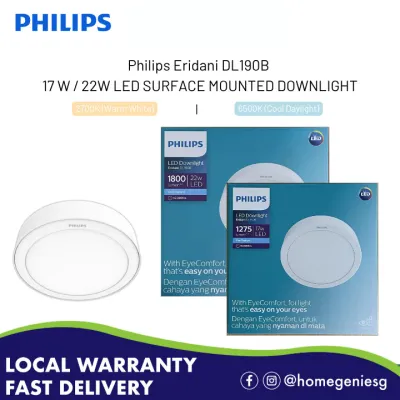
![[Climate Voucher] PHILIPS Eridani 12W / 18W / 24W Surface Mounted Ceiling Light Concrete Ceiling Warm Cool Daylight](https://img.lazcdn.com/g/p/b0b8cdbe06560ee9f647429ec02035f2.jpg_400x400q80.jpg_.webp)
![[3 Year Warranty] Philips Eridani Round LED Surface Light - 18W Cool DayLight](https://img.lazcdn.com/g/p/ebbe196fb472fca0aedf9da6368e3a4b.png_400x400q80.png_.webp)
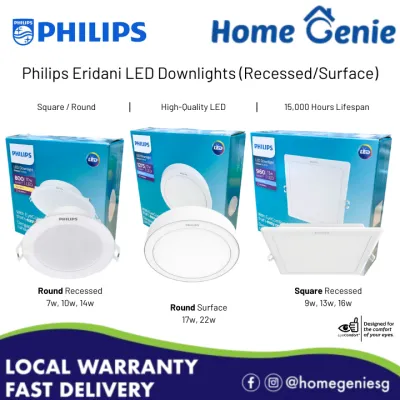
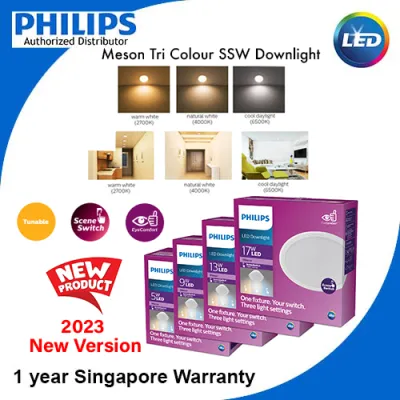
Prices are valid at publication and may change. Please refer to the product page for the latest price.
Beam angle is another critical specification that determines how light spreads across a space. A wide beam angle, typically found in diffused downlights like the Philips Eridani, distributes light broadly to provide even ambient illumination. Conversely, a narrow beam angle concentrates light into a focused spotlight, which is ideal for accentuating specific design features or artwork.
You must also distinguish between wattage and lumen output. Wattage indicates the electrical power consumed by the fixture, whereas lumens measure the actual brightness emitted. When planning your layout, rely on the lumen rating to determine if a room will have sufficient light, rather than assuming a higher wattage automatically guarantees better visibility.
Finally, pay close attention to dimmability and smart control indicators. Not all LED downlights are compatible with dimmer switches. Installing a non-dimmable downlight on a dimming circuit can cause flickering, buzzing, or premature driver failure. Always look for explicit dimming symbols on the product label and verify the compatible dimmer types before finalizing your purchase.
Planning Living and Dining Areas for Comfort
Living and dining rooms serve as the social hubs of the home, where family members gather to relax, watch television, or share meals. To foster a welcoming and comfortable environment, prioritize warmer color temperature labels, such as 3000K warm white. This softer light mimics traditional incandescent bulbs, helping to create a cozy atmosphere that encourages relaxation after a long day.

For general ambient lighting in these seating areas, opt for downlight variants with wide beam angles. Wide-angle diffusers distribute light evenly across the ceiling and floor, reducing harsh shadows and preventing the spotlight effect that can make a living room feel clinical. Spacing these fixtures evenly ensures a smooth wash of light throughout the entire room.
If you want the flexibility to adjust the lighting levels for different activities, such as dimming the lights for a movie night, verify the dimming compatibility of your chosen Philips Eridani model. Ensure that your wall dimmer switch matches the electrical requirements specified by the manufacturer, as incompatible dimmers can degrade the performance of the LED driver.
To add depth and visual interest to your living or dining room, consider layering your general ambient downlights with secondary light sources. If you have specific decor features, such as a gallery wall or a textured feature wall, you can pair wide-beam ambient downlights with narrow-beam accent fixtures to highlight these elements without over-illuminating the rest of the space.
Planning Kitchens and Workspaces for Visual Clarity
Kitchens, home offices, and study areas are task-oriented spaces that require high visibility and focus. In these environments, opting for neutral white (4000K) or cool daylight (6500K) specifications is highly beneficial. These cooler color temperatures enhance visual contrast and clarity, making it easier to read, write, or handle kitchen tools safely.
When positioning downlights in the kitchen, ensure you select variants with sufficient lumen output to brightly illuminate countertops, islands, and primary food preparation surfaces. Placing fixtures directly above the edges of countertops, rather than behind where you stand, prevents your body from casting shadows over your workspace while you cook.
Using wide beam angles in these workspaces helps to flood the entire room with light, minimizing dark corners and reducing the contrast between bright work surfaces and dimmer surrounding areas. This balanced distribution of light helps reduce eye strain during extended periods of work or cooking.
Additionally, kitchens generate significant amounts of steam and moisture near sinks and stovetops. Before installing downlights in these specific zones, verify the Ingress Protection (IP) rating of the fixture. Ensure the model is rated for damp locations to protect the internal electrical components from moisture ingress and potential short circuits.
Planning Bedrooms and Bathrooms for Rest and Safety
Bedrooms and bathrooms require a careful balance of soothing light for relaxation and clear light for personal grooming. For bedrooms, choosing warmer, dimmable downlight options is highly recommended to support healthy sleep hygiene. Lowering the light levels in the evening signals to your body that it is time to wind down, helping you transition into restful sleep.
To maintain physical comfort in the bedroom, avoid positioning high-brightness downlights directly above the head of the bed. Looking directly up into a bright light source while lying down causes uncomfortable glare. Instead, offset the fixtures toward wardrobes, dressing tables, or walkways to provide functional light where it is actually needed.
Bathrooms present a highly humid environment that demands strict adherence to safety standards. You must check the specific moisture and IP ratings required for safe bathroom installations. Standard indoor downlights may not be sealed against water vapor, which can lead to premature failure or electrical hazards in wet environments.
Always consult the manufacturer’s guidelines and local building codes for safe clearances and enclosure requirements near showers, bathtubs, and vanity sinks. Ensuring that your fixtures are rated for the specific bathroom zone in which they are installed is critical for protecting your home and family.
Verifying Electrical and Ceiling Compatibility
Before purchasing your Philips Eridani downlights, you must ensure they are fully compatible with your home’s electrical system and ceiling structure. Start by matching the local mains voltage—typically 230V at 50Hz—and checking the frequency requirements on the product label to ensure safe, stable operation without flickering.
Next, measure your existing ceiling cut-out diameters precisely before making a purchase. Downlights are designed to fit specific hole sizes, and even a few millimeters of discrepancy can prevent a clean installation. If your cut-outs are too small, you will need to enlarge them; if they are too large, the fixture’s trim will not cover the gap, leading to unsightly finishes.
You must also confirm the clearance requirements for heat dissipation behind the ceiling. Even energy-efficient LED downlights generate heat that must escape to prevent the fixture from overheating. Check the manufacturer’s specifications regarding the minimum space required between the top of the downlight and any thermal insulation or structural joists.
Finally, electrical safety must always be your top priority. If you encounter complex wiring conditions, high ceilings that require working at height, or if you are unsure about circuit load limits, stop the installation immediately. Always consult a qualified, licensed electrician to handle the wiring and installation to ensure compliance with local safety regulations.
Frequently Asked Questions (FAQ)
Can these downlights be integrated with smart home systems?
Whether these downlights can be integrated with smart home systems depends on the specific model variant and your choice of external controls. Standard Philips Eridani downlights do not feature built-in smart connectivity. However, if you select a dimmable variant, you can often integrate it into a smart home ecosystem by wiring it to a compatible smart dimmer switch or smart wall controller. Always check the product packaging for specific smart protocol logos and consult the manufacturer’s official compatibility list to verify that the fixture will operate smoothly with your smart system without buzzing or flickering.
How do I maintain and clean recessed downlights safely?
To maintain and clean your recessed downlights safely, always turn off the power at the main circuit breaker before performing any maintenance. Allow the fixtures to cool completely to avoid burns. Use a dry or slightly damp, soft microfiber cloth to gently wipe the exterior trim and diffuser to remove dust and debris. Never use harsh chemical cleaners, abrasive solvents, or spray liquids directly onto the fixture, as these can damage the protective finish, degrade the plastic housing, or penetrate the seals and damage the internal electronics.
Community discussion
Share your experience or ask a question. Comments are reviewed before publication.