
Quick Answer: Which GU10 LED Brand Should You Choose?
When upgrading the spotlights in your home, choosing between a premium brand like Philips and other LED brands often comes down to a balance of upfront cost and long-term performance. Philips GU10 LED bulbs are widely recognized for their reliable luminous efficacy, consistent color rendering, and robust build quality. However, declaring one brand universally superior is impossible without comparing specific product lines side-by-side.
To find the most energy-efficient option for your space, you must look beyond the brand name and examine the technical specifications printed on the packaging. The true value of a GU10 bulb depends on its lumen-per-watt rating, its compatibility with your existing electrical setup, and its suitability for your specific lighting design.
Your decision should rest on three primary factors: the upfront purchase price, the projected long-term energy savings, and whether you require smooth dimming performance. While budget-friendly alternatives might seem appealing for large-scale installations, established brands often provide better consistency and compatibility, which can save you from premature replacements and electrical headaches down the road.
Products mentioned in this guide
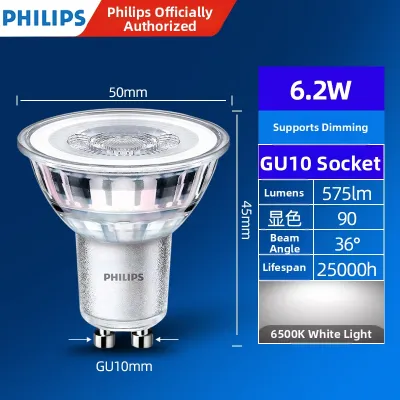
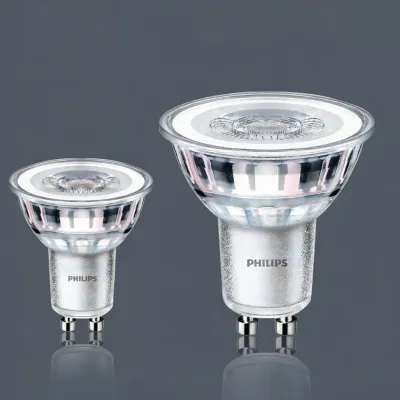
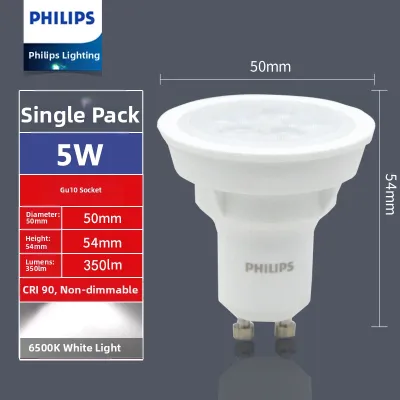
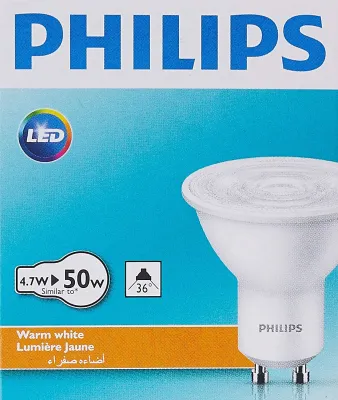
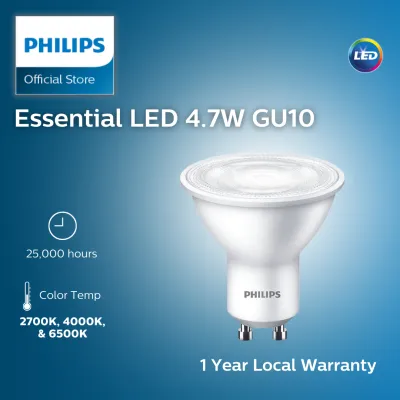
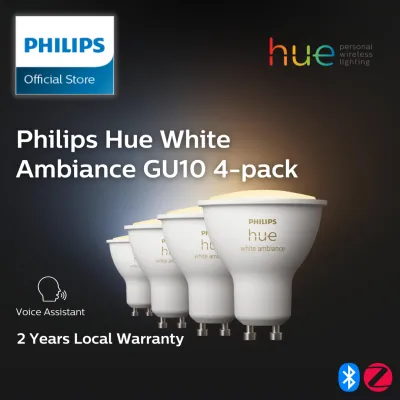
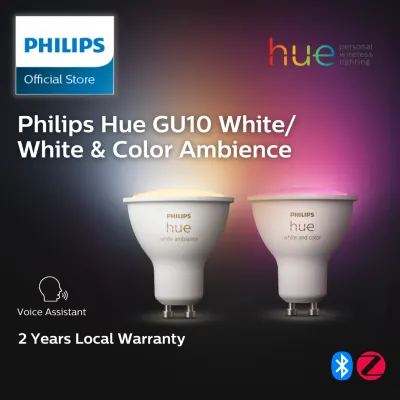
![[BUNDLE DEAL] PHILIPS GU10 led bulb/ 4.7W/4.9W/6.2W Essential/ Master/ High CRI/ Dimmable](https://img.lazcdn.com/g/p/3072b5fbd6ce70cce0e36ecf4f803363.jpg_400x400q80.jpg_.webp)
Prices are valid at publication and may change. Please refer to the product page for the latest price.
How to Measure True Energy Efficiency in GU10 Bulbs
To make an informed comparison between Philips and other LED brands, you need to understand how energy efficiency is measured in modern lighting. Many consumers mistakenly rely on wattage as a measure of brightness. In the LED era, wattage only tells you how much electricity the bulb consumes, not how much light it produces.

The true benchmark of energy efficiency is luminous efficacy, which is measured in lumens per watt (lm/W). This ratio represents the amount of visible light (lumens) a bulb produces for every watt of electrical power it draws. For example, a GU10 bulb that delivers 400 lumens while consuming 4.5 watts has an efficacy of approximately 89 lm/W. When comparing bulbs, always calculate or look for this ratio; a higher number means more light for less electricity.
Another critical factor is the beam angle, which dictates how light is distributed. GU10 bulbs are directional spotlights, typically offering beam angles ranging from narrow spots (around 24 degrees) to wider floods (36 to 60 degrees). A narrower beam concentrates light onto a specific task area, making it feel brighter without requiring higher wattage. Conversely, a wider beam spreads the light, which might require more fixtures or higher-lumen bulbs to achieve the same perceived brightness in a specific spot.
In Singapore, where residential electricity tariffs can fluctuate, checking the official energy label on the packaging is a highly practical step. These labels provide a quick visual reference of the bulb’s efficiency class. Additionally, you should compare the rated lifespan of the bulbs, usually expressed in hours (such as 15,000 or 25,000 hours). A highly efficient bulb that fails prematurely due to poor thermal management does not deliver true long-term value, as the cost of frequent replacements will quickly wipe out any minor energy savings.
Philips GU10 vs. Competing Brands: Core Comparison Dimensions
When evaluating Philips GU10 bulbs against alternative brands found in local lighting shops or online marketplaces, several practical performance dimensions come into play. Understanding these differences will help you choose the right bulb for your home’s specific needs.
Energy Savings & Efficacy
To compare energy savings, look closely at the nominal power consumption and light output listed on the spec sheets. Premium brands like Philips often utilize highly efficient LED chips and advanced driver designs that maximize lumens while keeping wattage low. Some generic or budget brands may claim high brightness but actually draw more power than advertised, or they may experience rapid lumen depreciation, meaning they dim significantly after a few hundred hours of use. Always verify that the bulbs carry recognized safety and performance certifications to ensure the packaging claims are accurate.
Light Quality & Color Rendering
The quality of light is just as important as energy efficiency. This is measured by the Color Rendering Index (CRI), which rates how accurately a light source reveals the true colors of objects compared to natural light. A CRI of 80 is standard for residential use, but premium options often offer a CRI of 90 or higher, which is ideal for highlighting artwork, dining tables, or vanity mirrors. Furthermore, established brands employ strict color binning processes. This ensures that if you buy five “warm white” (2700K or 3000K) bulbs, they will all emit the exact same shade of light, whereas cheaper alternatives often exhibit noticeable color variations from bulb to bulb.
Dimming Performance
Dimming GU10 LED bulbs can be notoriously challenging. Many homeowners experience annoying flickering, buzzing, or a limited dimming range when installing new LEDs on older dimmer switches. Philips designs its dimmable GU10 bulbs to be compatible with a wide range of trailing-edge and leading-edge dimmers, but compatibility is never guaranteed. When comparing brands, check if the manufacturer provides an official dimmer compatibility list. If you choose a budget brand, you may find that you need to replace your wall dimmer switch with a specialized LED-compatible dimmer to avoid performance issues.
Build Quality & Heat Dissipation
The physical construction of a GU10 bulb directly impacts its lifespan and efficiency. LEDs are highly sensitive to heat; if the internal junction temperature gets too high, the bulb’s efficiency drops and its lifespan is drastically shortened. Philips and other high-quality brands typically use advanced thermoplastic, ceramic, or aluminum heat sinks to draw heat away from the LED chips. Cheaper alternatives often rely on low-grade plastics that trap heat inside the housing. This is a critical consideration in Singapore’s warm climate, especially when bulbs are installed in tight, recessed ceiling voids where airflow is severely restricted.
Decision Framework: Choosing the Right GU10 LED
To help you make the final decision for your home lighting project, use this structured framework to match your specific requirements with the right product category.
Choose Philips GU10 if:
- You are outfitting primary living spaces like the living room, kitchen, or dining area where light quality, color accuracy, and smooth dimming are essential.
- You want peace of mind backed by a reliable manufacturer warranty and easily accessible customer support in Singapore.
- You prefer a proven track record of compatibility with standard trailing-edge dimmers to avoid the hassle of troubleshooting electrical flicker.
Choose Alternative Brands if:
- You are working on a tight budget to light up large utility areas, hallways, or storage rooms where minor color variations and dimming capabilities are not priorities.
- You require highly specialized smart-home integration (such as specific Zigbee or Wi-Fi protocols) that may be more affordably or readily available from alternative smart lighting ecosystems.
- You need a very specific, niche beam angle or a unique aesthetic design that is not offered in the standard Philips retail lineup.
Verify First if:
- You are retrofitting older halogen GU10 spotlights. Halogen systems often run on 12V transformers (MR16 fittings), whereas GU10 bulbs typically run directly on mains voltage (220V-240V). Ensure your fixtures are actually GU10 mains-voltage sockets before purchasing. If you are keeping an existing dimmer circuit, be prepared for the possibility of needing a dimmer switch upgrade to ensure stable, flicker-free operation regardless of the LED brand you select.
Installation and Safety Checks for GU10 Spotlights
Installing GU10 LED bulbs is generally a straightforward task, but working with electrical fixtures always requires strict adherence to safety protocols. Before you begin any installation or replacement, always isolate the power. Turn off the main power supply at your home’s circuit breaker (DB box) rather than just relying on the wall switch, as wall switches do not always cut off all electrical current.
Next, verify the physical and electrical compatibility of your fixtures. Check the maximum wattage rating printed on the inside of the spotlight fixture; while LEDs draw far less power than halogens, staying within the fixture’s limits is essential. Additionally, measure the physical depth of the recessed ceiling cavity. Ensure there is adequate clearance around the bulb to allow heat to dissipate naturally, and make sure the bulb does not come into direct contact with ceiling insulation or flammable materials.
Special care must be taken in damp environments, such as bathrooms or covered outdoor balconies. In these areas, both the GU10 bulb and the light fixture itself must have an appropriate Ingress Protection (IP) rating to resist moisture and water splashes. Standard indoor GU10 bulbs are typically IP20 and are not safe for wet zones. If you are unsure about the safety, IP ratings, or wiring configuration of your existing setup, always consult a qualified, licensed electrician to handle the installation.
Frequently Asked Questions (FAQ)
Can I mix Philips GU10 bulbs with other LED brands in the same room?
It is highly recommended to avoid mixing different LED brands on the same lighting circuit or within the same room. Even if two different brands claim the exact same color temperature (such as 3000K Warm White) and lumen output, their internal LED chips and phosphor coatings will differ. This often results in highly visible variations in color tint and brightness, creating an inconsistent and unappealing look. Furthermore, mixing brands on a single dimming circuit can cause uneven dimming rates, flickering, or buzzing due to differences in their internal driver designs.
Do GU10 LED bulbs get hot enough to damage the ceiling fixture?
While GU10 LED bulbs operate at significantly lower temperatures than traditional halogen bulbs, they are not completely heat-free. The LED chips and internal driver components generate localized heat that must be dissipated through the bulb’s base. If installed in a completely enclosed fixture without proper ventilation, this heat can build up rapidly. While it is unlikely to cause immediate damage to a high-quality ceiling fixture, excessive heat accumulation will degrade the LED’s internal electronics, leading to rapid dimming, color shifting, or premature bulb failure. Always ensure your ceiling cavity has adequate ventilation space.
Community discussion
Share your experience or ask a question. Comments are reviewed before publication.