
Quick Answer: Which Portable Smart Lamp Fits Your Setup?
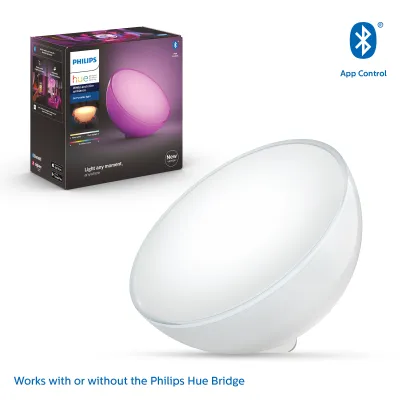
If you are already invested in the Philips Hue ecosystem and own a Hue Bridge, the Philips Hue Go is an excellent addition to your home. It integrates seamlessly with your existing smart lighting setups, allowing you to synchronize colors across multiple rooms and control the lamp remotely. However, if you prefer a standalone device that connects directly to your home Wi-Fi network without the need for an external hub, or if you require specific battery runtimes and standard USB-C charging interfaces, alternative portable smart lamps may better suit your needs.
The decision ultimately depends on three primary dimensions: ecosystem integration, brightness requirements, and portability. By evaluating how you plan to use the lamp—whether as a permanent bedside companion, a flexible accent light, or an occasional outdoor dining accessory—you can determine whether to invest in the premium Hue ecosystem or opt for a more versatile, hub-free alternative.
Key Comparison Factors for Portable Smart Lamps
Traditional smart lighting typically remains fixed in wall sockets or ceiling fixtures, relying on constant mains power. Portable smart lamps shift this dynamic by introducing internal batteries, meaning you must evaluate not just light quality, but also power management and wireless protocol stability. To find the right balance for your home, you need to examine three core pillars: light output, power management, and smart integration.
Products mentioned in this guide
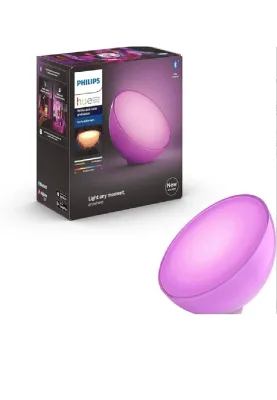
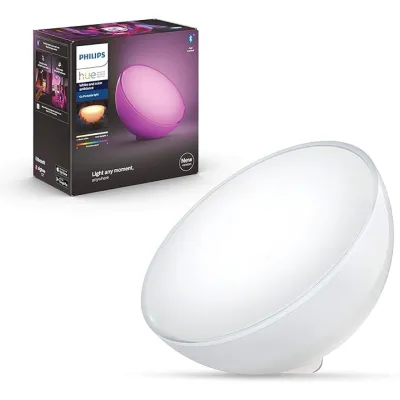

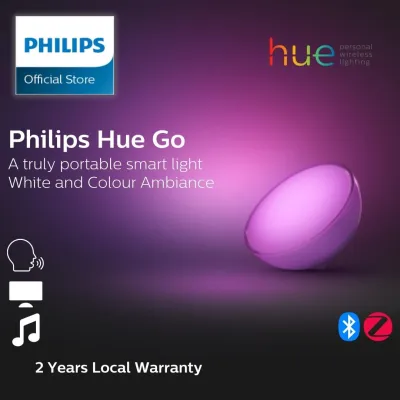
![[Latest Bluetooth Version] Philips Hue GO/ Portable Light/ 16 Million color Smart LED Light](https://img.lazcdn.com/g/p/4ff58888f9dd044302eee591bed0f0a3.png_400x400q80.png_.webp)
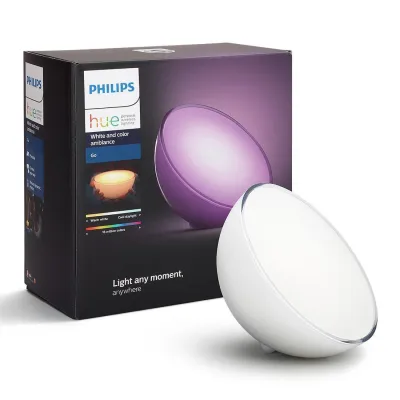
Prices are valid at publication and may change. Please refer to the product page for the latest price.

Brightness, Color, and Light Quality
When comparing portable smart lamps, light quality is paramount. You should begin by checking the maximum lumen output on the product label or manufacturer specifications. It is important to note that many portable lamps operate under dual-power profiles; they may deliver their maximum brightness when plugged into a wall outlet but automatically dim to a lower lumen level when running on battery power to conserve energy. Verify whether the stated maximum brightness is achievable on battery power if you plan to use the lamp for reading or task work away from an outlet.
Color performance is another critical factor. Evaluate the color gamut of each lamp, distinguishing between full-color spectrum models and those that only offer tunable white light. If you want to create vibrant ambient scenes, look for lamps that support millions of colors and offer smooth color-blending transitions. For task-oriented spaces, prioritize lamps with a wide color temperature range (measured in Kelvin) and a high Color Rendering Index (CRI), which ensures that colors appear natural and accurate under the light.
Finally, consider the physical design of the light source. Look for lamps with frosted diffusers or indirect lighting designs that shield your eyes from direct LED glare. A well-designed portable lamp should distribute light evenly across a table or bedside surface, preventing harsh shadows and eye strain during extended use.
Battery Life and Charging Convenience
Cordless runtime is what makes a smart lamp truly portable, but battery performance can vary significantly depending on how you use the device. When reviewing manufacturer-stated battery life, look closely at the testing conditions. A lamp advertised with a long battery life may only achieve this runtime at its lowest dimming level or in a single-color nightlight mode. At maximum brightness or during dynamic color-changing scenes, the battery life may drop to just a few hours. Always check the estimated runtime for your typical usage level before making a decision.
The charging interface also plays a major role in daily convenience. Some portable lamps utilize proprietary charging docks or pin-based connectors, while others feature standard USB-C ports. Proprietary docks offer a clean, cable-free look and allow you to easily pick up the lamp, but they can be difficult and expensive to replace if lost. On the other hand, USB-C ports offer universal compatibility, allowing you to charge the lamp using your existing phone, tablet, or laptop chargers, making them highly convenient for travel or desk setups.
Additionally, consult the product manual to check for battery care guidelines. Look for features like automatic power-saving modes, battery health indicators, and information on whether the internal lithium-ion battery is replaceable. Over several years of use, all rechargeable batteries experience degradation; knowing whether the manufacturer offers replacement options can help you avoid having to discard the entire lamp when the battery eventually loses its capacity.
Smart Home Ecosystem and App Control
A portable lamp is only as smart as the network it connects to. Before purchasing, verify the wireless protocol requirements of each lamp. Some devices rely on Zigbee, a protocol that requires a dedicated smart hub (such as the Philips Hue Bridge) to connect to your home network. While a hub-based setup offers superior range, lower latency, and less strain on your home router, it does require an additional upfront investment. Alternatively, many competing lamps use standalone Wi-Fi or Bluetooth connections, allowing you to control them directly from your smartphone without any extra hardware.
Next, evaluate the companion app’s features and third-party integrations. Check if the app supports scheduling, custom scene creation, and voice control through popular platforms like Apple Home, Google Home, or Amazon Alexa. If you plan to use the lamp in a household with multiple users, verify how easily the app handles multi-user access and whether settings can be shared across different devices without losing connection stability.
Network stability is particularly important for portable devices that move between rooms. A Wi-Fi-enabled lamp must remain within range of your router to receive smart commands, whereas a Bluetooth lamp only requires proximity to your smartphone. If you plan to carry the lamp to the far corners of your home or into the garden, consider how these protocol differences will affect your ability to control the light.
Decision Framework: Choosing the Right Portable Lamp
To help you finalize your decision, use this actionable framework to match your specific household needs with the right portable smart lamp.
Choose the Philips Hue Go if:
- You already own a Philips Hue Bridge: If your home is already equipped with a Hue ecosystem, adding the Hue Go is seamless. It will instantly sync with your existing light scenes, entertainment zones, and smart switches.
- You prioritize advanced lighting effects: The Hue Go is highly regarded for its smooth color transitions, dynamic natural light effects (like candle or fireplace modes), and precise dimming capabilities.
- You want dual-protocol flexibility: With both Bluetooth and Zigbee support, you can use the lamp as a simple standalone device today and integrate it into a larger smart home network later.
Choose an alternative portable smart lamp if:
- You want a hub-free setup: If you do not want to purchase or configure an external smart hub, a standalone Wi-Fi or Bluetooth lamp offers a much simpler and more cost-effective entry point.
- You prefer universal USB-C charging: If you want to minimize cable clutter and charge your lamp using standard cables you already own, look for alternatives that eschew proprietary charging bases.
- You are on a budget: Competing brands often offer similar brightness levels and basic smart features at a lower price point, making them a practical choice if you do not need deep ecosystem integration.
Verify first if:
- Your home router supports the required bands: Many smart lamps connect exclusively to 2.4 GHz Wi-Fi networks. Ensure your router is configured to support this band before attempting setup.
- The physical dimensions fit your space: Measure your bedside table, shelf, or desk to ensure the lamp's footprint and height are appropriate for the area.
- The local electrical standards are met: If purchasing a lamp that requires a mains charger, verify that the plug type and voltage compatibility match the electrical standards in Singapore, and look for local safety certifications.
Setup, Care, and Safety Checks
Proper maintenance and safety practices are essential to maximize the lifespan of your portable smart lamp and ensure safe operation in your home.
For routine care, always turn off the lamp and disconnect it from the power source before cleaning. Wipe the exterior casing gently with a dry or slightly damp microfiber cloth. Avoid using harsh chemical solvents, alcohol, or abrasive cleaning pads, as these can damage the plastic housing or strip away the light-diffusing coating. Regularly inspect the charging contacts on both the lamp and the charging base to ensure they are free of dust, lint, or corrosion.
Observe strict safety boundaries regarding water and heat. Unless the manufacturer explicitly states a high IP (Ingress Protection) rating that permits wet-environment use, keep the lamp away from water, sinks, and damp outdoor areas. Never charge the lamp in enclosed spaces with poor ventilation, such as under blankets or inside cabinets, as this can cause heat to build up. Avoid leaving the lamp in areas exposed to extreme heat, such as near stoves, radiators, or in direct sunlight behind a window.
Discontinue use immediately and contact the manufacturer or a qualified professional if you observe any warning signs of electrical or battery failure. These signs include a visibly swollen casing, cracks in the outer shell, unusual heat generation during charging, a burning odor, or persistent flickering that cannot be resolved by a standard factory reset.
Frequently Asked Questions (FAQ)
Can I use portable smart lamps outdoors?
Yes, but only under specific conditions. To determine if a portable smart lamp is safe for outdoor use, you must check the Ingress Protection (IP) rating on the product label or in the user manual. An IP rating consists of two numbers; the second number indicates water resistance. For example, a rating of IP20 means the lamp is strictly for indoor use and has no protection against water. A rating of IP44 or higher indicates resistance to splashes, making it suitable for a dry patio or balcony.
Even if a lamp has a suitable IP rating, check the manufacturer’s specifications for operating temperature limits and UV exposure. Prolonged exposure to direct sunlight can degrade plastic casings and overheat the internal battery. To prevent weather damage, always bring indoor-rated portable lamps back inside after outdoor use, and never leave any portable lamp outside during heavy rain or extreme weather.
Do I need a smart hub for these portable lamps?
Whether you need a smart hub depends entirely on the wireless protocol used by the specific lamp. Hub-dependent lamps, such as those utilizing Zigbee, require a dedicated bridge connected to your router to enable smart features like scheduling, voice control, and remote access. You can verify whether a hub is required by checking the product packaging or the manufacturer’s official website before purchasing.
Hub-based setups offer excellent range, high network stability, and do not congest your home Wi-Fi network, making them ideal for larger smart home systems. Conversely, hub-free lamps connect directly to your smartphone via Bluetooth or to your home router via Wi-Fi. While hub-free setups offer a simpler, more affordable initial installation, they can experience latency if your Wi-Fi network is overloaded, and Bluetooth-only lamps can only be controlled when you are within close physical range.
Community discussion
Share your experience or ask a question. Comments are reviewed before publication.