
Choosing a portable smart lamp for your home in Singapore involves balancing seamless ecosystem integration against standalone convenience and budget. The Philips Hue Go is a prominent contender, known for its deep integration with smart home ecosystems and premium color rendering. However, several alternative portable smart lamps offer compelling features that might better suit your specific living space, whether you are lighting a cozy bedroom, a study desk, or a covered balcony. Rather than declaring a single universal winner, the ideal choice depends on your existing smart home infrastructure and how you plan to use the lamp daily. By understanding the technical specifications and practical limitations of each option, you can select a portable smart lamp that fits seamlessly into your lifestyle.
Smart Home Integration and Connectivity Requirements
When evaluating the Philips Hue Go against alternative portable smart lamps, the underlying connectivity technology is one of the most critical factors to consider. The Hue Go utilizes both Bluetooth and Zigbee protocols. While Bluetooth allows for direct control via a smartphone within a limited range, unlocking the lamp’s full suite of smart features requires a dedicated Hue Bridge. This bridge connects directly to your home router, acting as a translator that enables out-of-home control, advanced scheduling, and synchronization with other smart home devices. If you do not already own this bridge, it represents an additional hardware requirement and setup step.
In contrast, many alternative portable smart lamps connect directly to your home network via Wi-Fi or operate solely on Bluetooth. Standalone Wi-Fi lamps eliminate the need for a central hub, making them highly convenient for quick, single-device setups. However, they rely heavily on the strength of your 2.4 GHz Wi-Fi band. In Singapore’s typical high-density housing, concrete walls can significantly degrade Wi-Fi signals, potentially leading to latency or connection drops if the lamp is moved far from the router. Bluetooth-only alternatives avoid network congestion entirely but limit your control to when you are physically near the device.
Products mentioned in this guide
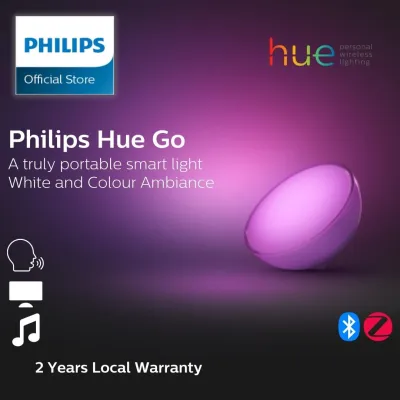
![[Latest Bluetooth Version] Philips Hue GO/ Portable Light/ 16 Million color Smart LED Light](https://img.lazcdn.com/g/p/4ff58888f9dd044302eee591bed0f0a3.png_400x400q80.png_.webp)
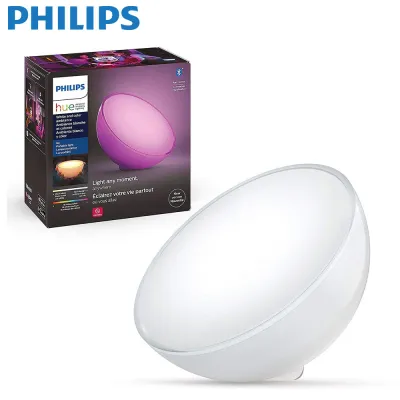
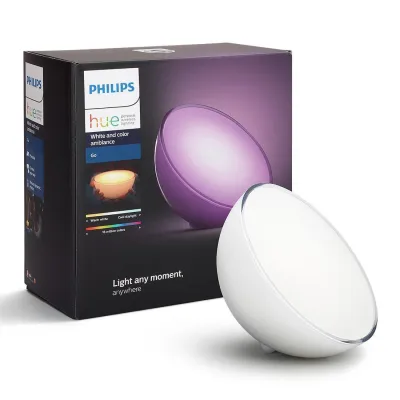

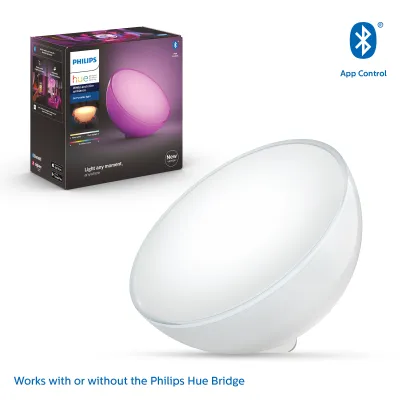
Prices are valid at publication and may change. Please refer to the product page for the latest price.
Compatibility labels on the product packaging are essential indicators of how well a lamp will integrate with your existing smart home ecosystem. Look for official certifications such as Apple HomeKit, Google Home, Amazon Alexa, and the unified Matter standard. Matter compatibility is particularly valuable, as it ensures the device can communicate seamlessly across different brand ecosystems without requiring proprietary bridges. Before purchasing, verify which standards the lamp supports to avoid being locked into an incompatible system that requires multiple apps to control different lights in the same room.
Light Quality, Battery Performance, and Controls
To ensure a portable smart lamp meets your visual expectations, you must look beyond aesthetic design and verify the technical specifications listed on the product label or manual. Color accuracy is measured by the Color Rendering Index (CRI or Ra). For tasks like reading, studying, or applying makeup, look for a lamp with a CRI of Ra 80 or higher, which ensures colors appear natural and vibrant. Maximum brightness is another key metric, expressed in lumens. Portable lamps typically range from 100 lumens for soft ambient lighting to over 500 lumens for functional task lighting; ensure the maximum output aligns with your intended use.

Adjustable color temperature ranges, measured in Kelvin (K), determine the versatility of the lamp. A wide range, such as 2000K (warm, amber light) to 6500K (cool, daylight), allows you to transition the space from a productive daytime workspace to a relaxing evening sanctuary. Some basic smart lamps only offer fixed color temperatures or limited color options, so verifying these specifications on the packaging is crucial before making a decision.
Battery performance is a vital consideration for any untethered light source. Manufacturer guidelines typically state battery life expectations based on specific brightness levels. A lamp may run for dozens of hours on its lowest candle-flicker setting, but only a fraction of that time at maximum brightness. Check the charging method carefully. The Philips Hue Go utilizes a specialized charging connection on certain models, while other portable lamps rely on standard USB-C ports. USB-C offers superior convenience, allowing you to use existing phone chargers and power banks, which is highly practical if you plan to move the lamp around your home or take it outdoors.
Physical controls on the device itself should not be overlooked. While app control is convenient, having intuitive physical buttons on the lamp allows for quick adjustments without searching for your smartphone. Look for tactile buttons that let you cycle through preset scenes, adjust brightness levels, or power the device on and off instantly. This physical interface is especially useful for guests, children, or bedside placement where quick, screen-free operation is preferred.
Design, Build, and Placement Flexibility
The physical form factor and structural design of a portable lamp dictate where it can be safely and effectively positioned. The Philips Hue Go features a unique, bowl-like design with an angled base, allowing it to be placed flat for upward illumination or tilted on its side to wash a wall with soft, indirect light. When comparing alternatives, evaluate the stability of the base. A top-heavy lamp or one with a narrow footprint may easily tip over when placed on bedside tables, crowded desks, or outdoor surfaces.
Given Singapore’s tropical climate and high humidity, ingress protection is a critical safety and durability consideration. If you intend to use your portable lamp on a covered balcony, patio, or in a bathroom, you must check the IP (Ingress Protection) rating in the product specifications. An IP20 rating indicates the lamp is strictly for dry, indoor environments and has no protection against moisture. For semi-outdoor or humid areas, look for a rating of IP44 or higher, which certifies that the enclosure protects internal components against splashing water and high humidity.
Safety instructions regarding heat dissipation must also be reviewed. Although LEDs are highly efficient, both the light source and the internal lithium-ion battery generate heat during operation and charging. Ensure the manufacturer’s manual does not restrict placement near soft furnishings, bedding, or flammable materials. Proper ventilation around the base and body of the lamp is essential to prevent overheating, preserve battery health, and ensure safe operation throughout the lifetime of the device.
Evaluating Price and Total Cost of Ownership
Calculating the true financial commitment of a portable smart lamp requires looking beyond the initial retail price in S$. While a standalone smart lamp might appear highly economical at first glance, you must consider whether additional hardware is required to access its smart features. For instance, if you choose the Philips Hue Go and want to integrate it into a wider home automation system, you may need to purchase a Hue Bridge separately, which increases the total upfront investment.
If you already own a compatible smart hub or have established a specific lighting ecosystem, staying within that brand family often provides better long-term value. It simplifies control through a single app and ensures reliable communication between devices. However, if you only require a single, independent light source for a specific desk or bedside table, purchasing a standalone Wi-Fi or Bluetooth lamp from an alternative brand can save you significant costs without sacrificing basic smart functionality.
Warranty terms and local support are also crucial components of the total cost of ownership. Electrical products sold in Singapore should carry appropriate safety certifications, such as the Safety Mark, to ensure they comply with local electrical standards. Verify the warranty duration offered by the manufacturer or local distributor, and check the availability of authorized service centers. Choosing a brand with established local support ensures that if you encounter battery issues or require a replacement charging dock, you can easily resolve the issue without having to import parts or replace the entire lamp.
Final Decision Framework: Which Portable Lamp Fits Your Needs?
To finalize your decision, assess your current home setup and lighting priorities against the specific characteristics of each option. The Philips Hue Go is highly recommended if you already own or plan to invest in the Hue ecosystem, value premium color mixing with smooth transitions, and want a versatile design that can project light at different angles. Its integration capabilities make it an excellent choice for creating immersive entertainment spaces or complex, automated lighting schedules throughout your home.
Conversely, alternative portable smart lamps are often the better choice if you prefer a straightforward, plug-and-play solution that connects directly to your Wi-Fi network without an extra hub. They are also ideal if you prioritize standard USB-C charging for maximum portability, require a highly budget-friendly standalone option, or need a specific physical design that fits a narrow shelf or desk space.
Before making your final purchase, always verify that the lamp’s IP rating matches your intended placement environment, check for local electrical safety certifications, and ensure your home network infrastructure can support the device’s connectivity requirements. By matching these technical parameters to your specific household needs, you will secure a reliable and functional lighting solution for your space.
Frequently Asked Questions (FAQ)
Can I use the Philips Hue Go without a Hue Bridge?
Yes, you can operate the Philips Hue Go without a Hue Bridge. Modern versions of the lamp feature built-in Bluetooth connectivity, allowing you to control it directly using the dedicated app on your smartphone within a standard Bluetooth range. You can also use the physical button located on the back of the lamp to turn it on and off and cycle through several preset light scenes. However, without the bridge, you will not have access to advanced features such as out-of-home control, synchronization with entertainment systems, or complex automation schedules that require a continuous network connection.
Are portable smart lamps safe to leave on the charger continuously?
Most reputable portable smart lamps are equipped with built-in battery management systems (BMS) designed to prevent overcharging by cutting off power once the lithium-ion battery is fully charged. However, you should always consult the specific user manual for the manufacturer’s recommendations regarding continuous charging. To maximize battery health and longevity, it is generally advisable to avoid leaving the lamp plugged in constantly in environments with high ambient temperatures or poor ventilation, and to periodically allow the battery to discharge during normal use.
Do alternative smart lamps work with my existing Hue app?
Generally, proprietary smart lighting applications do not support competing brands of smart lamps directly. If you wish to control different brands of smart lights together, you will need to utilize a universal smart home platform or aggregator, such as Apple Home, Google Home, or Amazon Alexa. Additionally, look for portable lamps that support the Matter standard, as this universal protocol is specifically designed to enable seamless interoperability and unified control across different brands and smart home ecosystems.
Community discussion
Share your experience or ask a question. Comments are reviewed before publication.