
Choosing the right LED bulb for your home in Singapore involves balancing upfront costs against long-term energy savings. While Philips is often regarded as the gold standard for household lighting, determining whether it offers superior energy efficiency compared to alternative brands requires a close look at technical specifications rather than brand recognition alone. The most efficient bulb is not simply the one with the lowest wattage, but the one that delivers the highest light output for every watt of electricity consumed. By understanding how to read product labels and calculate total cost of ownership, you can make an informed decision that suits your specific household budget and lighting requirements.
Key Metrics for Comparing LED Energy Efficiency
To accurately compare the energy efficiency of Philips LED bulbs against other brands, you must look at the lumens per watt (lm/W) ratio. Lumens measure the total amount of visible light emitted by a source, while wattage represents the electrical power consumed. Dividing the lumen output by the wattage gives you the luminous efficacy. For example, a bulb emitting 806 lumens while consuming 7.5 watts has an efficacy of approximately 107 lm/W. When comparing brands on an online marketplace or in a local hardware store, always calculate this ratio; a higher lm/W rating indicates a more efficient bulb that converts more electricity into light rather than waste heat.
In Singapore, household electrical appliances and light fittings are subject to strict regulatory standards. Look for the mandatory Safety Mark registered with Enterprise Singapore, which ensures the bulb has been tested to meet local safety requirements and is safe for use with the domestic 230V, 50Hz electrical grid. While the Safety Mark primarily denotes electrical safety rather than energy efficiency, it guarantees that the electrical components inside the bulb—such as the driver—are built to stable standards. High-quality drivers prevent energy leakage and ensure the bulb operates at its rated efficiency.
Products mentioned in this guide
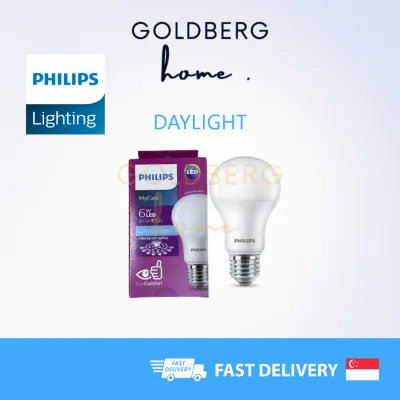
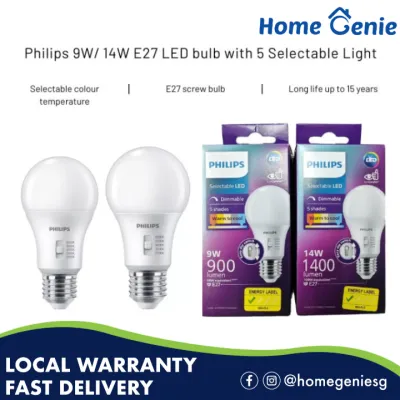
![[Authorised Dealer] Philips MyCare E27 LED Bulb 7.5W | 9.5W](https://img.lazcdn.com/g/p/71bc852effbe9947b01a40a75f323285.jpg_400x400q80.jpg_.webp)
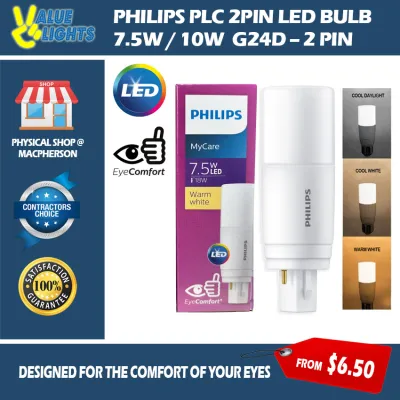
![[3 Year Warranty] Philips LED Vertical PLC PL-C G24D 6.5W Light Bulb (Warm White / Cool White / Cool Daylight)](https://img.lazcdn.com/g/p/7f847a8d326564d046487338afa327b3.jpg_400x400q80.jpg_.webp)
![[3 Year Warranty] Philips LED Vertical PLC PL-C 7.5W G24D Light Bulb (Warm White / Cool White / Cool Daylight)](https://img.lazcdn.com/g/p/f1d581f4e505965cf0f4717155941aab.jpg_400x400q80.jpg_.webp)
![[3 Year Warranty] Philips LED Vertical PLC PL-C G24D 9w 7.5W Light Bulb Warm White Cool Daylight](https://img.lazcdn.com/g/p/d9d85083fcdd879599367f1d9718d155.png_400x400q80.png_.webp)
Prices are valid at publication and may change. Please refer to the product page for the latest price.
Another critical but often overlooked metric is the Power Factor (PF). Power Factor is a dimensionless number between 0 and 1 that measures how effectively the bulb uses the incoming electrical current. A low Power Factor (typically below 0.5) means the bulb draws more current than it actually converts into useful power, putting unnecessary strain on your home’s electrical wiring and potentially causing minor efficiency losses across your entire household system. Premium brands like Philips often design their bulbs with a higher Power Factor (0.7 or above), whereas generic or budget-focused brands may cut corners on driver components, resulting in a lower Power Factor that degrades overall system efficiency over time.
Evaluating Lifespan and Total Cost of Ownership
The true value of an LED bulb is realized over its entire operational lifespan, which manufacturers typically rate between 15,000 and 50,000 hours. However, these ratings are determined under controlled laboratory conditions. In Singapore’s warm and highly humid tropical climate, heat accumulation is the primary enemy of LED longevity. If a bulb is installed in an enclosed fixture or a ceiling recess with poor ventilation, heat builds up rapidly around the driver and the LED chips, significantly shortening the actual lifespan. When comparing brands, look for those that incorporate robust thermal management designs, such as aluminum heatsinks or heat-dissipating plastics, to ensure the bulb survives close to its rated hours in local conditions.

Warranty terms offer a reliable indicator of a manufacturer’s confidence in their product’s durability under real-world conditions. Philips and other reputable lighting brands typically offer warranties ranging from one to three years, but the ease of claiming these warranties varies. Before purchasing, verify the local distributor’s claim process. Some budget brands sold on ecommerce platforms may offer long warranties on paper, but claiming them might require shipping the defective bulb overseas at your own expense, effectively rendering the warranty useless. Always check if the brand has an established local customer service center or an authorized distributor network in Singapore to facilitate straightforward replacements.
To calculate the Total Cost of Ownership (TCO), you must combine the initial purchase price with the projected electricity cost over the bulb’s lifetime. The formula for lifetime energy cost is: (Bulb Wattage x Daily Operating Hours x 365 Days x Lifespan in Years x Electricity Tariff) / 1000. Even if an alternative brand has a lower retail price, a slightly less efficient bulb with a higher wattage rating will accumulate higher electricity costs on your monthly utility bill. Over several years of continuous use, especially for high-usage areas like living rooms or corridors, the energy savings from a highly efficient bulb will easily offset a higher initial purchase price.
Light Quality and Application-Specific Needs
Prioritizing energy efficiency should not come at the expense of visual comfort and light quality. The color temperature of a bulb, measured in Kelvin (K), dictates the ambiance of your space. Warm white (2700K to 3000K) creates a cozy, relaxing environment suitable for bedrooms and living areas, while cool white (4000K) and daylight (6500K) are better suited for task-oriented spaces like kitchens, home offices, and bathrooms. When comparing brands, ensure they offer consistent color temperatures across different batches; lower-tier brands often exhibit noticeable color shifts, where two bulbs rated at 3000K emit visibly different shades of light.
The Color Rendering Index (CRI) is another vital metric that measures how accurately a light source reveals the true colors of objects compared to natural sunlight. A CRI of 80 is the standard minimum for residential indoor lighting, but spaces where color accuracy is critical—such as dining areas, vanity mirrors, or art displays—benefit from bulbs with a CRI of 90 or higher. While high-CRI bulbs sometimes require slightly more power to achieve the same brightness as lower-CRI alternatives, the dramatic improvement in visual clarity and comfort is generally worth the minor trade-off in absolute efficiency.
If your home utilizes dimmer switches or smart home automation, verifying compatibility is essential. Not all LED bulbs are dimmable, and installing a non-dimmable bulb on a dimmer circuit can cause persistent flickering, buzzing, and premature driver failure. Philips offers dedicated dimmable ranges and smart lighting ecosystems that integrate seamlessly with major smart home protocols. If you choose alternative brands, verify that their packaging explicitly states compatibility with your specific dimmer type (such as leading-edge or trailing-edge dimmers) or your smart home hub to avoid costly compatibility issues.
Pre-Purchase Verification and Safety Checks
Before finalizing your purchase, conduct a thorough physical inspection of the product packaging. Legitimate products sold in Singapore must display clear technical specifications, including the exact lumen output, wattage, voltage range, and the Enterprise Singapore Safety Mark. Be wary of packaging that only lists vague marketing terms like “super bright” or “ultra-energy-saving” without providing concrete numbers. If the packaging lacks a clear manufacturer address, importer details, or contact information, it is highly likely a low-quality import that has not undergone rigorous safety testing.
Always confirm that the bulb’s physical dimensions and base type match your existing light fixtures. The most common bases in Singapore homes are the E27 screw base and the B22 bayonet base, while downlights often use GU10 or integrated LED modules. Additionally, check the maximum wattage limit printed on your light fixture. Even though LED bulbs draw significantly less power than legacy incandescent bulbs, installing a bulb that exceeds the fixture’s rated thermal capacity can lead to heat buildup, damaging both the bulb and the fixture’s internal wiring.
Red flags in marketing terminology often include claims of unrealistic lifespans, such as “lasts up to 50 years,” without any qualifying details or warranty backing. Similarly, watch out for brands that claim compatibility with all smart systems or dimmers without listing certified protocols. True compatibility is always backed by specific standards, such as Zigbee, Matter, or explicit dimmer model compatibility lists. If a brand’s claims seem too good to be true at an incredibly low price point, prioritize safety and reliability by choosing a brand with verifiable certifications.
Decision Framework: Choosing the Right LED Brand
Your final choice between Philips and alternative LED brands should be guided by your specific household priorities, budget, and installation environment. Choose Philips if you value long-term peace of mind, reliable local warranty support, and consistent light quality across your entire home. Their extensive distribution network in Singapore makes finding exact replacements straightforward, and their premium product lines are highly optimized for thermal management and high color rendering, making them ideal for main living spaces and high-use fixtures.
Conversely, alternative brands are highly suitable if you are working within a strict budget for low-use areas, such as storerooms or utility closets, where minor variations in light quality and lifespan will not impact your daily life. They are also worth considering if you require highly specialized decorative bulb shapes, vintage filament designs, or integration with niche smart home ecosystems that Philips does not natively support. When opting for alternative brands, always prioritize those that carry the local Safety Mark and provide clear, verifiable technical specifications on their packaging.
Regardless of the brand you select, always assess the physical installation environment before mounting your new bulbs. If you are installing lights in enclosed fixtures, damp locations like bathrooms, or outdoor balconies exposed to the elements, ensure the bulb is rated for those specific conditions. For installations at height, such as high-ceiling living rooms or stairwells, the difficulty and safety risks of replacing a failed bulb make long-term reliability paramount. In these scenarios, isolating the power supply, following the manufacturer’s installation instructions, and hiring a qualified professional for installation is the safest and most cost-effective approach.
Frequently Asked Questions (FAQ)
Do higher-wattage LED bulbs always consume more electricity than lower-wattage ones?
Yes, wattage directly measures the rate of electrical energy consumption. A 10-watt LED bulb will always draw more electricity from your grid than a 6-watt LED bulb when operating. However, higher wattage does not automatically mean a bulb is brighter or more efficient. To determine actual brightness and efficiency, you must compare the lumen output of the bulbs. A highly efficient 8-watt bulb from a reputable brand may produce the same or more lumens than a poorly designed 10-watt bulb from a budget brand, allowing you to achieve the desired brightness while consuming less electricity.
Can I mix different LED brands in the same room or smart lighting system?
While you can physically mix different LED brands in the same room, doing so is generally not recommended if you want visual consistency. Different manufacturers use different LED chips and phosphor coatings, which can result in noticeable variations in color temperature, color rendering, and brightness levels, even if the bulbs share the same nominal specifications. Furthermore, mixing brands within a single smart lighting system or on a shared dimmer switch can lead to synchronization issues, varying dimming curves, and communication latency, as different drivers respond differently to control signals.
Community discussion
Share your experience or ask a question. Comments are reviewed before publication.