
Achieving comfortable, glare-free lighting in a standard 2.6m Housing & Development Board (HDB) flat requires selecting Philips LED downlights that feature wide beam angles, integrated diffusers, or recessed optical designs. Because a 2.6m ceiling height places the light source relatively close to eye level, standard downlights can easily cause visual discomfort if they are too bright or lack proper glare control. By focusing on physical design, light distribution, and room-specific requirements, you can create a balanced lighting scheme that enhances your home’s spaciousness while protecting your eyes.
Understanding Lighting Constraints in 2.6m HDB Ceilings
The physical dimensions of a standard HDB flat present unique challenges for interior lighting design. With a ceiling height of 2.6 meters, the distance between the light fixture and the floor—or the eye level of a seated person—is relatively short. This proximity directly impacts how light spreads across the room and how our eyes perceive the brightness of the light source.
When a downlight projects light downward, it forms a cone of illumination. The width of this cone at floor level depends entirely on the beam angle of the fixture and the height of the ceiling. In a low-ceiling environment, a narrow beam angle creates tight, intense pools of light on the floor while leaving the upper portions of the walls in deep shadow. This high-contrast effect, often referred to as the “cave effect,” makes a room feel smaller, more cramped, and visually disjointed.
Products mentioned in this guide
![[Local Set] [3 Year Warranty] Philips Meson LED Downlight Ceiling Light 9W/13W Round/Square [Bundle Deal Available]](https://img.lazcdn.com/g/p/d8d02051d9b113c0010c4b1a40161081.png_400x400q80.png_.webp)
![[Climate Voucher] PHILIPS 3 Color Meson LED Downlight 5.5W 9W 13W 17W Tri Tone Scene Switch for False Ceiling Local Warranty](https://img.lazcdn.com/g/p/4f25f6fa6bf4fcf754b08b97b4102da3.jpg_400x400q80.jpg_.webp)
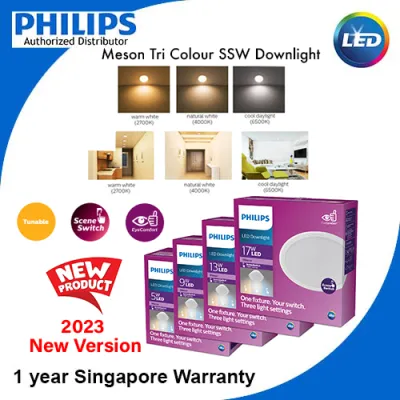
![[3 Year Warranty] Philips Meson Scene Switch Downlight 3 Color Downlight Tri Color](https://img.lazcdn.com/g/p/c9bdcc527c086bb4edb1910bbd62abcf.jpg_400x400q80.jpg_.webp)
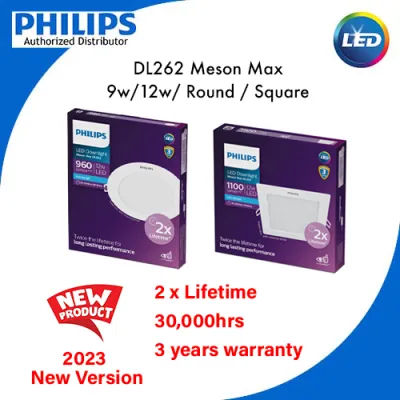
![[3 Year Warranty] Philips Meson SceneSwitch Downlight 3 Color Downlight Tri Color](https://img.lazcdn.com/g/p/e216f88a639452630860ec9dddb9e116.png_400x400q80.png_.webp)
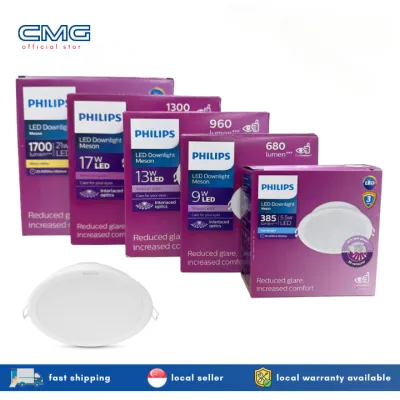
Prices are valid at publication and may change. Please refer to the product page for the latest price.
To achieve a bright and airy feel, the light cones from adjacent downlights must overlap at a height that illuminates the walls and vertical surfaces. This requires fixtures with wider beam angles that distribute light more horizontally. When light reflects off the walls, it opens up the space visually, making the standard HDB layout feel significantly larger than its physical footprint.
Glare is another critical concern in 2.6m ceilings. Glare occurs when a high-intensity light source is directly visible within a person’s normal field of view, causing discomfort or temporary visual impairment. In a low-ceilinged room, the angle between your eyes and the ceiling lights is much shallower than in a high-ceilinged space, meaning you are far more likely to look directly into the light source while walking or sitting.
To combat this, modern downlights utilize specific optical designs to shield the bare LED chips from direct view. Deep-recessed baffles set the light source back into the ceiling cavity, ensuring that the light is only visible when standing almost directly underneath the fixture. Alternatively, frosted or textured diffusers scatter the light across a larger surface area, reducing the peak intensity of the light and softening its impact on the eyes.
Using overly bright, narrow-spot lights as primary ambient lighting in a compact HDB flat is a common mistake. These fixtures are designed to highlight specific objects, such as artwork or architectural features, rather than illuminate an entire room. When used incorrectly, they create harsh shadows, intense hot spots, and significant visual fatigue as your eyes constantly adjust between bright and dark zones.
Key Specifications to Filter Philips LED Downlights
Navigating the technical specifications on product packaging is essential to finding the right Philips LED downlights for your home. Understanding these metrics allows you to filter out unsuitable options and select fixtures that deliver the perfect balance of brightness, color, and physical compatibility.

Beam angle and glare control are the primary specifications to evaluate. For general ambient lighting in an HDB flat, look for downlights with a wide beam angle, typically between 90 and 120 degrees. These wide-angle fixtures ensure even light distribution across the room. Additionally, look for product labels indicating advanced optical designs, such as micro-prism diffusers or anti-glare technology, which help distribute light smoothly without harsh hotspots.
Color Temperature, measured in Kelvin (K), determines the color appearance of the light and influences the mood of the space. Warm White (2700K to 3000K) provides a cozy, relaxing glow similar to traditional incandescent bulbs, making it ideal for living rooms and bedrooms. Cool White (4000K) offers a clean, neutral light that enhances focus and clarity, perfect for kitchens, studies, and bathrooms. Daylight (6500K) mimics natural midday light and is highly functional, but it should be used sparingly in low-ceilinged flats to avoid a cold, clinical atmosphere.
Wattage and lumen output must be carefully balanced to avoid over-illuminating a 2.6m space. Wattage measures energy consumption, while lumens measure the actual amount of visible light emitted. In a low-ceiling environment, high-lumen fixtures can easily overpower a room. Instead of installing a few high-wattage downlights, it is far more effective to install a larger number of lower-wattage fixtures (typically 5W to 9W, emitting 350 to 600 lumens each) spaced evenly across the ceiling. This approach provides uniform brightness without creating uncomfortable glare.
Physical compatibility with your ceiling structure is another crucial factor. HDB flats with retrofitted false ceilings often have limited plenum space—the cavity between the concrete slab and the plasterboard. This space can be as shallow as 50mm to 100mm, especially where structural beams or air conditioning pipes run. You must measure this clearance before purchasing downlights.
Ultra-thin or slim-profile integrated LED downlights are specifically designed for shallow ceiling cavities, requiring minimal vertical clearance. Conversely, deep-recessed downlights offer superior glare control but require a much deeper ceiling cavity to accommodate their housing. Always verify both the housing depth and the required cut-out diameter (commonly 3-inch, 4-inch, or 6-inch) to ensure a seamless fit with your false ceiling layout.
Matching Downlight Features to Your HDB Rooms
Every room in an HDB flat serves a different purpose, meaning your lighting choices should be tailored to the specific activities that take place in each space. Applying a one-size-fits-all approach to your entire flat can result in areas that are either too bright for relaxation or too dim for practical tasks.
The living and dining areas are the social hubs of the home, requiring versatile lighting that can adapt to different occasions. For these spaces, prioritize downlights with a high Color Rendering Index (CRI) of 80 or above. A high CRI ensures that the colors of your furniture, decor, and food appear vibrant and true to life. Consider installing dimmable LED downlights in these areas, allowing you to easily transition from bright, functional light for cleaning or reading to a soft, warm glow for hosting dinner guests or watching movies.
Bedrooms are dedicated to rest and recovery, making visual comfort the absolute priority. Because you spend a significant amount of time lying down in a bedroom, your eyes are frequently directed toward the ceiling. To prevent discomfort, choose downlights with deep-recessed designs that hide the light source from side angles. Position the fixtures away from the area directly above the bed headboard, opting instead to place them along the perimeter of the room or near wardrobes to provide soft, indirect illumination.
Kitchens and bathrooms demand highly functional, task-oriented lighting. In the kitchen, downlights should be positioned directly over countertops, sinks, and cooking zones to prevent your body from casting shadows on your workspace. Because these areas are prone to steam, grease, and moisture, look for fixtures with appropriate Ingress Protection (IP) ratings. While standard dry areas can use IP20-rated downlights, zones close to kitchen sinks or bathroom showers benefit from IP44-rated fixtures, which are sealed against moisture and water splashes.
Installation Safety and HDB False Ceiling Limits
Installing downlights in an HDB flat involves structural and electrical considerations that must be handled with care to ensure long-term safety and compliance with local regulations. Understanding the limitations of your ceiling structure is the first step in a successful installation.
Most HDB false ceilings are constructed from gypsum board panels suspended from the concrete soffit by a lightweight metal framework. While gypsum board is an excellent material for creating a smooth, modern ceiling finish, it has limited weight-bearing capacity. The downlights you select must be lightweight and equipped with sturdy spring clips that distribute the fixture’s weight evenly across the plasterboard, preventing sagging or damage over time.
Heat dissipation is a critical safety factor for all LED lighting. Although LEDs are far more efficient than older halogen bulbs, they still generate heat at the backplate and driver. If this heat cannot escape, it can cause the LED chips to degrade prematurely, leading to dimming, color shifting, or complete fixture failure. Ensure there is adequate clearance—typically at least 50mm of free space—above and around the downlight housing within the false ceiling cavity to allow air to circulate and dissipate heat safely.
Never cover downlight fixtures with thermal insulation materials unless the product is explicitly rated for insulation contact. Trapping heat around the fixture poses a serious fire hazard and will void the manufacturer’s warranty. If your false ceiling contains insulation, you must use specialized covers or select downlights designed to operate safely in contact with insulation.
Finally, all electrical modifications, including cutting new holes in false ceilings, running new wiring, and connecting fixtures to the mains power, must be performed by a qualified professional. In Singapore, electrical works must comply with strict safety standards to prevent short circuits, electrical fires, and shocks. Engaging a licensed electrician ensures that your home’s electrical load is calculated correctly, the wiring is safely insulated, and the installation meets all local regulatory requirements.
Frequently Asked Questions (FAQ)
Can I replace existing halogen downlights with Philips LEDs without changing the transformer?
Replacing older halogen downlights with modern LED alternatives requires careful consideration of your existing electrical setup. Halogen downlights often operate on a low-voltage 12V system, which relies on an external transformer to step down the voltage from the 230V mains power. If you attempt to install retrofit LED bulbs (such as MR16 LEDs) into these existing fixtures, the old halogen transformer may not be compatible. Halogen transformers typically require a minimum wattage load to operate correctly; because LEDs consume very little power, they may fail to meet this minimum load, resulting in flickering, buzzing, or a significantly shortened lifespan. For a more reliable and energy-efficient solution in an HDB flat, it is highly recommended to remove the old halogen fixtures and transformers entirely and replace them with integrated Philips LED downlights that connect directly to the 230V mains power.
Are smart Philips downlights worth the investment for a standard HDB flat?
Smart LED downlights offer a high degree of flexibility that can greatly enhance the living experience in a standard 2.6m HDB flat. These fixtures allow you to adjust both the brightness and the color temperature via a smartphone app, voice commands, or smart switches. This means you can program your lights to emit a bright, cool white light in the morning to help you wake up, and gradually transition to a soft, warm white in the evening to promote relaxation. While the initial cost of smart downlights is higher than standard fixtures, the ability to customize your home’s ambiance without installing complex dimming switches makes them a worthwhile investment for many homeowners. However, they do require a stable home Wi-Fi or Zigbee network to function reliably. If you prefer a simple, maintenance-free setup, high-quality non-smart Philips downlights remain an excellent and cost-effective choice.

Community discussion
Share your experience or ask a question. Comments are reviewed before publication.