
The premium for a Philips LED light is generally worth the investment if you prioritize long-term reliability, visual comfort, and electrical safety, particularly in high-traffic or hard-to-reach areas of your home. However, if you are outfitting a rarely used storage space, setting up temporary lighting, or choosing easily accessible decorative fixtures where failure carries low inconvenience, cheaper generic brands can be a practical, cost-effective choice. The decision is not a simple choice between “premium” and “budget” but rather a calculation of application suitability, safety margins, and maintenance tolerance.
In Singapore’s typical residential setups—ranging from high-ceiling condominiums to compact HDB flats—the cost of replacing a failed bulb is not just the price of the new hardware. It also includes the physical effort of climbing ladders, the risk of falls, and the time spent sourcing replacements. Therefore, evaluating whether to pay the upfront premium for Philips LED lights requires looking beyond the initial checkout price and examining how each bulb fits into your household’s daily patterns and safety standards.
Upfront Costs vs Long-Term Value: Calculating the Real Price
In Singapore’s retail landscape, a stark price divide exists between premium brands like Philips and the unbranded or generic alternatives stacked in neighborhood hardware shops or sold on online marketplaces. A generic LED bulb might cost only a fraction of a premium Philips equivalent, making it highly tempting for budget-conscious homeowners. However, focusing solely on the sticker price ignores the true cost of ownership, which is better measured through metrics like cost per lumen (the price paid per unit of actual light output) and cost per hour of use (the total cost of the bulb divided by its operational lifespan).
Products mentioned in this guide
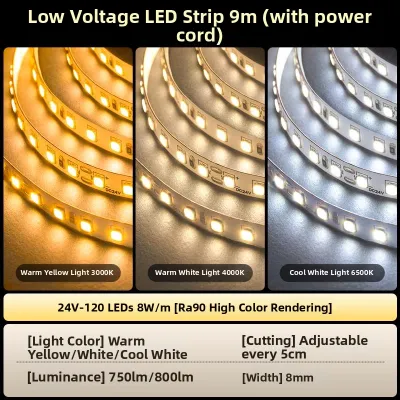
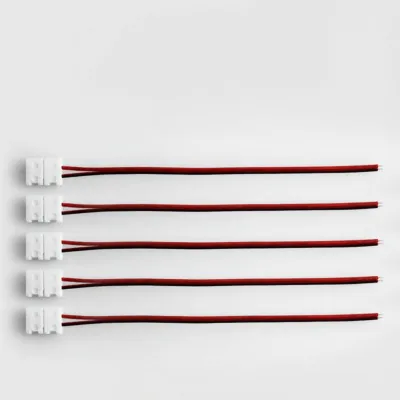
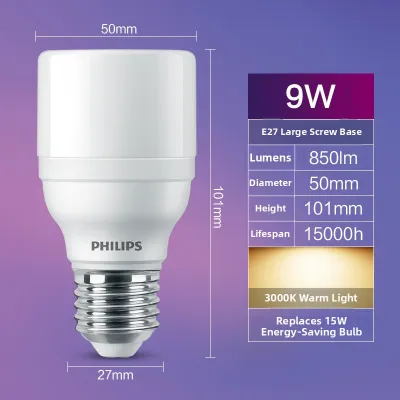
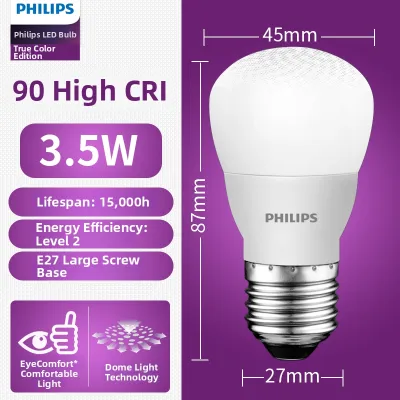
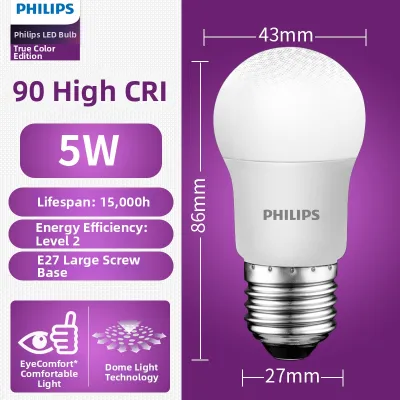
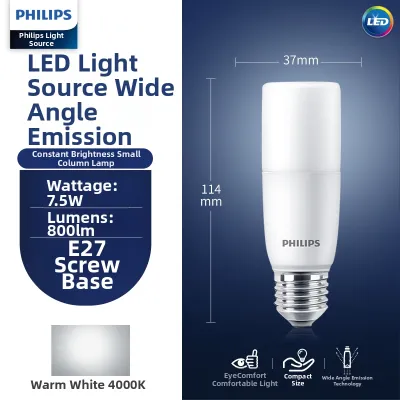
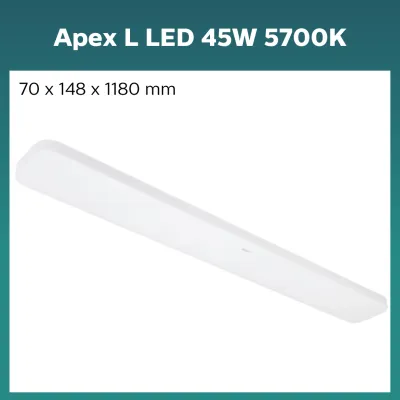
Prices are valid at publication and may change. Please refer to the product page for the latest price.
To calculate the real value of a light bulb, you can use a straightforward break-even evaluation formula:
Total Cost of Ownership = Purchase Price + (Wattage × Daily Hours of Use × 365 Days × Electricity Tariff per kWh / 1000) + (Replacement Frequency × Cost of Replacement Effort)
Let’s contrast two typical Singaporean household scenarios to see how this formula plays out in practice.
Consider a living room fixture that is switched on for an average of six hours daily. This is a high-traffic area where consistent brightness and color accuracy are essential for comfort. If a generic bulb fails prematurely within a year, you must spend time and money to replace it, potentially repeating this cycle multiple times over a five-year period. In contrast, a premium bulb designed to maintain its lumen output and survive tens of thousands of hours will likely run uninterrupted for years, easily offsetting its higher initial cost through avoided replacement purchases and lower cumulative energy consumption due to superior efficiency.
Now consider a bomb shelter or storeroom light that is switched on for only fifteen minutes a day while retrieving household items. In this low-usage environment, the bulb accumulates fewer than 100 hours of operation per year. Even a low-quality generic bulb with a short lifespan of a few thousand hours could theoretically last for decades in this scenario. The energy savings from a slightly more efficient premium bulb would amount to mere cents annually, making the upfront price premium of a high-end bulb financially unjustifiable. By assessing the daily usage hours of each fixture in your home, you can strategically allocate your budget, investing in premium bulbs where they deliver compounding returns and opting for generic alternatives where the financial and physical stakes are low.
Build Quality and Lifespan: What You Actually Get for Your Money
The physical construction of an LED bulb directly dictates its real-world lifespan, safety, and performance stability over time. While two bulbs may look identical when switched off, the internal engineering and materials used inside the housing determine whether a bulb will last for years or burn out within months.

Heat Dissipation and Component Durability
LED bulbs are highly sensitive to heat; contrary to popular belief, they do generate significant thermal energy internally, which must be dissipated to protect the delicate semiconductor junctions. Premium brands like Philips invest heavily in advanced thermal management, using robust aluminum-lined or ceramic heat sinks and engineered thermoplastic housings that efficiently draw heat away from the LED chips. In contrast, many generic brands cut costs by using thin, low-grade plastic housings with minimal or non-existent heat sinks, trapping thermal energy inside the bulb.
This trapped heat accelerates the degradation of the LED phosphors, leading to premature lumen depreciation (where the light becomes noticeably dimmer over time) and color shifting (where a warm white light turns a harsh blue or green). Furthermore, the lifespan of an LED bulb is often limited by its driver—the internal circuit board that converts the 230V alternating current (AC) from Singapore’s power grid into the direct current (DC) required by the LEDs. Premium drivers utilize high-grade capacitors and resistors designed to withstand minor voltage fluctuations and heat, whereas generic drivers often use cheap, low-tolerance components that are prone to drying out or popping under thermal stress.
When shopping in-store, a practical proxy for heat dissipation quality is the physical weight and material feel of the bulb; a heavier bulb usually indicates a more substantial, effective heat sink, while a feather-light bulb often points to stripped-back internal components. Inspecting the ventilation design and the solidity of the joints can also give you a clear indication of whether the manufacturer prioritized long-term durability or absolute cost minimization.
Warranty Terms and Local Support
The warranty accompanying a light bulb is a strong indicator of the manufacturer’s confidence in their product’s longevity and their commitment to customer service. Generic LED bulbs purchased from third-party online sellers or small local shops often come with vague, highly restricted, or entirely non-existent warranties. If a generic bulb fails after three months, claiming a replacement is frequently impossible or economically unfeasible, as the shipping costs to return the defective item to an overseas seller may exceed the price of a new bulb.
Established brands like Philips, however, provide clear, legally binding warranty periods that are backed by local distribution networks and physical customer support channels in Singapore. Should a premium bulb fail prematurely within its warranty period, you can typically obtain a replacement through straightforward local claims processes, eliminating the risk of lost capital. This local support infrastructure provides a valuable safety net, transforming the higher upfront purchase price into an insurance policy against early equipment failure and reducing the hidden costs of maintenance.
Light Quality and Efficiency: Beyond the Basic Wattage
When comparing light bulbs, many consumers make the mistake of looking only at the wattage, assuming that a higher wattage automatically translates to a better, brighter light. In reality, wattage simply measures the amount of electrical power the bulb consumes, whereas light quality and efficiency are determined by complex optical engineering.
Color Rendering, Flicker, and Visual Comfort
The quality of light in your living space has a profound impact on your visual comfort, mood, and even physical well-being. One crucial metric of light quality is the Color Rendering Index (CRI), which measures how accurately a light source reveals the true colors of objects compared to natural sunlight. Premium Philips bulbs typically offer high CRI ratings (often CRI 80 or CRI 90 and above), ensuring that skin tones look natural, food appears appetizing while cooking, and colors remain vibrant and true to life.
Generic bulbs, on the other hand, frequently exhibit low CRI ratings, casting a dull, grayish, or unnaturally yellow tint over your home that can make spaces feel clinical or uninviting. Another critical, yet often invisible, aspect of light quality is flicker—the rapid, repetitive modulation of light output caused by cheap driver circuits failing to smooth out the AC power supply. While you may not consciously perceive this high-frequency flicker, your brain and eyes still register it, which can lead to eye strain, fatigue, and persistent headaches during extended reading or working sessions.
Premium manufacturers employ sophisticated ripple-filtering circuitry to ensure a virtually flicker-free output, prioritizing long-term visual comfort. To protect your family’s eyesight, always check the product packaging for explicit CRI ratings and certified flicker-free labels, rather than assuming that all illuminated bulbs offer the same level of eye safety.
True Luminous Efficacy Over Time
Luminous efficacy, measured in lumens per watt (lm/W), represents the true efficiency of a light bulb by showing how much visible light it produces for every watt of electricity consumed. High-quality LEDs utilize premium phosphors and highly efficient semiconductor chips to deliver high luminous efficacy, meaning they produce bright light while keeping your Singapore Power (SP) utility bills low.
While some generic bulbs may claim impressive initial brightness figures on their packaging, these claims are often unverified or represent peak performance that rapidly degrades. Due to inferior phosphors and poor thermal management, generic bulbs often suffer from steep lumen depreciation, losing up to 30% or more of their initial brightness within the first few thousand hours of operation. This means you may start with a bright room, only to find yourself living in a dimly lit environment a year later while still paying the same electricity costs.
To gauge true efficiency, compare the stated lumen output relative to the wattage on the packaging and look for reputable, independent testing marks that verify sustained performance over the bulb’s rated lifetime.
Safety, Certifications, and Electrical Compatibility in Singapore
Operating electrical appliances in Singapore requires strict adherence to safety standards, given the country’s standard 230V, 50Hz electrical grid. Using substandard, uncertified electrical products poses severe risks, including electrical short circuits, damage to home wiring, and in worst-case scenarios, electrical fires. In Singapore, certain lighting products and electrical accessories are classified as Controlled Goods and must carry the SAFETY Mark, which indicates that the product has been tested and certified to meet the relevant safety standards.
Premium brands like Philips systematically certify their products, ensuring they comply with both local regulations and stringent international standards, such as those set by the International Electrotechnical Commission (IEC) and European Standards (EN). Generic bulbs imported directly from overseas via online platforms often lack these certifications, meaning they have not undergone rigorous testing for insulation resistance, flame retardancy, or electromagnetic interference. Using uncertified generic bulbs is particularly hazardous in enclosed fixtures, where heat buildup is extreme, or in damp environments like bathrooms and kitchens, where moisture can easily penetrate poorly sealed housings and cause short circuits.
Furthermore, installing low-quality bulbs in high-ceiling areas or hard-to-reach fixtures is highly discouraged; if the bulb fails prematurely, the physical process of replacing it involves working at height, which carries an inherent risk of falls and serious injury. When performing any bulb replacement, safety must always come first: ensure you turn off the main power at the distribution board (DB box) rather than relying solely on the wall switch, as wall switches do not always isolate the live wire. For any fixed wiring modifications, complex light fixture installations, or if you experience persistent electrical issues like flickering circuits or tripped breakers, never attempt a DIY fix; instead, hire a qualified, EMA-licensed electrical worker to ensure the work is performed safely and legally.
How to Choose: Decision Framework for Your Home
To simplify your purchasing decisions, use this scenario-based framework to determine when to invest in premium Philips LED lights and when to opt for budget-friendly generic alternatives.
Choose Philips (or similar premium brands) if:
- High-Traffic and Task Areas: The lighting is intended for spaces where you spend significant time, such as the living room, kitchen, study, or home office, where high color rendering, visual comfort, and flicker-free light are essential for productivity and well-being.
- Hard-to-Reach Fixtures: The bulbs are installed in high-ceiling fixtures, outdoor wall mounts, or complex chandeliers where replacing a failed bulb requires a tall ladder, specialized tools, or significant physical effort.
- Smart Home Integration: You plan to build a cohesive smart lighting ecosystem (such as Philips Hue or WiZ) that requires stable wireless connectivity, seamless app control, and reliable dimming performance.
- Enclosed or Demanding Environments: The fixtures are enclosed or located in areas prone to heat accumulation, where superior thermal management is necessary to prevent premature failure.
Choose Generic brands if:
- Low-Usage Spaces: The lights are for utility areas, bomb shelters, storerooms, or shoe cabinets that are only illuminated for a few minutes a day, making the long-term energy and lifespan benefits of premium bulbs negligible.
- Temporary Setups: You are renting a property short-term, staging a home for sale, or setting up temporary decorative lighting where long-term durability is not a priority.
- Accessible, Low-Risk Fixtures: The bulbs are housed in easily accessible table lamps, bedside lights, or low-hanging fixtures where replacement takes seconds and carries zero physical risk.
- Strict Upfront Budget Constraints: Immediate capital constraints prevent you from investing in premium options, and you are fully prepared to accept a shorter replacement cycle and potential fluctuations in light quality.
Verify first if:
- Dimming Requirements: Your fixture is connected to a wall dimmer switch; generic LEDs frequently buzz, flicker, or fail to dim smoothly on standard trailing-edge or leading-edge dimmers, whereas premium brands offer clearly labeled, tested dimmable models.
- Enclosed Fixture Ratings: The bulb will be placed inside a sealed glass or metal globe; verify that the manufacturer explicitly rates the bulb for enclosed use to avoid rapid thermal degradation.
- Smart Hub Compatibility: If you are integrating the light with existing smart home protocols (like Zigbee, Matter, or Thread), ensure the bulb's wireless specifications match your smart hub to avoid connectivity dropouts.
Community discussion
Share your experience or ask a question. Comments are reviewed before publication.