
When upgrading home or commercial lighting, determining which brand offers the best energy savings requires looking beyond marketing claims. While Philips is a prominent name in the LED market, the actual energy efficiency and overall value of a Philips LED spotlight compared to competing brands depend on specific technical metrics, installation environments, and long-term operational costs. This guide provides an objective framework to evaluate luminous efficacy, verify packaging specifications, and make a conditional choice based on your specific lighting requirements, ensuring you select the most efficient and safe option for your space.
Key Metrics for Comparing LED Spotlight Energy Efficiency
To objectively compare the energy efficiency of a Philips LED spotlight against any other brand, you must focus on standardized technical metrics. The primary indicator of an LED bulb’s electrical efficiency is its luminous efficacy, measured in lumens per watt (lm/W). This ratio tells you exactly how much visible light (lumens) the bulb produces for every single watt of electricity it consumes. A higher efficacy rating means more light is generated with less power, directly translating to lower monthly electricity bills.
When shopping, you can verify these efficiency claims by looking at local energy rating labels. Standardized rating systems, such as the tick-rating system on energy labels, provide a clear way to compare verified performance under standardized testing conditions. Comparing these official labels across different brands prevents you from relying solely on manufacturer-published marketing materials.
Products mentioned in this guide
![[3 Year Warranty] [Authorized Dealer] Philips GU10 LED Spotlight Bulb Philips Essential LEDspot MV 4.7W GU10](https://img.lazcdn.com/g/p/f05426a137fb394924178754ffb22158.png_400x400q80.png_.webp)
![[Bundle Set] Philips Essential LEDSpot LV 5W (50W) GU5.3 MR16 SpotLight and Electronic Transformer ET-E 10](https://img.lazcdn.com/g/p/9e06ae79678458b5b518f20e7862691a.png_400x400q80.png_.webp)
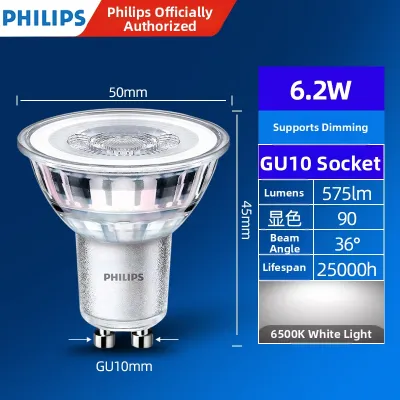
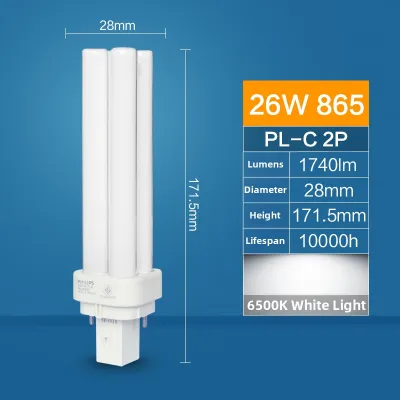
Prices are valid at publication and may change. Please refer to the product page for the latest price.
It is also vital to differentiate between total wattage consumed and actual usable light output. Modern LED technology has decoupled wattage from brightness. A high-quality LED spotlight might deliver 500 lumens of light using only 5.5 watts, whereas a less efficient competitor might require 7 watts or more to achieve the same brightness. Over multiple fixtures running for several hours daily, this small wattage gap accumulates into significant energy differences.
Furthermore, the physical design of the spotlight, including its beam angle and optical lens, plays a massive role in perceived brightness and overall room efficiency. A spotlight with a narrow beam angle concentrates light into an intense, focused beam, making a specific area look highly illuminated without requiring a higher-wattage bulb. Conversely, a wider beam angle spreads the light out, which might require more fixtures or higher-lumen bulbs to achieve the same perceived brightness on a work surface.
Evaluating Philips LED Spotlights: What to Check on the Packaging
When examining a Philips LED spotlight in a retail store or on an online marketplace, the product packaging serves as your primary source of technical truth. To calculate the exact efficacy of the bulb, locate the total lumen output and the rated wattage on the box. By dividing the lumens by the wattage, you can establish the baseline efficiency of that specific model and compare it directly against competing products on the shelf.

Beyond raw efficiency, check the quality of the light to ensure it suits your space. Look for the Color Rendering Index (CRI), which measures how accurately the light reveals true colors; a CRI of 80 or higher is standard for residential spaces. Additionally, verify the color temperature, measured in Kelvin (K); warm white light (2700K to 3000K) is ideal for cozy living areas, while cool daylight (6500K) is better suited for task-oriented workspaces.
Electrical safety is another critical factor that must be verified on the packaging. Look for recognized safety certification marks required for your local market, which indicate that the electrical product has been tested and certified to meet safety standards for mains voltage. Using bulbs that lack recognized safety certifications can pose electrical risks, regardless of how energy-efficient the manufacturer claims the product to be.
Finally, review the manufacturer’s stated lifespan claims, which are often advertised in hours. Read the fine print on the packaging to understand the specific operating conditions required to achieve this lifespan. Factors such as ambient operating temperature, proper ventilation, and whether the bulb is compatible with enclosed fixtures can significantly shorten or extend the actual life of the spotlight.
Comparing Philips Against Other Brands: Decision Framework
Choosing between Philips and competing brands requires a structured decision framework based on your specific project requirements, budget, and existing infrastructure. Philips is often the preferred choice if you prioritize consistent color batching across multiple fixtures. In large open-plan spaces, minor variations in color temperature between bulbs can be highly distracting; Philips typically maintains tight quality control to ensure color consistency. Additionally, if you plan to integrate your spotlights into a broader smart home ecosystem, Philips offers robust compatibility with established platforms like Philips Hue or WiZ, alongside widely accessible retail replacement warranties.
On the other hand, competing brands may be more suitable if your project has highly specialized architectural requirements. For instance, some niche lighting brands offer extremely narrow beam angles or specific trimless designs that are not commonly found in the standard Philips retail lineup. If you are managing a large-scale commercial installation with strict budget constraints, alternative brands may offer lower upfront costs per unit, though you must carefully weigh these initial savings against their long-term energy consumption.
Before finalizing any purchase, verify whether your existing dimmer switches and transformers are compatible with the specific LED driver technology of the chosen brand. LED spotlights operate on direct current (DC) and rely on internal drivers to regulate power. If you install a new LED spotlight on an older dimmer switch designed for halogen bulbs, you may experience severe flickering, buzzing, or premature bulb failure. Checking the manufacturer’s official dimmer compatibility list is a mandatory step to avoid these operational issues.
It is also important to recognize that neither brand will perform efficiently if the physical installation environment is unsuitable. If your existing ceiling fixtures lack adequate ventilation or are tightly packed with thermal insulation, heat will build up rapidly around the spotlight. High operating temperatures degrade the efficiency of the LED chips and shorten the lifespan of the internal driver, regardless of the brand.
Hidden Costs: Lifespan, Heat Management, and Dimmer Compatibility
Evaluating the true value of an LED spotlight requires looking past the initial purchase price in S$ and calculating the total cost of ownership over several years. One of the most significant hidden factors is thermal design and heat sink quality. High-quality spotlights utilize robust aluminum or ceramic heat sinks to draw heat away from the sensitive LED chips. Cheaper competing brands often use plastic-coated heat sinks that trap heat, leading to rapid lumen depreciation—meaning the bulb loses its brightness long before its rated lifespan ends, forcing you to replace it prematurely.
Another potential hidden cost is the need to upgrade your existing dimming system. Many older homes use leading-edge dimmers, which often cause modern, low-wattage LED spotlights to flicker or fail to dim smoothly. Upgrading to a compatible trailing-edge dimmer switch can add unexpected hardware and labor costs to your lighting project. When comparing brands, check if they offer “dimmable” models and verify if those models require specific, high-quality dimmers to function correctly.
To calculate the actual financial return on your investment, compare the initial purchase cost of the bulb in S$ against the projected energy savings over its lifetime. For example, a premium bulb costing S$15 that consumes 5 watts and lasts 25,000 hours will ultimately cost less to operate than a S$5 budget bulb that consumes 8 watts and needs replacement after 10,000 hours. This is especially true in regions where electricity tariffs make energy consumption a major component of long-term household expenses.
Lastly, read the warranty terms carefully to identify any exclusions that could void your coverage. Many manufacturers offer multi-year warranties but include clauses that exclude commercial use, installation in enclosed fixtures, or damage caused by incompatible dimming systems.
Installation and Safety Checks for Spotlight Upgrades
Upgrading your spotlights involves working with electrical systems, which requires strict adherence to safety protocols. First, verify the voltage requirements of your existing fixtures. Spotlights typically run on either 12V low voltage (which requires an external transformer) or 230V mains voltage. You must match the new bulb to the correct voltage and base type, such as GU10 for mains-voltage twist-and-lock sockets, or MR16 (GU5.3) for low-voltage bi-pin sockets. Installing a low-voltage bulb directly into a mains-voltage socket will destroy the bulb instantly and pose a serious safety hazard.
Next, check if the spotlight is explicitly rated for the specific environment where it will be installed. If you are placing spotlights in a bathroom, kitchen, or outdoor soffit, the bulbs and fixtures must have an appropriate Ingress Protection (IP) rating to withstand moisture and dust. Additionally, if your ceiling has thick thermal insulation, ensure the spotlight and its housing are rated for contact with insulation to prevent heat buildup and potential fire risks.
Before handling any electrical components, replacing bulbs, or altering fixtures, ensure that the power is completely isolated. Do not rely solely on the wall switch to turn off the power, as some wiring configurations may still leave live current at the fixture. Always turn off the main circuit breaker at your distribution board and use a reliable voltage tester to confirm that the wires are completely dead before proceeding with the work.
Finally, recognize the limits of DIY installation. While swapping a compatible bulb is straightforward, you must consult a qualified, licensed electrician for any fixed wiring alterations, complex transformer replacements, or structural ceiling modifications. Electrical work must comply with local safety regulations, and hiring a professional ensures that your installation is safe and compliant.
Frequently Asked Questions (FAQ)
Do higher wattage LED spotlights always produce more light?
No, higher wattage does not guarantee more light in modern LED technology. Wattage measures the amount of electrical energy the bulb consumes, whereas lumens measure the actual amount of visible light produced. To find the brightest and most efficient spotlight, you should compare the lumen output and look for a higher lumens-per-watt (lm/W) ratio, which indicates how efficiently the bulb converts electricity into usable light.
Can I mix Philips LED spotlights with other brands on the same dimmer switch?
It is highly recommended to avoid mixing different brands or models of LED spotlights on a single dimming circuit. Different manufacturers use distinct internal driver designs and electronic components, which can react differently to the same dimming signal. Mixing them on the same switch often results in uneven dimming levels, flickering, buzzing noises, or even premature driver failure. For consistent performance, use identical models from the same brand on any single dimming circuit.
Community discussion
Share your experience or ask a question. Comments are reviewed before publication.