
Selecting the right ceiling light for a standard Housing & Development Board (HDB) bedroom requires balancing functional illumination with physical proportions. With a standard ceiling height of 2.6 meters, choosing a fixture that is too bulky can make the space feel cramped, while an underpowered light can leave corners in shadow. The Philips Marcasite 14W is a popular low-profile option, but determining whether it is the right fit for your specific bedroom involves evaluating its light output against your room’s square footage and assessing how its physical dimensions sit within your vertical space. By verifying key specifications and understanding your room’s layout, you can make an informed decision that ensures both visual comfort and aesthetic balance.
Evaluating Brightness for Your Bedroom
To determine if a 14W LED fixture provides sufficient illumination, you must first look beyond wattage. While wattage indicates power consumption, the actual brightness of a light is measured in lumens. Because LED efficiency varies across different models and generations, you should always check the product packaging or the manufacturer’s official specification sheet for the exact lumen output of the specific model you are purchasing.
Once you have the lumen rating, you can calculate your bedroom’s specific lighting requirements. A standard HDB bedroom typically ranges from 9 to 12 square meters. For general ambient lighting in a bedroom, lighting design guidelines generally recommend an illuminance level of 100 to 150 lux (lumens per square meter). To find your target lumen range, multiply your room’s area by the desired lux level. For example, a 10-square-meter bedroom requiring 100 lux of ambient light would need a total output of approximately 1,000 lumens. Comparing this target to the verified lumen output of the 14W fixture will tell you if it can serve as the primary light source.
Products mentioned in this guide
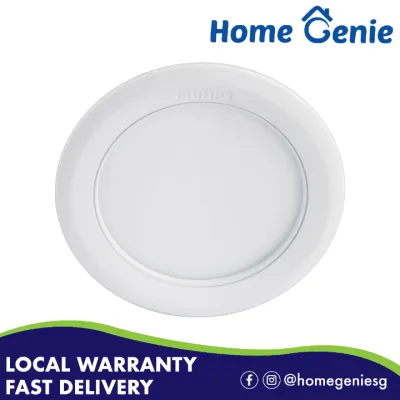
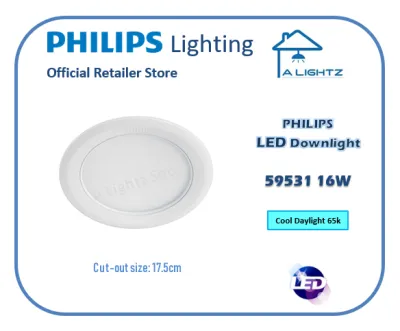
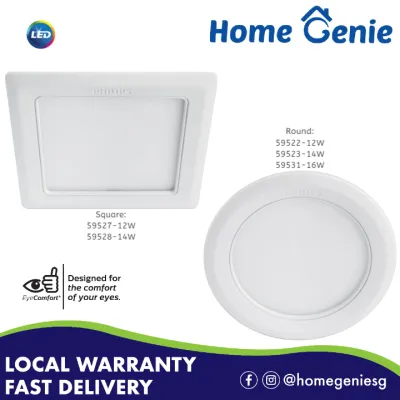
Prices are valid at publication and may change. Please refer to the product page for the latest price.
However, mathematical calculations only provide a baseline. Real-world perceived brightness is heavily influenced by your bedroom’s interior design and environmental factors. Dark-colored walls, deep wood furniture, and heavy drapes absorb light, meaning you may need a higher lumen output to achieve the same perceived brightness as a room with white walls and light-colored furnishings. Additionally, consider the layout of your furniture; if the light is positioned directly over a tall wardrobe, it may cast deep shadows in other parts of the room. You should also account for natural window light during transitional hours, as well as how you intend to use the space at different times of day.
Assessing Visual Proportions for a 2.6m Ceiling
A ceiling height of 2.6 meters presents unique spatial constraints that dictate the physical style of your lighting. Suspended fixtures or bulky flush mounts can easily make a standard HDB bedroom feel lower and more restrictive. To maintain an open, airy atmosphere, low-profile fixtures like the Philips Marcasite are commonly selected. Before purchasing, verify the fixture’s exact diameter and profile height from the manufacturer’s specification sheet to ensure it aligns with your ceiling’s limits.

Visual clearance is crucial for safety and comfort in rooms with a 2.6m ceiling. As a general rule, the bottom of a ceiling fixture should remain at least 2.1 to 2.3 meters above the floor to prevent taller occupants from feeling closed in or accidentally contacting the light. Low-profile recessed or surface-mounted downlights typically project only a few millimeters or centimeters from the ceiling surface, making them highly suitable for maintaining maximum vertical clearance. Verifying these physical dimensions ensures the fixture integrates seamlessly into the ceiling plane rather than protruding awkwardly into your living space.
Beyond vertical clearance, you must evaluate the horizontal proportion of the light against your bedroom’s floor dimensions. A fixture with a very small diameter might look insignificant and lost on the ceiling of a larger master bedroom, whereas an overly wide fixture can dominate the ceiling and disrupt the room’s visual balance. For a standard bedroom, a moderate diameter provides a clean, minimalist look. If you find that a single 14W fixture is too small for the room’s footprint, distributing the lighting load across multiple smaller, strategically spaced downlights may offer a more balanced aesthetic and more even light distribution.
Verifying Installation and Electrical Compatibility
Before finalizing your purchase, you must ensure that your bedroom’s existing ceiling infrastructure can safely accommodate the new fixture. If you are replacing an older, larger ceiling light, measure the existing ceiling rose, junction box, or cutout hole. You must verify that the base plate or trim of the new 14W fixture is wide enough to fully conceal any existing holes, unpainted patches, or mounting scars left behind on the concrete ceiling.
Electrical compatibility is another critical checkpoint. Review the product manual to confirm that the fixture’s voltage requirements match Singapore’s standard household supply of 230V at 50Hz. Additionally, if you plan to adjust the light levels in your bedroom, check the specifications to see if the specific model supports external dimmer switches. Many standard LED drivers are non-dimmable, and connecting them to a dimmer switch can cause flickering, buzzing, or premature driver failure.
Finally, always prioritize electrical safety during any installation or inspection. Before removing an old fixture or testing your ceiling wires, switch off the main power supply at your home’s distribution board (DB box) rather than relying solely on the wall switch. Because ceiling light installation involves working at heights and handling fixed electrical wiring, always engage a licensed electrician to perform the installation. A professional installer will ensure the fixture is securely anchored to the concrete ceiling and that all electrical connections comply with local safety standards.
Frequently Asked Questions (FAQ)
Does a 14W LED ceiling light provide enough light for reading in bed?
A 14W LED ceiling light is designed to provide general ambient illumination throughout the bedroom rather than focused task lighting. While it may offer sufficient light for casual reading if you are positioned directly beneath it, the beam angle and overall lumen spread from a central ceiling fixture are usually not optimized for comfortable, prolonged reading in bed. To prevent eye strain and avoid casting shadows over your book or device, it is highly recommended to supplement your ambient ceiling light with dedicated bedside reading lamps, adjustable wall sconces, or task lights.
How do I clean the acrylic diffuser without damaging it?
To clean the acrylic diffuser of your ceiling light safely, always turn off the light switch and allow the fixture to cool down completely to avoid thermal shock or electrical hazards. Gently wipe the surface of the diffuser using a clean, dry, or slightly damp microfiber cloth to remove dust and fingerprints. Avoid using abrasive scrubbing pads, paper towels, or harsh chemical cleaners containing ammonia, alcohol, or solvents, as these substances can scratch, degrade, or permanently cloud the acrylic material over time.
Community discussion
Share your experience or ask a question. Comments are reviewed before publication.