
Selecting the right E27 LED bulb for your home in Singapore often comes down to a choice between established premium brands like Philips and budget-friendly alternatives. While a premium brand often commands a higher price, deciding whether this upfront cost is justified requires looking closely at actual energy efficiency and long-term operating costs. The short answer is that a higher price tag only translates to true savings if the bulb delivers a significantly higher luminous efficacy—measured in lumens per watt—and lasts long enough in your specific home environment to offset the initial price gap.
To make an informed decision, you must look past marketing claims and calculate the real-world return on investment. This guide provides a practical framework to evaluate E27 LED bulbs, verify packaging specifications, compare alternative brands, and calculate your potential electricity savings using local utility rates.
How to Compare Energy Efficiency Beyond the Brand Name
When shopping for E27 LED bulbs, many consumers mistakenly rely on wattage as the primary indicator of brightness. Wattage simply measures the rate of electrical power consumption, not the amount of light produced. To evaluate the true energy efficiency of any LED bulb, you must look at its luminous efficacy, which is expressed in lumens per watt (lm/W). This metric tells you exactly how much visible light (lumens) the bulb produces for every single watt of electricity it draws from your home grid.
Products mentioned in this guide
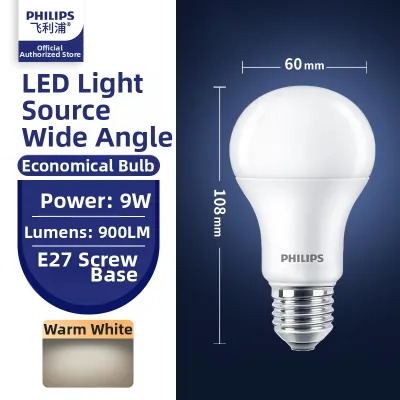
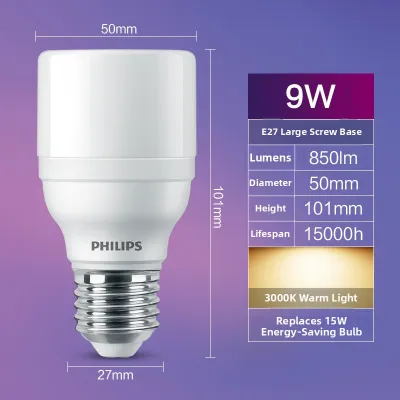
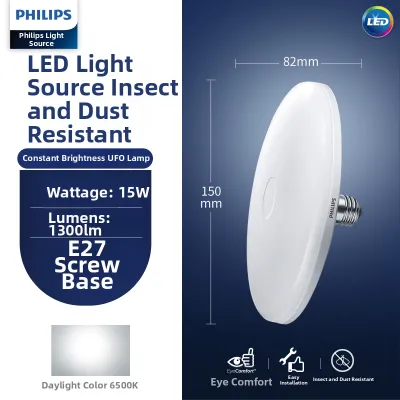
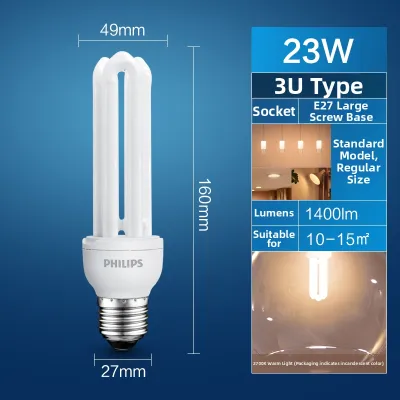
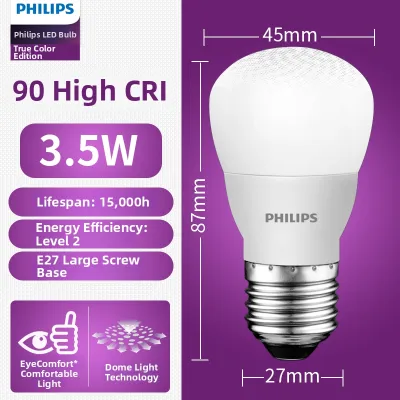
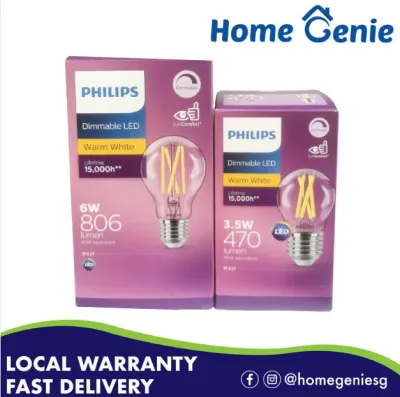
Prices are valid at publication and may change. Please refer to the product page for the latest price.
Packaging often highlights an “equivalent” wattage, such as claiming a 9W LED replaces a 60W traditional incandescent bulb. While these comparisons help transition from older lighting technologies, they are often generalized estimates. For an accurate comparison, ignore the equivalent rating and divide the total lumen output listed on the spec sheet by the actual rated wattage of the bulb. A bulb delivering 900 lumens at 9W (100 lm/W) is objectively more efficient than one delivering 800 lumens at the same wattage (88.8 lm/W).
In Singapore, residential lighting products are subject to energy labeling schemes that help consumers identify efficient models at a glance. Look for official energy labels that display efficiency ratings, often represented by a tick system or grading scale. These standardized labels provide an objective, third-party verification of the bulb’s power consumption, allowing you to compare different brands on an identical scale without relying solely on manufacturer advertising.
Philips E27 LED Bulbs: What to Check on the Packaging
Philips has long been a benchmark in the lighting industry, but you should still verify the specific performance metrics of any individual E27 bulb before purchasing. Start by locating the technical specifications panel on the packaging or the manufacturer’s official product datasheet. Here, you will find the exact lumen output, the actual power consumption in watts, the color temperature (measured in Kelvin, such as 2700K for warm white or 6500K for cool daylight), and the Color Rendering Index (CRI). A higher CRI, typically 80 or above, ensures that colors appear natural and vibrant under the light, though extremely high CRI bulbs can sometimes have a slightly lower luminous efficacy.

Next, examine the rated lifespan, which is typically stated in hours (for example, 15,000 or 25,000 hours). It is important to understand that these figures are calculated under controlled laboratory conditions. In real-world residential settings, factors such as poor ventilation, high ambient temperatures, and installation in fully enclosed fixtures can accelerate heat buildup, which significantly shortens the actual lifespan of the LED driver and diodes.
Finally, review the warranty terms provided for the local market. A premium brand should offer a clear local warranty that covers premature failure or severe lumen depreciation—where the bulb loses its brightness prematurely over time. Check whether the warranty requires you to keep the original physical receipt, if registration is necessary, and whether it covers residential use under standard operating conditions. A robust, easily claimable local warranty is one of the primary justifications for paying a brand premium.
Evaluating Alternative Brands for E27 LEDs
If you are considering alternative or lesser-known brands of E27 LED bulbs, safety and compliance must be your first priority. In Singapore, electrical appliances and light fittings must comply with local safety regulations. Look for the safety certification marks, such as the SAFETY Mark, on the packaging or the bulb itself. This mark indicates that the product has been tested and certified by a designated conformity assessment body, ensuring it meets the necessary electrical safety standards to prevent short circuits, shocks, or fire hazards.
Once safety compliance is established, compare the technical specifications of the alternative bulb against premium options. Check the lm/W ratio to ensure you are not sacrificing long-term energy efficiency for a lower purchase price. Additionally, inspect the physical design of the bulb, particularly its thermal management. High-quality alternative bulbs often feature robust heat-dissipating materials or heat sink structures integrated into the base, which help draw heat away from the sensitive LED chips and prolong the bulb’s operational life.
Another critical factor to evaluate is light quality and consistency. Lower-grade LED bulbs may suffer from high flicker rates—which can cause eye strain and headaches—or exhibit noticeable color shifting over time. Read user reviews on local online marketplaces or test a single bulb before committing to a whole-house upgrade. Furthermore, verify if the alternative brand offers reliable local customer support and a straightforward warranty replacement process, as shipping a defective bulb back overseas is rarely cost-effective.
Calculating Long-Term Electricity Savings
To determine if a premium E27 LED bulb is worth the extra upfront cost, you can perform a simple financial calculation based on your household’s actual usage patterns. First, calculate the annual electricity consumption of a single bulb in kilowatt-hours (kWh) using the following formula:
Annual Consumption (kWh) = (Bulb Wattage in Watts x Daily Operating Hours x 365) / 1,000
For example, if you run a 9W bulb for 6 hours every day, its annual consumption would be (9 x 6 x 365) / 1,000 = 19.71 kWh per year.
Next, calculate the annual running cost by multiplying the annual consumption by the prevailing residential electricity tariff in Singapore (expressed in S$ per kWh). If we assume a representative tariff of S$0.30 per kWh, the annual running cost for this bulb would be 19.71 x S$0.30 = S$5.91. By running this calculation for both a premium bulb and a cheaper, slightly less efficient alternative, you can find the exact annual savings in running costs.
Finally, calculate the break-even or payback period to see how long it will take for the energy savings to offset the difference in purchase price. The formula is:
Payback Period (Years) = Upfront Price Difference / Annual Running Cost Savings
If the premium bulb costs S$8 more but saves you S$2 per year in electricity, it will take four years of continuous use to break even. If the bulb is installed in a high-use area like a living room, the payback period will be much shorter than if it is placed in a seldom-used storeroom.
Decision Framework: When to Choose Philips vs. Alternatives
Choosing between Philips and alternative E27 LED bulbs depends on your specific installation environment, performance requirements, and budget. Opt for Philips if you require advanced features such as seamless integration with smart home ecosystems, precise dimming capabilities without buzzing, or highly consistent color rendering across multiple fixtures. The brand’s established supply chain and local retail presence also make warranty claims straightforward, providing peace of mind for high-traffic areas of your home.
Conversely, alternative brands are highly suitable if you find options that carry valid local safety certifications and offer comparable lm/W and CRI ratings at a fraction of the price. These budget-friendly bulbs are excellent choices for secondary spaces, such as utility closets, hallways, or guest bedrooms, where lights are only switched on for short periods and the long-term energy savings of a premium model would take too many years to realize.
Before making any purchase, always verify the specific physical and electrical requirements of your fixtures. Ensure the bulb’s dimensions fit within your lamp shade or recessed housing, and check that the voltage matches Singapore’s standard 230V grid. If you plan to install bulbs in damp environments like bathrooms or outdoor balconies, or in fully enclosed fixtures that trap heat, verify that the bulb is explicitly rated for those conditions. For any complex installations involving fixed wiring, dimming systems, or work at heights, always isolate the power supply at the main distribution board and consult a qualified electrical professional to ensure safety.
Frequently Asked Questions (FAQ)
Do all E27 LED bulbs with the same wattage produce the same brightness?
No, E27 LED bulbs with the identical wattage do not necessarily produce the same level of brightness. Wattage only measures the amount of electrical power the bulb consumes, whereas brightness is measured in lumens. The relationship between the two depends entirely on the bulb’s luminous efficacy; a highly efficient bulb will produce more lumens per watt than a lower-quality alternative. Always compare the lumen rating on the packaging rather than the wattage to ensure you are getting the desired brightness.
How does the power factor of an LED bulb affect my electricity bill?
For standard residential consumers in Singapore, the power factor of an LED bulb does not directly affect your monthly electricity bill. Residential utility meters measure and bill for active power consumption in kilowatts (kW), not apparent power in volt-amperes (VA). However, a very low power factor means the bulb draws more current than it actively uses, which can put minor additional stress on your home’s internal wiring and electrical system. Choosing bulbs with a decent power factor (typically 0.5 or higher for residential LEDs) is a good practice for overall electrical health.

Community discussion
Share your experience or ask a question. Comments are reviewed before publication.