
The Short Answer: Does Philips Save More on Your Electricity Bill?
When comparing Philips LED bulbs to those from alternative manufacturers, the brand logo on the box does not automatically translate to lower electricity bills. Energy savings are determined by the physical specifications of the bulb—specifically, how many lumens of light it produces for every watt of electricity it consumes. While Philips is an established brand known for manufacturing highly efficient, reliable LED bulbs that consistently meet their stated specifications, many competing brands offer comparable energy performance metrics at a lower initial purchase price.
To find the bulb that saves the most money, you must look beyond the brand name and calculate the luminous efficacy: the ratio of light output to power consumption. The most cost-effective choice is the bulb that delivers the required brightness for your space while drawing the fewest watts, balanced against its purchase price and expected lifespan.
Core Metrics for Comparing LED Energy Efficiency
To evaluate and compare any LED bulb’s energy performance objectively, you need to understand a few key technical specifications printed on the packaging.
Products mentioned in this guide
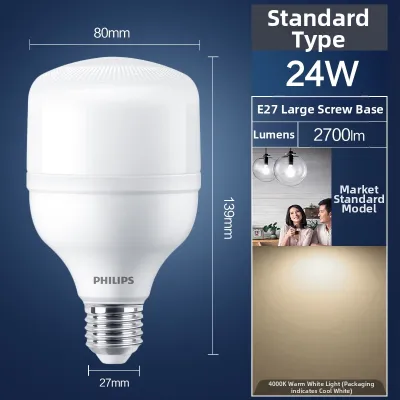
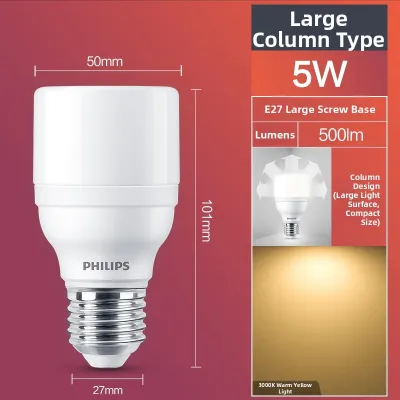
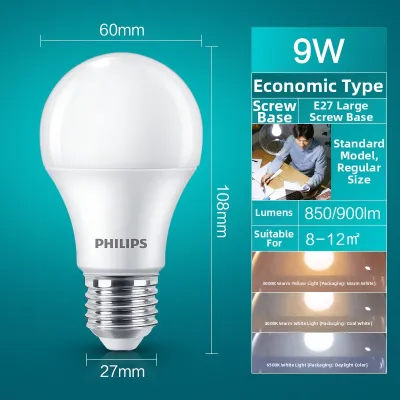
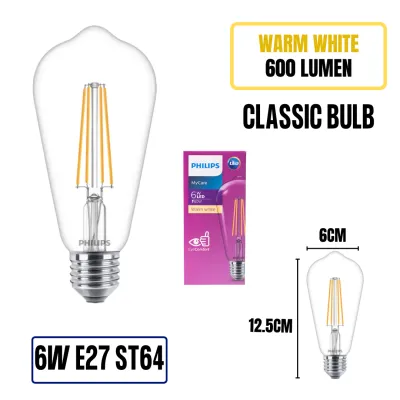
![[3 Year Warranty] PHILIPS LED E27 Screw Light Bulb All Type Warm White Cool Daylight](https://img.lazcdn.com/g/p/be1139cc9e01a21c25e9ba8fca38c0ea.png_400x400q80.png_.webp)
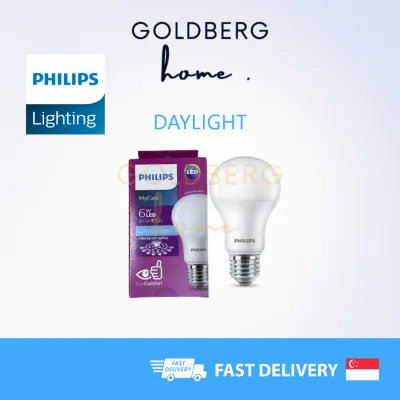
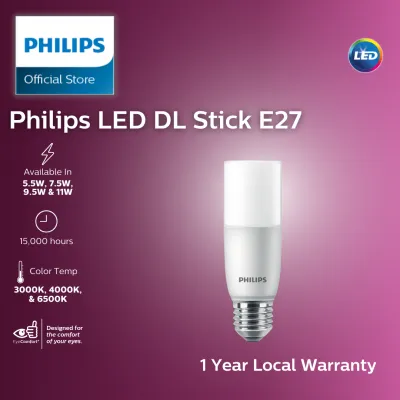
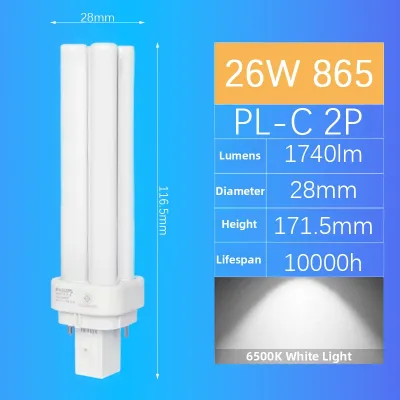
Prices are valid at publication and may change. Please refer to the product page for the latest price.

Lumens vs. Watts
Watts measure the amount of electrical power a bulb consumes, while lumens measure the total amount of visible light the bulb emits. To identify the most efficient bulb regardless of the brand, calculate its luminous efficacy by dividing the lumen output by the wattage (lumens per watt, or lm/W). For example, a bulb that produces 800 lumens and consumes 8 watts has an efficacy of 100 lm/W, whereas a bulb that produces 800 lumens but consumes 10 watts has an efficacy of only 80 lm/W. The 8-watt bulb is more efficient because it delivers the same brightness while drawing less power from your electrical grid.
Energy Rating Labels
In Singapore, look for the official Energy Label issued by the National Environment Agency (NEA) on the packaging. This label uses a tick rating system where more ticks indicate higher energy efficiency, allowing for a quick visual comparison between brands. Additionally, ensure the bulb carries local safety certifications, such as the Safety Mark, which verifies that the product has been tested to meet stringent electrical safety standards.
Power Factor and Heat Dissipation
Power factor, which ranges from 0 to 1.0, measures how effectively the bulb uses the incoming electrical current. A higher power factor (typically above 0.5 or 0.7 for quality residential LEDs) means the bulb draws current more efficiently, reducing strain on your home’s electrical wiring.
Heat dissipation is another critical factor that affects long-term efficiency. Although LEDs do not emit heat in the form of infrared radiation, they do generate heat internally at the junction point. High-quality bulbs use superior heat sinks to draw heat away from the delicate diodes. Poor heat dissipation degrades the internal driver and diodes over time, leading to a rapid drop in light output and premature bulb failure, which ultimately negates any initial energy savings.
Calculating True Long-Term Cost Savings
Finding the most economical bulb requires balancing the upfront purchase price with ongoing electricity costs over the product’s lifespan.
Upfront Cost vs. Lifespan
A budget-friendly bulb might have a lower initial purchase price, but it may also have a shorter rated lifespan, such as 15,000 hours compared to a premium bulb’s 25,000 hours. Over a 25,000-hour period, you would need to purchase and replace the cheaper bulb more frequently. This means the initial savings of a cheaper bulb can easily be wiped out by the cost of buying replacements sooner.
Electricity Cost Formula
To estimate the annual electricity cost of any bulb, you can use a simple calculation based on your daily usage hours and local electricity tariffs. Use the following formula:
**Annual Cost = (Bulb Wattage / 1000) Daily Usage Hours 365 Days * Electricity Tariff (S$ per kWh)**
For illustrative purposes, let us assume a daily usage of 5 hours and a residential electricity tariff of S$0.32 per kWh:
- Standard 10W LED Bulb: (10 / 1000) 5 365 * 0.32 = S$5.84 per year
- High-Efficiency 7.5W LED Bulb: (7.5 / 1000) 5 365 * 0.32 = S$4.38 per year
In this scenario, switching to the higher-efficiency bulb saves S$1.46 per year for a single fixture. If your home has 20 bulbs operating under similar conditions, the collective savings scale to S$29.20 annually.
Replacement Costs
Beyond the direct cost of the bulb, consider the physical effort and safety risks associated with replacing bulbs, particularly in high ceilings or hard-to-reach fixtures. Frequent replacements increase household waste and require more time spent shopping for parts. Investing in a highly reliable bulb with a proven lifespan reduces these indirect costs and provides greater convenience.
Philips vs. Competing Brands: What to Verify on the Packaging
When shopping in-store or on an online marketplace, comparing specific technical details on the packaging is more reliable than relying solely on brand reputation.
Voltage and Base Compatibility
Before comparing efficiency, verify that the bulb matches your home’s electrical system. In Singapore, the standard voltage is 230V at 50Hz, so ensure the bulb is rated for 220V-240V. Additionally, check the base type—such as E27 screw, B22 bayonet, or GU10 bi-pin—to ensure it fits your existing light fixtures.
Color Rendering Index (CRI) and Color Temperature
The Color Rendering Index (CRI) measures how accurately a light source reveals the true colors of objects compared to natural light. Look for a CRI of 80 or higher for general living spaces, and 90 or higher for task areas like kitchens or vanity mirrors. Color temperature is measured in Kelvin (K); warm white (2700K-3000K) creates a cozy atmosphere, cool white (4000K) is ideal for workspaces, and daylight (6500K) provides a bright, crisp light. Note that perceived color temperature and spatial effects are conditional preferences rather than universal performance facts.
Dimmability and Smart Features
If you plan to use a dimmer switch, verify that the bulb is explicitly labeled as “dimmable.” Using a non-dimmable LED on a dimmer circuit can cause flickering, buzzing, and permanent damage to the bulb’s internal driver. For smart bulbs, check the standby power consumption, as these bulbs draw a small amount of continuous power to remain connected to your home network even when turned off via an app.
Warranty and After-Sales Support
A long warranty period, typically ranging from 1 to 3 years, is a strong indicator of a manufacturer’s confidence in their product’s durability. Compare the warranty terms of Philips against alternative brands. A brand that offers a straightforward local replacement policy provides peace of mind and protects your investment.
Matching Bulb Specifications to Room Requirements
To maximize energy savings, tailor your bulb selection to the specific needs of each room rather than using a one-size-fits-all approach.
High-Traffic Areas
Spaces like kitchens and living rooms require lights to be on for several hours daily. Prioritize high-efficacy bulbs with long rated lifespans and high CRI ratings to ensure comfortable visual environments. Investing in premium, highly efficient bulbs in these areas yields the fastest return on investment through reduced electricity consumption.
Low-Traffic or Accent Areas
In spaces where lights are only turned on briefly, such as hallways, closets, or guest rooms, the long-term electricity savings of an ultra-premium bulb are less noticeable. In these areas, you can safely opt for budget-friendly competing brands with lower upfront costs, even if their rated lifespan or efficacy is slightly lower.
Task Lighting
For reading desks, kitchen countertops, or study areas, focus on directional brightness. Select bulbs with an appropriate beam angle, such as a narrow beam for spotlights or a wide beam for general ambient light, to direct light exactly where it is needed. This allows you to use lower-wattage bulbs without sacrificing visibility.
Safety and Installation Boundaries
For fixed wiring installations, damp environments like bathrooms, working at heights, or handling suspended loads, always isolate the power supply at the main circuit breaker before attempting installation. Carefully follow the manufacturer’s installation instructions. If you are unsure or if the installation requires modifying fixed electrical wiring, always hire a qualified licensed electrician to ensure safety and compliance with local regulations.
Frequently Asked Questions (FAQ)
Do smart LED bulbs use more electricity than standard LEDs?
Yes, smart LED bulbs consume a small amount of electricity even when they are turned off. This is known as standby power or vampire draw, which keeps the bulb’s wireless receiver active so it can respond to app or voice commands. Typically, this standby power ranges from 0.2 to 0.5 watts. While this continuous draw adds a tiny amount to your electricity bill, it is often offset by using automated schedules, timers, and motion sensors to ensure the lights are only fully illuminated when needed, preventing energy waste from lights left on accidentally.
Is it worth replacing working incandescent or CFL bulbs with new LEDs?
Replacing older incandescent or compact fluorescent lamps (CFLs) with LEDs is highly cost-effective, even if the old bulbs still work. Incandescent bulbs convert up to 90% of their energy into heat rather than light, while CFLs contain small amounts of mercury and take time to reach full brightness. Switching to an LED immediately reduces lighting energy consumption by up to 80% compared to incandescent bulbs and about 30% to 50% compared to CFLs. In a warm climate, reducing the heat emitted by your light bulbs also slightly lowers the cooling load on your air conditioning system, contributing to additional indirect savings.
Can I mix Philips and other LED brands in the same room?
You can physically mix different brands of LED bulbs in the same room, provided they share the same voltage, base type, and dimming compatibility. However, doing so may result in visual inconsistencies. Different manufacturers use different LED chips and phosphor coatings, which can lead to subtle variations in color temperature and color rendering, even if the packages claim identical ratings. To maintain a cohesive visual environment, try to use the same brand and model of bulb within a single multi-bulb fixture or open-concept space.
Community discussion
Share your experience or ask a question. Comments are reviewed before publication.